1.06 Collision Course: Marble Meets Marble
ask questions and make predictions about how speed, sound and motion change when two objects collide, then test them.
- I can ask questions about how the energy of objects changes when they collide, like how fast or slow they are moving before the collision.
- I can ask questions about how energy moves from one object to another when they hit each other, and how this changes their motion.
- I can ask questions about how energy from a collision can go into the air as sound or heat.
- I can predict what will happen to the energy of objects and the air after they collide, using patterns I have seen about how energy moves during collisions.
Phase 2: Investigate
Warm-Up ~5 min
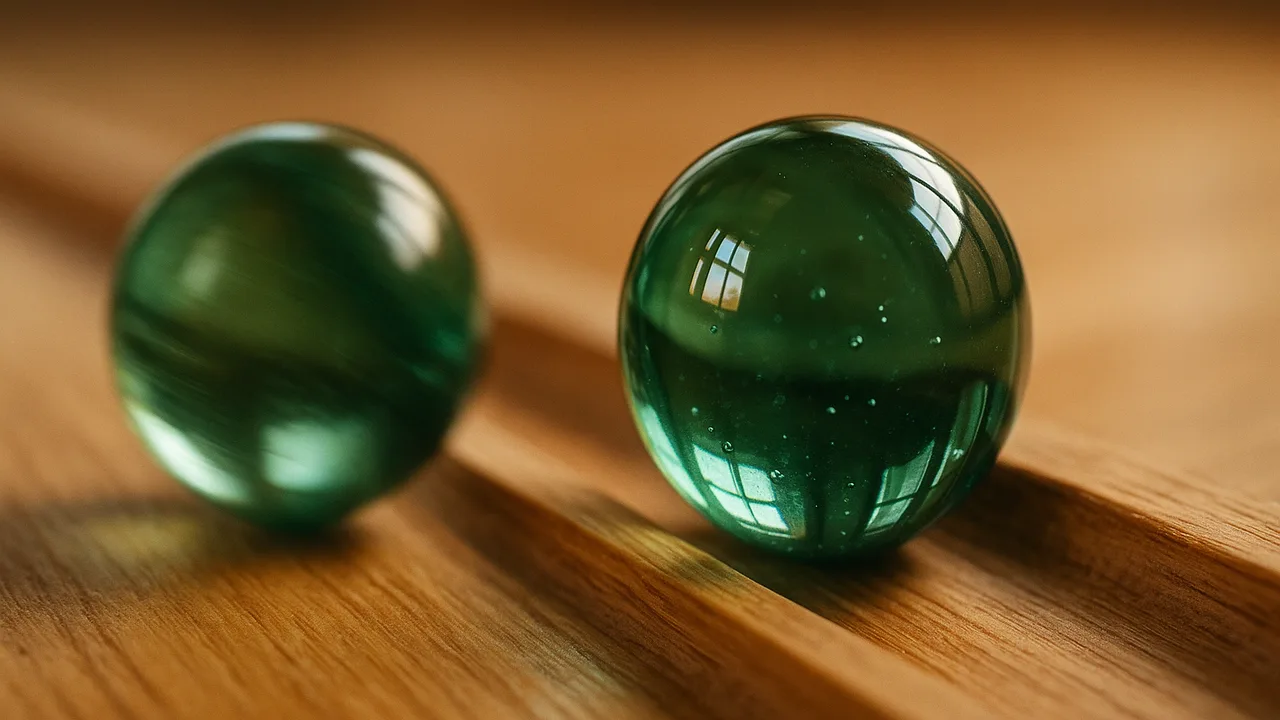
Do Now. Watch your teacher roll one marble into a marble that is sitting still. Listen closely, too.
A rolling marble hits a marble that is sitting still. What happens?
Instruction ~10 min
Junior engineers, our machine is full of crashes. A marble hits a domino. A domino hits a car. A car hits the bell. Each crash is a collision. Today we study collisions up close.
Step 1: ask. Write two questions before you test. Use these starters: What happens to the speed of…? How loud is…? Where does the energy go when…?
Step 2: test. Put a target marble at a tape mark at the bottom of your ramp. Roll a second marble from 1 book, then 2, then 3. Watch the target marble. Measure how far it rolls. Listen to the click. Watch the rolling marble, too. Does it stop, slow down, or keep going?
| Ramp height | Rolling marble before (slow / fast) | Rolling marble after (stops / slows / keeps going) | Target marble distance (cm) | Click (soft / medium / loud) |
|---|---|---|---|---|
| 1 book | ||||
| 2 books | ||||
| 3 books |
Worked example 1: a question that leads to a test. Priya asked, “What happens to the target marble’s speed if the rolling marble is faster?” She can test it. She changes the ramp height. She watches the target marble.
Worked example 2: a prediction from a pattern. Malik’s team saw a pattern. Each taller ramp made the target marble roll farther. Each taller ramp made a louder click. So before trying 4 books, Malik predicted, “The target will roll even farther, and the click will be even louder.” A good prediction uses a pattern you already saw.
Step 3: try a car crash. Roll a toy car into a lump of soft clay at two speeds. Look at the dent. Some energy went into changing the clay’s shape. Some went into sound.
Guided Exercises ~15 min
Use your collision table to answer these with your team.
Independent Practice ~10 min
Look at your team’s table.
Make a prediction for a 4-book ramp. Use the pattern in your data to explain why.
Closure ~5 min
You asked questions, saw patterns and made predictions about collisions. Next time, we follow energy through wires and switches.
Exit ticket: two marbles collide. Name two things that change after they hit.
Teacher notes
Materials: the ramps from 1.03, two same-size marbles per team, masking tape, rulers, a toy car, soft modeling clay.
Setup: mark the target spot with tape so it is the same each trial. Collect each team’s questions on chart paper for 1.12.
Listen for: “energy disappears in a crash” (it moves into the other object, sound, and a little heat); “the heavier object always wins” (keep marbles the same size; focus on speed). Keep 4-PS3-3 qualitative.
Support / stretch: give question starters on cards. Stretch: roll two marbles toward each other and describe what happens.