1.08 Power Detectives: Where Does Our School’s Energy Come From?
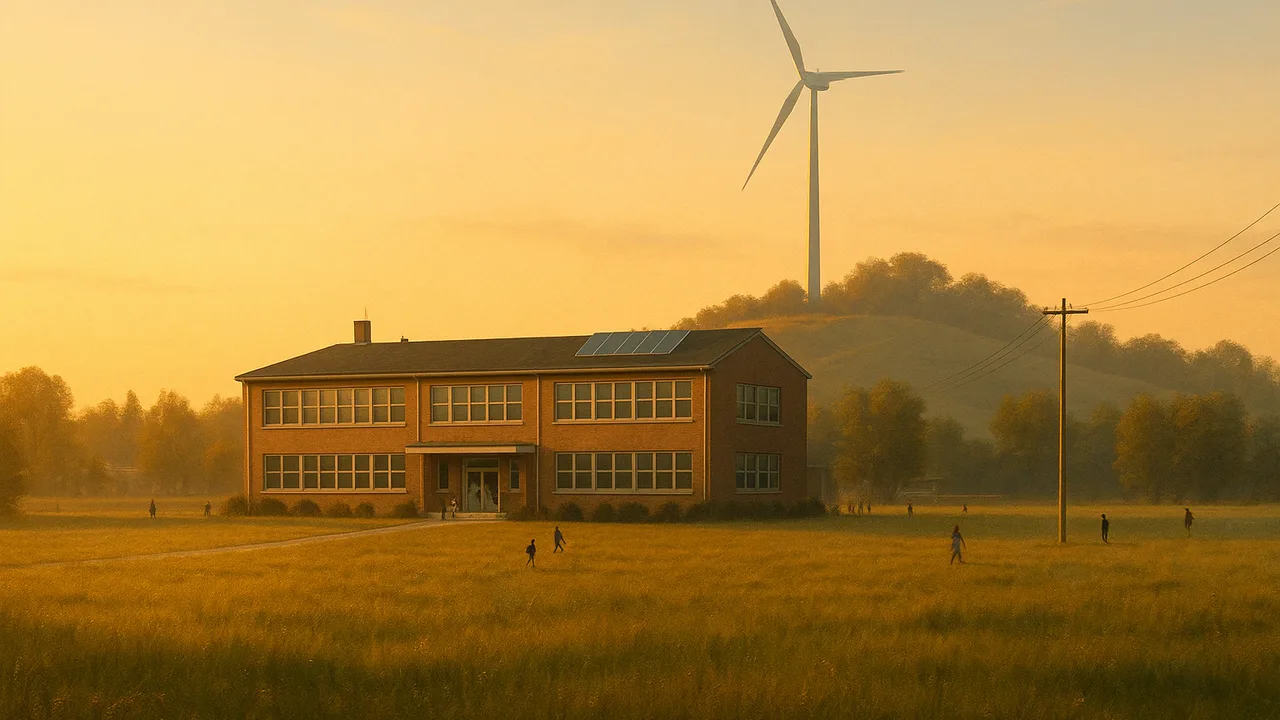
trace the energy for the school bell, a flashlight and the classroom lights back to energy resources found in nature.
- I can explain where different energy resources like fossil fuels, solar, wind, water, and nuclear energy come from in nature.
- I can describe how these energy resources help people meet their energy needs.
- I can compare the good and bad effects on the environment when people use each energy resource.
Phase 2: Investigate
Warm-Up ~5 min
Do Now. The school bell rings at the start of the day. The lights in our room glow all day. A flashlight shines when we press its switch. Each one needs energy. Where does it come from before it reaches our room?
Where does the electricity for our classroom lights start?
Instruction ~10 min
Junior engineers, we are power detectives today. Our machine rings a bell with motion energy. But the real school bell is electric. So are the lights. We will trace their energy backward, step by step, to where it starts in nature.
The trail. Lights ← wires in the school ← power lines ← a place that makes electricity ← an energy resource from nature. An energy resource is something in nature that people use to get energy.
Five resources to investigate. Your team gets five resource cards. Read each card and fill in the table.
- Coal: a black rock dug from underground. It formed long ago from buried swamp plants. Coal is found underground in many regions. Power plants burn it to boil water. The steam spins a machine that makes electricity.
- Natural gas: a gas trapped deep in rock layers. Natural gas also comes from underground rock in many regions. It is burned to make electricity and to heat many homes and schools.
- Wind: moving air. Wind turbines catch the wind with giant blades. Wind turbines stand on some windy hills and ridges.
- Solar: light from the Sun. Solar panels change sunlight straight into electricity. Some homes and schools have panels on their roofs.
- Water: moving water in a river. A dam lets water rush through a turbine, and the turbine spins to make electricity.
| Resource | Where it comes from in nature | How people get energy from it | What it can power |
|---|---|---|---|
| Coal | |||
| Natural gas | |||
| Wind | |||
| Solar | |||
| Water |
Worked example 1: tracing the bell. Diego traced it like this. “The bell rings because current flows to it. The current comes through wires from power lines. The power lines come from a power plant. That plant might burn natural gas from deep in the rocks.” Each arrow points back one step.
Worked example 2: tracing the flashlight. Priya said, “The flashlight uses a battery, not the wall. But the battery was made in a factory, and a rechargeable battery is filled up from the wall.” So even a battery’s energy trail leads back to energy resources. Many trails end at the same few resources.
One more card. Some power plants use nuclear energy. They use a metal called uranium, which is mined from rocks. It heats water to make steam, like a coal plant, but it does not burn.
Guided Exercises ~15 min
Use your resource cards and table to answer these.
Independent Practice ~10 min
Make your own energy trail.
Pick the school bell, the lights or a flashlight. Draw an energy trail with at least four arrows back to a resource in nature.
Closure ~5 min
Every light and bell in our school has an energy trail that starts in nature. Next time, we test models of wind and water power and see what using each resource does to the land, air and water.
Exit ticket: name two energy resources and tell where each one comes from in nature.
Teacher notes
Materials: five resource cards per team (text above, plus a photo of each), the energy-trail organizer, chart paper for a class trail. Optional: a photo of a wind turbine and a solar roof.
Setup: walk students past the bell and a light switch (look, do not touch). Build one class trail together before teams draw their own.
Listen for: “electricity comes from the outlet” (the outlet is the end of the trail); “batteries make energy” (they store it). We do not name which plants serve our school; the grid mixes sources, so keep the trail general (“might be”). Keep energy facts general: coal and natural gas come from underground rock in many regions, and turbines stand on some ridges.
Support / stretch: give a trail with blanks and a word bank. Stretch: add the nuclear card to the table.