1.02 Wonder Board Workshop: Questions We Can Test
The Chain-Reaction Machine for Family Science Night
How can we build a machine that passes energy along at least four times to ring a bell?
The mystery: On a classic roller coaster, the first hill is the tallest point of the whole ride. The train is pulled up only once, so why can’t any hill after it be taller?
describe our client’s problem as something a new machine could solve, tell how needs change over time, and sort our questions into ones we can test in class.
- I can describe a problem that could be solved by making a new or better object, tool, process, or system.
- I can explain how people’s needs and wants can change over time.
- I can ask questions about energy changes during collisions that we can investigate in our classroom or outside.
Phase 1: Spark
Warm-Up ~5 min
Do Now. Your teacher tips one domino. It starts a tiny chain reaction across the desk. Watch closely. Then look at our Wonder Board from last time. Which question could we answer just by watching?
Which question could our class test with dominoes, marbles and ramps this week?
Instruction ~10 min
Junior engineers, a good design starts with a clear problem. Our client did not ask for “something cool.” They asked for a machine that passes energy along and rings a bell. That is a problem we can solve by making a new object. Engineers say it like this: who needs it, what they need, and why.
Worked example 1: writing a problem statement. Priya’s team wrote: “The kindergarten class needs an exhibit that shows energy moving, because families are coming to Family Science Night and the kids want to show them something amazing.” It names the who, the what and the why. A new machine could solve it.
Needs change over time. Long ago, people lit their homes with candles and oil lamps. Then many homes got electric lights. Today, many people use LED bulbs that use less electricity. The need stayed the same: light at night. But what people wanted changed as new tools came along.
Worked example 2: our client’s wants can change, too. Last year, Malik’s little brother was in kindergarten. His class liked a simple domino line. This year’s class saw a big chain-reaction video. Now they want more steps and a bell! The need is still “show families energy.” The want grew. Engineers check in with the client so the design fits what people want now.
Testable questions. Some Wonder Board questions we can answer with a test in our room. A testable question names something we change and something we watch. “What happens to a still marble when a fast marble hits it?” is testable. We change the speed. We watch the still marble and listen for sound. Other questions need a book or an expert. Both kinds matter.
Team contract. Today your team also writes a short contract: how you will share jobs, take turns and fix arguments. Every member signs it.
Guided Exercises ~15 min
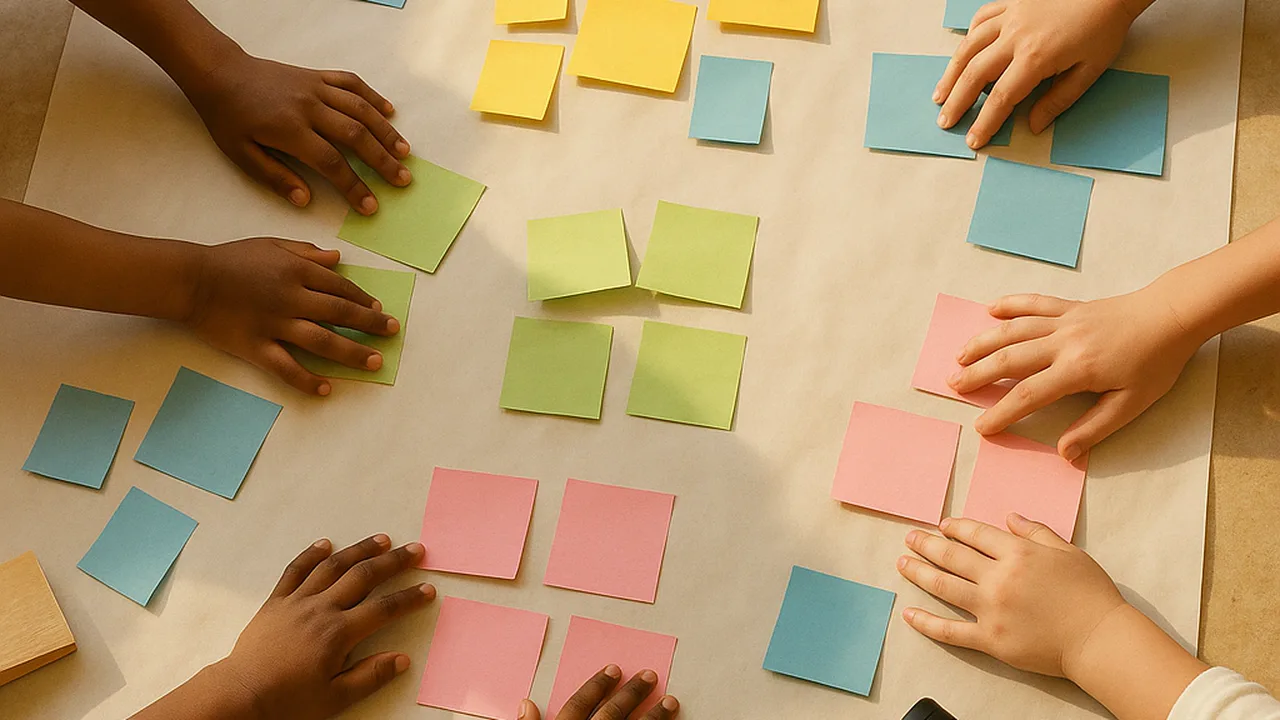
Sort and sharpen our questions with your team. Use the arrows to move through the cards.
Independent Practice ~10 min
Write your own problem statement and think about change over time.
Write a problem statement for our machine. Name who needs it, what they need, and why.
Think of something at your home or school that changed over time, like phones or lights. What need stayed the same? What changed?
Closure ~5 min
Our Wonder Board is sorted. We have testable questions and a team contract. Next time, our investigations begin with the ramp lab.
Exit ticket: write one testable question about collisions that our class could investigate.
Teacher notes
Materials: the Wonder Board, sticky notes in two colors (testable / research), 10 dominoes for the demo, a team contract template.
Setup: draw a T-chart labeled “We can test it” and “We need to look it up.” Reporters move each sticky note to a side and say why.
Listen for: “a testable question has a yes/no answer” (it names a change and an observation); students treating needs and wants as the same. Keep the history of lighting general; no dates needed.
Support / stretch: give the frame “What happens to ___ when we change ___?” Stretch: have students rank questions by how useful the answer would be for building the machine.