1.16 Prototype Day: Build One Section at a Time
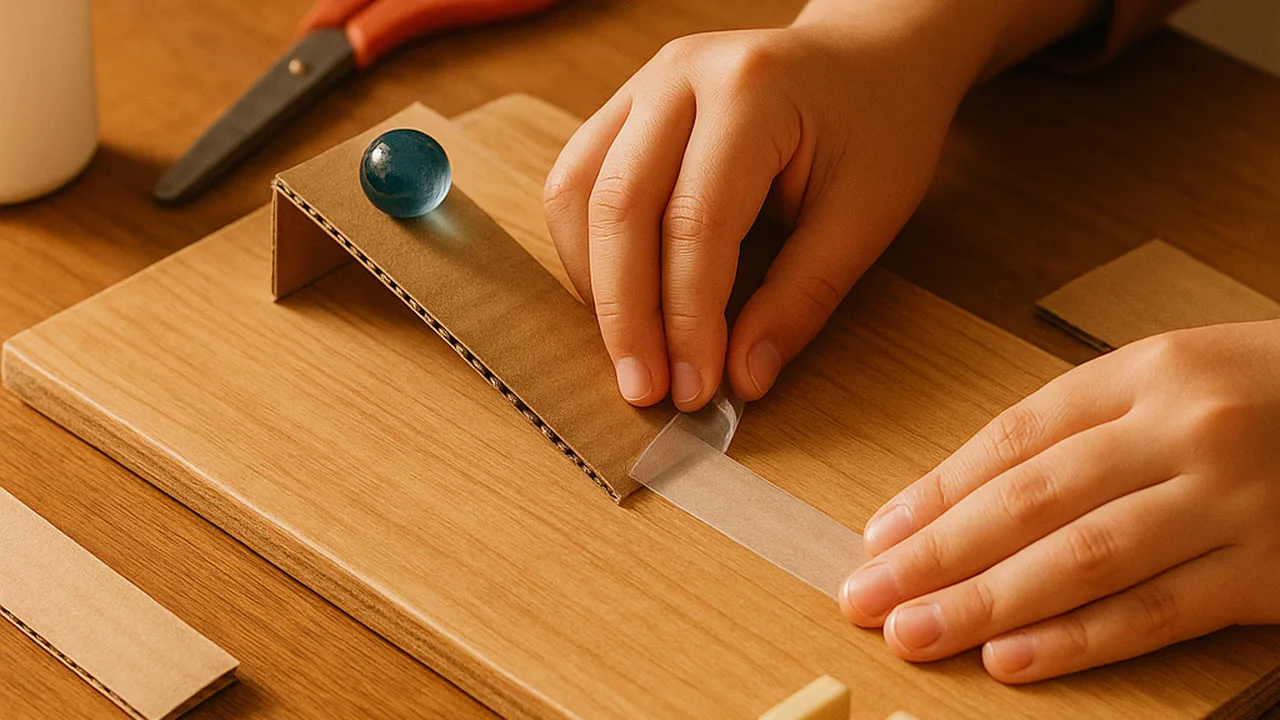
build the first sections of our prototype safely and test each section before joining it to the next.
- I can describe what my device needs to do and what kinds of energy it uses and produces.
- I can explain what materials I can use and what safety rules I need to follow when building my device.
- I can explain the purpose of my investigation, including how I will find problems or failure points in my model or prototype to help make it better.
Phase 4: Build
Warm-Up ~5 min
Do Now. A team builds a whole 10-step machine and then tests it for the first time. It fails. Think about this problem.
Why is it hard to fix a machine you test only at the very end?
Instruction ~10 min
Junior engineers, today you build a prototype. A prototype is a first model that you test and improve. It does not have to be perfect. Its job is to show you what works and what does not.
Build in sections. Split your machine into sections. A section is one or two energy transfers. Build section 1. Test it 3 times. When it works, build section 2. Test it. Then join the two sections and test again.
Why test each section? Each test is a small investigation. Its purpose is to find the failure point, the place where the energy stops moving along. If you test small parts, the failure point is easy to find.
Worked example 1: Diego’s ramp section. Diego’s team built a ramp from a folder on 2 books. The marble rolled down but missed the first domino twice. The failure point was the gap between the ramp and the domino. They moved the domino 2 cm closer. The next 3 tests all worked.
Worked example 2: Ava’s car section. Ava’s team tested the car hitting the bell. The car moved too slowly, and the bell made only a soft tap. A faster object has more energy. So they started the car higher on its ramp. The car went faster and the bell rang loudly.
| Section | Test 1 | Test 2 | Test 3 | Failure point (if any) |
|---|---|---|---|---|
| Section 1 | ||||
| Section 2 | ||||
| Sections 1 + 2 joined |
Ask for help the smart way. If you are stuck, look at another team’s section or ask the Materials Manager for a new part. Talking with others is part of good design.
Guided Exercises ~15 min
Roles today: Materials Manager, Builder, Tester and Recorder. Check your thinking as you build.
Independent Practice ~10 min
Check your machine against the rules.
List what your machine needs to do, the energy it starts with and the energy it ends with. Then list the materials you used and one safety rule you followed.
Closure ~5 min
Great building, junior engineers. Next time, some teams will add a light-up switch as a second energy changer.
Exit ticket: which section of your machine works best so far? Which one needs the most work? Use a test result.
Teacher notes
Materials (per team): cardboard tubes, rulers or folders for ramps, a marble, 15 to 30 dominoes or small books, a toy car, a desk bell, masking tape, books for height, a team bin.
Setup: mark a taped work zone for each team. Post the role cards. Set a timer for 10-minute build cycles with a test at the end of each.
Listen for: teams that build all sections before any test; “it just didn’t work” without naming where. Push for a failure point.
Support / stretch: give a two-section starter layout. Stretch: ask teams to time how long each section takes to set up.