2.01 The Leaf That Would Not Leave
The Silent Signal
How can we send a message across the field day crowd without saying a word?
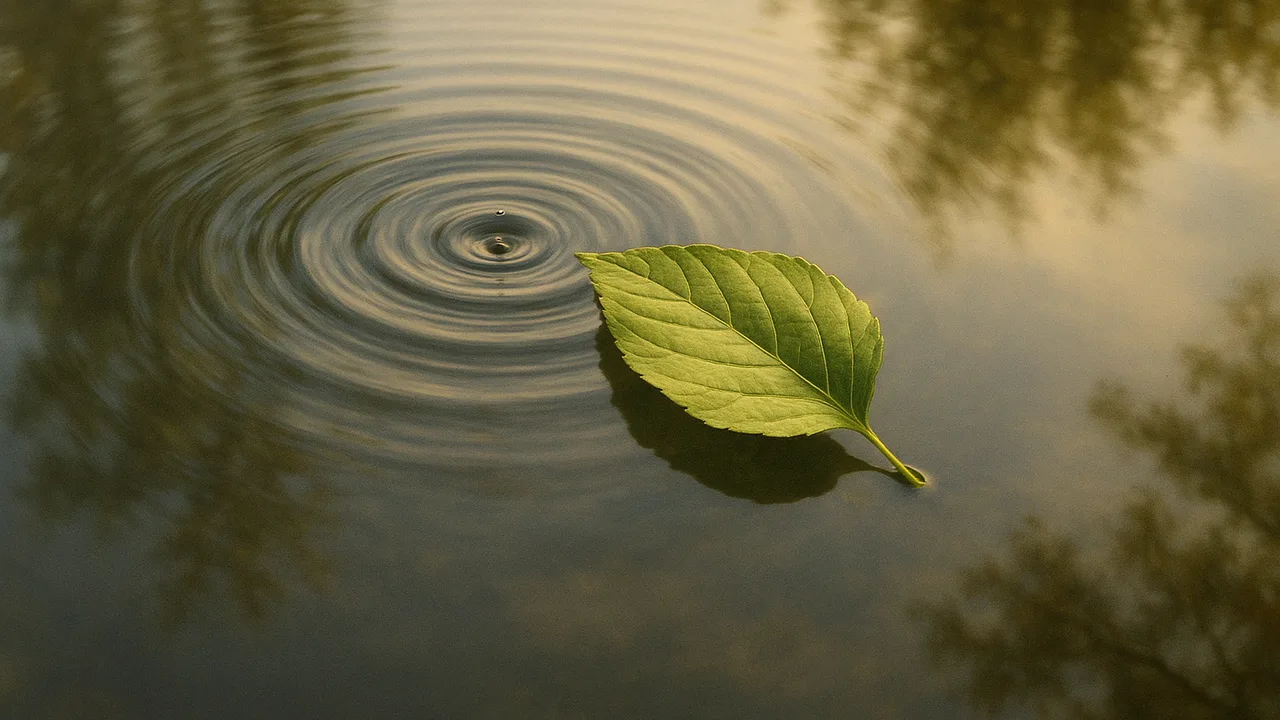
The mystery: A leaf floating on a pond bobs up and down as ripples pass, but the ripples do not carry it away. Out on the lake at night, a lighthouse flashes the same pattern over and over.
Questions we will figure out together in this unit:
- Why does the leaf bob up and down instead of floating away?
- What makes one wave bigger than another wave?
- How do we see things that do not make their own light?
- How do sailors know which lighthouse they are looking at?
- Can a light pattern send a whole message, not just one word?
- What kind of signal works for someone who cannot hear well?
- How do phones and computers send messages so far so fast?
- How can we tell which team’s code is the best one?
describe how a wave starts and moves, and explain the field day team’s message problem in my own words.
- I can use my model to show how a wave moves and how it makes an object move as it passes.
- I can explain how a wave starts, like by shaking a rope or disturbing water.
- I can show the repeating pattern that happens when a wave travels.
Phase 1: Spark
Warm-Up ~5 min
Junior engineers, we have a mystery. Picture a calm pond. A leaf floats near the edge. A friend drops a pebble in the middle. Rings of ripples spread out toward the leaf. What will the leaf do when the ripples reach it? Make your guess below before you read on.
The ripples reach the floating leaf. What happens to it?
Instruction ~10 min
Meet our client. Every spring, our school has a field day. The field gets loud and crowded. Whistles blow. Kids cheer. The organizers have a problem. They need to send quick messages across the field, like “Start the race,” “Come to the water station,” or “Stop, we need help.” Shouting does not work over the noise. Phones are not allowed on the field.
One more need. One of the field day helpers is a classmate who cannot hear well. A whistle or a horn will not reach them. So the organizers want a signal everyone can use. Your mission: design a silent signal code. It can use light, motion, or a sound pattern with a backup that you can see.
What is a wave? A wave is a disturbance that travels and repeats. Something has to start it. A pebble starts a water wave. A shake starts a wave on a rope. A wave moves energy from one place to another. It can make things move as it passes, like the bobbing leaf.
Worked example 1: the stadium wave. At a ball game, fans stand up and sit down, one section after another. The “wave” travels all the way around the stadium. But does any fan run around the stadium? No! Each fan just goes up and down in their own seat. The pattern travels, not the people. The leaf on the pond is like one fan.
Worked example 2: the jump rope. Mei and Diego hold a long jump rope. Mei flicks her end up once. A bump runs down the rope to Diego. Diego feels a tug in his hand. Mei’s flick sent energy all the way to Diego. But the rope did not leave Mei’s hand.
Waves and messages. People have used patterns of light and sound to send messages for a very long time. A lighthouse flashes in a pattern. Sailors watch the flashes at night to know which lighthouse they see. Lighthouses stand along many lakeshores and seacoasts. The pattern is the message.
Your team roles. In this unit, you work in teams of four. The Materials Manager gets and returns supplies. The Recorder writes data in the notebook. The Tester runs each trial. The Reporter shares the team’s ideas. You will rotate roles every lesson.
Guided Exercises ~15 min
Work through these with your team. Use the arrows to move from one to the next. The Reporter reads each one aloud.
Independent Practice ~10 min
Now on your own. Think like the client. What does a great field day signal need to do?
List three things a great field day signal must do. Think about the noise, the distance, and the classmate who cannot hear well.
How confident are you that you can I can explain how a wave starts and how it makes an object move.
Closure ~5 min
Today you met our client and our mystery. Waves carry energy, and patterns can carry messages. Next lesson, we look for signals all around us and set up our teams.
Exit ticket: pick one question from our Wonder Board. Write your best guess at the answer today.
Teacher notes
Materials: a clear tub or pan of water, a leaf or bottle cap, a pebble or marble, a jump rope, towels. Optional: a short video of a lighthouse at night.
Setup: do the leaf demo live on a document camera if you can. Post the Wonder Board on chart paper so it stays up all unit. Assign the first team roles before the lesson.
Listen for: “the wave pushes the water to the shore” (the water mostly moves up and down); “waves are only in water” (rope and sound waves count too).
Support / stretch: act out the stadium wave as a class for students who need to move. Stretch: ask why a big storm wave still seems to wash things onto a beach (near shore, waves break and the water moves forward; keep this as a wonder, not a lesson).