3.02 Project Brief and Wonder Board: One Population, Two Species?
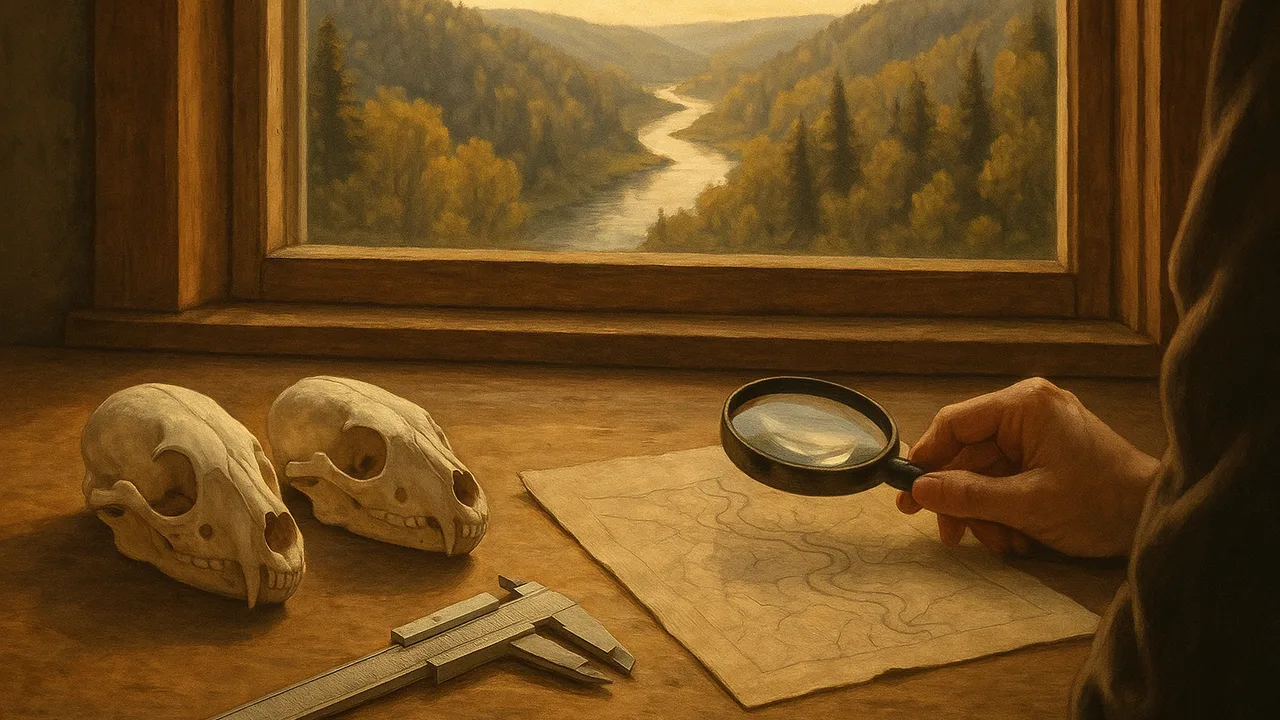
One Population, Two Species?
How can one population become two species, and how can we show people the evidence that living things share common ancestors?
The mystery: In a ring species of salamanders around a large valley, populations change gradually in color and pattern around the ring, and where the two ends of the ring meet they live side by side but rarely interbreed.
Questions we will figure out together in this unit:
- Why are the salamanders blotched in one forest and plain in another?
- How long does it take for one population to become two species?
- Do the newt-like salamanders really fool predators?
- How do scientists know whales came from land animals?
- Can we see natural selection happening today?
- Why do bacteria become resistant to antibiotics so quickly?
- If all life shares ancestors, why is DNA so different between species?
- Could climate change split or wipe out a population like this?
explain the museum’s request, our driving question and need-to-knows, and identify the environmental factors and additional evidence needed to evaluate claims about how species arise.
- I can describe additional evidence, such as data on population sizes, species diversity, and environmental conditions over time, that would help evaluate claims about species changes.
- I can identify environmental factors that influence whether individuals in a species can survive and reproduce.
- I can communicate scientific information about common ancestry and biological evolution using at least two different formats, such as oral, graphical, textual, or mathematical.
- I can cite the origin of scientific information I use to support my explanations about common ancestry and biological evolution.
Phase 1: Spark
Warm-Up ~5 min
Do Now. Read the letter below from a regional natural history museum. Underline what the museum wants, and circle what it is worried about.
“We are building a new gallery on evolution around the salamanders of the valley ring. Our visitor surveys show that many adults think animals change because they need to, and few can name any evidence for common ancestry. We need a small team of student designers to propose an exhibit station that is accurate, uses real lines of evidence, works for visitors of all ages, and fits a 3 m by 3 m floor space.”
Which request is the museum actually making?
Instruction ~10 min
Meet the client. The exhibits and education team of a regional natural history museum includes a curator of amphibians, an exhibit designer, an accessibility coordinator and a school-programs educator. They want visitors to leave able to explain how populations change and split, and why scientists are confident that living things share common ancestors.
Driving question. How can one population become two species, and how can we show visitors the evidence?
The product. Each team designs one exhibit station: a labeled model or map, an interactive element (a game, a sorting task or a simulation), and text panels. You prototype it, test it on visitors (your classmates and invited guests), revise it, and present it to the museum team in the Prove It phase, along with a written explanation of the ring.
Environmental factors that matter. HS-LS4-5 asks what evidence would help evaluate claims that changing conditions lead to new species, more of a species, or extinction. For the ring, the factors include temperature and moisture (which set where salamanders can live), the background color of the forest floor (which affects camouflage), predators (which may avoid toxic-looking prey) and distance (which limits how far individuals move).
Worked example 1: what additional evidence would help? Claim: the dry valley floor separated the two sides of the ring. Evidence that would help evaluate it: maps of temperature and rainfall showing the valley floor is too dry; survey records showing no salamanders on the valley floor; and genetic data showing little gene flow across the valley compared with along each side. Each piece tests a different part of the claim.
Worked example 2: two formats for one idea. HS-LS4-1 asks you to communicate in at least two formats. The same idea, “differences add up around the ring,” can be shown as a map with colored dots for patterns (graphical), a sentence on a panel (textual), and a short spoken guide script (oral). Exhibits work best when the formats repeat the same idea in different ways, and every panel names its source.
Need-to-knows and teams. We list what we must learn to answer the museum, and we form teams of four with rotating roles: Evidence Lead (checks every claim has a source), Modeler (maps, graphs, simulations), Exhibit Designer (layout, materials, accessibility) and Communicator (panel text and contact with the museum). Roles rotate each phase.
Guided Exercises ~15 min
Discuss with your team, then answer.
Independent Practice ~10 min
Team charter and Wonder Board.
Write your team charter: names and first roles, how you will make decisions, and how you will check that every exhibit claim has a source.
Add three questions to the class Wonder Board: one about how traits change, one about evidence for common ancestry, and one about what visitors misunderstand.
Closure ~5 min
Our project is launched. Next: the investigation lab, where we become the predators and watch a trait change over generations.
Exit ticket: state one claim about how species arise, identify the evidence the ring gives for it, and name one more piece of evidence that would make the claim stronger.
Teacher notes
Materials: the museum letter (printed), team role cards, the Wonder Board from 3.01, sticky notes.
Setup: the museum is fictional and generic. If a local museum, nature center or zoo educator can join by video for the pitch in 3.09, invite them now.
Listen for: students who treat a pattern as proof of a cause; students who want to “prove” rather than “show evidence for”.
Support / stretch: give a need-to-know sorter (know / need to know / nice to know). Stretch: survey five adults with one question about evolution and tally the misconceptions you hear (anonymously).