2.06 Tipping Points: A CER on Stability and Regime Shifts, Then Ideate
evaluate the argument that an ecosystem’s resilience depends on how much conditions change, using evidence from all three ecosystems, and brainstorm solutions for my team’s ecosystem.
- I can use additional evidence to assess how valid and reliable the given evidence is for supporting the argument that ecosystem resiliency depends on the degree of change in the environment.
- I can assess whether the reasoning logically connects the degree of change to ecosystem stability, and whether it helps explain how modest disturbances maintain consistent numbers and types of organisms.
- I can assess whether the reasoning helps explain how extreme changes can disrupt resources and habitats, and may result in a new ecosystem.
Phase 3: Make Sense
Warm-Up ~5 min
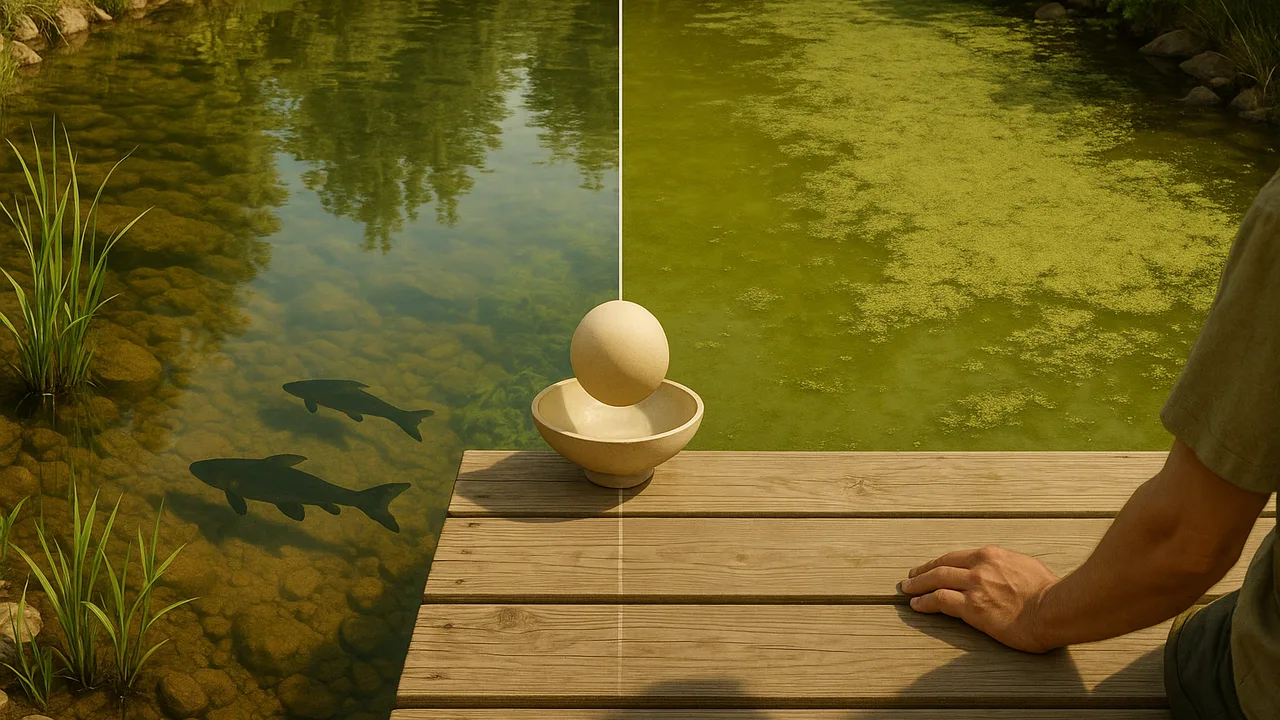
Do Now. A ball rests in a shallow bowl. A small push and it rolls back. A big push and it rolls over the rim into a second bowl, where it stays. Which of our three ecosystems is like the ball that rolled into the second bowl, and why?
In the ball-and-bowl model, what does the rim between the two bowls represent?
Instruction ~10 min
The argument to evaluate. Ecosystem resilience depends on the degree of change: modest disturbances are absorbed, and the numbers and types of organisms stay roughly consistent; extreme changes disrupt resources and habitat and can produce a new ecosystem. HS-LS2-6 asks you to judge whether the evidence for this is valid and reliable, and whether the reasoning connects the degree of change to stability.
Evidence from our unit.
| Ecosystem | Modest change | Extreme change | Threshold idea |
|---|---|---|---|
| Kelp coast | A warm summer: kelp thins, recovers | Predator loss + multi-year heat wave: urchin barren persists | Urchin density above which kelp cannot regrow |
| Salt lake / estuary | Salinity 35 → 50 ppt: hatching 82% → 60% (illustrative) | Salinity 35 → 80 ppt: hatching 18%; food web collapses | Edge of the tolerance range |
| Fire forest | Low fire in open forest: understory clears, big trees survive | Crown fire in dense forest: big trees die, shrubland may replace forest | Fuel density near about 59% in the model |
Worked example 1: a CER. Claim: the kelp coast shifted to a new stable state because the change was extreme, not modest. Evidence: sunflower sea stars fell by more than 90% across much of their range, a multi-year heat wave stressed kelp, and barrens persisted after the water cooled. Reasoning: one stress alone might have been absorbed, but losing the keystone predator while food was scarce pushed urchin numbers past the threshold; the barren then held itself in place because starving urchins graze every new sporeling.
Worked example 2: judging the evidence. The brine shrimp data are valid for hatching but are one lab’s evidence about one life stage; the fire model shows a clear threshold but leaves out wind and slope. Both support the argument; neither proves it alone. Combining several independent lines of evidence, from a field case, a lab and a model, makes the argument more reliable.
From stability to solutions. If an ecosystem has crossed a threshold, a solution may need to push it back past the threshold before it can hold itself there. If it has not, a solution may only need to reduce the stress. Either way, a good solution should improve overall environmental stability, not just treat one symptom.
Ideate. Brainstorm at least eight solutions for your team’s ecosystem. Rules: no judging yet, build on others’ ideas, include at least one “wild” idea, and tag each with the human impact it reduces.
Guided Exercises ~15 min
Evaluate the argument with your team.
Independent Practice ~10 min
CER and Ideate.
Write a CER evaluating the argument that resilience depends on the degree of change. Use evidence from at least two ecosystems, judge how valid and reliable that evidence is, and explain whether the reasoning connects the degree of change to stability. Predict what your simulation suggests would happen to biodiversity with and without a fuel break or urchin removal.
Ideate: list at least eight solutions for your ecosystem. Tag each with the human impact it reduces and whether it pushes the system back past a threshold or only reduces stress.
Closure ~5 min
We know what keeps ecosystems stable and what tips them. Next: the Build phase, where we compare solutions and build a simulation.
Exit ticket: which Wonder Board question can you now answer? Write the question and your answer in two sentences.
How confident are you that you can evaluate claims about how ecosystems respond to modest and extreme change?
Teacher notes
Materials: the evidence table (projected), a marble and two bowls for the demo, chart paper and sticky notes for Ideate.
Listen for: “any change destroys an ecosystem”; treating one experiment as proof; brainstorms that only list one kind of solution.
Support / stretch: give a CER frame with a slot for “how good is this evidence?” Stretch: sketch a graph with two stable states (kelp cover against urchin density) and mark the threshold.