4.02 Project Brief and Wonder Board: Heat Without Flame
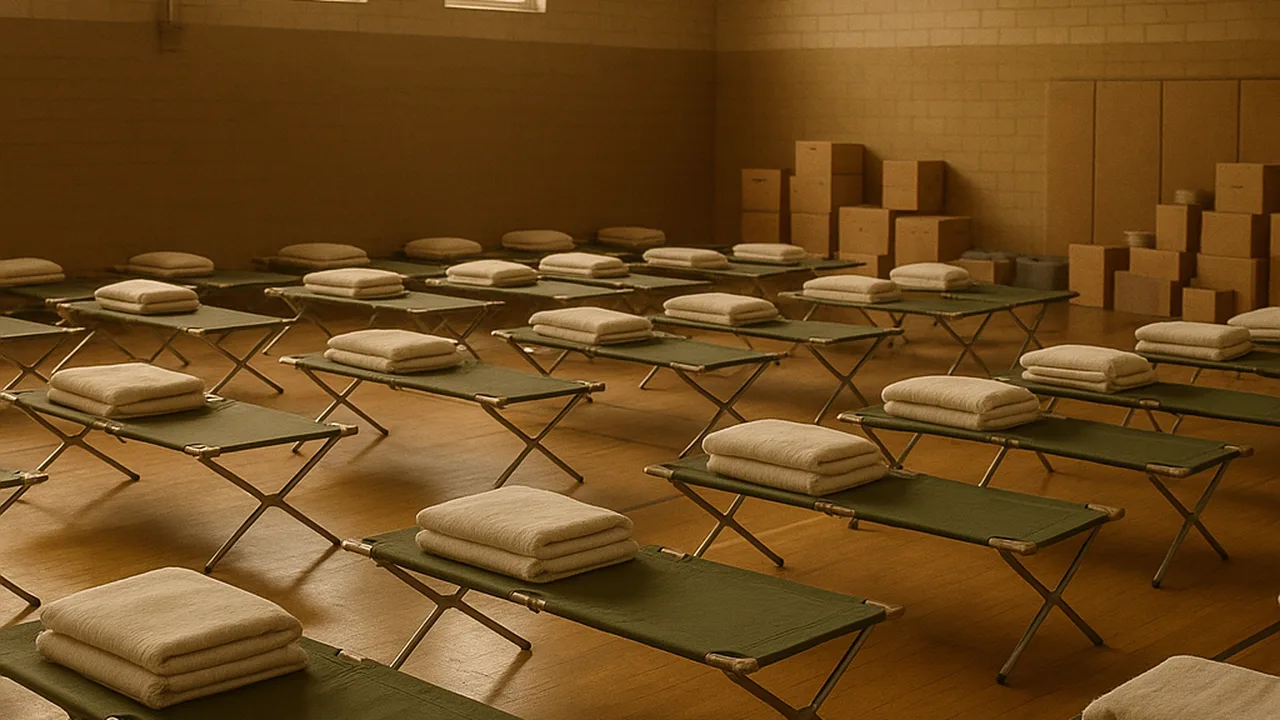
Heat Without Flame: A Design Brief for a Shelter Relief Kit
Where does the energy in a hand warmer or a cold pack come from, and which flameless reaction should a disaster-relief nonprofit pack to warm meals and hands in an emergency shelter: hot enough, for long enough, safely and at low cost?
The mystery: Tear open a disposable hand warmer and within minutes it is almost too warm to hold, and it stays warm for hours. Squeeze an instant cold pack until the inner pouch bursts, and seconds later it is cold enough to numb a sprained ankle. Neither has a battery, a flame or a plug.
Questions we will figure out together in this unit:
- Where is the energy in a hand warmer stored before you open it?
- Why do some substances get hot when they dissolve and others get cold?
- How much energy does it take to heat a 250 g meal to 60 °C?
- Why does a reusable warmer turn solid when you click the disc?
- Why does salt make a hand warmer heat faster?
- Can a heater get hot enough to burn someone?
- Do any of these reactions give off gases that are unsafe indoors?
- Which option costs the least per use?
explain the relief nonprofit’s request, turn it into measurable criteria and constraints, describe the components and boundary of a heating system, and turn our questions into need-to-knows.
- I can identify and describe the boundaries of a system and explain how the reference level for potential energy is set to zero.
- I can quantify and express the initial energies of each component in a system using algebraic descriptions, including thermal, kinetic, and potential energies.
- I can describe and quantify energy flows into or out of a system using algebraic expressions, and I can calculate the total final energy of the system’s components.
- I can explain that when two objects at different temperatures are combined in a closed system, thermal energy transfers between them until their energy is more evenly distributed, as described by the second law of thermodynamics.
Phase 1: Spark
Warm-Up ~5 min
Do Now. A winter storm has knocked out power across a town for three days. Two hundred people are sleeping in a school gym. List three things those people need that involve warmth, and one reason an open flame is a bad idea indoors.
Why might a shelter want a flameless way to heat food?
Instruction ~10 min
Meet the client. A disaster-relief nonprofit runs emergency shelters in schools and community halls after storms, floods and long power outages. Its volunteers often have no working kitchen and no electricity for the first days. The nonprofit’s supply director has written to our class with two requests for its shelter relief kit:
- A flameless self-heating meal pouch: a heater pad that warms a sealed 250 g meal from room temperature to at least 60 °C within about 15 minutes, with no flame and no electricity.
- A reusable hand warmer for people waiting outside or sleeping in a cold building: warm but never hot enough to burn, lasting as long as possible, and able to be reset.
The director wants a design brief: which reaction to use for each, why, an energy model that shows the choice will work, and test data.
Driving question. Where does the energy in a hand warmer or a cold pack come from, and which flameless reaction should the nonprofit pack to warm meals and hands: hot enough, for long enough, safely and at low cost?
The candidate reactions. (1) Iron oxidation: iron powder reacting with oxygen, sped up by salt and water (disposable hand warmers). (2) Dissolving calcium chloride or magnesium sulfate in water (some hot packs). (3) Crystallizing supersaturated sodium acetate: click a metal disc and the liquid turns to warm crystals (reusable warmers). (4) Magnesium and iron with salt water: magnesium reacts with water, with iron and salt speeding it up (flameless ration heaters). Part of your job is to find the right match between reaction and job.
Worked example 1: criteria and constraints. Jalen turned the letter into a table. Criteria (what makes a design better): meal reaches 60 °C; time to temperature under 15 min; warmer stays above 40 °C for as long as possible. Constraints (limits that must be met): no flame; no burns; no toxic or flammable products released indoors; low cost per use; light enough to ship by the pallet. He noted that “safe” must be made measurable, for example “surface stays below 50 °C.”
Worked example 2: drawing the system. Ana drew the meal pouch as a system with four components: the heater chemicals, the salt water that starts the reaction, the sealed meal, and the outer sleeve. She drew the boundary around the sleeve and listed the energy flows across it: energy lost to the air and to the table, and hydrogen gas escaping from a vent. Inside, energy moves from the heater chemicals to the meal. This is the start of the energy model you build in 4.07.
Breaking the problem down. Our sub-problems: (a) explain where each reaction’s energy comes from; (b) measure how much energy each releases per gram; (c) model how hot the meal gets and how fast; (d) test a hand-warmer prototype; (e) weigh safety and cost. Teams of four rotate weekly: Lead Chemist, Data Analyst, Lab Manager and Communicator.
Guided Exercises ~15 min
Use the client letter and your criteria table.
Independent Practice ~10 min
Start your Energy Notebook and the team charter.
In 3–4 sentences, restate the nonprofit's two requests and list at least three criteria and three constraints, each one measurable.
Draw the reusable hand warmer as a system. Label its components, its boundary and every energy flow you expect across that boundary.
Closure ~5 min
We have a client, a driving question and a system diagram. Next phase, we measure the energy of reactions in the lab.
Exit ticket: a warm hand warmer is left on a cold bench. Predict what happens to the temperatures of the warmer and the bench over an hour, and say which way energy flows and when it stops.
Teacher notes
Materials: the client letter (generic, on letterhead you design for a fictional relief nonprofit), a criteria-and-constraints template, role cards, chart paper for the Wonder Board, and one each of a disposable warmer, a reusable sodium acetate warmer and a cold pack to pass around.
Setup: keep the Wonder Board posted all unit; 4.06 and 4.09 return to it. The nonprofit is fictional; keep prices and product brands out of the letter.
Listen for: “safe” and “cheap” with no number attached; the boundary drawn around the reaction only, with the meal forgotten.
Support / stretch: give a sentence frame for need-to-knows (“We need to know ___ so that we can ___”). Stretch: rank the five sub-problems in the order they must be solved and justify the order.