4.01 Hot Packs and Cold Packs: System and Surroundings
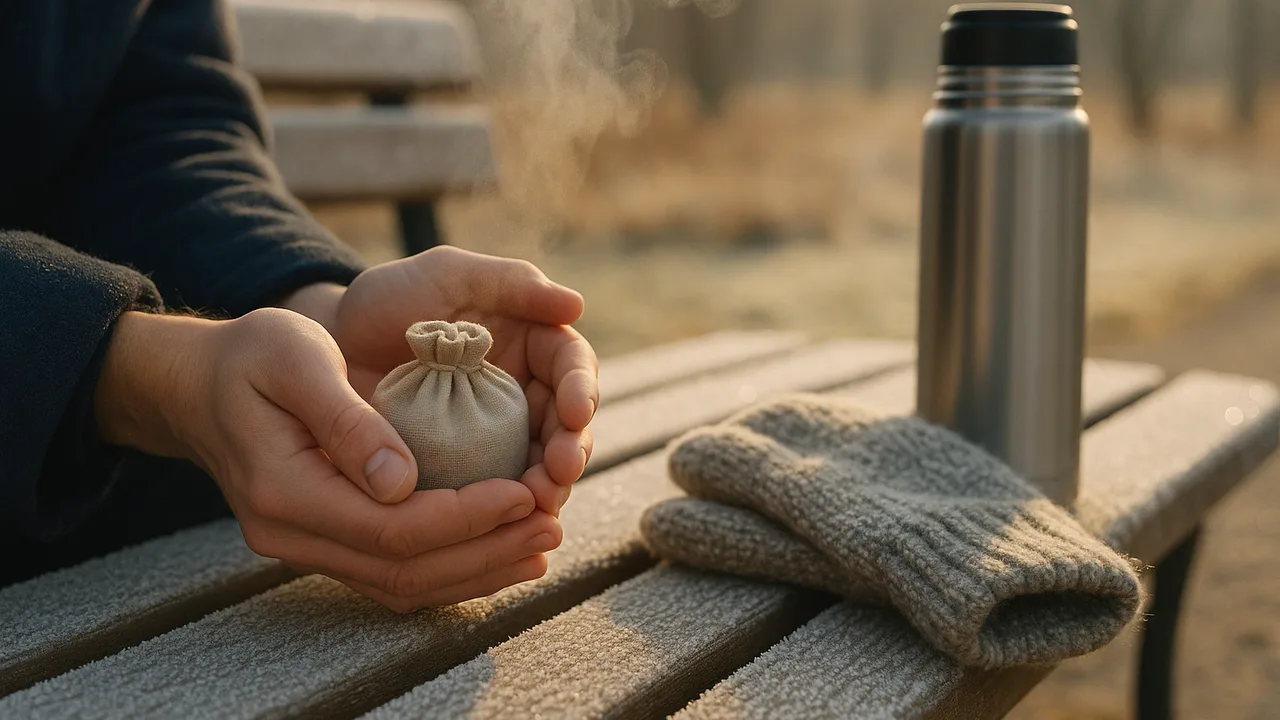
Heat Without Flame: A Design Brief for a Shelter Relief Kit
Where does the energy in a hand warmer or a cold pack come from, and which flameless reaction should a disaster-relief nonprofit pack to warm meals and hands in an emergency shelter: hot enough, for long enough, safely and at low cost?
The mystery: Tear open a disposable hand warmer and within minutes it is almost too warm to hold, and it stays warm for hours. Squeeze an instant cold pack until the inner pouch bursts, and seconds later it is cold enough to numb a sprained ankle. Neither has a battery, a flame or a plug.
identify the system and the surroundings in a hot pack and a cold pack, classify each change as exothermic or endothermic from temperature evidence, and ask testable questions about where the energy comes from.
- I can develop a model of a chemical reaction that identifies the system, the surroundings, and the bonds that are broken and formed.
- I can use my model to describe how energy is transferred between the system and surroundings, and how potential energy changes to kinetic energy (or vice versa) during molecular collisions.
- I can use my model to compare the relative potential energies of the reactants and products in a chemical reaction.
- I can explain that when two objects at different temperatures are combined in a closed system, thermal energy transfers between them until their energy is more evenly distributed, as described by the second law of thermodynamics.
Phase 1: Spark
Warm-Up ~5 min
Do Now. Your teacher hands your table an opened hand warmer and an activated cold pack. Hold each for ten seconds. Write what you feel, and finish this sentence for each pack: “Energy is moving from ___ to ___.”
A cold pack feels cold in your hand. Which statement best describes what is happening?
Instruction ~10 min
The phenomenon. A disposable hand warmer is a small cloth pouch of dark powder sealed in a plastic wrapper. Open the wrapper and within a few minutes the pouch warms to well above body temperature, and it stays warm for hours. An instant cold pack is a plastic bag of water with a sealed inner pouch of solid. Squeeze it, the inner pouch bursts, and the pack turns cold within seconds. Neither has a battery or a flame. This unit asks where that energy comes from and goes, and how to use it on purpose.
System and surroundings. To track energy, chemists draw a boundary. The system is the part we are studying: for a reaction, the reacting substances and their products. Everything else, including the container, the water the reaction happens in, the air and your hand, is the surroundings. A thermometer never measures the system directly; it measures the surroundings it touches. That idea will matter in every lab this unit.
Exothermic and endothermic. In an exothermic change, the system releases energy to the surroundings, so the surroundings warm up. In an endothermic change, the system absorbs energy from the surroundings, so the surroundings cool down. Chemists write the energy the system gains as q: q is negative when the system releases energy and positive when it absorbs energy. Heat is energy transferred because of a temperature difference; temperature measures the average kinetic energy of the particles.
Worked example 1: the hand warmer. Marisol drew the hand warmer as a box. Inside the boundary: iron powder, oxygen from the air and the iron oxide that forms. Outside: the pouch fabric, the air and her hand. Her hand warms, so energy flows from the system to the surroundings. The change is exothermic and q for the system is negative. She added an arrow labeled “energy out” crossing the boundary.
Energy is conserved. Energy is not created when the warmer heats up or destroyed when the cold pack chills. Whatever energy the system loses, the surroundings gain, and the reverse: qsystem = −qsurroundings. Before the reaction, the energy is stored as chemical potential energy in the arrangement of atoms and the bonds between them. During the reaction that stored energy changes, and the difference shows up as thermal energy of the surroundings.
Worked example 2: the cold pack. Dev set a thermometer in an activated cold pack. In a sample reading it fell from 22 °C to 5 °C. The system is the solid dissolving (ammonium nitrate in many packs; urea in others). The surroundings are the water in the bag, the plastic and Dev’s hand. The water got colder, so energy flowed from the surroundings into the system: the dissolving is endothermic and q for the system is positive. His hand, part of the surroundings, lost thermal energy too.
Two directions, one rule. Notice a pattern in both packs: thermal energy always moved from the warmer object to the cooler one, from the warm pouch to Dev’s hand and from Dev’s hand to the cold pack, never the other way on its own. That one-way flow is the second law of thermodynamics, and you will measure it directly in 4.04.
Asking good questions. “Why is the warmer hot?” is a start. “Does the warmer heat faster with more salt?” is testable in a lab. “How much energy does 1 gram of iron release?” can be answered from published data. “Why do some reactions release energy and others absorb it?” needs a model of bonds. Sort your questions into these three bins today.
Reading. OpenStax Chemistry 2e, chapter 5.1 (energy basics: system, surroundings, exothermic and endothermic processes), CC BY 4.0.
Guided Exercises ~15 min
Work with a partner. For each pack, draw a box for the system before you answer.
Independent Practice ~10 min
Classify six everyday changes in your Energy Notebook. For each, name the system and the surroundings, say which warms or cools, and classify the change.
| Change | System | Surroundings | Surroundings warm or cool? | Exo or endo? |
|---|---|---|---|---|
| Hand warmer heating up | ||||
| Cold pack chilling | ||||
| Ice melting in a drink | ||||
| A candle burning (teacher demo only) | ||||
| Sweat evaporating from skin | ||||
| Concrete setting and warming |
Pick the ice and the sweat rows. Explain why each one feels cooling even though no chemical reaction happens.
Closure ~5 min
We can name a system, its surroundings and the direction energy flows. Next class you meet the client who needs this science in a hurry.
Exit ticket: draw the cold pack as a system inside a box. Add an arrow for energy, label its direction, and write one sentence that uses the words system, surroundings and endothermic.
Teacher notes
Materials: one disposable air-activated hand warmer and one instant cold pack per table (opened and activated by the teacher), a digital thermometer for the demo, chart paper for the question bins.
Listen for: “cold flows into my hand”; “the thermometer measures the reaction”; heat and temperature used as the same word; “the energy comes from nowhere.”
Support / stretch: give a box-and-arrow template with “system” printed inside. Stretch: explain why an isolated system (nothing crosses the boundary) is an idealization no lab ever reaches, and name the closest thing in the room.