3.07 Competing Liner Designs: Criteria, Constraints and a Decision Matrix
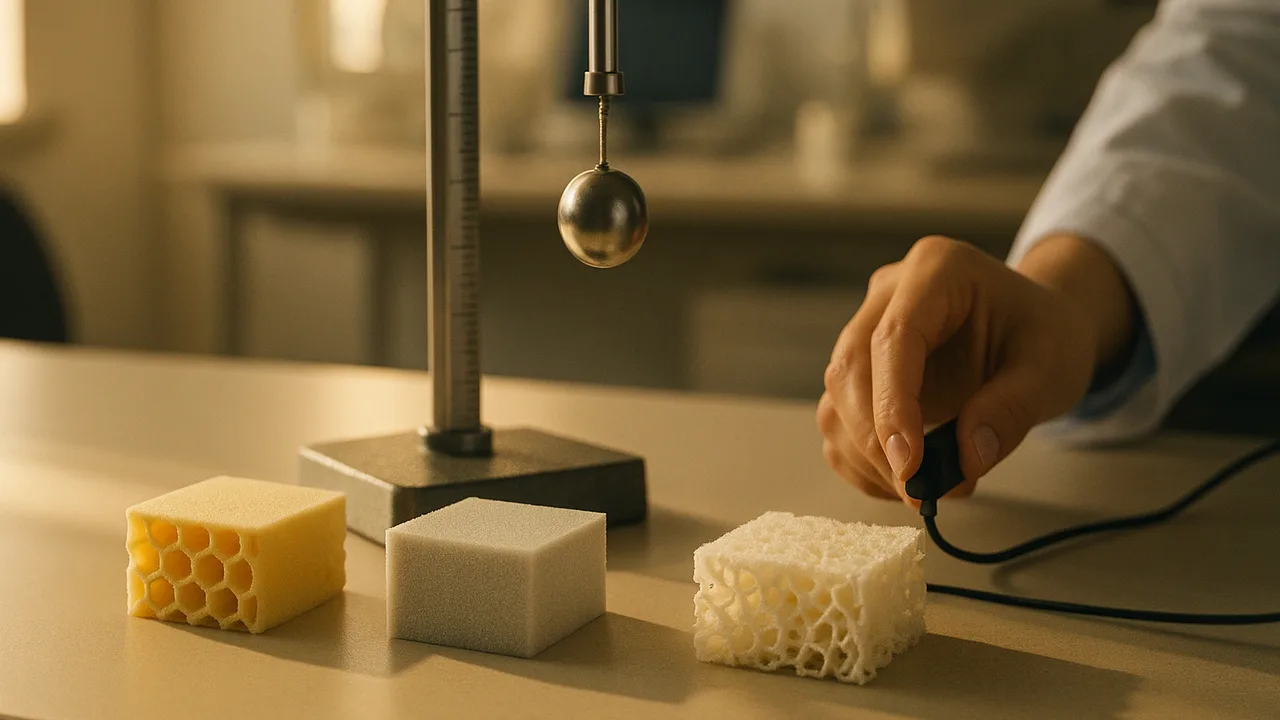
set quantitative criteria and constraints for the scale-model liner, prototype and test three concepts, justify each material and structure, and choose one with a weighted decision matrix.
- I can describe and, when possible, quantify the criteria and constraints for my device, including tradeoffs such as cost, mass, maximum force, and safety requirements.
- I can describe and justify my choices of materials and the structure of my device based on scientific reasoning.
- I can design a device that reduces the force on an object during a collision by increasing the time over which the collision occurs.
- I can explain how changing the collision time affects the force on an object, using the relationship FΔt = mΔv.
- I can apply the idea of increasing collision time to make sure my device reduces the net force on the object.
Phase 4: Build
Warm-Up ~5 min
Do Now. Sort these into criteria (what success means) and constraints (limits): the egg survives a 1.0 m drop; average force under 20 N; at most 100 g of added material; no side longer than 25 cm; only low-cost everyday materials; the liner can be reused.
A 60 g egg dropped from 1.0 m must feel an average force of at most 20 N. At least how far must the liner crush?
Instruction ~10 min
Engineers, today you prototype. Your prototype is a scale-model liner: a crush zone that protects a 60 g raw-egg “head” dropped from 1.0 m. One equation links every design choice to the force: at a steady crush force, the work the liner does equals the energy the egg brings, so Favg = mgh/d = mv2/(2d). It is the same result as Δp/Δt with Δt = 2d/v.
Step 1: criteria and constraints, quantified. Criteria: the egg survives; Favg ≤ 20 N (so d ≥ 2.9 cm); the liner is as light as possible, because riders refuse bulky helmets; reusable if possible. Constraints: added mass ≤ 100 g; no side over 25 cm; low-cost everyday materials; no parachutes (the test is about the impact, not the fall); goggles at every test. Trade-offs to watch: crush distance against mass and bulk; protection against reusability; cost against waste.
Step 2: justify the material from its structure. A concept is only as good as its reasoning. For each concept, name the structure that crushes, why it crushes at a steady force rather than springing back or shattering, and how far it can crush before it bottoms out (assume about 80% of its thickness, illustrative).
Worked example 1: three concepts on the test bench.
| Concept (illustrative bench data) | Material and structure | Thickness | Crush at 1.0 m drop | Average force F = mgh/d | Added mass | Meets 20 N criterion? |
|---|---|---|---|---|---|---|
| A. Card honeycomb | Corrugated card cut into hexagon tubes, standing on end | 5.0 cm | 3.5 cm | 0.588/0.035 = 16.8 N | 45 g | Yes, 3.2 N spare |
| B. Bubble pillow | Two layers of bubble wrap (trapped air cells) | 3.0 cm | 2.5 cm | 0.588/0.025 = 23.5 N | 20 g | No; egg also rebounds |
| C. Straw array | 30 drinking straws standing upright in a card frame | 8.0 cm | 5.0 cm | 0.588/0.050 = 11.8 N | 60 g | Yes, 8.2 N spare |
Concept B fails twice: it crushes too little, and trapped air acts like a spring, so the egg rebounds, which makes Δp larger. A and C crush steadily because their tube walls buckle one fold at a time, the same idea as EPS cells.
Worked example 2: the decision matrix. Diego’s team weights the criteria to match the client’s priorities and scores each concept from 1 (poor) to 5 (excellent):
| Criterion (weight) | A. Honeycomb | B. Bubble pillow | C. Straw array |
|---|---|---|---|
| Protection (×3) | 4 → 12 | 2 → 6 | 5 → 15 |
| Low mass and bulk (×2) | 4 → 8 | 5 → 10 | 3 → 6 |
| Cost (×2) | 5 → 10 | 4 → 8 | 4 → 8 |
| Reusability (×1) | 1 → 1 | 4 → 4 | 1 → 1 |
| Total | 31 | 28 | 30 |
A wins, but by one point. A one-point margin is a warning: a small change in a weight could flip it. The team carries both A and C into the critique and stress test next lesson.
Communicating the material. Your design record shows each material in at least two formats: a labeled sketch of its structure (tubes, cells or chains) and a number (crush distance and force).
Guided Exercises ~15 min
Build and test your three concepts first, then answer.
Independent Practice ~10 min
Finish your team’s design record.
Write your team's criteria (at least three, two of them quantitative) and constraints (at least three). Record your three concepts with test data and a materials justification for each, your decision matrix with a reason for each weight, and which concept is version 1.
Closure ~5 min
Version 1 is chosen. Next lesson, a gallery critique and a harder test.
Exit ticket: name one criterion and one constraint for the liner, and explain with F = mgh/d why a thicker liner meets the force criterion more easily but may break a constraint.
Teacher notes
Materials: per team: sealed raw eggs and practice eggs, corrugated card, straws, bubble wrap, paper cups, tape, a kitchen scale, a meter stick, a phone, goggles, a tray and paper towels.
Setup: the concept data are illustrative. Fix the drop height at 1.0 m from a marked line, dropped by a student standing on the floor.
Listen for: justifications with no structure; weights changed after seeing totals; matrices that rank designs which fail a must-pass criterion.
Support / stretch: provide a matrix template with weights already filled in. Stretch: find the crush distance at which the bubble pillow would just meet the 20 N criterion if it did not rebound.