plan, make, revise and present a two- or three-dimensional work, using a contemporary practice, that investigates an aspect of present-day life in my community for a specific audience, and review my investigation at its third checkpoint.
Instruction
The record’s assignment for its creative-expression unit is to create a two- or three-dimensional work of art that addresses a social issue. Standard VA:Cr1A.III asks you to visualize and hypothesize to generate plans for art that can affect social change. This task brings together what the unit studied: strategy, symbol, audience and persuasion. It is also an artistic investigation of present-day life: you study something happening in your community now and shape the work with a practice that artists use today.
Choosing an issue. Choose an issue that matters to your community and that you can research: litter in a creek or river, flooding, safe drinking water from private wells, food access in rural areas, loneliness among older neighbors, mental-health stigma, disability access in public places, animal shelters, screen time, the loss of a local landmark. You decide how personal to make it. You never need to disclose your own or your family’s experiences to meet the task.
Keep it nonpartisan. Your work may ask viewers to notice something, question it or do something about it (pick up litter, check on a neighbor, test a well). It does not promote or attack a candidate, a political party, a ballot measure or a particular bill, and it treats people who disagree with respect. If an issue is mostly an argument between parties, choose a different one or focus on a part of it that people across viewpoints share.
Research. Use at least two reliable sources: a government agency, a university, a reputable news organization, a community organization with a clear record. For example, Missouri Stream Team describes itself as a partnership of citizens concerned about the state’s 110,000 miles of streams, with projects such as litter control and streamside tree planting. Any fact your work states or implies must be accurate. Record your sources and the date you read them.
Strategy. Decide which strategy fits: descriptive (bear witness, as Daumier did), political in the broad sense of taking a clear position on public life (as Goya did, or as Bingham did in showing who was left out of a vote), narrative (tell one person’s or one place’s story) or symbolic (compress the issue into a symbol). Decide the audience: your family, neighbors, a community group, visitors to your online exhibition. Decide what you want them to think, feel or do.
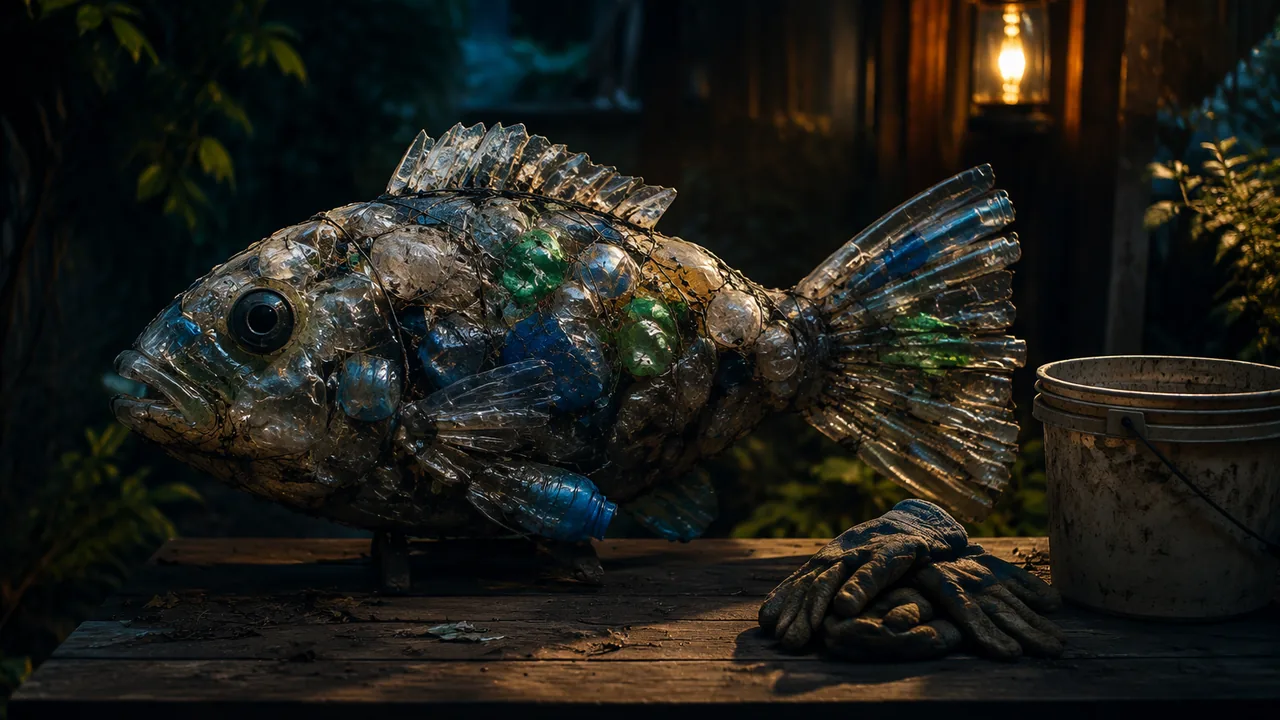
A contemporary practice. Standard VA:Cr2C.III asks you to show how visual and material culture shapes people’s lives; a contemporary practice lets the material make that point. Choose one and name it in your plan: assemblage (a work built from found and recycled objects), installation (a work arranged in a space so the viewer is inside it), an altered object, a poster or sticker series, or wearable sculpture. The Missouri-born artist Nick Cave shows how far such a practice can go. The Saint Louis Art Museum, which presented Currents 109: Nick Cave (2014-15), notes that he was born in Fulton in 1959 and studied at the Kansas City Art Institute, and describes his Soundsuits as wearable sculptures made from materials such as raffia, hair, buttons, sequins and objects he finds in flea markets and thrift stores, works that join fantasy with “keen social consciousness” and in which accumulated discarded toys and kitsch suggest a critique of consumerism. Study his work by description and through the museum’s page; do not copy it. Your materials should be clean, safe and your own: packaging from your household, printed public notices, maps, a bag of litter you collected with gloves and an adult present.
Avoiding the obvious. Works about social issues often fail by using the first image everyone thinks of: a crying earth, a broken heart, a red X. Push past it. Make twenty quick thumbnails and discard the first ten.
The audience test. Show your work in progress, without explanation, to a family member or another adult. Ask: What is this about? What do you feel? What would you do? If no one is available, put the work away for a day, then photograph it, look at the photo as a stranger would, and write your answers before rereading your plan. Compare the answers with your plan. If the message is misread, revise the image, not the caption.
The statement. In 250-350 words: the issue and your sources; your strategy, your contemporary practice and your audience; one artist from the unit whose approach you learned from; and what you hope viewers think or do.
Sharing. Show the finished work at home, in your online exhibition, or to a community group only with a parent’s permission. Do not post images of other people or of private property without permission.
Investigation checkpoint 3. Gather six works or studies from your sustained investigation, with your log. In a recorded self-conference of about five minutes, using the checkpoint sheet in the brief, plan its final form for the portfolio: which works will be shown, which reworked, and what the sequence will be. Your social-issue work may belong to the investigation if you designed it that way.
📖 Read for this lesson
The reading opens over the lesson; close it to come back to exactly where you were. The checks below draw on it.
Formative check
Work through these before moving on. They are not graded — they tell you whether the standard below has landed yet.
In the audience test, a family member thinks your work about water access is about recycling. What should you do?
Missouri standard: VA:Cr1B.I
Name your issue, your two sources, your audience and your strategy. Which aspect of present-day life in your community does the work investigate, and which contemporary practice (assemblage, installation, altered object, poster series, wearable sculpture) will you use, and why does it suit the issue? Which artist from this unit are you learning from, and how?
How confident are you that you can plan, make and revise a work that addresses a social issue for a specific audience?
Unit 3 checkpoint
Do this before you start the task. It covers the whole unit and tells you what to review first.
Which strategy dominates Daumier’s Rue Transnonain, on April 15, 1834?
Goya’s Disasters of War were published in 1863, decades after his death, and present war itself as the disaster.
According to the Saint Louis Art Museum, whom do the women on the balcony and the African American man in The Verdict of the People stand for?
An image in which figures represent abstract ideas, such as Truth or Justice, is an .
How long is a path of five 12-inch stones with 1-inch joints?
Primer and sealer for the stepping stone may be sprayed indoors if the windows are shut.
Why are the crowd and male dancer in Lautrec’s Moulin Rouge, La Goulue dark silhouettes?
A press release calls a show “landmark” and a critic calls it uneven. What is the best conclusion?
The planned order in which a viewer reads the parts of a design is its visual .
By the course guide of 1 inch of cap height per 10 feet, what cap height does a headline need for a 30-foot viewing distance?
A poster campaign uses no more than two typefaces, with strong contrast of size or weight between headline and information.
Submit: Social-issue artwork, statement and investigation checkpoint 3
Task: Research an issue in your community, plan and make a two- or three-dimensional work with a contemporary practice that makes a specific audience see it differently, revise it after an audience test without explanation, and present it with a 250-350-word statement. Keep it nonpartisan and share it beyond your household only with a parent’s permission. Review six investigation works in a recorded self-conference.
Submission workflow
- Stage 1 — Plan. Issue, two dated sources, audience, strategy, the contemporary practice you will use, twenty thumbnails and a chosen design, checked against the Stage 1 checklist in the brief.
- Stage 2 — Tested work in progress. Audience test without explanation, with a family member or other adult, or a written self-test after a day away; record what the viewer understood, felt and would do.
- Stage 3 — Revised final. Finished work, revision note, 250-350-word statement with sources, and six investigation works with the log.
- Stage 4 — Presentation. Record a presentation of the work and statement (about three minutes) and a recorded self-conference on the investigation.
How it is scored
| Criterion | What proficient looks like |
|---|---|
| Concept and strategy (VA:Cr1A.III) | A clear, researched issue; a deliberate strategy and audience; an image that moves past the obvious. |
| Visual communication (VA:Cr2C.III) | Viewers understand the message from the work itself; materials and form support it. |
| Craftsmanship (VA:Cr2A.II) | Skilled, controlled handling of the chosen medium. |
| Revision (VA:Cr3A.III) | Specific changes after the audience test, explained. |
| Statement and context (VA:Re8A.III) | Sources cited, strategy explained, and a studied artist’s approach connected to the work. |
Portfolio Task 7 Brief: Criteria, Source Check, an Exemplar Statement and the Audience-Test Sheet
SLS original brief and constructed exemplar; works cited checked against museum and Library of Congress open-access records; Missouri Stream Team About Us page and Saint Louis Art Museum Currents 109: Nick Cave page retrieved November 10, 2026 · SLS original
Why this reading. This is the full brief for Portfolio Task 7: the assignment, four-level criteria, a source-checking sheet, a complete exemplar statement with commentary, the audience-test sheet and the recorded self-conference sheet. Everything is an SLS original. The exemplar is constructed for this course; it is not by a real student. The artists it draws on are documented in the reading “Eight Works That Speak” (Posada, Cleveland Museum of Art 2000.97; Goya, Art Institute of Chicago 1920.1384) and the posters in “How Posters Persuade” (Library of Congress items 98518428, 98516354, 98518521); the source for the creek example is Missouri Stream Team’s About Us page (mostreamteam.org, viewed November 10, 2026).
The assignment
Choose an issue that matters in your community. Research it with at least two reliable sources. Make a two- or three-dimensional work with a contemporary practice (assemblage, installation, altered object, poster series or wearable sculpture) that a specific audience can read without a caption, test it on a family member or other adult without explaining it (or run the written self-test after a day away), revise the image (not the caption), and submit: (1) research notes with sources and dates; (2) a plan with your strategy, audience, and twenty thumbnails; (3) the finished work; (4) a revision note; (5) a 250–350-word statement; (6) six works or studies from your sustained investigation with the log and a recorded self-conference. You never have to disclose personal or family experience.
Two rules
- Nonpartisan. The work may ask viewers to notice, question or act. It does not promote or attack a candidate, party, ballot measure or bill, and it treats people who disagree with respect.
- Sharing. Show the work beyond your household (online, in a community space) only with a parent’s permission. Do not include images of other people or private property without permission.
Stage 1 checklist
Issue named; two sources with dates, each run through the source check below; audience; strategy; contemporary practice named, with one sentence on why it suits the issue; twenty thumbnails with the first ten crossed out; one chosen design; the two rules above checked.
Reliable source check (use it on each source)
- Who published it? A government agency, a university, a news organization with corrections policy, or a community organization with a public record.
- When? Date it. Facts about numbers go out of date.
- What is claimed and what is the evidence? A number should come with a method or a table.
- Who benefits? An advocacy group may be accurate and still choose which facts to show; note that.
- Can a second source confirm the key fact? If not, do not rest the work on it.
Strategy choices, with the work that models each
| Strategy | What it does | Model from the unit |
|---|---|---|
| Descriptive | Shows the evidence plainly | Daumier’s print: no hero, no explanation (AIC 1953.530) |
| Political | Takes a clear position | Goya, plate 79, Truth has died (AIC 1920.1384) |
| Narrative | Tells one person’s or one place’s story | Duncanson’s storytelling landscape, where the people stay small (Cleveland 2014.12) |
| Symbolic | Compresses the issue into one form | The WPA cancer poster’s upright sword (Library of Congress 98518521) |
Criteria, four levels
| Criterion | 4 Exceeds | 3 Meets | 2 Approaching | 1 Beginning |
|---|---|---|---|---|
| Concept and strategy | Researched issue of present-day life; deliberate strategy, contemporary practice and audience; image avoids the first obvious idea and can be explained by twenty thumbnails | Clear issue, strategy and audience | Issue clear, strategy borrowed | Slogan-driven; no research |
| Visual communication | The test viewer (or your day-later self-test) states the intended message unprompted; materials and form support it | The message mostly reads | Message needs the caption | Message unclear |
| Craftsmanship | Skilled, controlled handling of the medium throughout | Mostly controlled | Uneven | Careless |
| Revision | Two or more image changes after the audience test, each explained | One or two changes | A caption change only | None |
| Statement and context | Two dated sources; strategy explained; one studied artist’s approach clearly connected to the work | Two sources; artist named | One source | No sources |
Exemplar statement (SLS original, about 300 words; constructed)
“My work is an assemblage about what the creek behind our road carries after a storm. The issue is litter in Missouri streams. My sources are Missouri Stream Team’s About Us page (viewed November 10, 2026), which says the state has 110,000 miles of flowing water and lists litter control among the projects volunteers can do, and [in a real submission, the student names and dates the second source here].
My strategy is descriptive, with a symbolic center. My practice is assemblage: every object in the work is litter I picked up along one hundred feet of our creek bank in one afternoon, wearing gloves, with my father, then washed and dried. My audience is my family and the neighbors on our road, who drive over the creek every day without looking down. I want them to walk to the bridge once and look. I learned this approach from two sources in the unit. From Daumier’s Rue Transnonain I learned that plain evidence, with no explanation, can be the argument. From the Saint Louis Art Museum’s description of Nick Cave’s Soundsuits, built from objects found in thrift stores and flea markets, I learned that gathered things can carry a comment on what we throw away.
My first ideas were a crying fish and a red X over a bottle, so I threw them out in my twenty thumbnails. The final work is a long, narrow wooden board, the width of the creek on a map at one inch to ten feet, with the litter fastened along it in the order I found it, from the road downstream. In the audience test, my mother said it was ‘about recycling’ because I had sorted the bottles by color, so I put them back in the order I found them. Then my grandfather said ‘it’s the creek.’
I hope viewers walk to the bridge and ask what the water will carry after the next rain.”
Why this is strong. It names the issue, the sources, the strategy and the audience in the first paragraph; it names studied works with what was learned from each; it shows a rejected obvious image and the process (twenty thumbnails); it names its contemporary practice and an aspect of present-day life; it reports the audience test and a change to the image rather than the caption; it stays nonpartisan; and it ends on the viewer’s action. A weak statement says “I want to raise awareness.”
Audience test sheet (a family member or other adult fills it in without explanation from the artist; or, alone, fill it in yourself from a photo of the work after a day away, before rereading your plan)
- What is this about? (one sentence)
- What do you feel looking at it?
- What would you do after seeing it?
- What part of the image made you say that? Point to it.
Reading the results. Compare all four answers with your plan. If the viewer misses the message, revise the image, not the caption: find the visual choice that pointed them elsewhere and change it. Record before and after.
Investigation checkpoint 3: recorded self-conference sheet
Lay out six works or studies and the log. Write before recording: (a) the sequence I would show, as a numbered list; (b) which works I will rework and what each needs; (c) which I would cut if I could show only eight in the portfolio; (d) what the investigation still has not tested. Then record about five minutes talking through (a) to (d) in front of the works. After the recording, write the final form of the investigation in three to five sentences.
Sources: Missouri Stream Team, About Us (mostreamteam.org); Saint Louis Art Museum, Currents 109: Nick Cave (2014-15) (slam.org); Art Institute of Chicago, Goya, Truth has died (1920.1384) (artic.edu); Library of Congress, Don’t fear cancer fight it! (item 98518521) (loc.gov)