delineate the Cherokee Constitution into its claim, its evidence and its conclusion, and explain what the order of its provisions argues.
Instruction
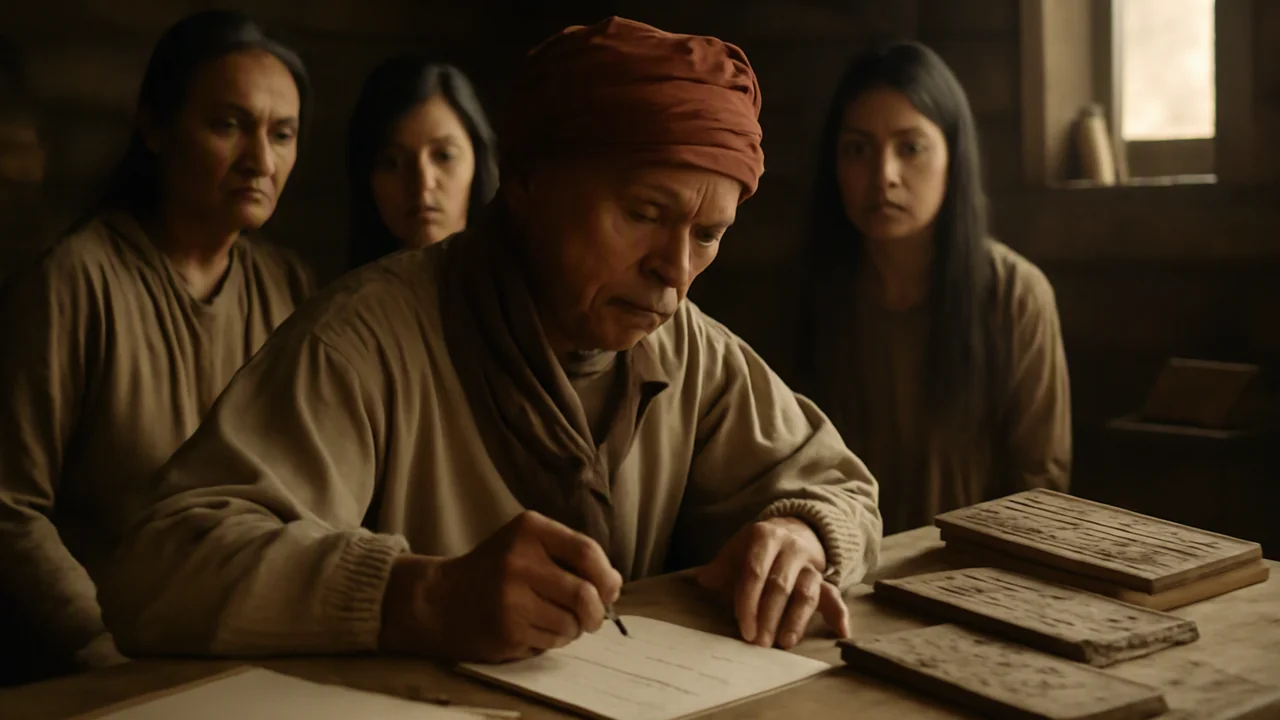
Around 1821, a Cherokee man named Sequoyah completed a writing system for the Cherokee language. He did not read or write English. He worked for roughly twelve years, was mocked and at one point tried for witchcraft, and produced a syllabary of eighty-five characters in which each character stands for a syllable rather than a sound.
A syllabary suited to the language turns out to be extraordinarily learnable. Within a few years, literacy in Cherokee was widespread — by several contemporary accounts more widespread than English literacy among the white population of the surrounding states.
What that literacy was immediately used for is the subject of this unit. Not private correspondence. Three public instruments, in five years:
- A written constitution (1827), modeled in form on the United States Constitution, declaring the Cherokee Nation a sovereign government with defined territory, a bicameral legislature, a principal chief and a judiciary.
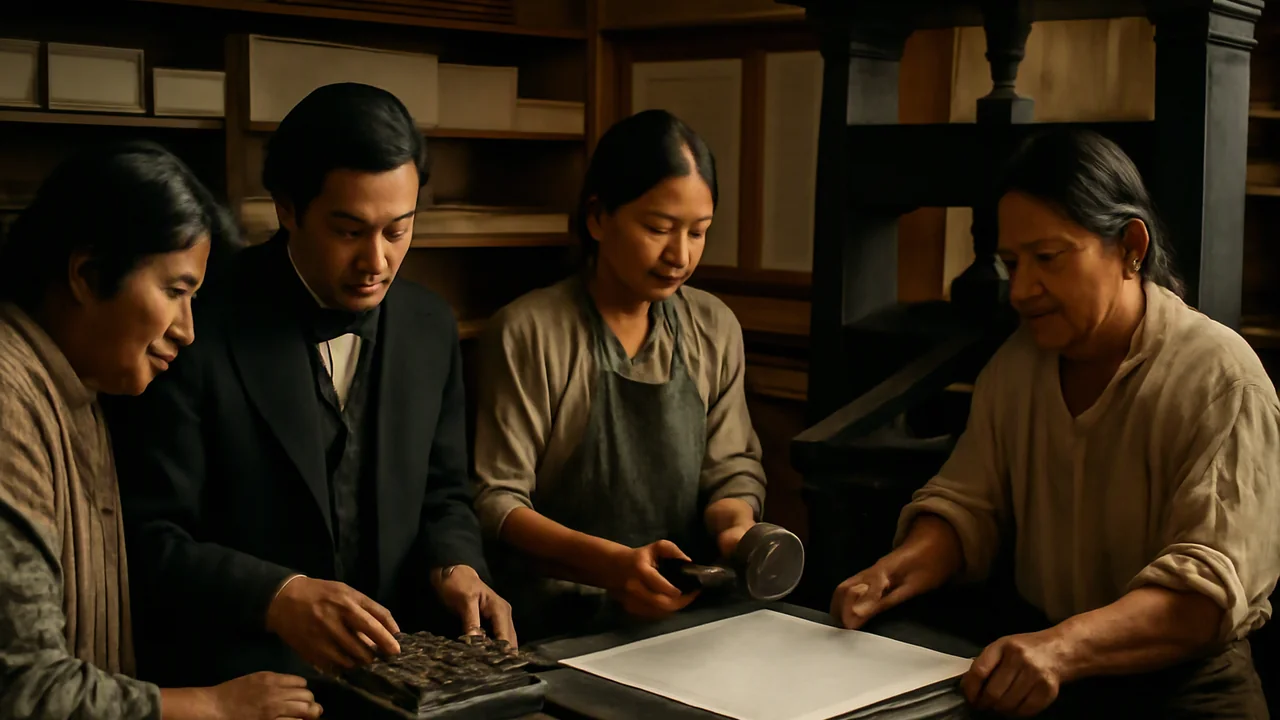
- A newspaper, the Cherokee Phoenix (1828), printed in parallel columns — Cherokee in the syllabary, English alongside — and circulated to subscribers across the United States and in Europe.
- A legal case carried to the Supreme Court of the United States.
These are not three separate achievements. They are one argument made three ways: a nation that writes its own law, prints its own newspaper and argues its own case in the highest court of another nation is demonstrating sovereignty rather than asserting it.
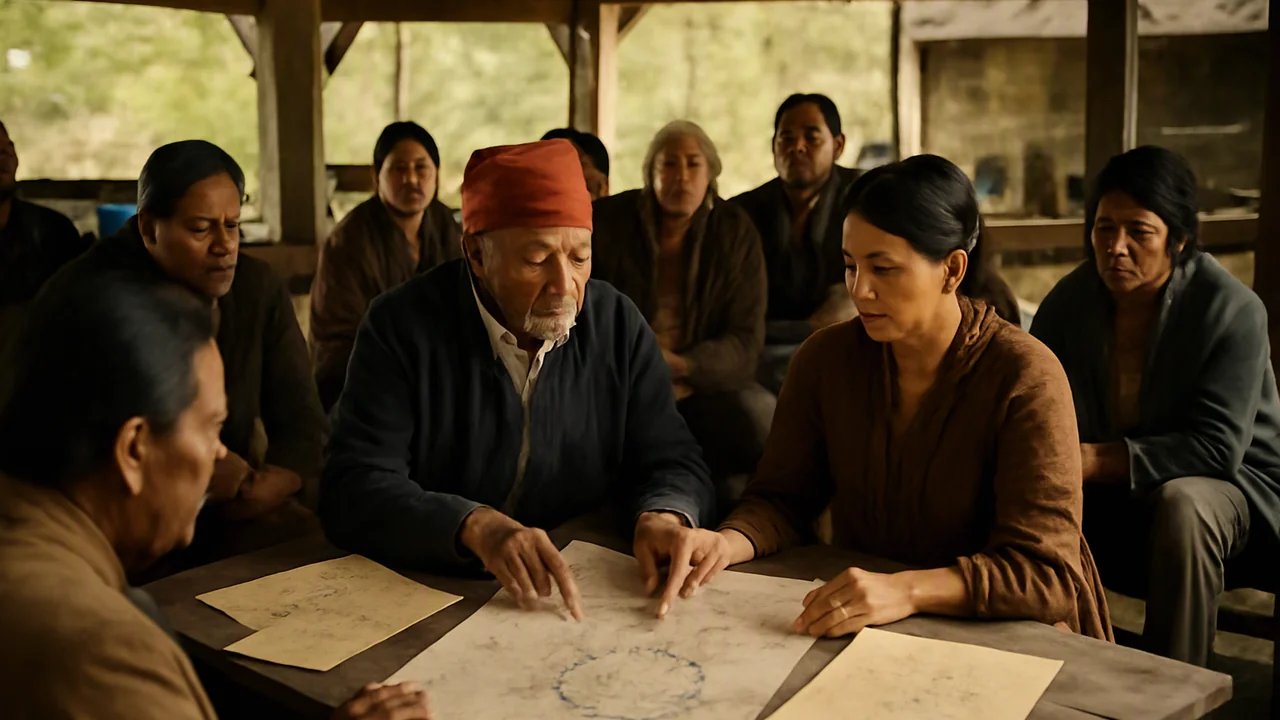
Reading the Constitution as an argument. Like the US Constitution it opens with a preamble, and like any argument the preamble states the premise. Article I then does something that a reader skimming for structure will miss: before establishing any branch of government, it defines the boundaries of the territory, and declares that those lands are the common property of the Nation and that the title is not transferable by individuals.
Ask why that comes first. A constitution that established a legislature and then described its territory would be a government with land. This one is a territory that constitutes a government — and the provision that individuals cannot sell is aimed squarely at the pressure that would, within a decade, be applied to exactly that point.
Order is argument. That is the RI.9-10.5 skill this unit is built on, and you will apply it to three documents.
One thing to hold as you read. The Cherokee Nation’s response to pressure was one nation’s response, shaped by its particular circumstances. Other nations facing the same federal policy responded differently, for reasons that were theirs. The framework this course crosswalks to states this first, and it is worth restating here: there is no single Native strategy, and reading one nation’s documents as a model for all of them would repeat the error the documents themselves were written against.
Reading: The Constitution of the Cherokee Nation, 1827: the preamble and the order of its articles
Constitution of the Cherokee Nation (New Echota, July 1827), as printed in the Cherokee Phoenix, 21 and 28 February 1828; U.S. Constitution (1787) | Text: Western Carolina University Hunter Library, Cherokee Phoenix digital collection (wcu.edu/library/DigitalCollections/CherokeePhoenix), issue 1 (21 Feb 1828), Constitution of the Cherokee Nation; Western Carolina University Hunter Library, Cherokee Phoenix digital collection (wcu.edu/library/DigitalCollections/CherokeePhoenix), issue 1 (21 Feb 1828); www.archives.gov/founding-docs/constitution-transcript [not machine-checkable: includes text only on non-scriptable hosts; checked by hand] · SLS original; quoted passages are public domain (Cherokee Constitution, 1827; U.S. Constitution, 1787)
Read the table of the articles first, then the passages. The order is part of the argument; the lesson asks you to say what it argues.
Elias Boudinot printed the Constitution of the Cherokee Nation in the first numbers of the Cherokee Phoenix (21 and 28 February 1828), after the convention at New Echota in July 1827. Below are the provisions the lesson works from, in the order the document places them. Each is labeled so you can cite it: (Cherokee Constitution, art. 1, sec. 2). Spelling and capitalization are the Phoenix’s.
The premise
 Preamble
WE THE REPRESENTATIVES of the people of the CHEROKEE NATION in Convention assembled, in order to establish justice, ensure tranquility, promote our common welfare, and secure to ourselves and our posterity the blessings of liberty, acknowledging with humility and gratitude the goodness of the sovereign Ruler of the Universe, in offering as an opportunity so favorable to the design, and imploring his aid and direction in its accomplishment, do ordain and establish this Constitution for the Government of the Cherokee Nation.
Article I: the territory
Article I, Section 1
THE BOUNDARIES of this nation, embracing the lands solemnly guarantied and reserved forever to the Cherokee Nation by the Treaties concluded with the United States, are as follows; and shall forever hereafter remain unalterably the same-to wit-
… [the boundary description, which names rivers, ridges and towns, is not reproduced here]
Article I, Section 2
The Sovereignty and Jurisdiction of this Government shall extend over the country within the boundaries above described, and the lands therein are, and shall remain the common property of the Nation; but the improvements made thereon, and in the possession of the citizens of the Nation, are the exclusive and indefeasible property of the citizens respectively who made, or may rightfully be in possession of them; Provided , That the citizens of the Nation, possessing exclusive and indefeasible right to their respective improvements, as expressed in this article, shall possess no right nor power to dispose of their improvements in any manner whatever to the United States, individual states, nor to individual citizens hereof; and that, whenever any such citizen or citizens shall remove with their effects out of the limits of this Nation, and become citizens of any other government, all their rights and privileges as citizens of this nation shall cease; Provided nevertheless, That the Legislature shall have power to re-admit by law to all the rights of citizenship any such person or persons, who may at any time desire to return to the Nation on their memorializing the General Council for such readmission. Moreover, the Legislature shall have power to adopt such laws and regulations, as its wisdom may deem expedient and proper, to prevent the citizens from monopolizing improvements with the view of speculation.
Articles II and III: how the government is built
Article II, Sections 1 and 2
The Power of this Government, shall be divided into three distinct departments; the Legislative, the Executive, and the Judicial. Sec. 2. No person or persons, belonging to one of these Departments, shall exercise any of the powers properly belonging to either of the others, except in the cases hereinafter expressly directed or permitted.
Article III, Section 1
THE LEGISLATIVE POWER shall be vested in two distinct branches; a Committee, and a Council; each to have a negative on the other, and both to be styled, the General Council of the Cherokee Nation; and the style of their acts and laws shall be, ‘RESOLVED by the Committee and Council in General Council convened.
Article III, Section 4
No person shall be eligible to a seat on the General Council, but a free Cherokee Male citizen, who shall have attained to the age of twenty-five years. The descendants of Cherokee men by all free women, except the African race, whose parents may be or have been living together as man and wife, according to the customs and laws of this Nation, shall be entitled to all the rights and privileges of this Nation, as well as the posterity of Cherokee women by all free men. No person who is of negro or mulatto parentage, either by the father or mother side, shall be eligible to hold any office of profit, honor or trust, under this Government.
Article III, Sections 22 and 23
All acknowledged Treaties shall be the Supreme Law of the land. Sec. 23. The General Council shall have the sole power of deciding on the construction of all Treaty stipulations.
Section 4 of Article III restricts who could hold office and who could vote, and it does so on the basis of race: it excludes people of African descent. Any honest analysis of this document has to hold that fact beside its assertion of sovereignty. The provision reflects the racial hierarchy of slaveholding states around the Cherokee Nation, and it was a choice made by the convention. Say so in your own writing; do not omit it.
The order of the articles (from the printed Constitution)
| Article | What it establishes |
|---|---|
| I | Boundaries and sovereignty; lands held in common; improvements held by citizens |
| II | Three departments of government, kept separate |
| III | The legislative power: a Committee and a Council |
| IV | The executive: a Principal Chief chosen by the General Council |
| V | The judicial power: a Supreme Court, and Circuit and Inferior Courts |
Article IV, Section 1
The Supreme Executive power of this Nation shall be vested in a Principal Chief, who shall be chosen by the General Council, and shall hold his office four years; to be elected as follows.- The General Council, by a joint vote, shall, at their second annual session, after the rising of this Convention, and at every fourth annual session thereafter, on the second day after the Houses shall be organized, and competent to proceed to business, elect a Principal Chief.
Article V, Section 1
The Judicial Powers shall be vested in the Supreme Court, and such Circuit and Inferior Courts, as the General Council may, from time to time, ordain and establish.
Set it beside the United States Constitution (1787)
Preamble of the United States Constitution
We the People of the United States, in Order to form a more perfect Union, establish Justice, insure domestic Tranquility, provide for the common defence, promote the general Welfare, and secure the Blessings of Liberty to ourselves and our Posterity, do ordain and establish this Constitution for the United States of America.
The United States Constitution begins Article I with the legislative power, Article II with the executive, and Article III with the judiciary. The Cherokee Constitution opens with the boundaries of the territory instead. The Cherokee preamble also borrows the language of the United States preamble (“establish justice,” “tranquility,” “secure … the blessings of liberty … posterity”), which is a choice about audience: it is written to be recognized by the officials and readers of the United States as a government like their own.
A worked answer to the delineation task (SLS original)
- Premise, quoted: the people of the Cherokee Nation, in Convention, “do ordain and establish this Constitution for the Government of the Cherokee Nation.” The source of authority is the Nation’s people.
- Order: territory and sovereignty (Art. I); separation of powers (Art. II); the legislature (Art. III); executive (Art. IV); judiciary (Art. V).
- What the order argues: the territory comes first, so the Nation is a government because it holds a defined land, and the clause that citizens cannot sell their improvements to the United States, a state or an individual (Art. I, sec. 2) closes the one route by which land could leave.
- A departure from the United States model: the United States Constitution begins with Congress; this one begins with land.
Sources
Constitution of the Cherokee Nation, formed at New Echota, July 1827; transcription of its printing in the Cherokee Phoenix, vol. 1, no. 1 (21 February 1828) and no. 2 (28 February 1828), Western Carolina University Hunter Library digital collections (wcu.edu/library/DigitalCollections/CherokeePhoenix), retrieved 2026-09-26. Constitution of the United States, National Archives transcript (archives.gov/founding-docs/constitution-transcript), retrieved 2026-09-26. Framing and worked answer SLS original.
This nation’s governing documents
The Cherokee Nation wrote a constitution in 1827. Every nation has its own governing instruments — a constitution, a code, a council structure, a set of agreements — with their own history, their own date, and their own relationship to federal law.
This slot is your own nation’s governing instruments: what they are, when they were adopted, what they establish, and how they have changed. The nation’s own current text is the only authoritative version, and your school may bring it to you. Until then, take one of the three routes below — all three earn full credit. Read every document as the law of a government that is operating this year, not as a historical artifact, and always prefer the version the nation itself publishes over any copy sitting in an outside database. Where a nation publishes its constitution only to its own citizens, that is its decision to make and your answer is to record it.
Your route — choose one. All three earn full credit.
- Route A — The nation’s own government pages — From the Tribal Leaders Directory (bia.gov/service/tribal-leaders-directory), open the nation’s own website and go to its government section: the constitution or governing document, the council or business committee, the courts, the election office, the code or statutes. Answer six questions in 250 words, citing the nation’s own pages: what is the governing document called, when was it adopted, how are leaders chosen and for how long, how are laws made, what courts exist, and how is the document amended. If a document is posted only to citizens, or not posted at all, write that down as your finding and name the pages you checked — do not go looking for a copy the nation did not choose to publish.
- Route B — The Tribal Law Gateway (National Indian Law Library) — The National Indian Law Library of the Native American Rights Fund runs the Tribal Law Gateway at narf.org/nill/triballaw/, a free public collection of tribal constitutions and codes built with the permission of the nations that appear in it. Browse to your nation, and use the Gateway’s guides How to Find Tribal Constitutions and How to Find Tribal Codes & Ordinances. Two cautions the library states itself, and you should repeat in your write-up: a nation granting permission to share its law does not thereby consent to any other use of it, and an outside copy may be out of date. If the Gateway’s copy and the nation’s own copy differ, the nation’s copy governs — say which one you used and why.
- Route C — The 1934 vote, and the shape it left behind — Many tribal constitutions date from the Indian Reorganization Act of 1934, and many nations voted it down. Open Ten Years of Tribal Government Under I.R.A. by Theodore H. Haas, Chief Counsel of the United States Indian Service, published January 1947 and free at thorpe.law.ou.edu/IRA/IRAbook/index.html. Find Table A, which lists the tribes, bands and communities that voted to accept or reject the terms of the Act, with the date of each election and the votes cast. Locate your own nation if it is there. Then write 250 words on what the table can tell you — a date, a margin, a decision — and what it cannot: it records a vote held under a federal statute on a federal timetable, in a model constitution drafted in Washington, and it says nothing about how the nation governed itself before 1934 or how it governs itself now.
For the school — how this slot gets filled
Who holds this: The tribal council or governing body, the tribe’s legal department, or the tribal college’s Native American studies program.
- Most tribal constitutions and codes are public documents, but ask the council or legal department rather than assuming — some provisions are not published and some are published only to citizens.
- Ask specifically whether the document may be quoted in a course that other schools can see, which is a separate permission from classroom use.
- Ask for the current version. Tribal constitutions are amended, and an outdated copy circulating in a school is worse than none.
- Invite someone from the council or legal department to teach the comparison if they are willing; if not, teach it from the document with the attribution agreed.
Formative check
Work through these before moving on. They are not graded — they tell you, and your teacher, whether the standard below has landed yet.
The Cherokee Constitution defines its territory in Article I, before it establishes any branch of government. Before reading on — why that order?
Article I Section 2 states the lands “shall remain the common property of the Nation” while improvements belong to individual citizens. What does that distinction do?
Sequoyah’s syllabary matters to this unit mainly as an impressive personal achievement.
A writing system in which each character stands for a syllable is a ; the opening statement of a constitution, which states the premise the document rests on, is its .
Delineate the preamble and Article I: (1) the premise, quoted; (2) what Article I establishes, in the order it establishes it; (3) one sentence on what that order argues. Then answer: this constitution takes the form of the United States Constitution. Name one place it departs from that form, and say what the departure accomplishes.
How confident are you that you can read a founding document as an argument whose order of provisions is part of the claim?