4.02 Project Brief and Wonder Board: A Town Between Forest and Fault
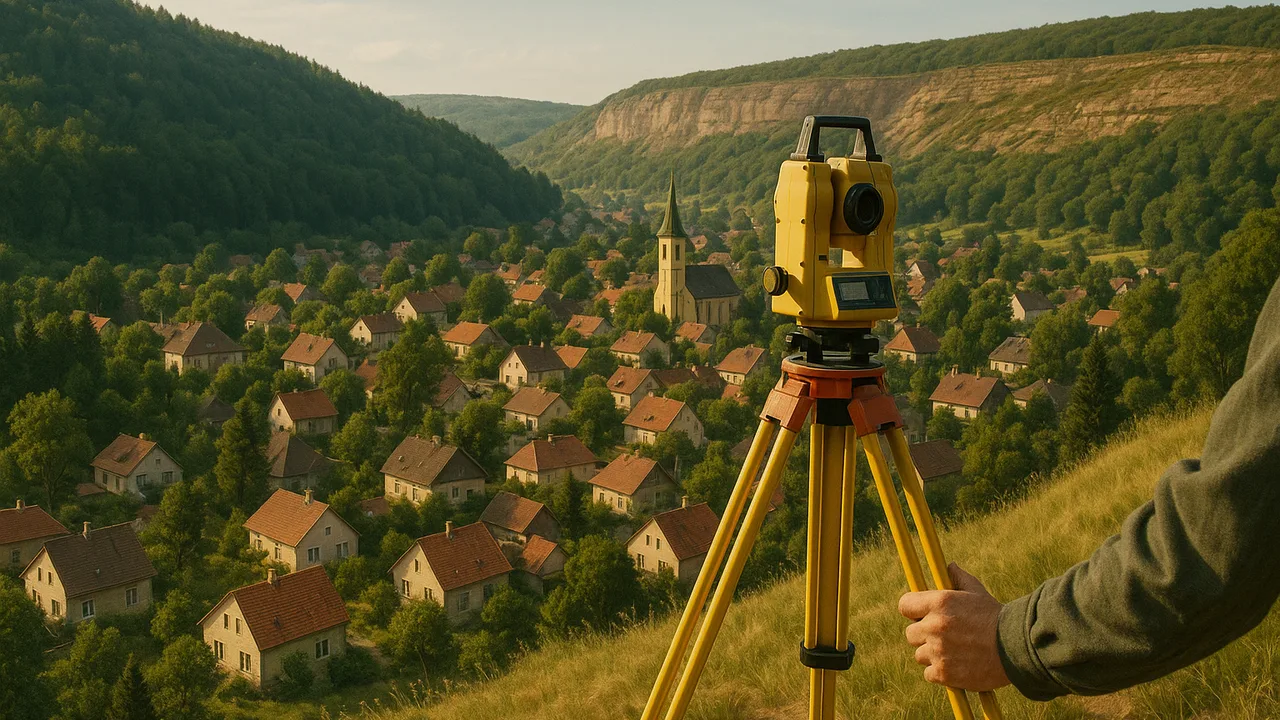
Engineering Resilience for One Foothill Town
How can a community use Earth science and engineering to reduce its risk from hazards and use its resources wisely?
The mystery: A foothill town sits between a forested slope where wind-driven wildfires have destroyed neighboring towns, an active fault under an old downtown, and a paved creek that turns brown with every storm, while it decides where its energy and minerals should come from.
Questions we will figure out together in this unit:
- Why do some fires race through towns while others stop at the forest edge?
- Why do some buildings fall in an earthquake while the next one stands?
- Where does rain go when it falls on a parking lot?
- Can a surface be strong enough to drive on and still let water through?
- Which energy source is cheapest once every cost is counted?
- Is a mineral project worth what it costs the land and the town?
- How can we test a solution without waiting for a disaster?
- Who pays for safety, and who is left out?
explain the town council’s problem, the driving question and our need-to-knows, define criteria and constraints for a hazard solution, and choose reliable sources of evidence.
- I can generate a list of at least three realistic criteria and two constraints, such as cost, safety, reliability, and aesthetics, that define what makes a solution acceptable for a complex real-world problem.
- I can assign priorities to each criterion and constraint so I can logically and systematically evaluate different solution proposals.
- I can analyze and describe the strengths and weaknesses of each solution based on my criteria and constraints, including social, cultural, and environmental impacts, and explain possible barriers to putting each solution into action.
- I can use a variety of valid and reliable sources, such as scientific theories, simulations, peer-reviewed studies, or my own investigations, to gather evidence for my explanation.
Phase 1: Spark
Warm-Up ~5 min
Do Now. The town council has $2 million and four problems: wildfire, earthquake shaking, a polluted creek and an energy decision. Which would you fund first? Write your choice and the one fact you would want before deciding.
Which kind of source is MOST reliable for the town's earthquake hazard?
Instruction ~10 min
Our client. The town council of a foothill town (a made-up town drawn from many real ones). Its east side climbs into forested hills, and homes now reach well into the trees. A mapped active fault runs a few kilometers to the west, and the old downtown is full of brick storefronts and apartments built over open ground-floor garages. The creek through town was paved over decades ago, so its first autumn storm sends muddy, oily water downstream. The council must also choose a new source of electricity and answer a company that wants to develop a mineral deposit in the hills. It has asked our class for engineering proposals it can act on.
The brief. The council’s letter asks each team to choose ONE hazard or impact (wildfire at the forest edge, shaking in the old downtown, polluted runoff in the creek, or the energy and mineral decision), explain its Earth-science causes, and propose a solution that is tested, priced and fair. The council wants to see at least two competing solutions compared before it spends any money.
Driving question. How can a community use Earth science and engineering to reduce its risk from hazards and use its resources wisely?
Criteria and constraints. Engineers define a problem before solving it. Criteria are what a good solution must achieve, stated so they can be measured. Constraints are limits it must respect. Worked example 1. For downtown shaking, Priya’s team wrote: criteria — C1 no building collapse in the design earthquake; C2 cut expected annual loss by at least half; C3 finished within five years. Constraints — K1 cost under $2 million in public money; K2 ground-floor shops and parking stay open; K3 renters are not pushed out by higher rents. Then they ranked them: a life-safety criterion comes first.
Worked example 2: judging sources. Evidence for a proposal can come from scientific theories, simulations, peer-reviewed studies and your own investigations. Ask four questions of each source: Who made it, and do they have the expertise? What data is it based on? Has anyone else checked it? Does it have a reason to exaggerate? A hazard map from a geological survey passes all four; a brochure selling homes near the forest may fail the last.
Teams and roles. Teams of four rotate roles each week: Hazard Scientist (keeps the Earth science accurate), Test Engineer (labs, simulations and data), Community Advocate (keeps every resident’s needs in view, including renters and older residents) and Project Manager (timeline, sources and the final submission).
Guided Exercises ~15 min
Use the client’s brief. Discuss each card before you answer.
Independent Practice ~10 min
Choose a focus and build the need-to-know board.
Choose your team's hazard or impact. Write at least three ranked criteria and two constraints, including one about cost and one about fairness or culture.
Write eight need-to-knows (science, data, design and people) and name one reliable source you could use to answer each science or data question.
Closure ~5 min
Client, brief, criteria and teams are set. Next phase we test the first solution with our own hands: a pavement that drinks the rain.
Exit ticket: restate the town's problem for your chosen hazard in one sentence that names who is affected and what the solution must achieve.
Teacher notes
Materials: printed client brief and town map (made-up town), role cards, criteria-and-constraints organizer, sticky notes for the Wonder Board.
Setup: the town is generic. If a local emergency manager, city engineer or utility planner can visit or send a short video, use it, but keep the project town generic. Balance team choices so all four hazards are covered.
Listen for: criteria that cannot be measured; constraints left out entirely; treating any website as a source.
Support / stretch: give criterion stems (“reduce ___ from ___ to ___ by ___”). Stretch: assign weights to your criteria and justify the heaviest one.