2.10 Unit 2 Checkpoint: Reaction Rates and Equilibrium
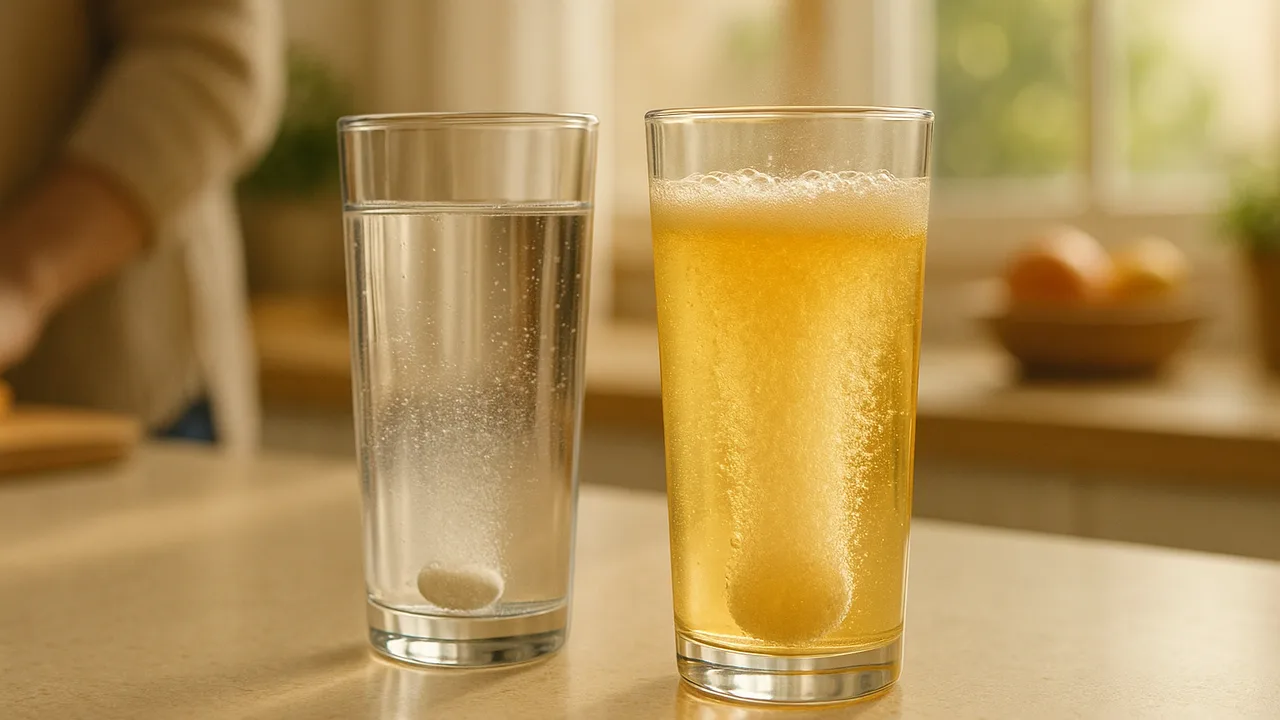
show what I learned about collision theory, rate data, dynamic equilibrium, Le Chatelier’s principle and refining a chemical system by answering data questions, a scenario set and short constructed responses.
- I can analyze data to identify that increasing the concentration of reactants increases the reaction rate, and decreasing concentration decreases the rate.
- I can analyze data to identify that increasing the temperature usually increases the reaction rate, and decreasing temperature decreases the rate.
- I can identify and describe how changing one component of a chemical reaction system (such as adding a reactant or removing a product) will affect the amounts of substances at equilibrium, using evidence and Le Chatelier’s Principle.
- I can explain, at the molecular level, how a change in concentration of one component causes the rates of the forward and backward reactions to change until equilibrium is re-established.
- I can describe a system at equilibrium by explaining that both the forward and backward reactions are happening at the same rate, so the system appears stable overall.
- I can systematically evaluate different ways to refine a chemical system by comparing how well each option meets the criteria for increasing product and fits within the given constraints.
Phase 5: Prove It
Warm-Up ~5 min
Do Now. Back to the foam and the window bottle: in three sentences, explain why one was fast, why the other was slow, and why the slow one was not zero.
At equilibrium, the forward and reverse reactions have both stopped.
Instruction ~10 min
Chemists, this is the unit checkpoint. Part A is multiple choice with data. Part B is a scenario set built on one table. Part C is short constructed responses, each scored 0–3.
How a 0–3 answer is scored. 3: correct claim, accurate evidence and reasoning that names molecules, collisions, energy or forward and reverse rates. 2: correct claim and evidence, incomplete reasoning. 1: correct claim with little support, or partly correct. 0: incorrect or blank.
Worked example: from 1 point to 3. “Why does adding SCN− darken the red solution?” “It shifts right” earns 1. “Le Chatelier: adding a reactant shifts the equilibrium toward FeSCN2+” earns 2. Adding “more SCN− ions mean more collisions with Fe3+, so the forward rate exceeds the reverse rate until enough FeSCN2+ builds up for the rates to match again” earns 3.
Scenario data (sample class data). A team measured initial rates of oxygen release from 10.0 mL of peroxide with 2.0 mL of 0.5 M KI, three trials each. Use for Part B.
| Trial | Peroxide | Temperature | Catalyst | Initial rate (mL/s), trials |
|---|---|---|---|---|
| A | 3.0% | 20 °C | KI | 0.50, 0.49, 0.51 |
| B | 1.5% | 20 °C | KI | 0.25, 0.26, 0.24 |
| C | 3.0% | 30 °C | KI | 1.0, 0.98, 1.0 |
| D | 3.0% | 20 °C | none | < 0.01 (all three) |
Guided Exercises ~15 min
Parts A and B: answer on your own.
Independent Practice ~10 min
Part C: constructed responses, each scored 0–3.
13. Explain at the molecular level why a bottle of peroxide in a sunny, warm window loses strength faster than one in a cool, dark closet. Use collisions, kinetic energy, activation energy and light. (0–3)
14. Sample data: oxygen at 30 s with yeast, 3.0% peroxide: 24, 25, 23 mL; 1.5%: 12, 19, 11 mL. Evaluate the precision of each set, identify the likely problem trial and one cause, and state what the data show about concentration and rate. (0–3)
15. A team's storage-check vial is already blue at 22 °C. Using Le Chatelier's principle and Q, propose one change to its composition that would make it pink at room temperature, and explain the shift with forward and reverse rates. (0–3)
16. A supplier wants more ester from acetic acid + ethanol ⇌ ester + water (K ≈ 4). Propose two ways to increase the yield, rank them against two criteria (for example cost and safety), and state the trade-off of your top choice. (0–3)
Closure ~5 min
Finished, chemists. Next unit: acids, bases and the carbon chemistry of the ocean, where equilibrium comes back in a big way.
Exit ticket: which item was hardest, and which idea do you want to practice before Unit 3?
How confident are you that you can I can explain reaction rates at the molecular level and use Le Chatelier's principle to refine a chemical system.
Teacher notes
Materials: printed checkpoint with the scenario table, scoring guide for items 13–16.
Setup: about 40 minutes, then review. Item tags: 1, 7 and 13 → HS-PS1-5:1a, 3a; 2–6 and 14 → HS-PS1-5:2a; 8, 9, 11 and 15 → HS-PS1-6:1a; 10 and 12 → HS-PS1-6:1a, 4a; 16 → HS-PS1-6:2a, 3a, 4a; 15 → 4a.
Listen for: “equilibrium means equal amounts”; “the catalyst adds energy”; concentration said to change collision energy.
Support / stretch: read items aloud on request. Stretch: for item 16, calculate the yield with 2 mol ethanol per mole of acid (3x2 − 12x + 8 = 0, so x ≈ 0.85, an 85% yield).