4.06 Genes, Chance and Garden: A Variation CER
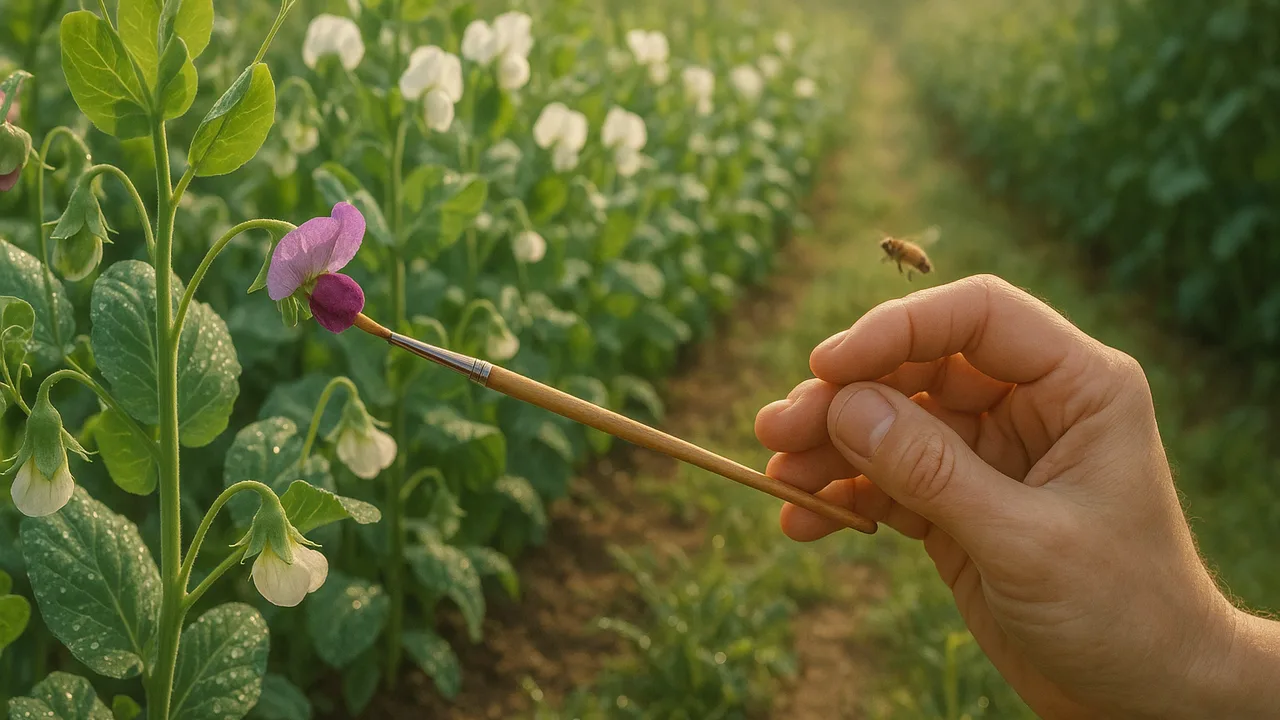
write and defend a claim-evidence-reasoning explanation of the variation the seed library sees, judging whether my evidence is enough and whether it shows cause or only correlation, then brainstorm trial and guide ideas.
- I can use scientific knowledge, research, data, simulations, or other sources as evidence to support my claim about genetic variation.
- I can use reasoning and valid evidence to explain that new combinations of DNA can come from meiosis, errors during replication, and mutations caused by environmental factors.
- I can identify the types and number of sources I use as evidence.
- I can evaluate whether my evidence is sufficient to support my claim and to tell the difference between cause and correlation.
- I can judge the validity and reliability of the evidence I use.
Phase 3: Make Sense
Warm-Up ~5 min
Do Now. A volunteer says, “The big beans came from the sunny bed, so sun gives beans better genes.” Write what is right and what is wrong about that sentence.
Growing a bean plant in full sun changes the alleles in the seeds it passes on.
Instruction ~10 min
Pulling the unit together. The seed library sees two kinds of variation. Some is heritable: yellow kernels on purple ears, speckled and plain beans from one pod. Some is environmental: big beans from the sunny bed. Today you write one claim-evidence-reasoning explanation that sorts the variation by its cause, using every investigation so far.
Your evidence bank.
- Kernel counts (4.03): 3 : 1 and 9 : 3 : 3 : 1 ratios with χ2 below the critical values show alleles separating and assorting in meiosis.
- Meiosis model (4.04): independent assortment (2n combinations) and crossing over make new combinations of existing alleles.
- Mutation (4.04 reading): rare replication errors and mutagens such as UV light make new alleles; only germ-line changes are inherited.
- Bean lengths (4.05): a bell curve fits polygenic inheritance; the sun-shade comparison from one seed stock points to the environment.
Sentence starters. Claim: “The variation in ___ is mainly caused by ___.” Evidence: “In our data, ___, which shows ___.” Reasoning: “This happens because during meiosis / replication / growth ___.” Counter-claim: “Someone might argue ___, but ___.”
Worked example 1: a CER for the yellow kernels. Claim: yellow kernels on “purple” ears are inherited, from hidden p alleles. Evidence: 7 of 10 packets saved near yellow corn grew yellow kernels, against 2 of 30 saved elsewhere (sample data); a Pp × Pp ear gives about 1/4 yellow, and our ears fit 3 : 1 (χ2 = 0.384). Reasoning: pollen from yellow corn gave Pp kernels that looked purple; when those plants made gametes, meiosis separated P and p, so about a quarter of the next kernels were pp. Counter-claim: “a new mutation made them yellow.” Mutations are rare, about one uncorrected error per billion bases copied, so a mutation cannot explain yellow kernels in 7 of 10 packets.
Worked example 2: is the evidence enough? Judge your evidence with three questions. How many sources, and what kinds? Lab counts, a model and a textbook are three different kinds, which is stronger than one. Is it reliable? Pooled class data are more reliable than one ear; illustrative data show a method, not a real result. Cause or correlation? The returned-seed table shows an association; the meiosis model supplies a mechanism, and a controlled cross would test it. A claim backed by a pattern, a mechanism and a test is far stronger than a pattern alone.
| Evidence | Kind of source | Reliable? Why | Shows cause or correlation? |
|---|---|---|---|
| Returned-seed table | |||
| Kernel chi-square | |||
| Meiosis model | |||
| Sun-shade bean means | |||
| OpenStax section 14.6 |
Ideate: from explanation to plan. The library needs a seed-saving guide and a trial plan. Brainstorm at least five ideas, each tied to a cause of variation: isolate corn varieties by distance or planting date; save seed from many plants, not just the biggest; a common-garden bed where two seed lots grow side by side; the same seed lot in sun and shade beds; random placement using numbered stakes; a chi-square check of each returned lot. Wild ideas are welcome; we judge them in 4.07.
Guided Exercises ~15 min
Draft your CER with your team, then answer.
Independent Practice ~10 min
Judge your evidence, then Ideate.
Fill in the evidence table. Then write three sentences: is your evidence sufficient for your claim, which piece is weakest, and does any of it show only correlation?
Ideate: list five ideas for the seed-saving guide or trial plan. Tag each with the cause of variation it controls or tests, and star the two your team likes best.
Closure ~5 min
Our science is ready. Next phase, we design the garden trial.
Exit ticket: in three sentences, explain how the same pair of parents can produce offspring that differ, and why a sunny garden cannot change the alleles a seed carries.
How confident are you that you can defend a claim about the sources of genetic variation, judging whether my evidence is sufficient and causal.
Teacher notes
Materials: Lab Notebooks with 4.01–4.05 data, the returned-seed table, CER organizer, sticky notes for the Ideate wall, the class Wonder Board.
Setup: before drafting, revisit the Wonder Board and mark the questions the unit has now answered.
Listen for: “the environment changes the genes”; “mutation explains every difference”; evidence quoted without numbers.
Support / stretch: give the sentence starters on a card and a two-column cause sorter (heritable, environmental). Stretch: explain a trait that depends on both, such as seed length, and propose how to estimate how much of its variation each cause contributes.