3.01 How Does a Lizard Regrow Its Tail?
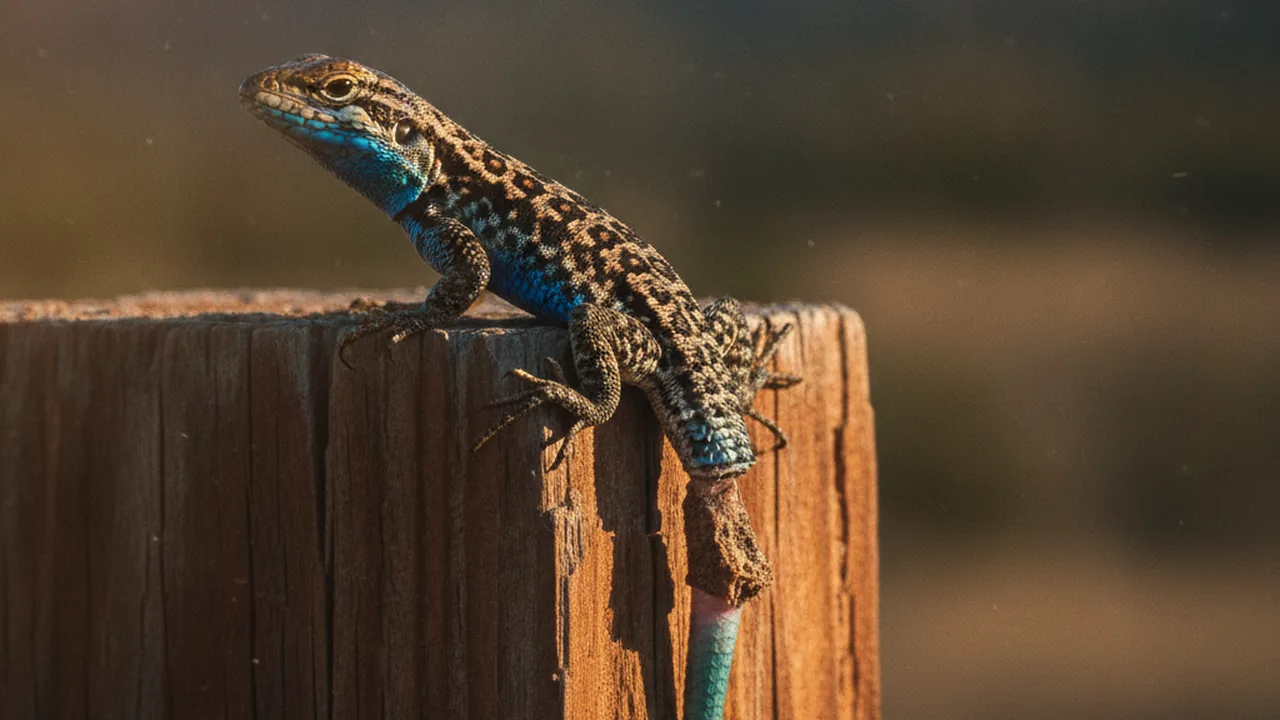
The Regrowth Exhibit
How does a small stump of cells rebuild a whole tail, from the code in DNA to new tissue, and how can we design an exhibit that makes that process clear to museum visitors?
The mystery: A small lizard drops its tail to escape a predator, and over the following weeks a new tail grows from the stump, but the new tail is not an exact copy of the old one.
describe the stages of the cell cycle, explain why growth and repair need both cell division and differentiation, and ask testable questions about how a lizard regrows its tail.
- I can explain how daughter cells receive identical genetic information from a parent cell or fertilized egg in a model.
- I can describe how mitotic cell division produces two genetically identical daughter cells from one parent cell in a model.
- I can explain, using a model, that differences between cell types in a multicellular organism are due to gene expression, not different genetic material.
- I can use a model to show that mitotic cell division results in more cells, allowing the organism to grow.
- I can use a model to show that new cells from mitosis can differentiate to create different cell types.
- I can use a model to show that mitosis can replace dead cells to help maintain a complex organism.
- I can ask questions about DNA and chromosomes that scientists could test with experiments or observations.
Phase 1: Spark
Warm-Up ~5 min
Do Now. You scrape your knee. Two weeks later the scrape is covered by new skin. Write where you think the new skin cells came from.
A regrown lizard tail is supported by a tube of cartilage instead of bony vertebrae. What does that tell you about regrowth?
Instruction ~10 min
The phenomenon. Many small lizards, such as the fence lizards that bask on sunny rocks and fence posts, have an escape trick. When a bird or a snake grabs the tail, the lizard can drop it. The tail breaks at a weak plane inside a vertebra, muscles pinch off the blood vessels, and the wriggling tail distracts the predator while the lizard runs. Over the following weeks a new tail grows from the stump. It is not an exact copy: in lizards that have been studied closely, such as the green anole, the new tail is supported by a tube of cartilage instead of a chain of bony vertebrae, and its scales and color often differ. Our question for the unit: how can a small stump of cells rebuild skin, muscle, cartilage, nerves and blood vessels, and why is the result different from the original?
More cells: the cell cycle. A tail is made of cells, so growing one means making new cells. Cells reproduce by the cell cycle. Most of the cycle is interphase, when the cell grows (G1), copies every chromosome (S phase) and prepares to divide (G2). After the S phase each chromosome consists of two identical sister chromatids joined at a centromere. Then comes mitosis, the division of the nucleus, in four stages: in prophase the chromosomes condense and become visible; in metaphase they line up across the middle of the cell; in anaphase the sister chromatids are pulled to opposite ends; in telophase two new nuclei form. Cytokinesis then splits the cytoplasm. The result is two daughter cells with the same chromosomes as the parent cell. Because the lizard began as one fertilized egg carrying one set of chromosomes from each parent, every daughter cell also carries both parents’ genetic material.
Worked example 1: how many divisions? Each round of division can double the number of cells, so after n rounds one cell could become 2n cells. After 10 rounds: 210 = 1,024 cells. One widely cited 2013 estimate puts the number of cells in an adult human body at about 37 trillion (3.7 × 10¹³). Because log2(3.7 × 10¹³) ≈ 45, it would take at least 45 rounds of doubling to get there from a single fertilized egg. The real number of divisions is far larger, because many cells die and are replaced throughout life: mitosis builds the body and also maintains it.
Division is not enough: differentiation. If mitosis made only copies, a regrowing tail would be a ball of identical cells. Instead, new cells differentiate: they become muscle, cartilage, skin or nerve cells with different shapes and jobs. Almost every cell in the lizard carries the same DNA. What differs is which genes are switched on. A muscle cell makes large amounts of the proteins actin and myosin, while a skin cell makes keratin. Cells that can still divide and become several cell types are called stem cells, and lizard tail regrowth depends on cells near the wound that behave this way.
Division under control. Cells check for damaged DNA and for correctly attached chromosomes at checkpoints before they move on. When those controls fail and a cell divides without limits, the result can be cancer, as the National Cancer Institute explains. Regrowth has to start, and it also has to stop.
Worked example 2: asking a testable question. Why can lizards regrow tails? is a starting point. Are there more dividing cells near the tip of a growing onion root than 5 mm behind it? is testable: it names something we can observe (cells in mitosis) and a comparison we can make (two positions). You will test a version of it in the next phase.
Reading: OpenStax Biology 2e, chapter 10, Cell Reproduction, and OpenStax Concepts of Biology, chapter 6 (CC BY 4.0).
Guided Exercises ~15 min
Work with your table group. Sketch first, then answer.
Independent Practice ~10 min
Start your Lab Notebook for the unit.
Explain, in four or five sentences, how mitosis lets an organism grow, replace worn-out cells and repair a wound. Use the words parent cell, daughter cell and identical chromosomes.
Closure ~5 min
Next lesson we meet the client who wants visitors to understand this exact phenomenon.
Exit ticket: why can mitosis alone not rebuild a tail? Name the second process and say what it adds.
How confident are you that you can describe the cell cycle and explain why regrowth needs both division and differentiation.
Teacher notes
Materials: a generic photo or short clip of a lizard with a regrowing tail, chart paper for initial models, Lab Notebooks.
Listen for: “the new cells have new DNA” (they share the same DNA); “mitosis makes the cell bigger” (it makes more cells); and the idea that cells divide in interphase.
Support / stretch: give a cell-cycle wheel organizer to label. Stretch: estimate how many doublings a tail stump of 10,000 cells needs to reach about one million cells (about 7, since 27 = 128).