3.10 Unit 3 Checkpoint: Growth, Division and the Code of Life
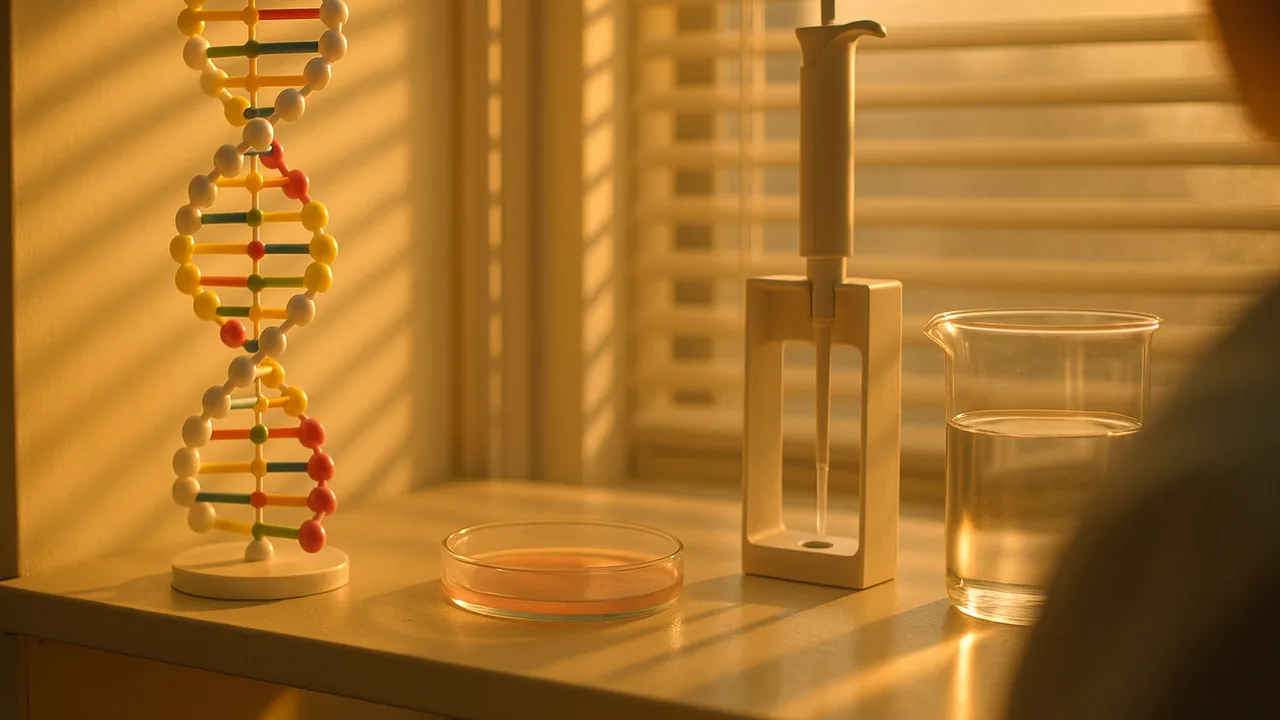
show what I learned about mitosis, differentiation, DNA and protein synthesis, using data questions, a scenario set and short constructed responses.
- I can explain how daughter cells receive identical genetic information from a parent cell or fertilized egg in a model.
- I can describe how mitotic cell division produces two genetically identical daughter cells from one parent cell in a model.
- I can explain, using a model, that differences between cell types in a multicellular organism are due to gene expression, not different genetic material.
- I can use reasoning to connect evidence and scientific principles to explain how genes in DNA code for proteins in all cells.
- I can describe how specialized cells in tissues rely on proteins to carry out their functions, and how proper protein function is necessary for cells to work correctly.
- I can explain how changes in gene sequences can affect protein function and, in turn, the function of body tissues.
- I can ask questions about DNA and chromosomes that scientists could test with experiments or observations.
Phase 5: Prove It
Warm-Up ~5 min
Do Now. Back to our phenomenon: a lizard drops its tail and grows a new one. In two sentences, name the two cell processes that make it possible.
Mitosis gives each daughter cell half of the parent cell's chromosomes.
Instruction ~10 min
Biologists, this is the unit checkpoint. Part A is multiple choice with data, including a scenario set where several questions share one situation. Part B is short constructed responses scored 0 to 3. Read each question twice and show your reasoning.
How a 0–3 answer is scored. 3 points: a correct claim, accurate evidence with numbers where given, and reasoning that links them with the science. 2 points: correct claim and evidence, with weak or incomplete reasoning. 1 point: a partly correct claim with little support. 0 points: incorrect or blank.
Worked example: from 1 point to 3. Question: “Why are muscle and skin cells different if they have the same DNA?” “They do different jobs” earns 1 point. “They express different genes: muscle cells transcribe actin and myosin genes, skin cells transcribe keratin genes, so each makes different proteins; Dolly, cloned from an adult mammary-gland nucleus, shows the whole genome is still there” earns 3.
Scenario set data (sample data). Use this table for questions 6–9. A hypothetical study counted 400 cells in stained slices from the tip of a regrowing lizard tail at different days after the tail was dropped, and from the base of an uninjured tail for comparison.
| Sample | Cells counted | Cells in mitosis | Mitotic index (%) |
|---|---|---|---|
| Uninjured tail base | 400 | 8 | 2 |
| Day 7 tip | 400 | 36 | 9 |
| Day 14 tip | 400 | 56 | |
| Day 21 tip | 400 | 40 | 10 |
| Day 35 tip | 400 | 16 | 4 |
Guided Exercises ~15 min
Part A: answer on your own. Your teacher reviews answers after everyone finishes.
Independent Practice ~10 min
Part B: constructed responses, each scored 0–3.
13. Explain how the sequence of bases in a collagen gene determines the protein that gives cartilage cells their function, and what a nonsense mutation in that gene could do to the tissue. Name one reliable source that supports your explanation. (0–3)
14. Use a model to explain how one fertilized egg becomes an organism with many different cell types, carrying genetic material from both parents in every cell. Then state one way your model differs from the real process. (0–3)
15. Using the scenario-set data, explain how mitosis helps the lizard grow a new tail and maintain its body, and use the numbers to argue that division is controlled. (0–3)
16. A model of a chromosome shows genes separated by non-coding DNA. Ask two questions the model raises about how cells decide which genes to use, and describe one observation or experiment that could answer one of them. (0–3)
Closure ~5 min
Finished, biologists. Next: the Unit 3 field trip, then Unit 4: how traits pass from parents to offspring, and why offspring vary.
Exit ticket: which question was hardest, and what idea do you want to practice before Unit 4?
How confident are you that you can explain how mitosis, differentiation and the code in DNA build and maintain a multicellular organism.
Teacher notes
Materials: printed checkpoint with the scenario table, a codon table, scoring guide for items 13–16, calculators allowed.
Setup: about 40 minutes for Parts A and B, then a short review. Item tags: 1–2, 7–8, 12, 14 and 15 LS1-4; 3–4, 10 and 13 LS1-1; 5, 9, 11 and 16 LS3-1 (5 and 11 also LS1-4). Use the tags to plan reteaching.
Listen for: mitosis confused with meiosis; reading the DNA template as codons; “different cells, different DNA”.
Support / stretch: read items aloud on request and allow the cell-cycle wheel for item 14. Stretch: for item 15, graph the mitotic index over time and mark where checkpoints must be slowing division.