evaluate the forms of republics over time and what they implied for the ideas and expectations that came before the Age of Revolution, compare limited and absolute governments and their impact on individuals and society, and analyze reform movements, including educational reform, as responses to the challenges revolutions raised.
Instruction
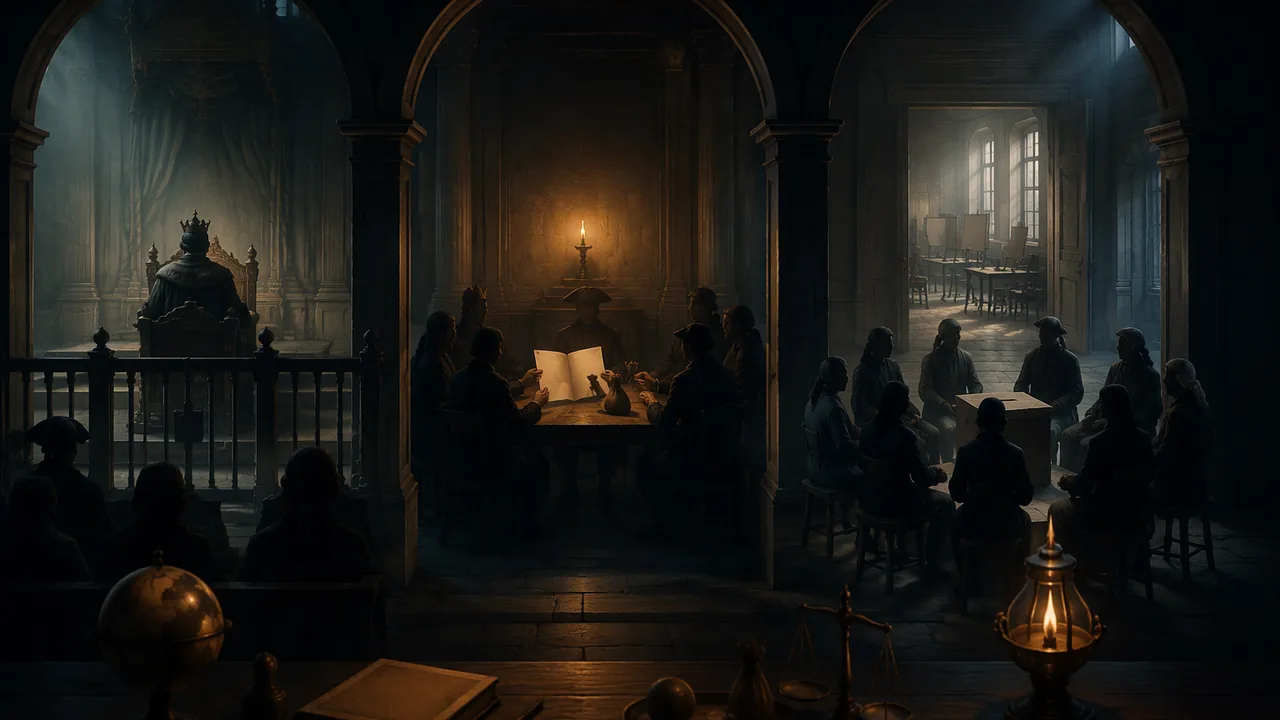
Who holds power, what limits it, and who counts as a member of the political community? Those three questions run through every government in this unit, and in the 1600s and 1700s they were answered in very different ways. This lesson compares three: absolute monarchy, limited monarchy and the republic. It then asks what the revolutions that overturned some of them promised, and who they left out.
Absolute monarchy. An absolute monarch holds supreme power without effective checks by legislatures or other bodies. Throughout much of European history the divine right of kings was the theological justification: monarchs claimed supreme power from God, and their subjects had no rights to limit it. Louis XIV of France and Frederick the Great are common examples. John Locke attacked the idea in 1690: “absolute monarchy… is indeed inconsistent with civil society, and so can be no form of civil-government at all.” His reason was that civil society exists to give everyone “a known authority, to which every one of that society may appeal,” and an absolute prince, who is judge in his own case, offers no such authority. The people under him remain in a state of nature.
Limited monarchy. In November 1688 King James II was deposed in what is called the Glorious Revolution. His daughter Mary II and her husband William III of Orange replaced him. In 1689 Parliament passed an Act declaring the rights and liberties of the subject. It declared “illegal” the power of “suspending the laws or the execution of laws by regal authority without consent of Parliament” and “levying money for or to the use of the Crown by pretence of prerogative, without grant of Parliament.” It insisted that “election of members of Parliament ought to be free” and that “Parliaments ought to be held frequently.” The change was that the monarch now ruled under rules the legislature could enforce. The effect on individuals and society was large, but it was not universal: the Act protected subjects and reserved arms for Protestants.
Republics. The word republic comes from the Latin res publica, “public thing.” The Roman Republic, after the overthrow of the kings in 509 BCE, had a Senate of wealthy aristocrats, assemblies of free citizens and elected magistrates. In the Middle Ages free cities such as Venice again developed republican governments. The Dutch Republic declared independence from Spain in 1581 and confederated in 1588; it lasted until 1795 and, though small, controlled a worldwide network of seafaring trade routes. Since the Age of Revolution the term has described mainly states with a written constitution whose officials get their legitimacy from the consent of the people rather than from heredity or divine right. These older republics gave eighteenth-century revolutionaries both models and warnings, such as the power of aristocrats in Rome and Venice. Their expectations before the revolutions were shaped by them.
Revolutionary promises. On 26 August 1789 the French National Assembly declared in Article 3 that “the principle of all sovereignty resides essentially in the nation” and in Article 16 that “a society in which the observance of the law is not assured, nor the separation of powers defined, has no constitution at all.” Those words put sovereignty and constitutional limits at the center of a republic. But they spoke of “men.” In 1792 Mary Wollstonecraft published A Vindication of the Rights of Woman. She dedicated it to the French statesman Talleyrand and asked him “to weigh what I have advanced respecting the rights of woman, and national education.” She warned men not to use “the same arguments that tyrannic kings and venal ministers have used” to claim “that woman ought to be subjected because she has always been so.” And on power, she wrote: “I do not wish them to have power over men; but over themselves.”
Reform as a response. Revolutions raised challenges they did not solve: who is a citizen, who is taught, who may vote. Educational reform became one answer. Wollstonecraft argued that women appeared inferior only because they lacked education, and she asked that girls receive the same education as boys. Her argument is a model of how reform movements work: take the revolution’s own principles and press them to their consequences. When you evaluate a government, ask who holds power, what limits it, and who is counted. When you evaluate a reform movement, ask which principle it appeals to and which group it speaks for.
📖 Read for this lesson
The reading opens over the lesson; close it to come back to exactly where you were. The checks below draw on it.
Formative check
Work through these before moving on. They are not graded — they tell you whether the standard below has landed yet.
Missouri standard: 9-12.WH.4.GS.B
According to the English Bill of Rights, what may the Crown NOT do “without grant of Parliament”?
Missouri standard: 9-12.WH.4.GS.B
Locke argued that an absolute monarch is consistent with civil society because he is a final judge.
Missouri standard: 9-12.WH.4.CC.A
The 1789 Declaration says the principle of all resides essentially in the nation.
Missouri standard: 9-12.WH.4.CC.A
The Dutch Republic confederated in 1588 and lasted until what year?
Missouri standard: 9-12.WH.4.PC.C
In her dedication, what does Wollstonecraft ask Talleyrand to weigh?
Missouri standard: 9-12.WH.4.CC.A, 9-12.WH.4.GS.B, 9-12.WH.4.PC.C
Fill in the chart for absolute monarchy, limited monarchy and republic: who holds power, what limits it and who is counted. Cite one phrase from Locke, the Bill of Rights or the 1789 Declaration. Then write one paragraph arguing whether Wollstonecraft’s call for educational reform was consistent with the principles of 1789, quoting her.
How confident are you that you can compare forms of government and analyze how reform movements tested the promises of the Age of Revolution?
Practice
Work these on paper or in your notebook, then open Check your answer. Aim for all of Fluency and Application; try at least one Challenge.
Printable version: this unit’s practice workbook (PDF)
Fluency
Build speed and accuracy with the core skill.
- The Dutch Republic existed from 1588 to 1795. For how many years?
Check your answer
Answer: 1795 – 1588 = 207 years.Subtract. - The Glorious Revolution deposed James II in 1688, and the Bill of Rights is dated 1689. The Declaration of the Rights of Man is dated 1789. How many years after the Bill of Rights is the Declaration?
Check your answer
Answer: 1789 – 1689 = 100 years.Subtract.
Application
Use the skill in context. Show your reasoning.
- Name two limits on the Crown in the Bill of Rights quoted in the lesson.
Check your answer
Answer: The Crown may not suspend laws without Parliament’s consent, and may not levy money by prerogative without a grant of Parliament. (Also: elections must be free and Parliaments held frequently.)Use the quoted phrases. - Compare Article 3 of the 1789 Declaration with the divine right of kings. Where does each locate final authority?
Check your answer
Answer: Article 3: sovereignty resides in the nation. Divine right: authority comes from God through the monarch, so subjects cannot limit it.Locate sovereignty in each. - Wollstonecraft says she does not wish women to have power “over men; but over themselves.” Explain in one or two sentences what she means and how it connects to the republican idea of liberty.
Check your answer
Answer: She is asking for self-government: women should be able to direct their own lives, not rule men. That parallels the republican ideal that citizens are free when they are not dependent on another person’s will.Tie the quotation to the lesson’s idea of who is counted.
Review
Keep earlier skills sharp.
- Review (lesson 5.1): Article 6 of the 1789 Declaration says all citizens are equally eligible for public positions “according to their abilities.” What does Wollstonecraft say about whether the principle covers women?
Check your answer
Answer: She argues it should: that women appear inferior only because they lack education, and that the reasoning used to keep them subject is the same as that of “tyrannic kings and venal ministers.”Connect two readings.
Limiting Power: Bill of Rights, Locke, the Rights of Man and Wollstonecraft
English Bill of Rights, 1689 (Avalon Project, Yale Law School); John Locke, Second Treatise of Government (1690), ch. VII sect. 90, Project Gutenberg #7370; Declaration of the Rights of Man and of the Citizen, 26 August 1789, arts. 3 and 16 (Avalon Project); Mary Wollstonecraft, A Vindication of the Rights of Woman (1792), dedication and chapter 2, Project Gutenberg #3420 · Public domain
Why this reading. Lesson 5.8 asks you to compare limited and absolute government, and to ask what the Age of Revolution promised and to whom. Four documents give the argument in order: a Parliament listing what a king may not do, a philosopher saying why an absolute prince cannot be part of civil society, an assembly saying where sovereignty lies, and a writer who asks whether “rights of man” includes women.
A. England, 1689: what the Crown may not do
English Bill of Rights, 1689, selected declarations. Avalon Project, Yale Law School. Public domain. The Act lists the actions of King James II that Parliament declared illegal.
“That the pretended power of suspending the laws or the execution of laws by regal authority without consent of Parliament is illegal;”
“That levying money for or to the use of the Crown by pretence of prerogative, without grant of Parliament, for longer time, or in other manner than the same is or shall be granted, is illegal;”
“That election of members of Parliament ought to be free; That the freedom of speech and debates or proceedings in Parliament ought not to be impeached or questioned in any court or place out of Parliament;”
“And that for redress of all grievances, and for the amending, strengthening and preserving of the laws, Parliaments ought to be held frequently.”
B. John Locke, 1690: why absolute monarchy is not civil government
John Locke, Second Treatise of Government, chapter VII, section 90. Project Gutenberg #7370. Public domain.
“Hence it is evident, that absolute monarchy, which by some men is counted the only government in the world, is indeed inconsistent with civil society, and so can be no form of civil-government at all:”
C. France, 1789: sovereignty and constitutions
National Assembly of France, Declaration of the Rights of Man and of the Citizen, 26 August 1789, articles 3 and 16. Avalon Project. Public domain.
“3. The principle of all sovereignty resides essentially in the nation. No body nor individual may exercise any authority which does not proceed directly from the nation.”
“16. A society in which the observance of the law is not assured, nor the separation of powers defined, has no constitution at all.”
D. Mary Wollstonecraft, 1792: who counts as a citizen
Mary Wollstonecraft, A Vindication of the Rights of Woman (1792), the dedication to Talleyrand and chapter 2. Project Gutenberg #3420. Public domain. In 1792 Wollstonecraft asked that French girls be given the same right to an education that boys were being offered by the new regime.
“I call upon you, therefore, now to weigh what I have advanced respecting the rights of woman, and national education; and I call with the firm tone of humanity.”
“Let not men then in the pride of power, use the same arguments that tyrannic kings and venal ministers have used, and fallaciously assert, that woman ought to be subjected because she has always been so.”
“This is the very point I aim at. I do not wish them to have power over men; but over themselves.”
About these excerpts. Every excerpt is word for word from the text named. Passages not shown are omitted, not changed.
Sources: English Bill of Rights 1689 (Avalon Project) (avalon.law.yale.edu); John Locke, Second Treatise of Government (Project Gutenberg #7370) (gutenberg.org); Declaration of the Rights of Man – 1789 (Avalon Project) (avalon.law.yale.edu); Mary Wollstonecraft, A Vindication of the Rights of Woman (Project Gutenberg #3420) (gutenberg.org)