analyze nation-building in Africa since 1945 — its challenges, geopolitical and economic significance, political systems, leaders, religious issues, natural features, resources and population — through the cases of Ghana, Kenya, South Africa and Rwanda.
Instruction
In 1945 only four African countries were independent. By 1975 almost the whole continent was. Winning independence was the first step; building a nation — a working state with shared loyalty, legitimate government and a growing economy — proved harder. The standard asks you to understand the challenges, the region’s significance and its recent history.
Independence. Ghana, led by Kwame Nkrumah, became the first sub-Saharan colony to win independence, on 6 March 1957, after years of strikes, boycotts and elections. In 1960 alone, seventeen African countries became independent. Elsewhere, independence came through war. In Kenya, the Mau Mau uprising (1952-1960) was met by British forces who held tens of thousands of Kenyans in detention camps where many were abused; in 2013 the British government agreed to compensate surviving victims. Algeria won independence from France in 1962 after an eight-year war that killed hundreds of thousands. Portugal’s colonies — Angola, Mozambique and Guinea-Bissau — won independence in 1974-1975 after long wars.
The challenges of nation-building (WH.10.10.1).
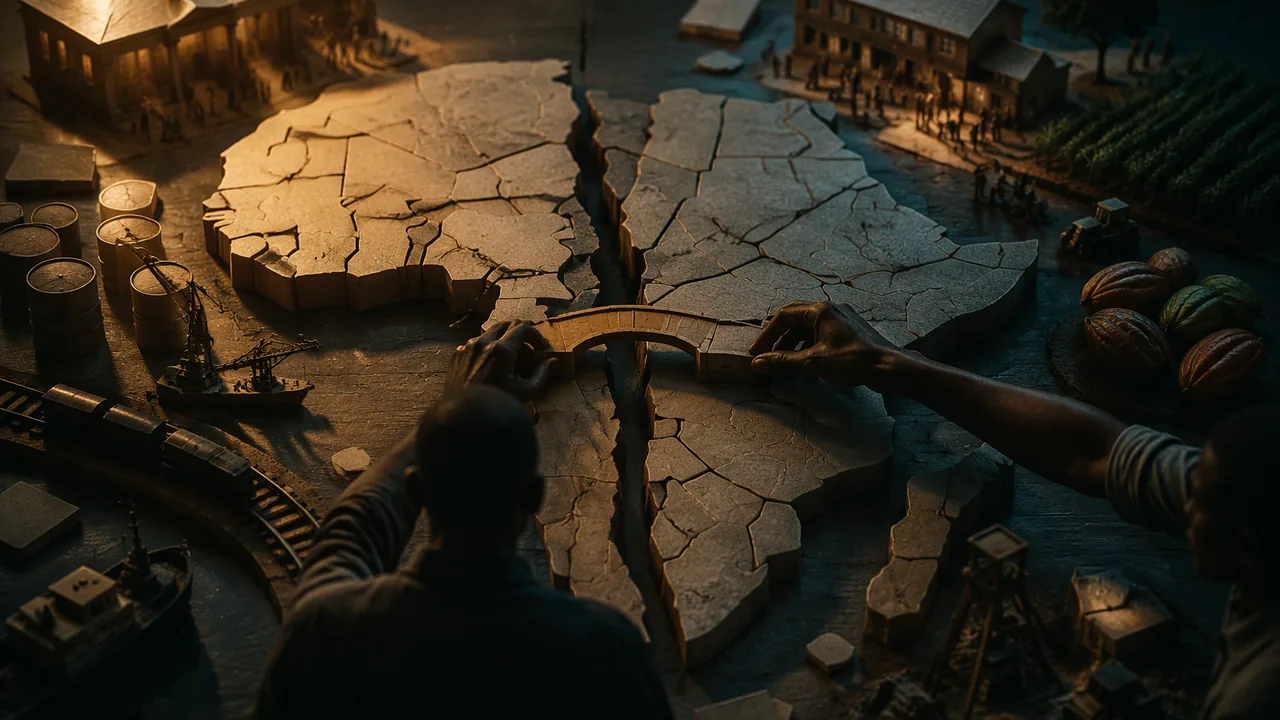
- Borders: colonial borders, many drawn at the Berlin Conference, grouped rival peoples together and split others apart. The Organization of African Unity (1963) decided to keep them, fearing endless wars.
- Politics: many new states became one-party states or military regimes; Nigeria suffered coups and the Biafran civil war (1967-1970).
- Economy: colonies had been built to export one or two raw materials. Dependence on cocoa, copper or oil left states exposed to price swings, and oil and diamonds sometimes funded corruption and war.
- The Cold War: superpowers backed friendly dictators and armed rival factions, as in the Congo and Angola.
- Religion and culture: countries such as Nigeria and Sudan combine a largely Muslim north and a largely Christian south, with hundreds of languages. Nation-builders had to create loyalty that crossed these lines.
South Africa: apartheid and democracy. From 1948 the National Party government imposed apartheid, a legal system of racial separation and white minority rule: every person was classified by race, Black South Africans were stripped of citizenship and assigned to “homelands,” and protest was crushed. Police killed 69 protesters at Sharpeville in 1960. The African National Congress turned to armed struggle; its leader Nelson Mandela was sentenced to life imprisonment in 1964. Student protests in Soweto in 1976, strikes, international sanctions and economic crisis eventually forced the government to negotiate. Mandela was released in 1990 and, after the first election open to all races in April 1994, became president. A Truth and Reconciliation Commission heard testimony from victims and perpetrators. Mandela’s own words, such as his 1964 statement from the dock, are still under copyright; read them through the Nelson Mandela Foundation.
Rwanda: genocide and rebuilding. Belgian colonial rulers had hardened the distinction between Hutu and Tutsi, issuing identity cards that recorded it. After the president’s plane was shot down on 6 April 1994, Hutu extremists organized the murder of Tutsi across the country, urged on by radio broadcasts. In about 100 days, an estimated 800,000 people — most of them Tutsi, along with Hutu who opposed the killing — were murdered; some estimates are higher. UN peacekeepers were reduced rather than reinforced. The genocide ended when the Rwandan Patriotic Front took control. Rwanda has since rebuilt its economy and made reconciliation official policy, while its government has been criticized for restricting political opposition and free speech.
Natural features, resources and population (WH.10.10.2). Africa includes the Sahara, the Sahel, the Nile and Congo basins, the Great Rift Valley and rich deposits of oil, gold, cobalt and other minerals needed for modern technology. It is the world’s youngest and fastest-growing continent; the United Nations estimates its population at about 1.5 billion in the mid-2020s. Nigeria is the most populous country. That youth is both a challenge — jobs, schools — and a great resource.
📖 Read for this lesson
The reading opens over the lesson; close it to come back to exactly where you were. The checks below draw on it.
Reading: Three voices of African nation-building — summaries
Summaries by the course authors of the Freedom Charter adopted by the Congress of the People, Kliptown, South Africa, 26 June 1955; Kwame Nkrumah’s address at Ghana’s independence, 6 March 1957; and survivor testimony collections from the 1994 genocide against the Tutsi in Rwanda · SLS original
These are paraphrases, not quotations; the original texts are still under copyright or held in archives, so cite them as summaries by the course authors. This lesson’s reading carries documents you can quote directly, including the United Nations’ own record of what it decided in Rwanda in April 1994 and its judgment on that decision five years later.
The Freedom Charter, 1955 (paraphrase): Adopted by thousands of delegates of all races, it declares that South Africa belongs to all who live in it, Black and white, and that no government can claim authority unless it is based on the will of all the people. It demands equal rights, equality before the law, a vote for every adult, and a share in the country’s wealth.
Nkrumah, 1957 (paraphrase): At midnight, as Ghana became independent, Nkrumah told the crowd that the struggle was over and Ghana was free forever, and that Ghana’s independence was meaningless unless it was linked to the total liberation of Africa.
Rwandan survivor testimonies (summary of common themes): Survivors describe neighbors, colleagues and sometimes relatives turning on Tutsi families; roadblocks where identity cards marked ‘Tutsi’ meant death; radio broadcasts urging killing; churches and schools where people sought refuge becoming massacre sites; and a few Hutu who hid Tutsi at great risk.
Formative check
Work through these before moving on. They are not graded — they tell you whether the standard below has landed yet.
Why did the Organization of African Unity decide in 1963 to keep colonial borders?
Belgian colonial rule helped harden the division between Hutu and Tutsi, including by issuing identity cards recording it.
Ghana became independent in under Kwame ; South Africa held its first election open to all races in .
Build a regional profile of Africa (natural features, resources, population, international relationships) and a case card for each of Ghana, Kenya, South Africa and Rwanda: path to independence or majority rule, key leaders, political system, religious or ethnic issues, and one current trend. End with two sentences naming the challenge you think has mattered most across all four cases.
Simulation & tools
Map African independence as a story map
Optional digital route for the regional profile. In StoryMapJS (free Google sign-in; use the paper alternative if you cannot), make a story map with eight slides in date order: Ghana (1957), Guinea (1958), Nigeria (1960), the Congo (1960), Algeria (1962), Kenya (1963), Angola (1975) and South Africa’s first all-race election (1994). For each, set the capital city as the location, and write three sentences: the colonial power, how independence or majority rule was won (negotiation, mass protest or war), and one challenge the new state faced. Use only public-domain images with credits. On a final slide, answer: do the countries that won independence by war show different challenges from those that won it by negotiation? Submit the link. No-tool alternative: the same eight entries on a printed outline map of Africa earn equal credit.
Open Knight Lab ↗ · Knight Lab, Northwestern University (TimelineJS, StoryMapJS) · MPL-2.0 open source
How confident are you that you can analyze the challenges and recent history of nation-building in Africa through specific cases?
Practice
Work these on paper or in your notebook, then open Check your answer. Aim for all of Fluency and Application; try at least one Challenge.
Printable version: this unit’s practice workbook (PDF)
Fluency
Build speed and accuracy with the core skill.
- Order: (a) Ghana’s independence; (b) Sharpeville; (c) South Africa’s first election open to all races; (d) the genocide against the Tutsi in Rwanda; (e) apartheid laws begin under the National Party.
Check your answer
Answer: (e) 1948 → (a) 6 March 1957 → (b) 1960 → (c) April 1994 → (d) April-July 1994.South Africa’s democratic transition and Rwanda’s genocide happened in the same months of 1994 — a reminder that the continent’s recent history cannot be summed up in one story. - Define decolonisation and one-party state, with an African example of the second.
Check your answer
Answer: Decolonisation: the process by which colonies became independent states, especially after 1945. One-party state: a state where a single party holds power and others are banned or powerless — many new African states after independence, as the lesson describes.A strong answer explains why leaders often justified one-party rule as necessary for national unity, and why critics disagreed.
Application
Use the skill in context. Show your reasoning.
- Sourcing: the Freedom Charter (1955) appears in the course as a labeled paraphrase, not a quotation. Why, and how should you cite it?
Check your answer
Answer: Its text is not available to the course as a public-domain source, so the course summarizes it. Cite it as the course summary of the Freedom Charter, do not put quotation marks around the summary’s words, and read the full text from a lawful source if you want to quote it.A strong answer distinguishes paraphrase from quotation and names how to find the original. - Cause or sequence? “Belgium issued identity cards recording Hutu or Tutsi in the colonial period; the genocide happened in 1994.” How are they connected, and what else must a causal explanation include?
Check your answer
Answer: Colonial rule hardened the distinction between Hutu and Tutsi, and in 1994 identity cards were used at roadblocks to identify Tutsi for murder. But the genocide was organized by Hutu extremists in 1994, urged on by radio broadcasts, after the president’s plane was shot down; the UN reduced its peacekeepers. A causal explanation needs these decisions, not only the colonial background.A strong answer treats the colonial legacy as a condition, names the perpetrators’ decisions as causes, and describes the victims with care. An estimated 800,000 people were murdered in about 100 days; some estimates are higher. - Perspectives: why did the Organization of African Unity decide in 1963 to keep colonial borders, even though they were drawn by Europeans?
Check your answer
Answer: Leaders feared that redrawing them would start wars everywhere, because nearly every border grouped or split peoples. They accepted artificial borders as the price of peace, while nation-building tried to create loyalty across them.A strong answer explains the choice from the leaders’ perspective and names its cost.
Review
Keep earlier skills sharp.
- Review (World History A, Unit 4): at which 1884-1885 meeting, with no Africans present, did European powers set rules for claiming African territory?
Check your answer
Answer: The Berlin Conference.A strong answer links the conference to the borders the OAU later chose to keep.
Africa in Figures and Documents: Population, Minerals, and What the UN Said About Rwanda
World Bank, World Development Indicators, SP.POP.TOTL and NY.GDP.PCAP.CD, 2024 (CC BY 4.0); US Geological Survey, Mineral Commodity Summaries 2026; UN Security Council resolution 912 (21 April 1994); Report of the Independent Inquiry into the actions of the United Nations during the 1994 genocide in Rwanda, UN doc. S/1999/1257 · CC BY 4.0
Why this reading. Lesson 4.1 asks you to build a regional profile of Africa — natural features, resources, population, international relationships — and a case card for each of Ghana, Kenya, South Africa and Rwanda. The lesson describes those things but gives you no figures you could put in a profile and no source you could cite for them. Here are current data with their indicator codes, the mineral figures behind the phrase “resources needed for modern technology”, and the United Nations’ own account of what it did and failed to do in Rwanda in 1994.
A. Population and income
World Bank, World Development Indicators: SP.POP.TOTL (population, total) and NY.GDP.PCAP.CD (GDP per capita, current US dollars), 2024. World Bank Open Data, licensed CC BY 4.0. Figures retrieved 23 September 2026.
| Country or region | Population, 2024 | GDP per capita, current US$, 2024 |
|---|---|---|
| Sub-Saharan Africa | 1,289,936,286 | — |
| Nigeria | 232,679,478 | 1,084 |
| South Africa | 64,007,187 | 6,267 |
| Kenya | 56,432,944 | 2,133 |
| Ghana | 34,427,414 | 2,419 |
| Rwanda | 14,256,567 | 1,060 |
Two traps in this table, and you should fall into neither. First, “Africa” is not a World Bank aggregate. The figure above is for Sub-Saharan Africa and excludes Egypt, Libya, Tunisia, Algeria and Morocco, so it is not the continent’s population. If your profile says “about 1.5 billion” for Africa, that is the United Nations figure for the whole continent, and you must say which you mean. Second, Nigeria’s GDP per capita reads $2,899 for 2022 and $1,084 for 2024 in the same series. Nigeria’s economy did not shrink by two-thirds. The naira was devalued, and this indicator converts at market exchange rates. A number that moves that fast is usually telling you about the measuring instrument rather than about the country.
B. The minerals
United States Geological Survey, Mineral Commodity Summaries 2026 (published February 2026), commodity sheets for cobalt, platinum-group metals and gold. A US federal publication: public domain.
Cobalt (metric tons of cobalt content). The USGS states: “Congo (Kinshasa) was the world’s leading source of mined cobalt and accounted for an estimated 73% of world total, followed by Indonesia, which accounted for 14%.”
| Country | Mine production 2024 | Mine production 2025 (est.) | Reserves |
|---|---|---|---|
| Congo (Kinshasa) | 226,000 | 230,000 | 6,000,000 |
| Indonesia | 35,000 | 44,000 | 760,000 |
| Russia | 8,000 | 7,700 | 800,000 |
| United States | 200 | 300 | 70,000 |
| World total | 302,000 | 310,000 | 12,000,000 |
Platinum (kilograms). South Africa produced 126,000 kg in 2024 of a world total of 179,000 kg — about 70 per cent, a share we have calculated from the USGS figures rather than quoted, because the USGS does not print it. The USGS does state: “In 2025, production of PGMs in South Africa, the world’s leading producer of PGM-containing mined material, decreased by an estimated 9% compared with that in 2024…”
Gold (metric tons). World mine production was an estimated 3,300 tons in 2025 and 3,280 tons in 2024. Ghana produced 149 tons in 2024; South Africa produced 90.
Three findings for your profile, straight off these tables. (1) One country supplies about three-quarters of the world’s cobalt, the metal in the batteries of phones and electric cars — and it is the country whose first prime minister was the subject of the assassination plot in the lesson 3.2 reading. Dependence on a single mineral cuts both ways. (2) Ghana now out-produces South Africa in gold, 149 tons to 90, which inverts the picture handed down from the colonial era; economic geography is not fixed. (3) The United States mined 200 tons of cobalt against the Congo’s 226,000. That ratio, not a slogan, is what “geopolitical significance” means.
C. Rwanda 1994: what the United Nations decided, and what it later said about itself
United Nations Security Council resolution 912 (1994), adopted at the 3368th meeting, 21 April 1994; and Report of the Independent Inquiry into the actions of the United Nations during the 1994 genocide in Rwanda, UN document S/1999/1257, 15 December 1999. United Nations official records.
Resolution 912, operative paragraph 8. “Decides, in the light of the current situation in Rwanda, to adjust the mandate of UNAMIR as follows: (a) To act as an intermediary between the parties in an attempt to secure their agreement to a cease-fire; (b) To assist in the resumption of humanitarian relief operations to the extent feasible; and (c) To monitor and report on developments in Rwanda, including the safety and security of the civilians who sought refuge with UNAMIR, and authorizes a force level as set out in paragraphs 15 to 18 of the Secretary-General’s report of 20 April 1994 for that purpose”.
Note what the resolution does not say. The figure often quoted — that the peacekeeping force was cut to 270 — does not appear in it. The Council delegated the force level to paragraphs 15 to 18 of the Secretary-General’s report of 20 April 1994 (document S/1994/470). If you use the number, cite the report, not the resolution. This is a small point of accuracy with a large lesson in it: the decision that mattered was taken by reference to another document, which is one of the ways institutions make grave choices quietly.
The Independent Inquiry, 1999. “The failure by the United Nations to prevent, and subsequently, to stop the genocide in Rwanda was a failure by the United Nations system as a whole. The fundamental failure was the lack of resources and political commitment devoted to developments in Rwanda and to the United Nations presence there. There was a persistent lack of political will by Member States to act, or to act with enough assertiveness.”
On resolution 912 specifically: “The decision by the Security Council on 21 April to reduce UNAMIR to a minimal force in the face of the killings which were by then known to all, rather than to make every effort to muster the political will to try and stop the killing has led to widespread bitterness in Rwanda. It is a decision which the Inquiry finds difficult to justify. The Security Council bears a responsibilty for its lack of political will to do more to stop the killing.” (The spelling “responsibilty” is as printed.)
And: “The United Nations failed the people of Rwanda during the genocide in 1994. It is a failure for which the United Nations as an organization, but also its Member States, should have apologized more clearly, more frankly, and much earlier.”
Put the resolution and the inquiry side by side and you have a case card that does something rare: it shows a decision and, five years later, the same institution’s judgment on that decision. For the “international relationships” part of your regional profile, this is the strongest evidence you will find, and it comes from the organization that failed rather than from its critics.
D. Turning this into four case cards
Each card needs a path to independence or majority rule, key leaders, political system, a religious or ethnic issue, and one current trend. Attach a figure with a source to at least two of them.
- Ghana. Independent 6 March 1957 by negotiation after strikes, boycotts and elections. Gold: 149 tons in 2024 (USGS), more than South Africa. Population 34.4 million (World Bank, 2024).
- Kenya. Independence in 1963 after the Mau Mau uprising and mass detention; compensation agreed by the British government in 2013. Population 56.4 million, GDP per capita $2,133 (World Bank, 2024).
- South Africa. Majority rule in 1994 after apartheid, sanctions and negotiation. About 70 per cent of world platinum production (calculated from USGS 2026). The richest of the four by GDP per capita and among the most unequal countries in the world.
- Rwanda. Genocide against the Tutsi in 1994; UNAMIR reduced by resolution 912 while it was under way; a United Nations inquiry in 1999 called the failure the organization’s own. Population 14.3 million, GDP per capita $1,060 (World Bank, 2024).
Then answer the lesson’s closing question — which challenge has mattered most across all four — and notice that the four cases let you test that claim rather than assert it. Borders, one-party rule, dependence on a single export and Cold War interference are not equally present in each.
Sources: World Bank Open Data: population and GDP per capita (CC BY 4.0) (data.worldbank.org); USGS Mineral Commodity Summaries 2026: cobalt (pubs.usgs.gov); USGS Mineral Commodity Summaries 2026: platinum-group metals (pubs.usgs.gov); Report of the Independent Inquiry into the actions of the United Nations during the 1994 genocide in Rwanda, S/1999/1257 (docs.un.org)