2.04 Lab: Catalysts, Surface Area and Light
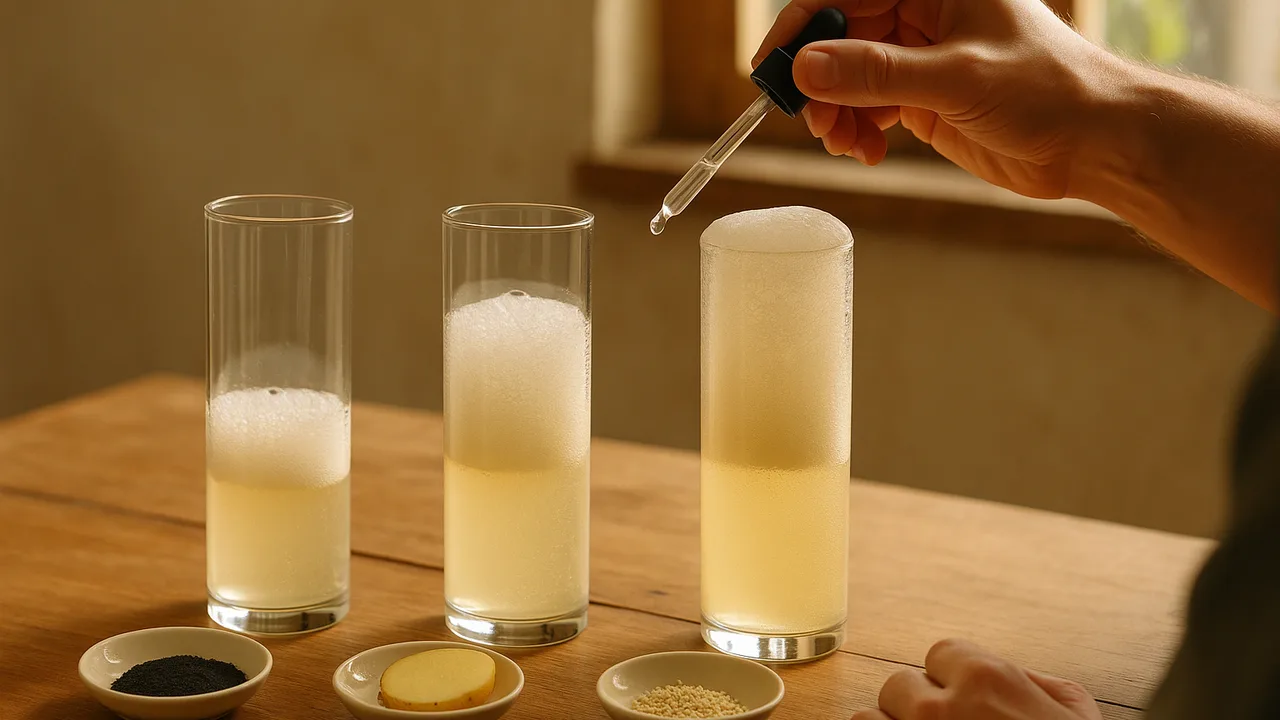
compare how catalase, potassium iodide and manganese dioxide speed peroxide decomposition, test the effect of surface area, and analyze shelf data on light and heat.
- I can analyze data to identify that increasing the concentration of reactants increases the reaction rate, and decreasing concentration decreases the rate.
- I can analyze data to identify that increasing the temperature usually increases the reaction rate, and decreasing temperature decreases the rate.
- I can explain that increasing the kinetic energy of colliding particles and increasing the number of collisions both cause the reaction rate to increase.
Phase 2: Investigate
Warm-Up ~5 min
Do Now. A 2 g cube of raw potato and 2 g of grated potato each go into 10 mL of 3% peroxide. Predict which fizzes faster and give a reason that mentions collisions.
Which will release oxygen faster: a 2 g potato cube or 2 g of grated potato?
Instruction ~10 min
Three catalysts, one reaction. Today you compare three catalysts for the same decomposition. Catalase, in yeast and potato, is an enzyme; one catalase molecule can break down millions of peroxide molecules each second. Potassium iodide (KI) dissolves, and its iodide ions take part in the reaction and are regenerated: H2O2 + I− → H2O + IO−, then H2O2 + IO− → H2O + O2 + I−. Add the two steps and the iodide cancels, leaving 2H2O2 → 2H2O + O2. Manganese dioxide (MnO2) is a black solid; the reaction happens on its surface.
Surface area. A solid catalyst, or a solid holding an enzyme, only works where peroxide molecules can touch it. Grinding or grating the same mass exposes far more surface, so more successful encounters happen each second. Cut a 1 cm cube into 1 mm cubes and the total surface grows ten times.
Procedure. Use the 2.03 setup. Each trial: 10.0 mL of 3% peroxide at room temperature, one catalyst, oxygen read at 30 s, three trials. Stations: (1) no catalyst; (2) 2.0 mL yeast suspension; (3) 2.0 g grated potato; (4) one 2.0 g potato cube; (5) 2.0 mL of 0.5 M KI; (6) 0.10 g MnO2 powder; (7) 0.10 g MnO2 granules. At station 6, filter, dry and reweigh the MnO2 the next day.
| Station (sample data) | Mean O2 at 30 s (mL) | Initial rate (mL/s) |
|---|---|---|
| No catalyst | 0 (none in 5 min) | < 0.01 |
| Yeast suspension | 24 | 0.80 |
| Grated potato | 7 | 0.23 |
| Potato cube | 2 | 0.07 |
| 0.5 M KI | 15 | 0.50 |
| MnO2 powder | 36 | 1.2 |
| MnO2 granules | 5 | 0.17 |
Worked example 1: is the catalyst used up? Malia’s team weighed 0.10 g of MnO2 powder before the trial and 0.10 g after filtering and drying it (sample data, to the balance’s 0.01 g). The black solid made a lot of oxygen yet was still there. That is the evidence that it is a catalyst, not a reactant.
Worked example 2: surface area in numbers. Grated potato: 0.23 mL/s. Potato cube of the same mass: 0.07 mL/s. 0.23 ÷ 0.07 ≈ 3, so grating made it about three times faster. MnO2 powder against granules: 1.2 ÷ 0.17 ≈ 7. Same substance, same mass; only the exposed surface changed.
The co-op’s shelf data. The co-op kept sealed retention bottles in six spots for 6 months, then measured the strength left (sample data, % of the label strength): cool dark closet 20 °C, clear bottle 96%; same, brown bottle 97%; refrigerator 5 °C 99%; warm dark cabinet 35 °C 84%; sunny window, brown bottle 82%; sunny window, clear bottle 61%. Light matters on its own: ultraviolet light can break the weak O–O bond directly. Traces of metal ions, such as iron or copper from a dirty spray nozzle, also act as catalysts inside the bottle.
Guided Exercises ~15 min
Use the station data.
Independent Practice ~10 min
Lab analysis, in your Rate Notebook.
Make a bar graph of the co-op's six shelf results. Write two storage recommendations it supports, each tied to a pair of bars.
A customer keeps refilling a spray bottle from the big jug and sometimes rinses the old metal nozzle in it. Explain, using the word catalyst, why this jug might lose strength faster than one that is never opened.
Closure ~5 min
We have numbers for every lever. Next phase: a particle model that explains all of them at once.
Exit ticket: the co-op wants the cleaner to work fast on a dirty kitchen counter. Many food spills and cells contain catalase. Explain why that helps.
Teacher notes
Materials (per class): the 2.03 gas-collection setups, 3% peroxide, yeast suspension, raw potato (grated and 2.0 g cubes), 0.5 M potassium iodide, MnO2 powder and granules (teacher weighs 0.10 g portions), filter paper and funnel, balance (0.01 g), goggles.
Setup: run stations in rotation, two trials per team per station, and pool class data for three or more trials. Dry the MnO2 overnight for the reweigh.
Listen for: “the catalyst gives the reaction energy”; “more surface means more catalyst” (same mass, same amount).
Support / stretch: give a two-column “what changed / why the rate changed” frame. Stretch: the shelf study is not a lab trial; list two variables the co-op may not have controlled.