conduct respectful audience research, turn it into an evidence-based audience profile, build a mood board with sources and licenses recorded, and use a structured critique (a self-critique or an adult viewer’s feedback).
Instruction
Empathy is a research method. In design, empathy does not mean feeling sorry for someone. It means understanding how the people you are designing for see the situation, what they already know, what they want and what gets in their way. You cannot guess this reliably from your own experience, even if you are part of the audience. You find it out.
Three simple methods. Short interviews: five to ten minutes with a person from the audience, using open questions (“Tell me about the last time you volunteered. What made you sign up?”) rather than yes-or-no questions (“Would you volunteer?”). Ask “why?” and “can you give me an example?” and write down their words. Observation: watch where the audience actually is. Which bulletin boards do people stop at in your library, church or grocery store? How long do they look? What do they photograph? Existing information: what the client already knows, such as sign-up numbers or which shifts go unfilled.
Research ethics. Tell people what the interview is for and that they can skip any question. Do not collect names, phone numbers, addresses, ages of younger children, or anything sensitive such as health, immigration status or family finances. Record what people said, not who said it. Family members, family friends and other adults you know are fine interviewees for this course. Arrange every interview with a parent’s knowledge, and never interview strangers online.
From notes to an audience profile. Look for patterns across your interviews: things two or more people said. Write a short audience profile, sometimes called a persona: a description of a typical member of the audience based on those patterns, including their goals, their frustrations and where they would see your design. Every sentence in the profile should be traceable to something you heard or observed. A profile built on stereotypes (“teenagers only care about their phones”) is worse than none, because it sends the design in the wrong direction with false confidence.
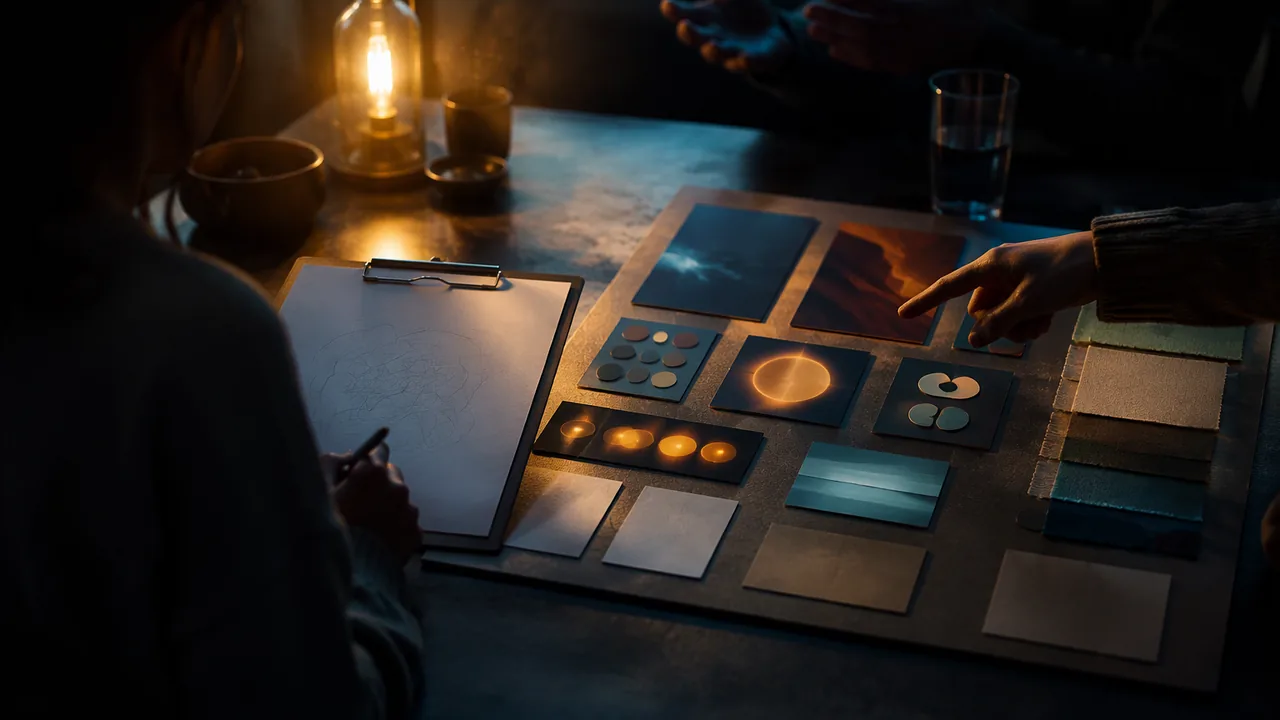
The mood board. A mood board is a collection of images, colors, textures, type samples and layouts that capture the feeling a design should have. It helps you and the client agree on a direction before you design. Build it digitally (an Inkscape or Scribus page works well) or by hand. Include eight to fifteen items and a short caption for each saying what it contributes, for instance “this rough crate texture: hands-on, physical work.”
Record every source. A mood board is for inspiration and internal discussion; its images will not appear in the final design unless you have the right to use them. Still, record for each image the title or description, the creator, where you found it and its license. This habit will matter in Unit 3, when you learn how copyright and Creative Commons licenses work. Search open collections first: museum open-access collections (CC0), public-domain federal images and Creative Commons-licensed work.
Structured critique. Set your audience profile and mood board aside for at least a day, then critique them as if they were someone else’s, using three prompts: I notice (a specific observation), I wonder (a question about fit with the audience) and What if (one concrete suggestion). Write at least one of each. If a family member or other adult is willing, show them the board for three minutes and ask for the same three prompts. Listen and take notes without defending, then ask one follow-up question. Good feedback is about the work, never the person.
📖 Read for this lesson
The reading opens over the lesson; close it to come back to exactly where you were. The checks below draw on it.
Formative check
Work through these before moving on. They are not graded — they tell you whether the standard below has landed yet.
Which interview question will give you the most useful information?
If you are part of the audience yourself, you can skip audience research.
What should you record for each image on a mood board?
Write the most useful ‘I wonder’ or ‘What if’ from your structured critique (your own after a day away, or an adult viewer’s), and explain how you will respond to it in your design.
How confident are you that you can build an evidence-based audience profile and a sourced mood board, and use structured critique?
Audience Research Kit: Interview Script, Worked Notes, Profile, a Sourced Mood Board and a Structured Critique
SLS original worked example (constructed interviews); records: Library of Congress items 2002722585, 2002712333, 98518589; retrieved Sept. 26, 2026 · SLS original (with public-domain poster records)
Why this reading. The lab asks you to interview three users, write an audience profile, build a sourced mood board and run a structured critique on your own (or with an adult viewer). To learn what each looks like you need worked examples. Everything about the food bank and its students is an invented SLS original; the poster records are real and public-domain. Records retrieved Sept. 26, 2026.
Interview script (about 8 minutes)
Interview family members or other adults you know, arranged with a parent’s knowledge; never interview strangers online. Say what it is for and that they may skip any question; do not record names. Ask: “Tell me about the last time you signed up for something at school. What made you do it?” “Where do you look at posters, and for how long?” “What would make you skip a volunteer poster?” Follow every answer with “Why?” or “Can you give an example?” and write down their words.
Worked notes from three interviews (constructed)
| Student | Words noted |
|---|---|
| A (grade 10) | “I signed up for the robotics club because my friend was going.” Looks at the board by the cafeteria while waiting in line, about five seconds. Skips posters with lots of small text. |
| B (grade 11) | “I need service hours, but I never know which ones count.” Photographs the QR code on a poster to use later. |
| C (grade 9) | “I thought you had to be 18.” Would come with a friend. Ignores posters that look like ads. |
From notes to an audience profile
Patterns (two or more): friends drive sign-up (A, C); service hours matter but are unclear (B); students give a poster a few seconds while waiting (A, B); small text loses them (A). Profile: “A 15-to-18-year-old who sees the poster while waiting in a line, reads for a few seconds, wants proof that the hours count, and is more likely to come with a friend.” Each sentence traces to a note above. A stereotype such as “teens only care about phones” would fail this test.
Worked mood board, with source records
| Item | Record (title, creator, date, holding and id, rights) | Caption: what it contributes |
|---|---|---|
| 1 | Food will win the war, American Lithographic Co. for the U.S. Food Administration, [1917], Library of Congress 2002722585 (POS – WWI – US, no. 456); no known restrictions on publication | A dark blue panel with cream and orange lettering in three clear sizes: authority and clarity |
| 2 | Sow the seeds of Victory!, James Montgomery Flagg, c1918, Library of Congress 2002712333 (POS – US .F63, no. 13); no known restrictions on publication | A figure scattering seed over brown earth, with the message in warm lettering to the left: growth and action |
| 3 | See America. Visit the national parks, NYC Art Project, WPA, 1936-40, Library of Congress 98518589; no known restrictions on publication | Flat areas of color and one calm image: confidence without clutter |
| 4 | Photo of crates at a church food pantry, taken by the student with permission, Sept. 30, 2026 (illustrative) | Rough wooden texture: hands-on, physical work |
These records show the habit: title or description, creator, date, holding and identifier, and rights, for every item, even if the item never appears in the final design.
Structured critique, worked
After a day away, the designer critiques the board as if it were someone else’s. I notice the board is mostly cool blues. I wonder whether that fits students who want a friendly Saturday morning. What if one warm color, such as the orange in the Food Administration sign, carried the day and time? Then one follow-up question to answer before revising: “Which warm color stood out on the library bulletin board when I observed it?” If an adult viewer gives the three prompts instead, take notes without defending and ask them the follow-up.