analyze how Gilman’s diary form and Chopin’s ironic ending structure each story, and distinguish what each narrator or character says from what the story means.
Instruction
Short fiction lets a writer control every sentence toward one effect. Gilman and Chopin both wrote about a married woman confined by the care of others, and both built their stories so that the reader understands more than the characters around the woman do. 11-12.RL.2.A asks you to analyze how an author’s choices about structure contribute to meaning and aesthetic impact.
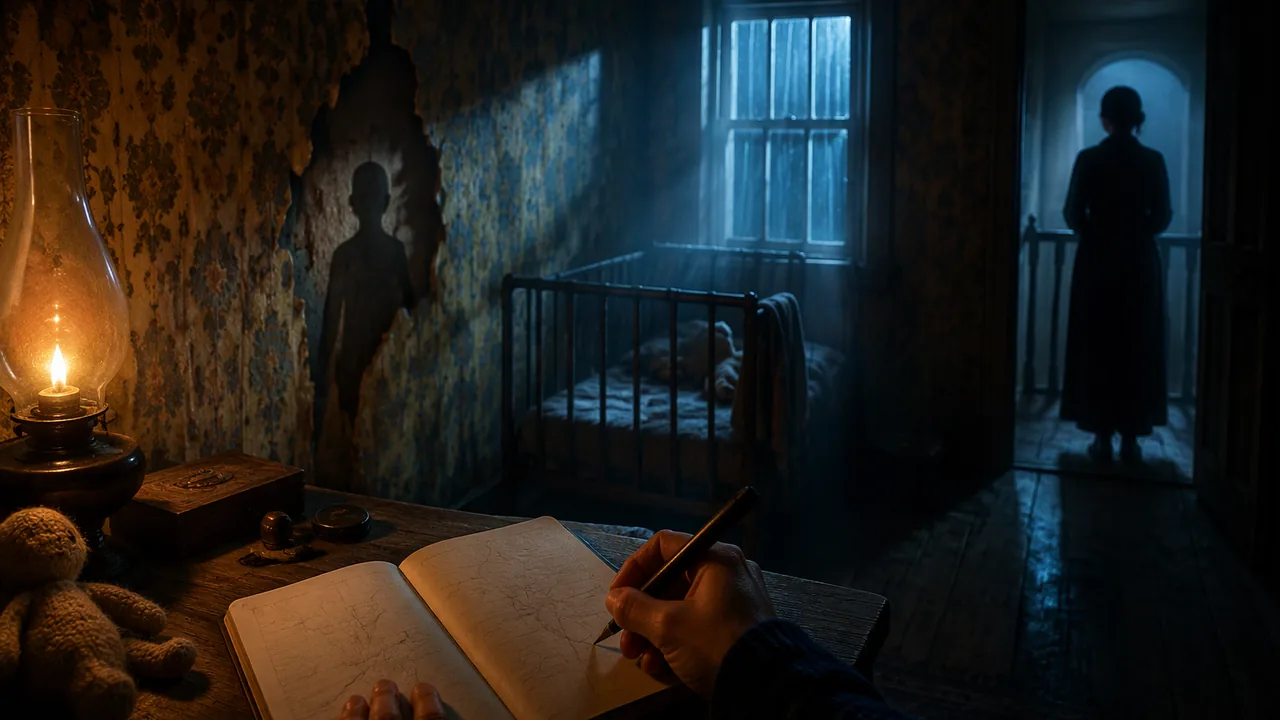
Gilman’s diary. “The Yellow Wall-Paper” is written as a series of secret journal entries by a woman whose physician husband, John, has prescribed complete rest after the birth of their baby: no work, no writing, no stimulating company. She writes anyway, hiding the pages. The structure is the story. Each entry is shorter and stranger than the last; the gaps between entries are time we do not see; and because she is writing to “dead paper,” she tells it what she cannot tell anyone. As the entries go on, she becomes fixed on the yellow wallpaper in the old nursery where she is kept, and sees a woman trapped behind its pattern.
Reading an unreliable narrator (11-12.RL.2.B / 11-12.RL.3.C). The narrator’s account is not reliable about the wallpaper; it is completely reliable about her treatment. The reader must distinguish what she states from what the story means. When she writes that John “is very careful and loving, and hardly lets me stir without special direction,” she means it as praise; the story means it as a description of imprisonment. The final scene — the narrator creeping around the room, her husband fainting in the doorway — is both a breakdown and a grim kind of escape: “I’ve got out at last.”
Gilman’s own account. In 1913 Gilman published a short essay, “Why I Wrote The Yellow Wallpaper,” in her magazine The Forerunner. She explains (in our paraphrase) that she had suffered a breakdown, was treated by a leading specialist in nervous diseases with a rest cure that forbade intellectual work, came close to losing her mind, and recovered only by returning to work. She wrote the story, she says, to save others from that treatment. That is an author’s statement of purpose: evidence, not the last word on the story’s meaning.
Chopin’s hour. “The Story of an Hour” is about a thousand words long. Louise Mallard is told, gently, that her husband has died in a railroad accident. She weeps, goes to her room alone, and slowly feels something approaching: “Free! Body and soul free!” She comes downstairs — and her husband walks in the door, alive; he had been nowhere near the accident. She dies.
The ironic ending. The doctors say she died “of joy that kills” — joy at seeing her husband. The reader knows better. This is dramatic irony at the level of a whole structure: the story has let us into the room the others never entered. The last line is what the world says; the story is what the world did not see.
Two themes that interact (11-12.RL.1.D). In both stories you can trace the theme of confinement disguised as care, and the theme of a self discovered in solitude. Notice how they build on each other: the women discover themselves precisely in the rooms they have been confined to.
A reading caution. Neither story says that marriage is always imprisonment, or that Louise’s husband was cruel. Chopin is careful to say he had been kind. Read what the stories actually show: that even kindness, when it decides for a woman, can be a cage.
Reading: Gilman’s opening and ending, and Chopin’s whole story
Charlotte Perkins Gilman, ‘The Yellow Wall-Paper’ (first published in the New England Magazine, January 1892), text as supplied by Project Gutenberg #1952 (it may follow a later reprint of the magazine text); Kate Chopin, ‘The Story of an Hour’ (Vogue, 6 December 1894), Wikisource. Retrieved 26 September 2026. Fetchable texts: Project Gutenberg #1952 (https://www.gutenberg.org/ebooks/1952); https://en.wikisource.org/wiki/The_Story_of_an_Hour. · SLS original; quoted stories are public domain (Gilman, 1892; Chopin, 1894)
Both stories are quoted exactly. The analysis and task are SLS original.
Read the passages once for what happens, then again for what each narrator can and cannot see. Gilman’s story is given in two pieces, its opening and its last scene. Chopin’s story is given whole, because it is short enough to read in a single sitting.
Gilman, “The Yellow Wall-Paper”: the opening entries
John is a physician, and perhaps—(I would not say it to a living soul, of course, but this is dead paper and a great relief to my mind)—perhaps that is one reason I do not get well faster.
You see, he does not believe I am sick!
And what can one do?
If a physician of high standing, and one’s own husband, assures friends and relatives that there is really nothing the matter with one but temporary nervous depression—a slight hysterical tendency—what is one to do?
My brother is also a physician, and also of high standing, and he says the same thing.
So I take phosphates or phosphites—whichever it is, and tonics, and journeys, and air, and exercise, and am absolutely forbidden to “work” until I am well again.
Personally, I disagree with their ideas.
Personally, I believe that congenial work, with excitement and change, would do me good.
But what is one to do?
— Charlotte Perkins Gilman, ‘The Yellow Wall-Paper’ (1892), Project Gutenberg #1952
Gilman: the last scene
Why, there’s John at the door!
It is no use, young man, you can’t open it!
How he does call and pound!
Now he’s crying for an axe.
It would be a shame to break down that beautiful door!
“John dear!” said I in the gentlest voice, “the key is down by the front steps, under a plantain leaf!”
That silenced him for a few moments.
Then he said—very quietly indeed, “Open the door, my darling!”
“I can’t,” said I. “The key is down by the front door under a plantain leaf!”
And then I said it again, several times, very gently and slowly, and said it so often that he had to go and see, and he got it, of course, and came in. He stopped short by the door.
“What is the matter?” he cried. “For God’s sake, what are you doing!”
I kept on creeping just the same, but I looked at him over my shoulder.
“I’ve got out at last,” said I, “in spite of you and Jane! And I’ve pulled off most of the paper, so you can’t put me back!”
Now why should that man have fainted? But he did, and right across my path by the wall, so that I had to creep over him every time!
— Charlotte Perkins Gilman, ‘The Yellow Wall-Paper’, final entry
Chopin, “The Story of an Hour” (1017 words, complete)
Knowing that Mrs. Mallard was afflicted with a heart trouble, great care was taken to break to her as gently as possible the news of her husband’s death.
It was her sister Josephine who told her, in broken sentences; veiled hints that revealed in half concealing. Her husband’s friend Richards was there, too, near her. It was he who had been in the newspaper office when intelligence of the railroad disaster was received, with Brently Mallard’s name leading the list of “killed.” He had only taken the time to assure himself of its truth by a second telegram, and had hastened to forestall any less careful, less tender friend in bearing the sad message.
She did not hear the story as many women have heard the same, with a paralyzed inability to accept its significance. She wept at once, with sudden, wild abandonment, in her sister’s arms. When the storm of grief had spent itself she went away to her room alone. She would have no one follow her.
There stood, facing the open window, a comfortable, roomy armchair. Into this she sank, pressed down by a physical exhaustion that haunted her body and seemed to reach into her soul.
She could see in the open square before her house the tops of trees that were all aquiver with the new spring life. The delicious breath of rain was in the air. In the street below a peddler was crying his wares. The notes of a distant song which some one was singing reached her faintly, and countless sparrows were twittering in the eaves. There were patches of blue sky showing here and there through the clouds that had met and piled one above the other in the west facing her window.
She sat with her head thrown back upon the cushion of the chair, quite motionless, except when a sob came up into her throat and shook her, as a child who has cried itself to sleep continues to sob in its dreams.
She was young, with a fair, calm face, whose lines bespoke repression and even a certain strength. But now there was a dull stare in her eyes, whose gaze was fixed away off yonder on one of those patches of blue sky. It was not a glance of reflection, but rather indicated a suspension of intelligent thought.
There was something coming to her and she was waiting for it, fearfully. What was it? She did not know; it was too subtle and elusive to name. But she felt it, creeping out of the sky, reaching toward her through the sounds, the scents, the color that filled the air.
Now her bosom rose and fell tumultuously. She was beginning to recognize this thing that was approaching to possess her, and she was striving to beat it back with her will — as powerless as her two white slender hands would have been. When she abandoned herself a little whispered word escaped her slightly parted lips. She said it over and over under her breath: “free, free, free!” The vacant stare and the look of terror that had followed it went from her eyes. They stayed keen and bright. Her pulses beat fast, and the coursing blood warmed and relaxed every inch of her body. She did not stop to ask if it were or were not a monstrous joy that held her. A clear and exalted perception enabled her to dismiss the suggestion as trivial.
She knew that she would weep again when she saw the kind, tender hands folded in death; the face that had never looked save with love upon her, fixed and gray and dead. But she saw beyond that bitter moment a long procession of years to come that would belong to her absolutely. And she opened and spread her arms out to them in welcome. There would be no one to live for her during those coming years; she would live for herself. There would be no powerful will bending hers in that blind persistence with which men and women believe they have a right to impose a private will upon a fellow-creature. A kind intention or a cruel intention made the act seem no less a crime as she looked upon it in that brief moment of illumination.
And yet she had loved him — sometimes. Often she had not. What did it matter! What could love, the unsolved mystery, count for in face of this possession of self-assertion which she suddenly recognized as the strongest impulse of her being!
“Free! Body and soul free!” she kept whispering.
Josephine was kneeling before the closed door with her lips to the keyhole, imploring for admission. “Louise, open the door! I beg, open the door — you will make yourself ill. What are you doing, Louise? For heaven’s sake open the door.”
“Go away. I am not making myself ill.” No; she was drinking in a very elixir of life through that open window. Her fancy was running riot along those days ahead of her. Spring days, and summer days, and all sorts of days that would be her own. She breathed a quick prayer that life might be long. It was only yesterday she had thought with a shudder that life might be long.
She arose at length and opened the door to her sister’s importunities. There was a feverish triumph in her eyes, and she carried herself unwittingly like a goddess of Victory. She clasped her sister’s waist, and together they descended the stairs. Richards stood waiting for them at the bottom.
Someone was opening the front door with a latchkey. It was Brently Mallard who entered, a little travel-stained, composedly carrying his grip-sack and umbrella. He had been far from the scene of the accident, and did not even know there had been one. He stood amazed at Josephine’s piercing cry; at Richards’ quick motion to screen him from the view of his wife.
But Richards was too late.
When the doctors came they said she had died of heart disease — of the joy that kills.
— Kate Chopin, ‘The Story of an Hour’, Vogue, 6 December 1894, via Wikisource
Worked structure analysis (SLS original)
| Gilman | Chopin | |
|---|---|---|
| Form | First-person secret entries. The narrator writes to “dead paper” because she may not write at all. | Third-person narration close to Louise Mallard for one hour, with the world outside the door reduced to a few lines. |
| What the reader knows that the characters do not | The narrator’s account of John’s care describes confinement; the reader sees it, and she does not name it. | The reader has watched Louise feel free. Josephine, Richards and the doctors have not. |
| Where it turns | “I kept on creeping just the same, but I looked at him over my shoulder.” The narrator stops hiding from John. The next sentence claims the escape. | “‘Free! Body and soul free!’ she kept whispering.” After it, every action of Louise is a preparation for a life she will not live. |
| Last sentence | The narrator creeps over her husband; the tone is gleeful and terrible at once. | The doctors’ diagnosis is the only explanation the world allows, and the reader knows it is wrong. |
Stated versus meant. When Gilman’s narrator says John “is very careful and loving,” she is stating; the story means that care has become control. When Chopin’s doctors say Louise died of the joy that kills, they are stating; the story means she died of the loss of a freedom she had held for an hour. Practice the move on one more sentence from each text before you write your analysis.
Your task. Name the sentence where each story turns. Explain in two sentences what the form (diary; one closed room) lets the reader know that the characters do not. Then write a paragraph on how confinement and self-discovery build on each other in both stories, using one quotation from each.
Formative check
Work through these before moving on. They are not graded — they tell you whether the standard below has landed yet.
Chopin’s story ends with the doctors’ diagnosis. What do you expect the reader is meant to do with it?
When Gilman’s narrator praises John for hardly letting her stir without direction, the story means:
Chopin presents Louise’s husband as cruel.
Structure analysis: for each story, identify the sentence where it turns, explain what the structure (diary entries; the closed room and the final line) lets the reader know that the characters do not, and write a paragraph on how the themes of confinement and self-discovery build on each other in both stories.
How confident are you that you can explain how a short story’s structure shapes what the reader understands?
Printable: Unit 2 Student Workbook
Every organizer for this unit in one booklet — the reading schedule, the vocabulary pages, all five lesson organizers, the peer review sheet and the scoring rubric. Print it before the unit starts and bring the page to each lesson.