analyze how Cather uses a second narrator, the Widow Steavens, to tell Ántonia’s story in Book IV, and compare the paths Lena, Tiny and Ántonia take to independence, property and the protection of the law.
Instruction
Content note. Book IV tells of a woman deceived and abandoned by the man she meant to marry, who gives birth alone, and of her brother’s cruel words about the newborn. Read with care.
Book III: the Muse and the prairie. At the university in Lincoln, Jim studies Latin with Gaston Cleric, who explains a line of Virgil’s Georgics, “for I shall be the first, if I live, to bring the Muse into my country,” meaning not a nation but the poet’s own rural neighborhood. That is Cather’s project too: to bring literature to the Nebraska farms. When Lena Lingard, now a successful dressmaker, visits Jim’s room, he understands “the relation between girls like those and the poetry of Virgil. If there were no girls like them in the world, there would be no poetry.” Lena is the novel’s freest woman. She has her own shop, plans to build her mother a house, and refuses marriage: “I prefer to be foolish when I feel like it, and be accountable to nobody.” Marriage, for her, is “all being under somebody’s thumb.” Tiny Soderball takes a harder road, to the Klondike gold fields, where a dying miner “deeded Tiny Soderball his claim on Hunker Creek” and she makes a fortune. Note that both women’s independence comes through property and business, and that Tiny pays for hers with three toes and with her capacity to care about anything but money.
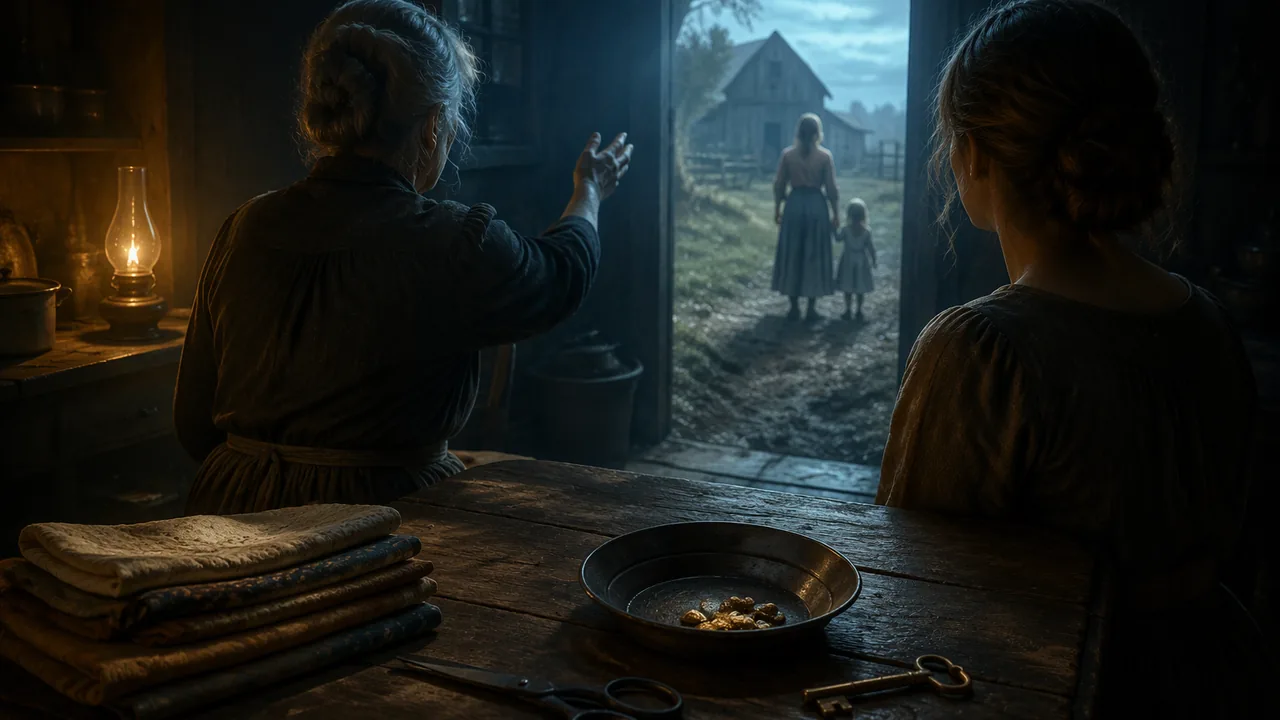
A second narrator (11-12.RL.2.B / 11-12.RL.3.C). Ántonia’s own story in Book IV reaches us at two removes. Jim hears rumors; then he drives out to the old farm and lets the Widow Steavens, who now rents it, tell what happened, and Cather gives most of Chapter 3 to her voice. 11-12.RL.2.B / 11-12.RL.3.C asks you to analyze point of view, and this is the place to do it. The widow is warm, practical and judgmental. She calls Ántonia “My Ántonia,” the novel’s own title in another mouth, and she ranks the girls by their “principles”: “My Ántonia, that had so much good in her, had come home disgraced. And that Lena Lingard, that was always a bad one, say what you will, had turned out so well.” Weigh her verdict against what you know of Lena from Book III.
Law in the widow’s story. Listen for every legal word. Larry Donovan was “blacklisted for knocking down fares,” that is, pocketing passengers’ money. Mrs. Steavens asked why Ántonia did not “insist on a civil marriage at once—that would have given her some hold on him.” Ambrosch had “collected her wages all those first years she worked out,” and gave her three hundred dollars, “and it was but right.” When Ántonia gives birth alone and Ambrosch mutters that the baby should be put “in the rain-barrel,” the widow answers with the law: “there’s a law in this land, don’t forget that. I stand here a witness that this baby has come into the world sound and strong.” In Black Hawk the law served Cutter’s notes. Here, spoken by a farm woman, it protects a child.
The changing land. Driving out, Jim sees “the old pasture land was now being broken up into wheatfields and cornfields, the red grass was disappearing, and the whole face of the country was changing.” He finds it beautiful, “like watching the growth of a great man or of a great idea.” Compare that with Chapter 4, when he meets Ántonia at her father’s grave, the one patch where “The tall red grass had never been cut.” She tells him, “I like to be where I know every stack and tree, and where all the ground is friendly,” and “I’m going to see that my little girl has a better chance than ever I had.” Ask what the red grass at the grave means once the rest has been plowed.
📖 Before this lesson, read: My Ántonia, Books III and IV
The reading opens over the lesson; close it to come back to exactly where you were.
Formative check
Work through these before moving on. They are not graded — they tell you whether the standard below has landed yet.
Jim learns what happened to Ántonia not from her but from the Widow Steavens. Before you read Chapter 3 of Book IV, what do you predict this choice of narrator will add?
Why did Larry Donovan have no job when Ántonia joined him in Denver?
When Ambrosch says the newborn should be put in the rain-barrel, the Widow Steavens answers by appealing to the law.
Three-paths chart: for Lena, Tiny and Ántonia, record what each wants, how she gets property or independence, what it costs her, and one quotation. Then write a paragraph analyzing the Widow Steavens as a narrator: quote one of her judgments, explain what it reveals about her point of view, and say whether the rest of the novel supports or questions it.
How confident are you that you can analyze how the Widow Steavens’s point of view shapes Ántonia’s story, and compare the three women’s paths?
My Ántonia, Books III and IV
My Ántonia, Book 3 (Lena Lingard), Chapter 1 Bridge summary — not the primary text
This is a short recap written for this course, not Willa Cather’s own words, so you can follow the story between close-reading lessons.
{summary}My Ántonia, Book 3 (Lena Lingard), Chapter 2 Bridge summary — not the primary text
This is a short recap written for this course, not Willa Cather’s own words, so you can follow the story between close-reading lessons.
{summary}My Ántonia, Book 3 (Lena Lingard), Chapter 3 Bridge summary — not the primary text
This is a short recap written for this course, not Willa Cather’s own words, so you can follow the story between close-reading lessons.
{summary}My Ántonia, Book 3 (Lena Lingard), Chapter 4 Bridge summary — not the primary text
This is a short recap written for this course, not Willa Cather’s own words, so you can follow the story between close-reading lessons.
{summary}My Ántonia, Book 4 (The Pioneer Woman’s Story), Chapter 1 Bridge summary — not the primary text
This is a short recap written for this course, not Willa Cather’s own words, so you can follow the story between close-reading lessons.
{summary}My Ántonia, Book 4 (The Pioneer Woman’s Story), Chapter 2 Bridge summary — not the primary text
This is a short recap written for this course, not Willa Cather’s own words, so you can follow the story between close-reading lessons.
{summary}My Ántonia, Book 4 (The Pioneer Woman’s Story), Chapter 3
Source: Willa Cather, My Ántonia (Boston: Houghton Mifflin, 1918), Project Gutenberg eBook #242 (gutenberg.org) · Public domain
On the first or second day of August I got a horse and cart and set out for the high country, to visit the Widow Steavens. The wheat harvest was over, and here and there along the horizon I could see black puffs of smoke from the steam threshing-machines. The old pasture land was now being broken up into wheatfields and cornfields, the red grass was disappearing, and the whole face of the country was changing. There were wooden houses where the old sod dwellings used to be, and little orchards, and big red barns; all this meant happy children, contented women, and men who saw their lives coming to a fortunate issue. The windy springs and the blazing summers, one after another, had enriched and mellowed that flat tableland; all the human effort that had gone into it was coming back in long, sweeping lines of fertility. The changes seemed beautiful and harmonious to me; it was like watching the growth of a great man or of a great idea. I recognized every tree and sandbank and rugged draw. I found that I remembered the conformation of the land as one remembers the modelling of human faces.
When I drew up to our old windmill, the Widow Steavens came out to meet me. She was brown as an Indian woman, tall, and very strong. When I was little, her massive head had always seemed to me like a Roman senator’s. I told her at once why I had come.
‘You’ll stay the night with us, Jimmy? I’ll talk to you after supper. I can take more interest when my work is off my mind. You’ve no prejudice against hot biscuit for supper? Some have, these days.’
While I was putting my horse away, I heard a rooster squawking. I looked at my watch and sighed; it was three o’clock, and I knew that I must eat him at six.
After supper Mrs. Steavens and I went upstairs to the old sitting-room, while her grave, silent brother remained in the basement to read his farm papers. All the windows were open. The white summer moon was shining outside, the windmill was pumping lazily in the light breeze. My hostess put the lamp on a stand in the corner, and turned it low because of the heat. She sat down in her favourite rocking-chair and settled a little stool comfortably under her tired feet. ‘I’m troubled with calluses, Jim; getting old,’ she sighed cheerfully. She crossed her hands in her lap and sat as if she were at a meeting of some kind.
‘Now, it’s about that dear Ántonia you want to know? Well, you’ve come to the right person. I’ve watched her like she’d been my own daughter.
‘When she came home to do her sewing that summer before she was to be married, she was over here about every day. They’ve never had a sewing-machine at the Shimerdas’, and she made all her things here. I taught her hemstitching, and I helped her to cut and fit. She used to sit there at that machine by the window, pedalling the life out of it—she was so strong—and always singing them queer Bohemian songs, like she was the happiest thing in the world.
‘“Ántonia,” I used to say, “don’t run that machine so fast. You won’t hasten the day none that way.”
‘Then she’d laugh and slow down for a little, but she’d soon forget and begin to pedal and sing again. I never saw a girl work harder to go to housekeeping right and well-prepared. Lovely table-linen the Harlings had given her, and Lena Lingard had sent her nice things from Lincoln. We hemstitched all the tablecloths and pillow-cases, and some of the sheets. Old Mrs. Shimerda knit yards and yards of lace for her underclothes. Tony told me just how she meant to have everything in her house. She’d even bought silver spoons and forks, and kept them in her trunk. She was always coaxing brother to go to the post-office. Her young man did write her real often, from the different towns along his run.
‘The first thing that troubled her was when he wrote that his run had been changed, and they would likely have to live in Denver. “I’m a country girl,” she said, “and I doubt if I’ll be able to manage so well for him in a city. I was counting on keeping chickens, and maybe a cow.” She soon cheered up, though.
‘At last she got the letter telling her when to come. She was shaken by it; she broke the seal and read it in this room. I suspected then that she’d begun to get faint-hearted, waiting; though she’d never let me see it.
‘Then there was a great time of packing. It was in March, if I remember rightly, and a terrible muddy, raw spell, with the roads bad for hauling her things to town. And here let me say, Ambrosch did the right thing. He went to Black Hawk and bought her a set of plated silver in a purple velvet box, good enough for her station. He gave her three hundred dollars in money; I saw the cheque. He’d collected her wages all those first years she worked out, and it was but right. I shook him by the hand in this room. “You’re behaving like a man, Ambrosch,” I said, “and I’m glad to see it, son.”
‘’Twas a cold, raw day he drove her and her three trunks into Black Hawk to take the night train for Denver—the boxes had been shipped before. He stopped the wagon here, and she ran in to tell me good-bye. She threw her arms around me and kissed me, and thanked me for all I’d done for her. She was so happy she was crying and laughing at the same time, and her red cheeks was all wet with rain.
‘“You’re surely handsome enough for any man,” I said, looking her over.
‘She laughed kind of flighty like, and whispered, “Good-bye, dear house!” and then ran out to the wagon. I expect she meant that for you and your grandmother, as much as for me, so I’m particular to tell you. This house had always been a refuge to her.
‘Well, in a few days we had a letter saying she got to Denver safe, and he was there to meet her. They were to be married in a few days. He was trying to get his promotion before he married, she said. I didn’t like that, but I said nothing. The next week Yulka got a postal card, saying she was “well and happy.” After that we heard nothing. A month went by, and old Mrs. Shimerda began to get fretful. Ambrosch was as sulky with me as if I’d picked out the man and arranged the match.
‘One night brother William came in and said that on his way back from the fields he had passed a livery team from town, driving fast out the west road. There was a trunk on the front seat with the driver, and another behind. In the back seat there was a woman all bundled up; but for all her veils, he thought ‘twas Ántonia Shimerda, or Ántonia Donovan, as her name ought now to be.
‘The next morning I got brother to drive me over. I can walk still, but my feet ain’t what they used to be, and I try to save myself. The lines outside the Shimerdas’ house was full of washing, though it was the middle of the week. As we got nearer, I saw a sight that made my heart sink—all those underclothes we’d put so much work on, out there swinging in the wind. Yulka came bringing a dishpanful of wrung clothes, but she darted back into the house like she was loath to see us. When I went in, Ántonia was standing over the tubs, just finishing up a big washing. Mrs. Shimerda was going about her work, talking and scolding to herself. She didn’t so much as raise her eyes. Tony wiped her hand on her apron and held it out to me, looking at me steady but mournful. When I took her in my arms she drew away. “Don’t, Mrs. Steavens,” she says, “you’ll make me cry, and I don’t want to.”
‘I whispered and asked her to come out-of-doors with me. I knew she couldn’t talk free before her mother. She went out with me, bareheaded, and we walked up toward the garden.
‘“I’m not married, Mrs. Steavens,” she says to me very quiet and natural-like, “and I ought to be.”
‘“Oh, my child,” says I, “what’s happened to you? Don’t be afraid to tell me!”
‘She sat down on the drawside, out of sight of the house. “He’s run away from me,” she said. “I don’t know if he ever meant to marry me.”
‘“You mean he’s thrown up his job and quit the country?” says I.
‘“He didn’t have any job. He’d been fired; blacklisted for knocking down fares. I didn’t know. I thought he hadn’t been treated right. He was sick when I got there. He’d just come out of the hospital. He lived with me till my money gave out, and afterward I found he hadn’t really been hunting work at all. Then he just didn’t come back. One nice fellow at the station told me, when I kept going to look for him, to give it up. He said he was afraid Larry’d gone bad and wouldn’t come back any more. I guess he’s gone to Old Mexico. The conductors get rich down there, collecting half-fares off the natives and robbing the company. He was always talking about fellows who had got ahead that way.”
‘I asked her, of course, why she didn’t insist on a civil marriage at once—that would have given her some hold on him. She leaned her head on her hands, poor child, and said, “I just don’t know, Mrs. Steavens. I guess my patience was wore out, waiting so long. I thought if he saw how well I could do for him, he’d want to stay with me.”
‘Jimmy, I sat right down on that bank beside her and made lament. I cried like a young thing. I couldn’t help it. I was just about heart-broke. It was one of them lovely warm May days, and the wind was blowing and the colts jumping around in the pastures; but I felt bowed with despair. My Ántonia, that had so much good in her, had come home disgraced. And that Lena Lingard, that was always a bad one, say what you will, had turned out so well, and was coming home here every summer in her silks and her satins, and doing so much for her mother. I give credit where credit is due, but you know well enough, Jim Burden, there is a great difference in the principles of those two girls. And here it was the good one that had come to grief! I was poor comfort to her. I marvelled at her calm. As we went back to the house, she stopped to feel of her clothes to see if they was drying well, and seemed to take pride in their whiteness—she said she’d been living in a brick block, where she didn’t have proper conveniences to wash them.
‘The next time I saw Ántonia, she was out in the fields ploughing corn. All that spring and summer she did the work of a man on the farm; it seemed to be an understood thing. Ambrosch didn’t get any other hand to help him. Poor Marek had got violent and been sent away to an institution a good while back. We never even saw any of Tony’s pretty dresses. She didn’t take them out of her trunks. She was quiet and steady. Folks respected her industry and tried to treat her as if nothing had happened. They talked, to be sure; but not like they would if she’d put on airs. She was so crushed and quiet that nobody seemed to want to humble her. She never went anywhere. All that summer she never once came to see me. At first I was hurt, but I got to feel that it was because this house reminded her of too much. I went over there when I could, but the times when she was in from the fields were the times when I was busiest here. She talked about the grain and the weather as if she’d never had another interest, and if I went over at night she always looked dead weary. She was afflicted with toothache; one tooth after another ulcerated, and she went about with her face swollen half the time. She wouldn’t go to Black Hawk to a dentist for fear of meeting people she knew. Ambrosch had got over his good spell long ago, and was always surly. Once I told him he ought not to let Ántonia work so hard and pull herself down. He said, “If you put that in her head, you better stay home.” And after that I did.
‘Ántonia worked on through harvest and threshing, though she was too modest to go out threshing for the neighbours, like when she was young and free. I didn’t see much of her until late that fall when she begun to herd Ambrosch’s cattle in the open ground north of here, up toward the big dog-town. Sometimes she used to bring them over the west hill, there, and I would run to meet her and walk north a piece with her. She had thirty cattle in her bunch; it had been dry, and the pasture was short, or she wouldn’t have brought them so far.
‘It was a fine open fall, and she liked to be alone. While the steers grazed, she used to sit on them grassy banks along the draws and sun herself for hours. Sometimes I slipped up to visit with her, when she hadn’t gone too far.
‘“It does seem like I ought to make lace, or knit like Lena used to,” she said one day, “but if I start to work, I look around and forget to go on. It seems such a little while ago when Jim Burden and I was playing all over this country. Up here I can pick out the very places where my father used to stand. Sometimes I feel like I’m not going to live very long, so I’m just enjoying every day of this fall.”
‘After the winter begun she wore a man’s long overcoat and boots, and a man’s felt hat with a wide brim. I used to watch her coming and going, and I could see that her steps were getting heavier. One day in December, the snow began to fall. Late in the afternoon I saw Ántonia driving her cattle homeward across the hill. The snow was flying round her and she bent to face it, looking more lonesome-like to me than usual. “Deary me,” I says to myself, “the girl’s stayed out too late. It’ll be dark before she gets them cattle put into the corral.” I seemed to sense she’d been feeling too miserable to get up and drive them.
‘That very night, it happened. She got her cattle home, turned them into the corral, and went into the house, into her room behind the kitchen, and shut the door. There, without calling to anybody, without a groan, she lay down on the bed and bore her child.
‘I was lifting supper when old Mrs. Shimerda came running down the basement stairs, out of breath and screeching:
‘“Baby come, baby come!” she says. “Ambrosch much like devil!”
‘Brother William is surely a patient man. He was just ready to sit down to a hot supper after a long day in the fields. Without a word he rose and went down to the barn and hooked up his team. He got us over there as quick as it was humanly possible. I went right in, and began to do for Ántonia; but she laid there with her eyes shut and took no account of me. The old woman got a tubful of warm water to wash the baby. I overlooked what she was doing and I said out loud: “Mrs. Shimerda, don’t you put that strong yellow soap near that baby. You’ll blister its little skin.” I was indignant.
‘“Mrs. Steavens,” Ántonia said from the bed, “if you’ll look in the top tray of my trunk, you’ll see some fine soap.” That was the first word she spoke.
‘After I’d dressed the baby, I took it out to show it to Ambrosch. He was muttering behind the stove and wouldn’t look at it.
‘“You’d better put it out in the rain-barrel,” he says.
‘“Now, see here, Ambrosch,” says I, “there’s a law in this land, don’t forget that. I stand here a witness that this baby has come into the world sound and strong, and I intend to keep an eye on what befalls it.” I pride myself I cowed him.
‘Well I expect you’re not much interested in babies, but Ántonia’s got on fine. She loved it from the first as dearly as if she’d had a ring on her finger, and was never ashamed of it. It’s a year and eight months old now, and no baby was ever better cared-for. Ántonia is a natural-born mother. I wish she could marry and raise a family, but I don’t know as there’s much chance now.’
I slept that night in the room I used to have when I was a little boy, with the summer wind blowing in at the windows, bringing the smell of the ripe fields. I lay awake and watched the moonlight shining over the barn and the stacks and the pond, and the windmill making its old dark shadow against the blue sky.
My Ántonia, Book 4 (The Pioneer Woman’s Story), Chapter 4 Bridge summary — not the primary text
This is a short recap written for this course, not Willa Cather’s own words, so you can follow the story between close-reading lessons.
{summary}