write and present a travel guide that narrates a visit in the preterite and recommends what to see in the present, with accurate historical information, and write a personal postcard e-mail in Spanish about the trip.
Instruction
Dos tiempos en un texto
A travel guide mixes two time frames. The visit is a narrative in the preterite (fuimos, vimos, aprendimos). The recommendation is in the present, because it is true now for any reader (el museo abre a las diez, hay visitas en español, vale la pena…). Switching between them on purpose, and signaling the switch, is an Intermediate skill.
Un modelo: Santa Fe, el final del camino
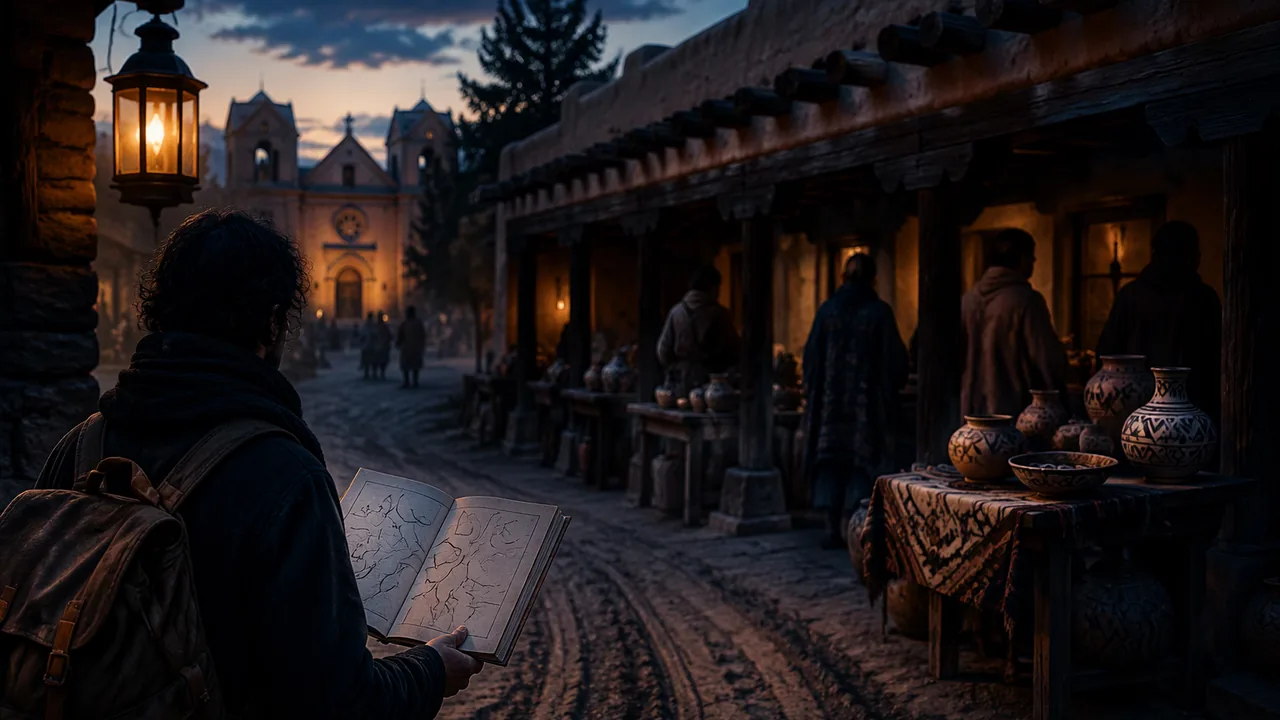
El verano pasado, mi familia y yo fuimos en carro de Independence, Missouri, a Santa Fe, Nuevo México, por la ruta del antiguo Camino de Santa Fe. Santa Fe fue la capital de Nuevo México durante los periodos español y mexicano, y la plaza fue el final del camino. Primero visitamos el Palacio de los Gobernadores, en el lado norte de la plaza. Allí supe algo que no sabía: el palacio es de 1610 y es el edificio público más antiguo en uso continuo construido por europeos en Estados Unidos continental. En el museo también supe que muchos comerciantes del camino hablaban español, porque eran nuevomexicanos. Después caminamos por el centro histórico y vimos casas de adobe. Por la tarde comimos enchiladas con chile verde.
Si usted visita Santa Fe, le recomiendo empezar en el Palacio de los Gobernadores. Bajo el portal del palacio, artistas indígenas de veintitrés tribus, pueblos y naciones de Nuevo México venden su arte directamente. También vale la pena preguntar por la historia de los pueblos indígenas: en 1680, los pueblos se rebelaron y los españoles salieron de Santa Fe por unos doce años.
Cómo está construida
- Orientación in the preterite: when, who, where, and one fact that places the site in history.
- La visita: three or four events in sequence (primero, después, por la tarde), with a moment of discovery (supe que…, aprendí que…).
- La recomendación in the present, addressed to the reader with usted or ustedes (le recomiendo, vale la pena, no se pierda…).
- Otra voz: one sentence that brings in a perspective the usual guide leaves out, such as the Native nation whose land it is.
Lugares posibles
In Missouri: Franklin or Independence, two of the trail’s starting points (Independence’s National Frontier Trails Museum has moved, so check the city’s website), or Kansas City’s Westside and the Mattie Rhodes Cultural Center. Along the trail: Council Grove in Kansas, Fort Larned National Historic Site (Kansas), Bent’s Old Fort National Historic Site (Colorado), Fort Union National Monument and Pecos National Historical Park (New Mexico), or the Santa Fe Plaza. In the Spanish-speaking world: the city of Oaxaca from Unit 3, Guanajuato from Lesson 4.2, or a city you research. Use at least two sources, preferably official ones (National Park Service, Missouri State Parks, a museum, a tribal nation’s own website), and list them.
Accuracy first
A guide is only useful if it is true. Check every date and name in your sources. If you are not sure of a fact, leave it out or say según [source]…. The historical facts in the Santa Fe model come from the New Mexico History Museum and the National Park Service: the Palace of the Governors dates to 1610 and sits on the north side of the plaza, the plaza was the end of the Santa Fe Trail, and the museum’s Portal Program lets artisans from 23 tribes, pueblos and nations sell their work under the portal. Even official dates can be debated: some historians now think construction began around 1618. That is exactly when a careful writer says según el museo….
Presentar
Record a 90-second podcast episode, or a short video with three images; a family member may watch. Speak from notes. Start with a hook question (¿Sabía usted que…?).
Una postal desde el viaje
Travelers also write to people they know. A postcard or short e-mail in Spanish to a friend or relative is personal communication, so it uses tú (or ustedes for a whole family) and has its own conventions:
- Saludo: Querida tía Rosa: / Querido Mateo: / ¡Hola, Valentina!
- Dónde estás y qué hiciste, in the preterite: Te escribo desde Santa Fe. Ayer visitamos el palacio…
- Una pregunta for the reader, so the conversation continues: ¿Y tú, qué hiciste este verano?
- Despedida: Un abrazo, / Besos, / Con cariño, + your name.
Your pen pal for this unit: Valentina Ruiz is a fictional sixteen-year-old who lives in the city of Chihuahua, Mexico. She loves history and old trains, and she likes to know that the Camino Real de Tierra Adentro once carried goods from Santa Fe south to her city. Write to Valentina, or, only with a parent’s or guardian’s OK, to a Spanish-speaking relative or family friend you know, and send it to them. Never write to strangers online for this task.
¡Hola, Valentina! Te escribo desde Santa Fe, Nuevo México. Ayer fuimos al Palacio de los Gobernadores y supe que tiene más de cuatrocientos años. En el portal compré unos aretes de una artista indígena. ¿Sabías que este camino continuaba hasta Chihuahua? ¿Qué hiciste tú este verano? Un abrazo, Sam
📖 Read for this lesson
The reading opens over the lesson; close it to come back to exactly where you were. The checks below draw on it.
Formative check
Work through these before moving on. They are not graded — they tell you whether the standard below has landed yet.
Lee la guía de Santa Fe y contesta.
El verano pasado, mi familia y yo fuimos en carro de Independence, Missouri, a Santa Fe, Nuevo México, por la ruta del antiguo Camino de Santa Fe. Primero visitamos el Palacio de los Gobernadores, en el lado norte de la plaza. Allí supe algo que no sabía: el palacio es de 1610. En el museo también supe que muchos comerciantes del camino hablaban español. Después caminamos por el centro histórico y vimos casas de adobe.
Si usted visita Santa Fe, le recomiendo empezar en el Palacio de los Gobernadores. Bajo el portal, artistas indígenas de Nuevo México venden su arte. También vale la pena preguntar por la historia de los pueblos indígenas de la región.
Show transcript
El verano pasado, mi familia y yo fuimos en carro de Independence, Missouri, a Santa Fe, Nuevo México, por la ruta del antiguo Camino de Santa Fe. Primero visitamos el Palacio de los Gobernadores, en el lado norte de la plaza. Allí supe algo que no sabía: el palacio es de 1610. En el museo también supe que muchos comerciantes del camino hablaban español. Después caminamos por el centro histórico y vimos casas de adobe. Si usted visita Santa Fe, le recomiendo empezar en el Palacio de los Gobernadores. Bajo el portal, artistas indígenas de Nuevo México venden su arte. También vale la pena preguntar por la historia de los pueblos indígenas de la región.
¿Qué edificio visitaron primero?
¿Qué supo el autor en el museo?
Which part is a recommendation in the present?
Build the sentence: “There I found out that many traders spoke Spanish.”
Type it instead
Translate into Spanish, addressing the reader as usted.
If you visit Santa Fe, I recommend the plaza.
Missouri standard: WL.5.1c.II
Draft your travel guide (180-220 words) to a place with Santa Fe Trail, Spanish-language or Native history, in Missouri, along the trail or in the Spanish-speaking world: orientation, a visit narrated in the preterite (at least six verbs, three irregular), one moment of discovery (supe que…, aprendí que…), a recommendation in the present with usted, and one sentence bringing in another perspective. List at least two sources. Then write a 50-70 word postcard e-mail in Spanish from that place to Valentina, the fictional pen pal in this lesson, or, only with a parent’s or guardian’s OK, to a Spanish-speaking relative or family friend: a greeting, where you are, three things you did (preterite, with tú for the reader), one question for the reader, and a closing. Heritage-speaker path: add a bilingual museum label (60 words in each language) for one object or building at the site.
How confident are you that you can write and present a travel guide that combines past narration with present recommendations and accurate history?
Practice
Work these on paper or in your notebook, then open Check your answer. Aim for all of Fluency and Application; try at least one Challenge.
Printable version: this unit’s practice workbook (PDF)
Fluency
Build speed and accuracy with the core skill.
- Give the meaning: (a) vale la pena; (b) le recomiendo; (c) según; (d) la casa de adobe; (e) Un abrazo.
Check your answer
Answer: (a) it’s worth it; (b) I recommend (to you, formal); (c) according to; (d) a house of sun-dried mud bricks; (e) a hug (a common closing of a personal letter).These phrases belong to the guide and the postcard. - Preterite or present? Label each sentence from the model as visit (preterite) or recommendation (present): (a) Primero visitamos el Palacio de los Gobernadores. (b) Le recomiendo empezar en el palacio. (c) Vimos casas de adobe. (d) Artistas indígenas venden su arte bajo el portal.
Check your answer
Answer: (a) visit, preterite; (b) recommendation, present; (c) visit, preterite; (d) recommendation/true now, present.The visit is a narrative; the recommendation is true now for any reader. - Name the four parts of the travel guide in order.
Check your answer
Answer: 1. Orientación (preterite: when, who, where, a fact placing the site in history). 2. La visita (events in sequence with a moment of discovery). 3. La recomendación (present, usted/ustedes). 4. Otra voz (a perspective the usual guide leaves out).The Santa Fe model follows this structure.
Application
Use the skill in context. Show your reasoning.
- The Palace of the Governors dates to 1610. How old was it in 2026? Some historians think construction began around 1618; how old would that make it in 2026? Write one Spanish sentence using según to report the date carefully.
Check your answer
Answer: 416 years; 408 years. Según el museo, el palacio es de 1610.2026 − 1610 = 416; 2026 − 1618 = 408. When dates are debated, a careful writer says según… - Translate into Spanish, addressing the reader as ustedes: “If you visit Santa Fe, it’s worth it to ask about the history of the Native peoples.”
Check your answer
Answer: Si ustedes visitan Santa Fe, vale la pena preguntar por la historia de los pueblos indígenas.Vale la pena + infinitive; visitan is the ustedes form. - Change the recommendation from formal to informal: Si usted visita Santa Fe, le recomiendo la plaza. Then say when you would use each version.
Check your answer
Answer: Si visitas Santa Fe, te recomiendo la plaza. Formal (usted) for a published guide to any reader; informal (tú) for a friend, as in a postcard.The postcard is personal communication, so it uses tú. - Write the “otra voz” sentence for a guide to Santa Fe in Spanish, using a fact from the lesson.
Check your answer
Answer: Model: En 1680, los pueblos se rebelaron y los españoles salieron de Santa Fe por unos doce años. (or Bajo el portal, artistas de veintitrés tribus, pueblos y naciones venden su arte.)The sentence brings in a Native perspective that the usual traders’ story leaves out.
Challenge
Stretch problems. Expect to think before you write.
- Review from Lesson 4.1: name two New Mexican trading families from the lesson and one Native nation whose homeland the trail crossed. Write one Spanish sentence with a New Mexican family as the subject.
Check your answer
Answer: Any two of the Chávez, Otero, Perea, Yrizarri; any of the Osage, Kansa (Kaw), Comanche, Kiowa, Cheyenne, Arapaho, Apache, Ute, Pueblo. Example: Los Otero vinieron a Missouri con sus caravanas.Making them the subject of the verb tells their side of the story.
Review
Keep earlier skills sharp.
- Write a 50-60 word postcard in Spanish to Valentina, the lesson’s fictional pen pal in Chihuahua, from an invented trip to Council Grove or Santa Fe. Include a greeting, where you are, three things you did (preterite), one question for her and a closing.
Check your answer
Answer: Model: ¡Hola, Valentina! Te escribo desde Santa Fe. Ayer visitamos el Palacio de los Gobernadores y supe que es de 1610. Después caminamos por la plaza y vimos casas de adobe. Por la tarde comimos enchiladas con chile verde. ¿Sabes que el Camino Real de Tierra Adentro llegó a Chihuahua? ¿Qué hiciste tú este verano? Un abrazo, SamA strong postcard uses tú for the reader, at least three preterite verbs, a question that keeps the conversation going and a closing. Write only to the fictional pen pal.
Guía de viaje: Santa Fe, el final del camino
SLS original travel-guide reading for RLP Spanish 2A, modeling the mixed past-narration/present-recommendation structure of the presentational task; facts from the New Mexico History Museum, the National Park Service and Wikipedia (retrieved November 10, 2026) · SLS original
Por qué esta lectura. La narradora es inventada, pero el Palacio de los Gobernadores (de 1610), el programa de artistas indígenas del portal y la rebelión de los pueblos de 1680 son reales. Fíjate en el cambio entre el pretérito (la visita) y el presente (la recomendación).
Guía de viaje: Santa Fe, el final del camino
El verano pasado, mi familia y yo fuimos en carro de Independence, Missouri, a Santa Fe, Nuevo México, por la ruta del antiguo Camino de Santa Fe. Santa Fe fue la capital de Nuevo México durante los periodos español y mexicano, y la plaza fue el final del camino. Primero visitamos el Palacio de los Gobernadores, en el lado norte de la plaza. Allí supe algo que no sabía: el palacio es de 1610 y es el edificio público más antiguo en uso continuo construido por europeos en Estados Unidos continental. En el museo también supe que muchos comerciantes del camino hablaban español, porque eran nuevomexicanos. Después caminamos por el centro histórico y vimos casas de adobe. Por la tarde comimos enchiladas con chile verde.
Si usted visita Santa Fe, le recomiendo empezar en el Palacio de los Gobernadores. Bajo el portal del palacio, artistas indígenas de veintitrés tribus, pueblos y naciones de Nuevo México venden su arte directamente. También vale la pena preguntar por la historia de los pueblos indígenas: en 1680, los pueblos se rebelaron y los españoles salieron de Santa Fe por unos doce años.
Sources: New Mexico History Museum: Palace of the Governors (dating back to 1610) and the Native American Artisans Portal Program (23 tribes, pueblos and nations) (nmhistorymuseum.org); Wikipedia, “Palace of the Governors” (1610; research suggesting about 1618) (en.wikipedia.org); Wikipedia, “Pueblo Revolt” (1680; end of Spanish rule for about 12 years) (en.wikipedia.org); National Park Service, “New Mexican Traders on the Santa Fe Trail” (nps.gov)