understand a narrative about a Día de los Muertos celebration, recognize past-tense verbs in context, and explain the perspectives behind the holiday’s practices.
Instruction
Una fiesta para recordar
The Día de los Muertos (November 1 and 2) is one of the best-known celebrations of Mexico, and it is celebrated publicly in Missouri too. In Español 1 you saw the altars at the Missouri History Museum in St. Louis. On Kansas City’s Westside, the Mattie Rhodes Center, a bilingual community organization, holds a Día de los Muertos exhibit every year: artists, families, school groups and neighbors build altars, and the season closes with a Calaca Parade (a skeleton parade), live music and food. Its 2016 event was the 18th; in 2026 the closing celebration was on November 6 at the Mattie Rhodes Cultural Center, 1701 Jarboe Street (Mattie Rhodes Center, mattierhodes.org). In 2008 UNESCO inscribed the Indigenous festivity dedicated to the dead in Mexico on its list of the Intangible Cultural Heritage of Humanity.
Productos, prácticas y perspectivas
Cultural knowledge has three layers, and you will use them all year.
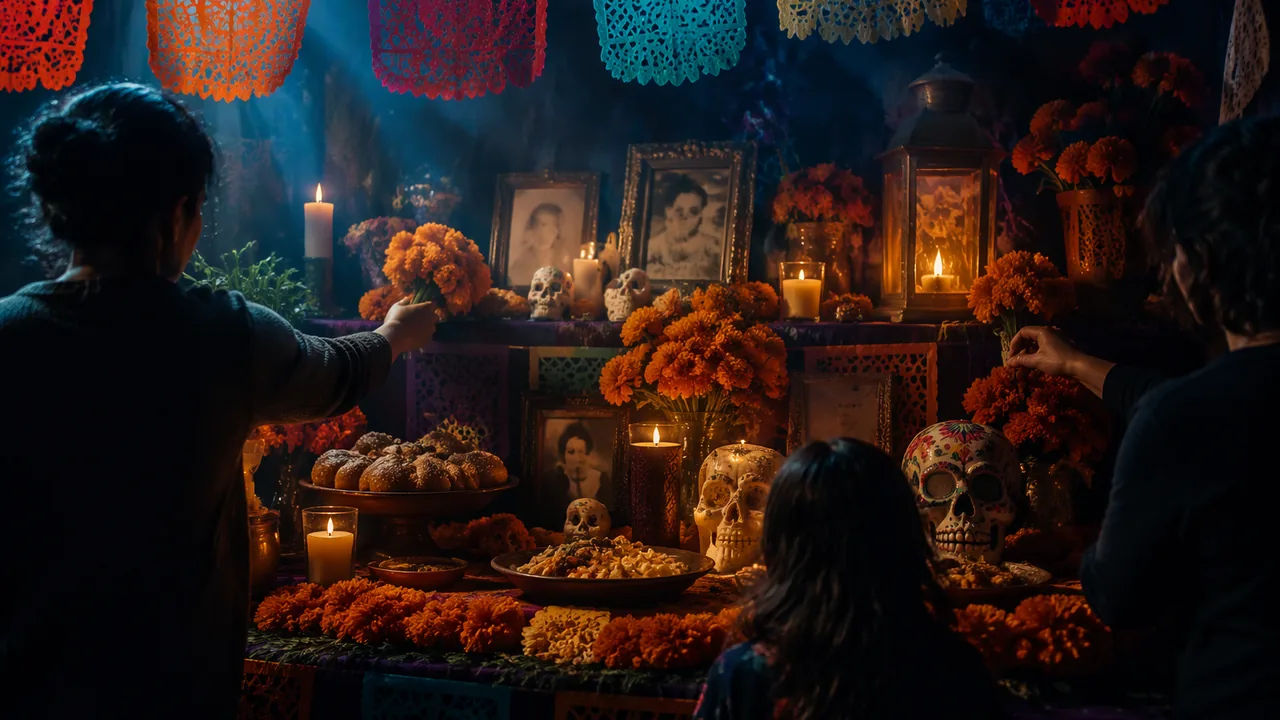
- Productos (products): the things people make. The ofrenda or altar, flowers of cempasúchil (Mexican marigold), pan de muerto, sugar skulls (calaveritas de azúcar), papel picado (cut-paper banners), photos, candles, the favorite food of the person remembered.
- Prácticas (practices): what people do. Families build the altar at home, visit and clean the graves, share food, tell stories about the dead, and in some towns spend the night in the cemetery.
- Perspectivas (perspectives): the beliefs and values behind them. Death is part of life; the dead are remembered with joy, not only sadness; for a few days, according to tradition, they come back to visit, and the bright color and scent of the cempasúchil help guide them.
The celebration joins Indigenous traditions of honoring ancestors, practiced in Mesoamerica long before 1500, with the Catholic days of All Saints and All Souls brought from Spain. It is not a “Mexican Halloween”: Halloween is about fear and costumes, while the Día de los Muertos is about memory and family. It is also not the same everywhere. In Guatemala, the towns of Sumpango and Santiago Sacatepéquez fly barriletes gigantes (giant kites) on November 1, and in many Central American families the day is centered on the cemetery.
A new tense appears
The chronicle you will read tells what happened last year, so it uses the preterite, a past tense for completed events. You will learn its forms in the next two lessons; today, notice the endings and use context.
- fuimos = we went. (Notice el año pasado, last year, at the start: a strong clue.)
- pusimos = we put (from poner).
- mi abuela preparó = my grandmother prepared. An -ó with an accent at the end of a verb often means “he / she did.”
- bailaron = they danced. An ending -aron or -ieron means “they did.”
A strategy: when you see a verb you don’t recognize, find its root and ask what infinitive it could come from, then check if a time expression (ayer, anoche, el sábado pasado) tells you the time frame.
Respeto
For some families this holiday is part of their life, and for others it is new. Treat it as you would want your own traditions treated. If you build a small altar at home as part of this lesson, it is a cultural study, not a religious practice, and you may honor a historical figure instead of a family member.
📖 Read for this lesson
The reading opens over the lesson; close it to come back to exactly where you were. The checks below draw on it.
Formative check
Work through these before moving on. They are not graded — they tell you whether the standard below has landed yet.
Lee la crónica de Andrea. Busca los verbos en pasado.
Una ofrenda para mi abuelo
El año pasado, mi familia y yo fuimos a la celebración del Día de los Muertos en el Westside de Kansas City. Antes, en casa, pusimos una ofrenda para mi abuelo. Mi mamá compró flores de cempasúchil y mi hermano y yo cortamos papel picado de muchos colores. Mi abuela preparó mole, la comida favorita de mi abuelo, y pusimos su foto en el centro del altar.
En la celebración, vimos altares de muchas familias y escuchamos música de mariachi. Unos jóvenes de un grupo de danza bailaron frente al centro cultural. Mi abuela contó historias de mi abuelo: cómo llegó a Kansas City, cómo trabajó en una panadería y cómo aprendió a tocar la guitarra. Todos nos reímos mucho. Por la noche, caminamos en el desfile de las calacas.
No fue un día triste. Fue un día para recordar.
Show transcript
Una ofrenda para mi abuelo El año pasado, mi familia y yo fuimos a la celebración del Día de los Muertos en el Westside de Kansas City. Antes, en casa, pusimos una ofrenda para mi abuelo. Mi mamá compró flores de cempasúchil y mi hermano y yo cortamos papel picado de muchos colores. Mi abuela preparó mole, la comida favorita de mi abuelo, y pusimos su foto en el centro del altar. En la celebración, vimos altares de muchas familias y escuchamos música de mariachi. Unos jóvenes de un grupo de danza bailaron frente al centro cultural. Mi abuela contó historias de mi abuelo: cómo llegó a Kansas City, cómo trabajó en una panadería y cómo aprendió a tocar la guitarra. Todos nos reímos mucho. Por la noche, caminamos en el desfile de las calacas. No fue un día triste. Fue un día para recordar.
¿Para quién pusieron la ofrenda?
¿Qué preparó la abuela?
¿Qué hizo la abuela en la celebración?
¿Qué perspectiva muestra la última línea?
Match each past-tense verb from the chronicle to its meaning.
Escucha a Byron, de Guatemala. ¿Qué hizo su familia el primero de noviembre?
Show transcript
El primero de noviembre, mi familia fue al cementerio de Sumpango. Limpiamos la tumba de mi bisabuela y vimos los barriletes gigantes.
Complete a three-column chart (productos / prácticas / perspectivas) for the Día de los Muertos with at least three entries per column, citing the reading or the lesson. Then write two sentences in English or Spanish: how is this holiday’s view of death different from Halloween’s, and how does your own family or community remember people who have died? (The second question is optional; you may answer about a community you have read about instead.)
How confident are you that you can explain the products, practices and perspectives of the Día de los Muertos and recognize past-tense verbs in a narrative?
Practice
Work these on paper or in your notebook, then open Check your answer. Aim for all of Fluency and Application; try at least one Challenge.
Printable version: this unit’s practice workbook (PDF)
Fluency
Build speed and accuracy with the core skill.
- Give the meaning of each product of the Día de los Muertos: (a) la ofrenda; (b) el cempasúchil; (c) el papel picado; (d) las calaveritas de azúcar.
Check your answer
Answer: (a) the offering: the altar with photos, food, flowers and candles; (b) the Mexican marigold; (c) tissue paper cut into designs and hung in banners; (d) sugar skulls.These are productos: things people make for the celebration. - Sort into producto, práctica or perspectiva: (a) pan de muerto; (b) families visit and clean the graves; (c) the dead are remembered with joy, not only sadness; (d) papel picado; (e) telling stories about the dead.
Check your answer
Answer: (a) producto; (b) práctica; (c) perspectiva; (d) producto; (e) práctica.Products are things made, practices are what people do, perspectives are the beliefs and values behind them. - Use the endings to say who did the action and translate: (a) preparó; (b) bailaron; (c) fuimos.
Check your answer
Answer: (a) he or she prepared; (b) they danced; (c) we went.An accented -ó often means “he/she did”; -aron or -ieron means “they did”; fuimos = we went.
Application
Use the skill in context. Show your reasoning.
- Read and answer in English: Mi abuela preparó mole, la comida favorita de mi abuelo, y pusimos su foto en el centro del altar. (a) Why did the grandmother make mole? (b) Where did the family put the grandfather’s photo?
Check your answer
Answer: (a) Because it was the grandfather’s favorite food. (b) In the center of the altar.The ofrenda holds the favorite food of the person remembered; pusimos = we put (from poner). - Explain in English why the Día de los Muertos is not a “Mexican Halloween.”
Check your answer
Answer: Halloween is about fear and costumes; the Día de los Muertos is about memory and family, remembering the dead with joy. It also joins Indigenous traditions of honoring ancestors with the Catholic days of All Saints and All Souls.A strong answer contrasts the two purposes (fear vs. memory) and mentions the holiday’s roots. - How is the day celebrated in Sumpango and Santiago Sacatepéquez, Guatemala? Answer in English, then write one Spanish sentence using barriletes gigantes.
Check your answer
Answer: Families fly giant kites on November 1, and in many Central American families the day centers on the cemetery. En Sumpango hacen barriletes gigantes el primero de noviembre. (or a similar sentence)The lesson shows the celebration is not the same everywhere. - The lesson says the Mattie Rhodes Center’s 2016 Día de los Muertos event was its 18th. If it was held every year after that, which number would the 2026 event be? Show the arithmetic.
Check your answer
Answer: The 28th.2026 − 2016 = 10 more years, so 18 + 10 = 28.
Challenge
Stretch problems. Expect to think before you write.
- Review from Lesson 2.1: give one cultural practice from Valeria’s day in Guadalajara and the perspective the lesson gives for it.
Check your answer
Answer: Practice: going to school in the afternoon shift (turno vespertino). Perspective: two shifts let more students use the same building. (Or: la comida, the main meal, in the afternoon.)Comparing practices and perspectives is the same tool you use for the Día de los Muertos.
Review
Keep earlier skills sharp.
- Write three short Spanish sentences about the ofrenda in Andrea’s chronicle, using only present-tense verbs you know from Units 1-2 (for example tiene, hay, es). Then name one perspective the ofrenda shows.
Check your answer
Answer: Model: La ofrenda tiene flores de cempasúchil. Hay papel picado de muchos colores. La foto del abuelo está en el centro. Perspective: the dead are remembered with joy and, according to tradition, come back to visit; the marigolds help guide them.A strong answer uses accurate details from the reading (flowers, papel picado, mole, the photo) and names a belief, not just an object.
Una ofrenda para mi abuelo
SLS original first-person narrative for RLP Spanish 2A (fictional family), closing with real, sourced facts about the Mattie Rhodes Center’s Día de los Muertos exhibit and Calaca Parade in Kansas City, Missouri (mattierhodes.org, retrieved November 10, 2026) · SLS original
Por qué esta lectura. La familia de esta lectura es inventada, pero la celebración existe de verdad: el Centro Mattie Rhodes, en el Westside de Kansas City, organiza cada año una exposición de altares de Día de los Muertos y un desfile de calacas. El último párrafo cuenta esa historia real.
Una ofrenda para mi abuelo
El año pasado, mi familia y yo fuimos a la celebración del Día de los Muertos en el Westside de Kansas City. Antes, en casa, pusimos una ofrenda para mi abuelo. Mi mamá compró flores de cempasúchil y mi hermano y yo cortamos papel picado de muchos colores. Mi abuela preparó mole, la comida favorita de mi abuelo, y pusimos su foto en el centro del altar.
En la celebración, vimos altares de muchas familias y escuchamos música de mariachi. Unos jóvenes de un grupo de danza bailaron frente al centro cultural. Mi abuela contó historias de mi abuelo: cómo llegó a Kansas City, cómo trabajó en una panadería y cómo aprendió a tocar la guitarra. Todos nos reímos mucho. Por la noche, caminamos en el desfile de las calacas.
No fue un día triste. Fue un día para recordar.
Esta celebración no es solo de mi familia: tiene una historia real. El Centro Mattie Rhodes es una organización bilingüe de Kansas City. En 1999 abrió su galería de arte, y cada otoño artistas, familias, grupos de escuelas y vecinos ponen altares en su exposición de Día de los Muertos. En 2016, la exposición celebró su año número dieciocho. La temporada termina con una gran fiesta y el desfile de las calacas: hay altares de la comunidad, música en vivo y comida. En 2026, la fiesta fue el 6 de noviembre en el Centro Cultural Mattie Rhodes, en la calle Jarboe.
Sources: Mattie Rhodes Center, Día de los Muertos 2026 (Closing Celebration & Calaca Parade, November 6, 2026) (mattierhodes.org); Mattie Rhodes Center, Día de los Muertos 2016 (18th annual exhibit and Calaca Night Parade) (mattierhodes.org); Mattie Rhodes Center, history (bilingual services since the late 1980s; Art Gallery 1999) (mattierhodes.org)