understand a short text about meals, name common foods and drinks, and explain how the milpa and Mesoamerican foods reached kitchens around the world.
Instruction
Meals. El desayuno is breakfast. La cena is the evening meal. The midday meal is where regions differ. In Mexico the main meal of the day is often la comida, eaten between about two and four in the afternoon, and it can be the largest meal; el almuerzo in Mexico may mean a late-morning snack or brunch. In Central America and much of South America, el almuerzo is simply lunch. When someone asks ¿A qué hora es la comida?, the answer tells you a lot about where they grew up. In the United States, school schedules push lunch earlier, and many families keep a large meal for the evening instead.
Foods and drinks. el arroz (rice), los frijoles (beans; las habichuelas in the Caribbean, los porotos in Chile and Argentina), las tortillas, el pan (bread), el pollo (chicken), la carne (meat, beef), el pescado (fish), el queso (cheese), los huevos (eggs), las verduras (vegetables), la fruta, la ensalada, la sopa. Drinks: el agua (water; it takes el but is feminine: el agua fría), la leche (milk), el jugo (juice; el zumo in Spain), el café, and las aguas frescas, drinks made from fruit, flowers or seeds, such as horchata and agua de jamaica (hibiscus).
Hunger and thirst. Spanish uses tener again: Tengo hambre (I’m hungry, literally “I have hunger”), Tengo sed (I’m thirsty). To say “very”: Tengo mucha hambre, mucha sed, because hambre and sed are feminine nouns.
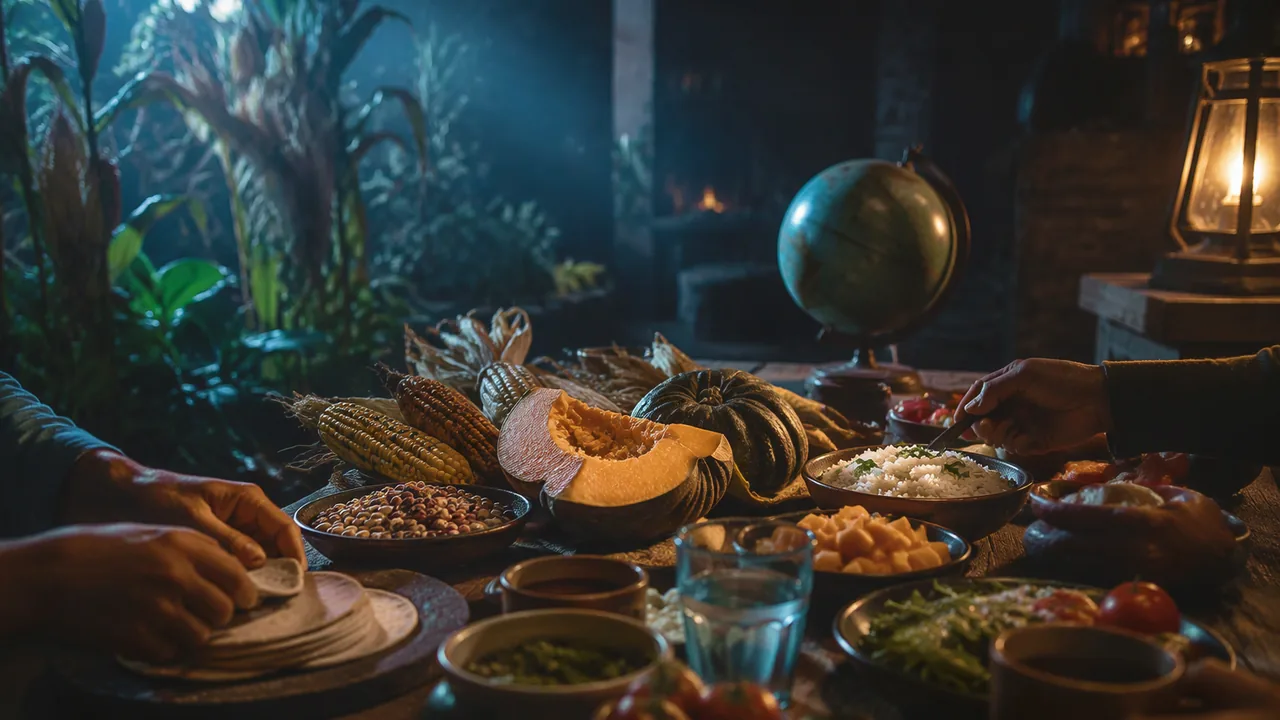
Culture: the milpa. For thousands of years, farmers in Mesoamerica (today’s Mexico and Central America) have grown maize, beans and squash together in a field called a milpa. The three plants help one another: the maize stalk is a pole for the bean vine, the beans add nitrogen to the soil, and the broad squash leaves shade the ground and keep moisture in. Eaten together, maize and beans also give a more complete protein than either alone. The people of Mesoamerica domesticated maize, beans, squash, chile, tomatoes, avocados and cacao, and these foods then traveled across the world after 1492. Today Mexican cooking is so tied to this heritage that UNESCO added traditional Mexican cuisine to its list of Intangible Cultural Heritage in 2010 (UNESCO).
Words that traveled with the food. Several food words came into Spanish from Nahuatl, the language of the Mexica (Aztecs) still spoken by more than a million people in Mexico, and then into English: tomatl → tomate → tomato, ahuacatl → aguacate → avocado, chīlli → chile → chili, tamalli → tamal → tamale. In central Mexico a red tomato is often called jitomate, also from Nahuatl. In South America an avocado is una palta, from Quechua. Food vocabulary is a map of contact between peoples.
Missouri connection. Mexican and Central American food is part of daily life in Missouri too. In Kansas City, families from Mexico settled on the Westside, near downtown, and many more arrived in the 1920s to work in the rail yards. In 1919 a Catholic women’s club opened the Guadalupe Center there, a volunteer school and clinic for the Mexican immigrants of the Westside; Guadalupe Centers still serves the community from Avenida César Chávez (Guadalupe Centers; KCUR). In St. Louis, Cherokee Street has the largest concentration of Hispanic-owned and Hispanic-run bakeries, restaurants, groceries and shops in the city, where you can find tacos, tortas, conchas (sweet bread) and paletas (ice pops) (Explore St. Louis).
Reading strategy. Today’s text describes one family’s meals. Make a three-row chart (desayuno, comida, cena) and fill in the time and the food for each as you read.
📖 Read for this lesson
The reading opens over the lesson; close it to come back to exactly where you were. The checks below draw on it.
Formative check
Work through these before moving on. They are not graded — they tell you whether the standard below has landed yet.
Read Julián’s description of his family’s meals, then answer.
Me llamo Julián y vivo en Kansas City, Missouri. Mi familia es de Guanajuato. Entre semana, desayuno a las siete: como pan dulce y bebo leche. En la escuela almuerzo a las doce. Mis padres trabajan en un restaurante y comen a las dos de la tarde. Los domingos, toda la familia come junta a las tres: mi abuela prepara arroz, frijoles, pollo en mole y tortillas de maíz. Siempre bebemos agua de jamaica. Por la noche, cenamos algo ligero, como quesadillas o fruta.
Show transcript
Me llamo Julián y vivo en Kansas City, Missouri. Mi familia es de Guanajuato. Entre semana, desayuno a las siete: como pan dulce y bebo leche. En la escuela almuerzo a las doce. Mis padres trabajan en un restaurante y comen a las dos de la tarde. Los domingos, toda la familia come junta a las tres: mi abuela prepara arroz, frijoles, pollo en mole y tortillas de maíz. Siempre bebemos agua de jamaica. Por la noche, cenamos algo ligero, como quesadillas o fruta.
What does Julián have for breakfast?
When does the whole family eat together on Sundays?
What is the evening meal like?
Which drink do they always have on Sundays?
Match each food word with its meaning. Some have regional variants.
Listen. What is the speaker’s problem?
Show transcript
Tengo mucha sed. ¿Hay agua fría?
What does this mean in English?
El maíz, el frijol y la calabaza crecen juntos en la milpa.
How confident are you that you can understand a text about meals and explain where the foods of the milpa come from?
Practice
Work these on paper or in your notebook, then open Check your answer. Aim for all of Fluency and Application; try at least one Challenge.
Printable version: this unit’s practice workbook (PDF)
Fluency
Build speed and accuracy with the core skill.
- Write the Spanish word, with its article, for each food or drink: (a) rice; (b) bread; (c) chicken; (d) cheese; (e) eggs; (f) milk.
Check your answer
Answer: (a) el arroz; (b) el pan; (c) el pollo; (d) el queso; (e) los huevos; (f) la leche.Learn each noun with its article so you know its gender: el arroz, la leche. - Name the three meals of the day in Spanish and give the time the lesson says la comida is often eaten in Mexico.
Check your answer
Answer: el desayuno (breakfast), la comida or el almuerzo (the midday meal), la cena (the evening meal). In Mexico la comida is often eaten between about 2 and 4 p.m.In Central America and much of South America el almuerzo is simply lunch; in Mexico el almuerzo may mean a late-morning snack or brunch. - Translate into English: Tengo mucha hambre y tengo sed.
Check your answer
Answer: I’m very hungry and I’m thirsty.Spanish uses tener: literally “I have much hunger and I have thirst.” Mucha, not mucho, because hambre is a feminine noun.
Application
Use the skill in context. Show your reasoning.
- Read: Me llamo Sofía. Desayuno a las siete: como huevos y bebo jugo. En la escuela almuerzo a las doce. Por la noche cenamos sopa y pan. Fill a three-row chart (meal, time, food).
Check your answer
Answer: Desayuno: 7:00, eggs and juice. Almuerzo: 12:00, at school (food not given). Cena: at night, soup and bread.This is the reading strategy from the lesson. A strong chart notes when a text does not give a piece of information instead of guessing. - Each word has a regional variant. Give the variant and where it is used: (a) los frijoles; (b) el aguacate; (c) el jugo; (d) el tomate (red tomato).
Check your answer
Answer: (a) las habichuelas (Caribbean) or los porotos (Chile, Argentina); (b) la palta (South America, from Quechua); (c) el zumo (Spain); (d) el jitomate (central Mexico, from Nahuatl).All variants are correct Spanish. Food words are a map of contact between peoples. - The milpa grows three plants together. Name them and explain in English how each one helps the others.
Check your answer
Answer: Maize, beans and squash. The maize stalk is a pole for the bean vine; the beans add nitrogen to the soil; the broad squash leaves shade the ground and keep moisture in.A strong answer names all three plants and gives one job for each. Bonus fact from the lesson: eaten together, maize and beans give a more complete protein. - Trace each word from Nahuatl through Spanish into English: tomatl, ahuacatl, tamalli.
Check your answer
Answer: tomatl → tomate → tomato; ahuacatl → aguacate → avocado; tamalli → tamal → tamale.Nahuatl is the language of the Mexica (Aztecs), still spoken by more than a million people in Mexico.
Challenge
Stretch problems. Expect to think before you write.
- Write three Spanish sentences about a family’s Sunday meal: when they eat, two foods, and one drink. Use only words from the lesson.
Check your answer
Answer: Model: Los domingos comemos a las tres. Comemos arroz, frijoles y pollo. Bebemos agua de jamaica.A strong answer uses a time (a las tres), at least two food nouns with correct articles or plural forms, and a drink such as agua de jamaica, horchata or leche.
Review
Keep earlier skills sharp.
- Review (tener, from Spanish 1A): complete with the right form of tener: (a) Yo ____ hambre. (b) Mi hermano ____ sed. (c) Nosotros ____ mucha hambre.
Check your answer
Answer: (a) tengo; (b) tiene; (c) tenemos.The lesson says Spanish “uses tener again” for hunger and thirst. Yo → tengo, él/ella → tiene, nosotros → tenemos.
La milpa: tres plantas amigas
SLS original text for RLP Spanish 1B, Lesson 1.1; grounded in UNESCO’s 2010 inscription of traditional Mexican cuisine, Guadalupe Centers’ history page and Explore St. Louis’s Cherokee Street guide (retrieved November 10, 2026) · SLS original
La milpa es un campo. En la milpa, los agricultores de Mesoamérica cultivan tres plantas juntas: el maíz, el frijol y la calabaza. Las tres plantas se ayudan. El maíz es alto y el frijol sube por el maíz. El frijol da nitrógeno a la tierra. Las hojas grandes de la calabaza cubren el suelo. Con esta técnica, la tierra está sana por muchos años.
Los pueblos de Mesoamérica cultivan maíz, frijol, calabaza, chile, tomate, aguacate y cacao desde hace miles de años. Después de 1492, estos alimentos viajan por todo el mundo. Hoy, muchas palabras de estos alimentos vienen del náhuatl: tomate, aguacate, chile y tamal.
En 2010, la UNESCO añade la cocina tradicional mexicana a su lista de Patrimonio Cultural Inmaterial. Es un honor importante para esta tradición.
En Missouri, la comida mexicana y centroamericana también es parte de la vida diaria. En Kansas City, muchas familias mexicanas viven en el barrio del Westside desde hace más de cien años. En 1919, abre allí el Centro Guadalupe, con una escuela y una clínica para las familias del barrio.
En St. Louis, la calle Cherokee tiene muchas panaderías, restaurantes, tiendas y supermercados hispanos. Allí hay tacos, tortas, conchas y paletas. La comida de la milpa está en la mesa de Missouri también.
Sources: UNESCO, Traditional Mexican cuisine (Intangible Cultural Heritage, 2010) (ich.unesco.org); Guadalupe Centers, About (history since 1919) (guadalupecenters.org); Explore St. Louis, Cherokee Street neighborhood guide (explorestlouis.com)