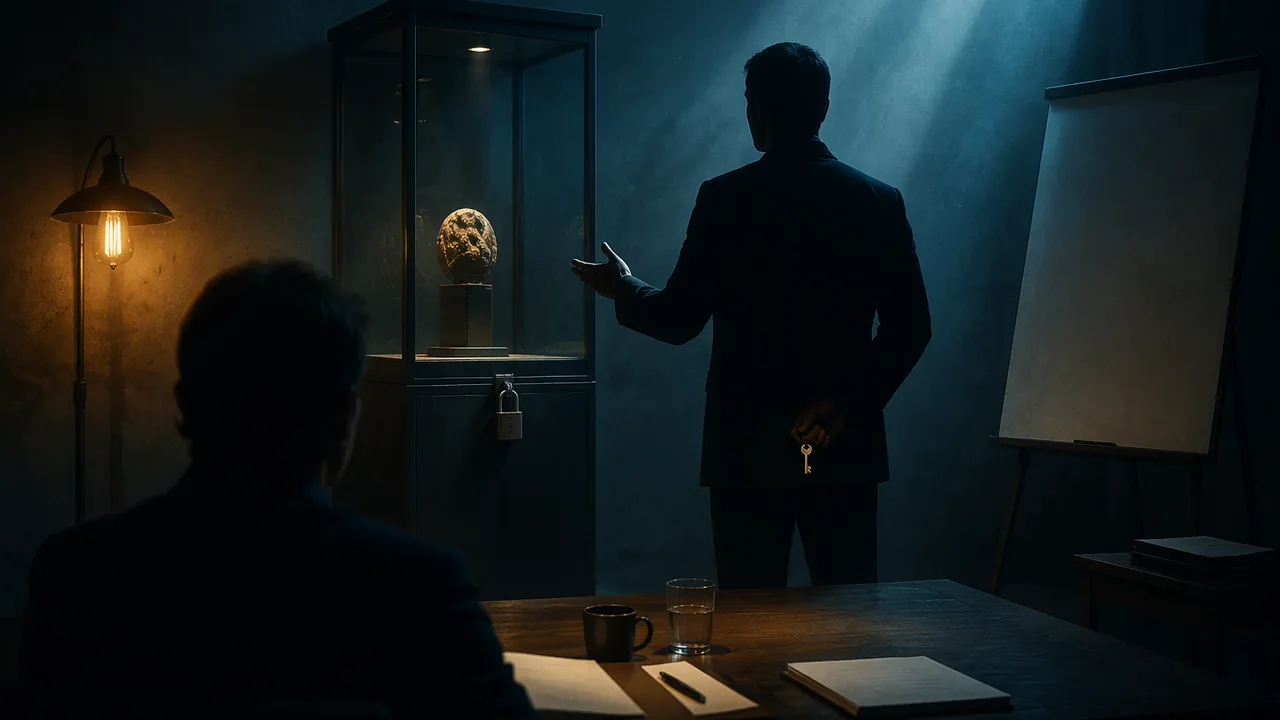
write a dramatic monologue or first-person narrative in a voice not my own, using narrative techniques to reveal more than the speaker intends.
Instruction
The best way to understand how a dramatic monologue works is to write one. This workshop asks you to write in a voice not your own — a character who wants something and reveals more than they mean. You may write in verse or prose.
Step 1 — The speaker, the listener and the moment (11-12.W.2.A). Every monologue has three things. A speaker with a strong want and a blind spot: a coach defending a decision, a landlord explaining a rent increase, a parent at a school board meeting, an app founder talking to an investor, a figure from history. A listener whose presence matters, though they never speak: the envoy in Browning, the crew in Tennyson. A moment that forces speech: a negotiation, an interview, a confession, a toast. Set these out in your opening lines so the reader is oriented: who is speaking, to whom, and why now.
Step 2 — The gap. Decide what your speaker will say and what the reader will understand instead. Plan three places where the gap opens: a detail the speaker thinks is harmless, a phrase that sounds generous and isn’t, an interruption or change of subject that gives the speaker away. Browning’s Duke changes the subject to a bronze statue at exactly the moment we understand him.
Step 3 — Narrative techniques (11-12.W.2.A). Use them deliberately. Dialogue: your speaker may quote others, or respond to what the listener seems to do (“Oh, you want to sit? Please.”). Pacing: slow down at the moment of revelation. Description: one or two exact objects that carry meaning, like the portrait and the statue. Reflection: the speaker’s self-justifications. Multiple plot lines: the story the speaker tells, and the story we infer.
Step 4 — Sequence toward an effect (11-12.W.3.A.d). Order events so they build: the speaker’s confidence, the first slip, the pressure, the revealing detail, the recovery that isn’t. Know the tone you want at the end — dread, pity, comedy, recognition.
Step 5 — Precise, sensory language (11-12.W.2.A). Telling details persuade more than adjectives. Not “a nice office”, but “the framed magazine cover of himself, hung where visitors have to face it”. Choose words your speaker would use; their vocabulary is part of their character.
Step 6 — The ending (11-12.W.2.A). End on a line that reflects on what has been revealed without explaining it. Robinson’s “And kept on drinking” does not tell us to pity Miniver; it lets us. Resist a final line that states the moral.
Writing routinely (11-12.W.2.A). Draft in short sessions over several days. Read your draft aloud each time; a monologue is a spoken form.
Care and choice. Your speaker should not be a real private person or a classmate, and should not be built on a stereotype. Public figures from history may be used with respect for the record. You are never required to write about your own life.
Reading: Three mentors, a model monologue and criteria for the dramatic monologue
Edgar Allan Poe, ‘The Tell-Tale Heart’ (1843), in The Works of Edgar Allan Poe, Volume 2, Project Gutenberg 2148 (https://www.gutenberg.org/ebooks/2148); Robert Browning, ‘My Last Duchess’ (1842), in Selections from the Poems and Plays of Robert Browning, ed. Myra Reynolds, Project Gutenberg 28041 (https://www.gutenberg.org/ebooks/28041); Edwin Arlington Robinson, ‘Miniver Cheevy’ (1910), in The Town Down the River, Wikisource transcription (https://en.wikisource.org/wiki/Page:The_town_down_the_river;_a_book_of_poems.djvu/113). All retrieved 2026-09-26. Browning’s line numbers are the editor’s. · SLS original; quoted passages are public domain (Edgar Allan Poe, 1843; Robert Browning, 1842; Edwin Arlington Robinson, 1910)
Study how the gap opens in each mentor, compare your plan with the model, then check your Stage 1 and first draft against the criteria.
A dramatic monologue works because the reader sees more than the speaker knows. This page gives you three mentors, quoted exactly, with the moves to notice; a complete model monologue and a Stage 1 plan for it (SLS original, not a student’s or a school’s work); a before-and-after revision; and the criteria your Stage 1 and first draft will be scored against. Your speaker is not a real private person, and you never have to write about your own life. Choose your own speaker, listener and moment.
Part 1. Three mentors
A. A prose voice: Poe, “The Tell-Tale Heart” (1843)
The speaker addresses a listener he calls you. He is trying to prove he is sane. Read for what he tells you without meaning to.
True!—nervous—very, very dreadfully nervous I had been and am; but why will you say that I am mad? The disease had sharpened my senses—not destroyed—not dulled them. Above all was the sense of hearing acute. I heard all things in the heaven and in the earth. I heard many things in hell. How, then, am I mad? Hearken! and observe how healthily—how calmly I can tell you the whole story.
Now this is the point. You fancy me mad. Madmen know nothing. But you should have seen me. You should have seen how wisely I proceeded—with what caution—with what foresight—with what dissimulation I went to work! I was never kinder to the old man than during the whole week before I killed him. And every night, about midnight, I turned the latch of his door and opened it—oh, so gently!
Moves to notice. The listener is present in every sentence: why will you say that I am mad? The moment is a confession, and the speaker never says so. The gap opens where his proof is his evidence against himself: I was never kinder to the old man than during the whole week before I killed him. A telling detail is precise and chilling: he opens the door oh, so gently!
B. A verse voice: Browning, “My Last Duchess,” lines 45 to 47
Much the same smile? This grew; I gave commands; 45
Then all smiles stopped together. There she stands
As if alive. Will’t please you rise? We’ll meet
Moves to notice. The killing is never named. The speaker’s sentence is polite, I gave commands;, and the next line is the effect. He then changes the subject to an invitation, Will’t please you rise?, and the change is what gives him away.
C. A narrator’s voice: Robinson, “Miniver Cheevy” (1910), the last two stanzas
Miniver scorned the gold he sought,
But sore annoyed was he without it;
Miniver thought, and thought, and thought,
And thought about it.Miniver Cheevy, born too late,
Scratched his head and kept on thinking;
Miniver coughed, and called it fate,
And kept on drinking.
Moves to notice. The last line refuses to draw a moral: And kept on drinking. It does not tell us to pity Miniver, and it lets us.
Part 2. A model monologue (about 300 words; SLS original)
Speaker: a landlord, Walter. Listener: a tenant who stands at the door and does not speak. Moment: a Saturday, after the rent-increase notice has been slipped under every door.
Come in, come in. No, don’t take your coat off, I won’t keep you. It’s only that you’re here on a Saturday, and I like to see my tenants on a Saturday. You’ll have seen the notice. I put it under every door myself, because I don’t trust the mail. Eighteen percent. Now, you’ll say that’s a lot, and I’d say the same in your shoes. I said so to my accountant. I said, Barry, that’s a lot. But you have to look at what the building has had. Look around you. New paint in the hall. Well, the hall on the first floor. A brand-new sign out front with my name on it, because people should know who takes care of them.
And I’ll tell you what I told Mrs. Ortega on the second floor, who was very understanding once we’d had a cup of tea. Nobody is forced to stay. I want that understood. I have never forced anyone. The Petersons left in March, and I wished them well, and I hope the sidewalk out there is dry by now.
Sit, sit. Do you know what the market is doing? I won’t bore you. The market is doing what it does. I’ve got a list, a long one, a very patient list, of young people who’d be glad of this unit, and I say to myself, Walter, you owe it to your loyal ones to be fair. So I’m being fair. That’s what eighteen is. It’s a fair number. I didn’t pick it because it was round.
Now, I’ll leave the notice with you, and you’ll sleep on it, and if you want to talk, my door is always open. Between nine and ten on Tuesdays.
Where the gap opens. (1) A detail he thinks harmless: “New paint in the hall. Well, the hall on the first floor.” He corrects himself and gives it away. (2) A phrase that sounds generous and is not: “Nobody is forced to stay,” followed at once by the Petersons, who left. (3) A change of subject that gives him away: “Sit, sit. Do you know what the market is doing?” comes right after his listener has said nothing at all. Narrative techniques. Dialogue with an unheard reply (Sit, sit); pacing that slows at “The Petersons left in March”; description through two objects, the sign with his name on it and the notice under every door; reflection in his self-justification (It’s a fair number); two story lines, the one he tells and the one we infer. The ending. It reflects on what has been revealed without explaining it: his door is always open, but only between nine and ten on Tuesdays.
Part 3. A model Stage 1 plan (SLS original)
| Element | The plan for Walter’s monologue |
|---|---|
| Speaker (want and blind spot) | Walter wants the tenant to accept the increase without argument. His blind spot is that he believes he is fair. |
| Listener | The tenant, who never speaks but whose presence is felt in Sit, sit and you’ll say that’s a lot. |
| Moment | A Saturday, the day after the notice. |
| Three places where the gap opens | The paint that covers one hall only; nobody is forced to stay and then the Petersons; the change of subject to the market. |
| Sequence toward the tone | Confidence (the welcome), the first slip (the paint), the pressure (the list of young people), the revealing detail (the Petersons), the recovery that is not one (It’s a fair number). Final tone: uneasy recognition. |
| Two telling details | The sign with his own name on it; the door that is open only between nine and ten on Tuesdays. |
Opening lines (the first 150 words). The first paragraph of the monologue above orients the reader: who is speaking, to whom and why now.
Part 4. Before and after: closing the gap (SLS original)
| Draft | Problem | Revision |
|---|---|---|
| I’m a greedy landlord and I admit it. | The speaker tells the reader what to think, so there is no gap. | I have never forced anyone. The Petersons left in March, and I wished them well. |
| The building was nice. | A vague adjective and no detail. | New paint in the hall. Well, the hall on the first floor. |
| And so, the lesson is that greed harms families. | A moral stated at the end. It does the reader’s work. | Between nine and ten on Tuesdays. |
Part 5. Criteria for Stage 1 and the first draft (four levels)
| Criterion | Beginning | Developing | Proficient | Exemplary |
|---|---|---|---|---|
| Speaker, listener, moment (11-12.W.2.A) | Only a speaker. | All three, but unclear in the opening. | All three set out in the opening lines. | Also gives the speaker a blind spot the reader sees at once. |
| The gap | The speaker says what he means. | One place where meaning and speech differ. | Three planned places, each with a different technique. | Also uses the listener’s silence to open the gap. |
| Narrative techniques (11-12.W.2.A, c) | Summary only. | One technique. | Dialogue, pacing, description, reflection and a second story line, used on purpose. | Also orders events to build to a chosen effect. |
| Language (11-12.W.2.A) | General adjectives. | Some telling details. | Precise, sensory details in the speaker’s own vocabulary. | Also uses an object the way Browning uses the portrait. |
| Ending (11-12.W.2.A) | States the moral. | Ends without reflecting. | Reflects on what has been revealed without explaining it. | Also trusts the reader to feel it. |
Routine. Draft in short sessions over several days and read the draft aloud each time: a monologue is a spoken form.
Formative check
Work through these before moving on. They are not graded — they tell you whether the standard below has landed yet.
Which revision best creates a gap between what the speaker says and what the reader sees?
The strongest ending for a dramatic monologue states its moral clearly.
Submit Stage 1: speaker (want and blind spot), listener, moment; the three places the gap will open; the sequence of events toward your intended final tone; and two telling details. Then draft the opening twelve lines or first 150 words.
Upload your full first draft (500-900 words, verse or prose). Mark the moment of revelation and the final line, and write two sentences on what you want the reader to understand that the speaker never says.
How confident are you that you can write in a voice not my own and reveal more than the speaker intends?