distinguish what the speakers of three dramatic monologues state from what the poems reveal, and compare a British and an American use of the form.
Instruction
You met the dramatic monologue in Twain’s King Leopold’s Soliloquy. Its home is poetry. A dramatic monologue is a poem spoken by a character, not the poet, to a listener who does not reply, at a particular moment. Its pleasure is the gap between what the speaker means to say and what the poem lets us see. 11-12.RL.2.B / 11-12.RL.3.C asks you to analyze cases where grasping a point of view requires distinguishing what is directly stated from what is really meant. These poems are made of that gap.
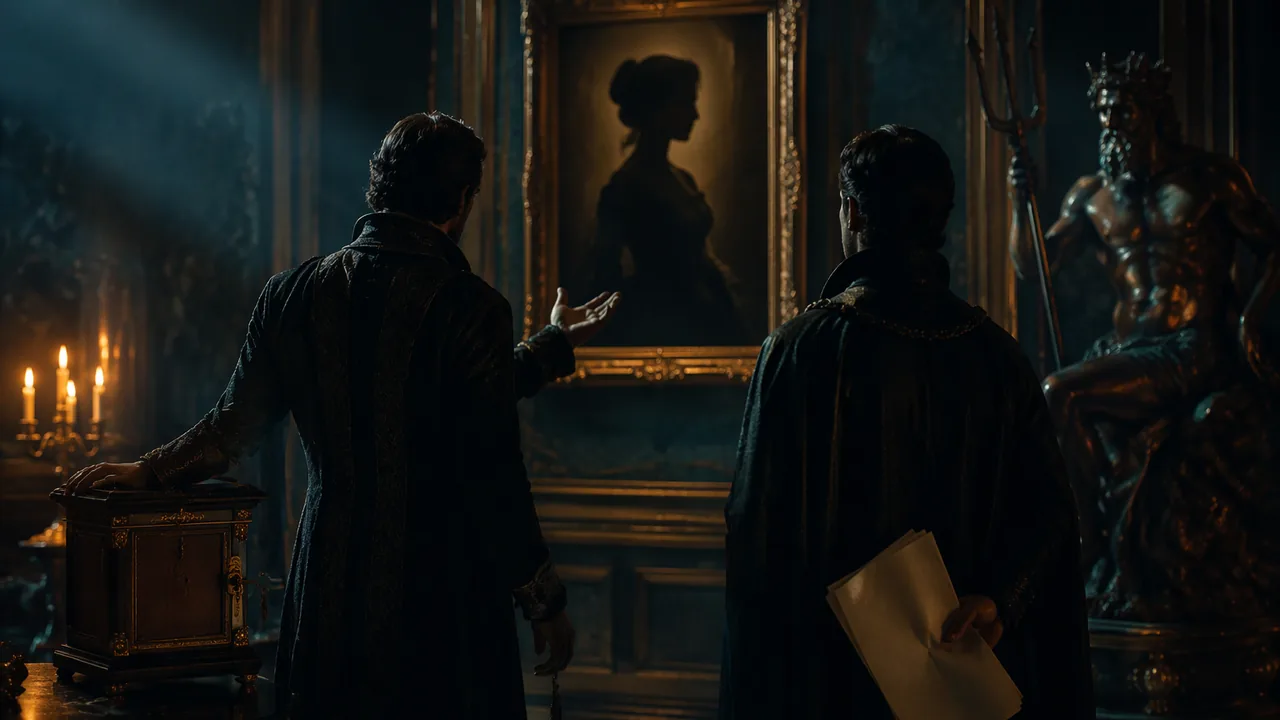
Browning, My Last Duchess (1842). A duke shows an envoy a portrait of his late wife. He is negotiating his next marriage, with a count’s daughter, and the envoy represents her father. The Duke praises the painting, then complains about the Duchess: she smiled at everyone, thanked people for small favors as if they equalled his gift of a nine-hundred-years-old name, blushed at compliments from the painter. He would not stoop to correct her. “I gave commands; / Then all smiles stopped together.” He does not say he had her killed. He does not need to. He moves on to the dowry and to a bronze statue of Neptune. What he states is a connoisseur’s pride; what the poem reveals is a man for whom a wife is an object to be owned and, when she will not be owned, removed. The form reinforces it: rhyming couplets so smoothly run on that the rhymes almost disappear, the way the Duke’s courtesy covers his threat.
Tennyson, Ulysses (1842). The aged Ulysses, home in Ithaca after the Odyssey, finds ruling tedious and resolves to sail again with his old crew. Tennyson wrote it after the death of his close friend Arthur Hallam, and said it expressed his own need to go forward. Its last line is often read as pure inspiration: “To strive, to seek, to find, and not to yield.” But look at what the speaker also says: that he is matched with an aged wife, that he metes out unequal laws to a savage race, that his son Telemachus is fit for the dull work of governing. Some readers find heroism; others find a restless man abandoning his duties. The poem gives evidence for both. That doubleness is the dramatic monologue’s power.
Robinson, Miniver Cheevy (1910). Edwin Arlington Robinson, from Maine, was one of the most admired American poets of the early twentieth century and won three Pulitzer Prizes. His Miniver Cheevy is spoken not by the character but about him, by a narrator whose irony is gentle and deadly. Miniver dreams of knights, Thebes and the Medici, despises his own ordinary age, and does nothing. The last line of each stanza deflates the one before, and the final stanza’s last line — “And kept on drinking” — turns romance into self-deception.
British and American (11-12.RL.3.B). Robinson learned from the Victorian monologue and made it American: a small-town figure instead of a Renaissance duke, plain speech, comic rhythm, and a narrator’s irony rather than a speaker’s self-exposure. Compare what each poem assumes about the reader’s ability to see through the speaker.
Words that carry double meaning (11-12.RL.1.B / 11-12.RL.2.C). Track last in Browning’s first line (the most recent, or the final?), yield in Tennyson, and reasons in Robinson.
Your chart. For each poem, list what the speaker states, what the poem reveals, and the words that open the gap.
Reading: Three poems whole: Browning, Tennyson and Robinson, with a worked chart
Robert Browning, ‘My Last Duchess’ (1842), in Selections from the Poems and Plays of Robert Browning, ed. Myra Reynolds, Project Gutenberg 28041 (https://www.gutenberg.org/ebooks/28041); Alfred Tennyson, ‘Ulysses’ (1842), in The Early Poems of Alfred Lord Tennyson, ed. John Churton Collins, Project Gutenberg 8601 (https://www.gutenberg.org/ebooks/8601); Edwin Arlington Robinson, ‘Miniver Cheevy’ (1910), in The Town Down the River, Wikisource transcription (https://en.wikisource.org/wiki/Page:The_town_down_the_river;_a_book_of_poems.djvu/111, https://en.wikisource.org/wiki/Page:The_town_down_the_river;_a_book_of_poems.djvu/112, https://en.wikisource.org/wiki/Page:The_town_down_the_river;_a_book_of_poems.djvu/113). All retrieved 2026-09-26. Line numbers: Browning’s are the editor’s, printed every fifth line; Tennyson’s and Robinson’s are counted by SLS. · SLS original; quoted poems are public domain (Robert Browning, 1842; Alfred Tennyson, 1842; Edwin Arlington Robinson, 1910)
Each speaker is sure of himself. Where does the poem stop agreeing with him? Use the numbered lines to complete the said-and-revealed chart.
The three poems are printed whole, with the lineation of the editions named above. Browning’s lines are numbered as the editor numbered them, at every fifth line, and the poem’s fifty-sixth line is the last. Tennyson’s poem has seventy lines and Robinson’s has thirty-two; I give their numbers in the chart. The small bracketed numbers in “Ulysses” are the editor’s footnote marks, kept so the text matches the edition, and you can ignore them. This edition of “My Last Duchess” spells favor and pretense where the 1842 printing has favour and pretence, and it prints the painter’s name with an accent, Frà Pandolf. The chart, the worked paragraph and the questions are SLS original.
Part 1. Browning, “My Last Duchess” (1842), 56 lines
The speaker is the Duke of Ferrara. He is showing a portrait of his dead wife to the envoy of a count whose daughter he means to marry.
That’s my last Duchess painted on the wall,
Looking as if she were alive. I call
That piece a wonder, now: Frà Pandolf’s hands
Worked busily a day, and there she stands.
Will’t please you sit and look at her? I said 5
“Frà Pandolf” by design, for never read
Strangers like you that pictured countenance,
The depth and passion of its earnest glance,
But to myself they turned (since none puts by
The curtain I have drawn for you, but I) 10
And seemed as they would ask me, if they durst,
How such a glance came there; so, not the first
Are you to turn and ask thus. Sir, ’twas not
Her husband’s presence only, called that spot
Of joy into the Duchess’ cheek; perhaps 15
Frà Pandolf chanced to say, “Her mantle laps
Over my lady’s wrist too much,” or “Paint
Must never hope to reproduce the faint
Half-flush that dies along her throat”; such stuff
Was courtesy, she thought, and cause enough 20
For calling up that spot of joy. She had
A heart–how shall I say?–too soon made glad,
Too easily impressed; she liked whate’er
She looked on, and her looks went everywhere.
Sir, ’twas all one! My favor at her breast, 25
The dropping of the daylight in the West,
The bough of cherries some officious fool
Broke in the orchard for her, the white mule
She rode with round the terrace–all and each
Would draw from her alike the approving speech, 30
Or blush, at least. She thanked men–good! but thanked
Somehow–I know not how–as if she ranked
My gift of a nine-hundred-years-old name
With anybody’s gift. Who’d stoop to blame
This sort of trifling? Even had you skill 35
In speech–(which I have not)–to make your will
Quite clear to such an one, and say, “Just this
Or that in you disgusts me; here you miss,
Or there exceed the mark”–and if she let
Herself be lessoned so, nor plainly set 40
Her wits to yours, forsooth, and made excuse,
–E’en then would be some stooping; and I choose
Never to stoop. Oh, sir, she smiled, no doubt,
Whene’er I passed her; but who passed without
Much the same smile? This grew; I gave commands; 45
Then all smiles stopped together. There she stands
As if alive. Will’t please you rise? We’ll meet
The company below, then. I repeat,
The Count your master’s known munificence
Is ample warrant that no just pretense 50
Of mine for dowry will be disallowed;
Though his fair daughter’s self, as I avowed
At starting, is my object. Nay, we’ll go
Together down, sir. Notice Neptune, though,
Taming a sea-horse, thought a rarity, 55
Which Claus of Innsbruck cast in bronze for me!
Part 2. Tennyson, “Ulysses” (1842), 70 lines
The speaker is Ulysses, back in Ithaca after the wanderings of the Odyssey. The last lines speak to his old crew.
It little profits that an idle king,
By this still hearth, among these barren crags,
Match’d with an aged wife, I mete and dole
Unequal laws unto a savage race,
That hoard, and sleep, and feed, and know not me.
I cannot rest from travel: I will drink
Life to the lees: all times I have enjoy’d
Greatly, have suffer’d greatly, both with those
That loved me, and alone; on shore, and when
Thro’ scudding drifts the rainy Hyades[1]
Vext the dim sea: I am become a name;
For always roaming with a hungry heart
Much have I seen and known; cities of men
And manners, climates, councils, governments,[2]
Myself not least, but honour’d of them all;
And drunk delight of battle with my peers,
Far on the ringing plains of windy Troy.
I am a part of all that I have met;
Yet all experience is an arch wherethro’
Gleams that untravell’d world, whose margin fades
For ever and for ever when I move.
How dull it is to pause, to make an end,[3]
To rust unburnish’d, not to shine in use!
As tho’ to breathe were life. Life piled on life
Were all too little, and of one to me
Little remains: but every hour is saved
From that eternal silence, something more,
A bringer of new things; and vile it were
For some three suns to store and hoard myself,
And this gray spirit yearning in desire
To follow knowledge, like a sinking star,
Beyond the utmost bound of human thought.
This is my son, mine own Telemachus,[4]
To whom I leave the sceptre and the isle—
Well-loved of me, discerning to fulfil
This labour, by slow prudence to make mild
A rugged people, and thro’ soft degrees
Subdue them to the useful and the good.
Most blameless is he, centred in the sphere
Of common duties, decent not to fail
In offices of tenderness, and pay
Meet adoration to my household gods,
When I am gone. He works his work, I mine.
There lies the port: the vessel puffs her sail:
There gloom the dark broad seas. My mariners,
Souls that have toil’d and wrought, and thought with me—
That ever with a frolic welcome took
The thunder and the sunshine, and opposed
Free hearts, free foreheads—you and I are old;
Old age hath yet his honour and his toil;
Death closes all; but something ere the end,
Some work of noble note, may yet be done,
Not unbecoming men that strove with Gods.
The lights begin to twinkle from the rocks:
The long day wanes: the slow moon climbs: the deep
Moans round with many voices. Come, my friends,
’Tis not too late to seek a newer world.
Push off, and sitting well in order smite
The sounding furrows; for my purpose holds
To sail beyond the sunset, and the baths
Of all the western stars, until I die.
It may be that the gulfs will wash us down:
It may be we shall touch the Happy Isles,[5]
And see the great Achilles, whom we knew.
Tho’ much is taken, much abides; and tho’
We are not now that strength which in old days
Moved earth and heaven; that which we are, we are;
One equal temper of heroic hearts,
Made weak by time and fate, but strong in will
To strive, to seek, to find, and not to yield.
Part 3. Robinson, “Miniver Cheevy” (1910), 32 lines
Here the poem is spoken about its hero by a narrator, not by the hero.
Miniver Cheevy, child of scorn,
Grew lean while he assailed the seasons;
He wept that he was ever born,
And he had reasons.Miniver loved the days of old
When swords were bright and steeds were prancing;
The vision of a warrior bold
Would set him dancing.
Miniver sighed for what was not,
And dreamed, and rested from his labors;
He dreamed of Thebes and Camelot,
And Priam’s neighbors.Miniver mourned the ripe renown
That made so many a name so fragrant;
He mourned Romance, now on the town,
And Art, a vagrant.Miniver loved the Medici,
Albeit he had never seen one;
He would have sinned incessantly
Could he have been one.Miniver cursed the commonplace
And eyed a khaki suit with loathing;
He missed the mediæval grace
Of iron clothing.
Miniver scorned the gold he sought,
But sore annoyed was he without it;
Miniver thought, and thought, and thought,
And thought about it.Miniver Cheevy, born too late,
Scratched his head and kept on thinking;
Miniver coughed, and called it fate,
And kept on drinking.
Part 4. A worked said-and-revealed chart (SLS original)
| Poem | What the speaker states | What the poem reveals | Words that open the gap |
|---|---|---|---|
| “My Last Duchess” | A connoisseur’s pride in a portrait, and a complaint that his wife did not value his name enough. | A man who treated his wife as something to be owned, and who, when she would not be owned, had her stopped. The killing is never stated. | my last Duchess (line 1: last means both latest and final); I choose Never to stoop (lines 42-43); I gave commands (line 45); and Neptune, Taming a sea-horse (line 55), where he changes the subject. |
| “Ulysses” | Ruling is dull and he will sail again; life is for experience, “to strive, to seek, to find, and not to yield.” | A restless man who describes his wife, his people and his duty in the tones of a man who has stopped paying attention to them. The heroism is real, and so is the desertion. | an idle king (line 1); Match’d with an aged wife (line 3); Unequal laws unto a savage race (line 4); Most blameless is he (line 39), his praise of a son whose devotion to common duties is exactly what Ulysses declines. |
| “Miniver Cheevy” | (The narrator, about Miniver.) He is a romantic who wishes he had been born in the age of knights. | A man who blames the age for what he will not do. Romance is his excuse for drink. | And he had reasons. (line 4); thought, and thought, and thought (line 27); called it fate (line 31); the last line, And kept on drinking. |
Part 5. A worked comparative paragraph (SLS original)
Browning and Robinson both make a reader see through a speaker, but they give the reader different tools. In “My Last Duchess” the Duke says too much on his own: he calls the portrait a wonder and, more than forty lines later, admits I gave commands, and the reader assembles the meaning from what he lets slip and where he changes the subject. In “Miniver Cheevy” no one who speaks is exposed; the narrator does the work with small ironies, so that And he had reasons. deflates the line before, and the last line tells us what Miniver did instead of living in the age he wished for. Browning trusts the reader to catch a menace the speaker does not know he has confessed, and Robinson trusts the reader to smile at a self-deception. The first poem is a trap for the listener in it, and the second is a joke that the reader shares with the narrator.
Part 6. Reading questions for the chart
Work from the numbered lines. Which of the three speakers knows what he has revealed? Where does each poem change the subject? What words in “Ulysses” would a defender of Ulysses quote, and which would a critic? Compare the endings: which poem stops on a boast, which on a joke, and which on an order?
Formative check
Work through these before moving on. They are not graded — they tell you whether the standard below has landed yet.
What does the Duke mean by “I gave commands; / Then all smiles stopped together”?
Ulysses’s last line can only be read as simple heroic inspiration.
Complete a said-and-revealed chart for the three poems: what the speaker states, what the poem reveals, and three words or lines that open the gap. Then write a paragraph comparing how Browning and Robinson make the reader see through a speaker.
How confident are you that you can distinguish what a poem’s speaker states from what the poem means?
Printable: Unit 4 Student Workbook
Every organizer for this unit in one booklet — the reading schedule, the vocabulary pages, all five lesson organizers, the peer review sheet and the scoring rubric. Print it before the unit starts and bring the page to each lesson.