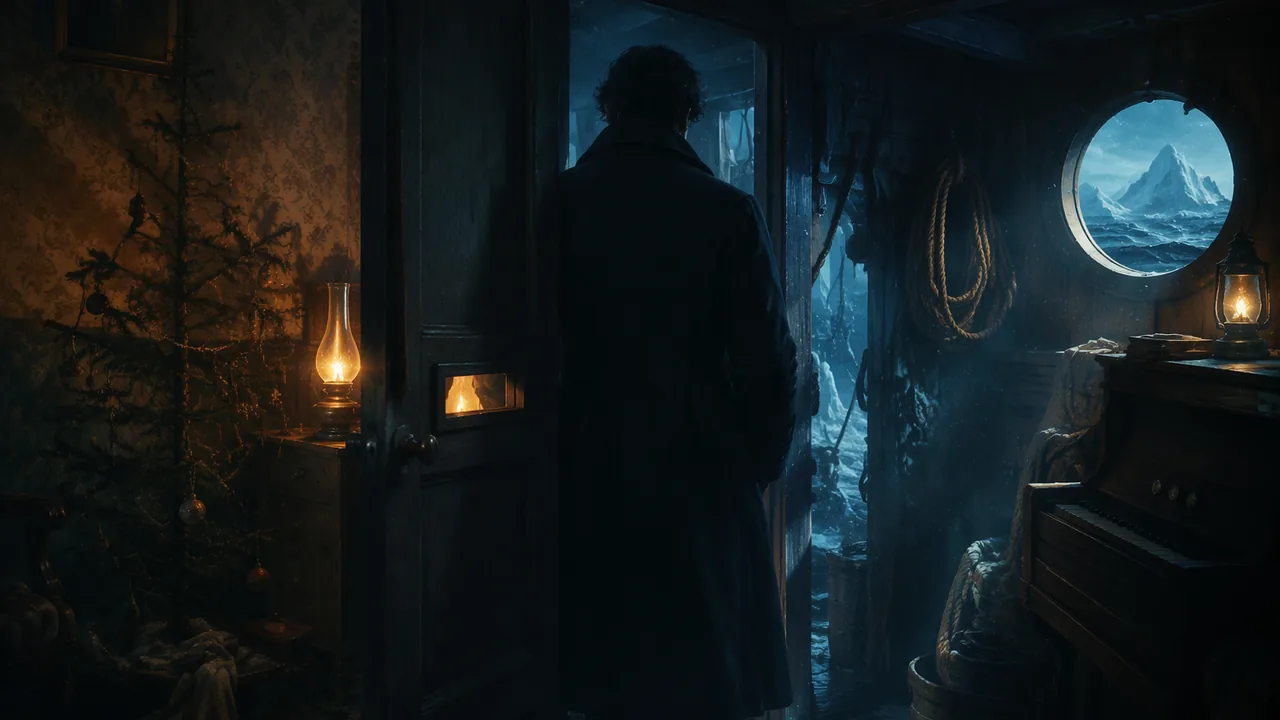
write a 1,300-1,800 word comparative argument on A Doll’s House and Ile, and present the claim, counterclaim and response orally.
Instruction
This essay argues what the difference between two plays reveals. It is not a list of similarities and differences. Every paragraph should advance one claim about what happens when a European play’s question — can a wife leave the house her husband has made for her? — is asked again on an American whaling ship forty years later.
The claim. Precise and disputable, as you built it in Lesson 2.6. State its significance early: what does your reading let us see in each play that we would miss reading it alone?
Evidence from both plays in every section. Point-by-point. Quote both plays in each body section, and analyze the quotations together.
Staging and translation. Plays are written to be seen. Analyze at least one staging choice in each: in Ibsen, the letter box, the tarantella, the Christmas tree stripped and disheveled at the start of Act II, or the sound of the door; in O’Neill, the cabin’s confinement, the organ, the ice and the sound of the crew. Analyze one translator’s choice from our translation of Ibsen, and say how a different choice would change the reading.
The counterclaim. The strongest counterclaim uses the texts. Develop it with quotations and answer it fairly.
Formal style (11-12.W.2.A). Present tense for what happens in the plays. Name the dramatist when discussing choices (“Ibsen places…”), the character when discussing actions (“Nora tells Torvald…”). Avoid moral verdicts on characters unless your argument depends on them, and then argue them.
A concluding section (11-12.W.3.A.a). End with what follows from your argument: what it suggests about the meaning of Nora’s door, about American drama in the early twentieth century (11-12.RL.3.B), or about freedom and circumstance.
Grammar and usage (11-12.W.3.A.c). Check pronoun reference: in a comparative essay about two husbands and two wives, he and she can point to the wrong person. Name the character when the pronoun is unclear.
The presentation (11-12.SL.2.A / 11-12.SL.2.B / 11-12.SL.2.C). Three minutes: your claim, two reasons in sequence with one quotation each, the counterclaim stated fairly, your response, and a closing sentence that uses one rhetorical device deliberately. Live, recorded or one-to-one delivery carry equal credit.
Integrity. Summaries of A Doll’s House are common; comparisons with Ile are not. That is an advantage: your argument has to be your own, and your stages will show it developing.
📖 Before this lesson, read: A Doll’s House, The whole play (Acts I-III)
The reading opens over the lesson; close it to come back to exactly where you were.
Reading: Key passages, rubric and models for the Ibsen and O’Neill essay
Henrik Ibsen, A Doll’s House (1879), translated by R. Farquharson Sharp (1910), Project Gutenberg 2542 (https://www.gutenberg.org/ebooks/2542), retrieved 2026-09-26, cited by act. Eugene O’Neill, Ile, in The Moon of the Caribbees and Six Other Plays of the Sea (Boni and Liveright, 1919), pp. 117-143; OCR text at https://archive.org/download/moonofthecaribbe00oneirich/moonofthecaribbe00oneirich_djvu.txt (Internet Archive, retrieved 2026-09-26), running heads removed, OCR errors repaired; page numbers shown as [p. N]. · SLS original; quoted passages are public domain (Henrik Ibsen, tr. R. Farquharson Sharp, 1910; Eugene O’Neill, Ile, 1919)
Use this page for the full prompt, the passages the model essay draws on, the four-level rubric and a model thesis, outline and paragraph.
This page holds what the Key Assignment needs and the lesson does not otherwise contain: the full prompt, the passages the essay draws on and where they are found, the rubric at four levels, and a model thesis, outline and paragraph. The passages are Ibsen (Sharp’s 1910 translation, cited by act) and O’Neill’s Ile (1919 printing, with that book’s page numbers in square brackets). The prompt, rubric and models are SLS original.
Part 1. The prompt
Write a comparative literary argument of 1,300 to 1,800 words. Argue a precise, disputable claim about how A Doll’s House and Ile treat a shared subject, whether that is marriage as performance, a husband’s pride, the price of leaving or of staying, or the meaning of the ending, and say what the difference between the plays reveals. Distinguish your claim from at least one alternative reading. Develop the strongest counterclaim with its own textual evidence and answer it. Quote both plays in every section. Analyze at least one staging choice in each play (the letter box, the tarantella or the closing door in Ibsen; the organ, the ice or the sound of the crew in O’Neill) and at least one choice made by Ibsen’s translator. Follow the three-stage process: a plan, a peer-reviewed draft, and a revised final, with MLA citations and a Works Cited that names the translator. Then give a three-minute recorded presentation that states the claim, the counterclaim and your response in that order.
Part 2. Key passages, and where they are
These are the passages the model essay uses. You may use any others in the plays. The Ibsen passages are from Act III, in the last conversation, which begins at Nora’s line Sit down. It will take some time and runs to the closing stage direction. The O’Neill passages are from pp. 135-142, from the middle of the play to its end.
Ibsen, Act III
HELMER.
It’s shocking. This is how you would neglect your most sacred duties.NORA.
What do you consider my most sacred duties?HELMER.
Do I need to tell you that? Are they not your duties to your husband and your children?NORA.
I have other duties just as sacred.HELMER.
That you have not. What duties could those be?NORA.
Duties to myself.HELMER.
Before all else, you are a wife and a mother.NORA.
I don’t believe that any longer. I believe that before all else I am a reasonable human being, just as you are—or, at all events, that I must try and become one. I know quite well, Torvald, that most people would think you right, and that views of that kind are to be found in books; but I can no longer content myself with what most people say, or with what is found in books. I must think over things for myself and get to understand them.
NORA.
Maybe. But you neither think nor talk like the man I could bind myself to. As soon as your fear was over—and it was not fear for what threatened me, but for what might happen to you—when the whole thing was past, as far as you were concerned it was exactly as if nothing at all had happened. Exactly as before, I was your little skylark, your doll, which you would in future treat with doubly gentle care, because it was so brittle and fragile. [Getting up.] Torvald—it was then it dawned upon me that for eight years I had been living here with a strange man, and had borne him three children—. Oh, I can’t bear to think of it! I could tear myself into little bits!HELMER.
[sadly]. I see, I see. An abyss has opened between us—there is no denying it. But, Nora, would it not be possible to fill it up?NORA.
As I am now, I am no wife for you.HELMER.
I have it in me to become a different man.NORA.
Perhaps—if your doll is taken away from you.
NORA.
[taking her bag]. Ah, Torvald, the most wonderful thing of all would have to happen.HELMER.
Tell me what that would be!NORA.
Both you and I would have to be so changed that—. Oh, Torvald, I don’t believe any longer in wonderful things happening.HELMER.
But I will believe in it. Tell me! So changed that—?NORA.
That our life together would be a real wedlock. Goodbye. [She goes out through the hall.]HELMER.
[sinks down on a chair at the door and buries his face in his hands]. Nora! Nora! [Looks round, and rises.] Empty. She is gone. [A hope flashes across his mind.] The most wonderful thing of all—?[The sound of a door shutting is heard from below.]
O’Neill, Ile
Keeney and Annie argue about his reason for staying (pp. 135-136).
MRS. KEENEY — [Wildly.] Because it’s a stupid, stubborn reason. Oh, I heard you talking with the second mate. You’re afraid the other captains will sneer at you because you didn’t come back with a full ship. You want to live up to your silly reputation even if you do have to beat and starve men and drive me mad to do it.
[p. 136] KEENEY — [His jaw set stubbornly.] It ain’t that, Annie. Them skippers would never dare sneer to my face. It ain’t so much what any one’d say — but [He hesitates, struggling to express his meaning.] You see — I’ve always done it — since my first voyage as skipper. I always come back — with a full ship — and — it don’t seem right not to — somehow. I been always first whalin’ skipper out o’ Homeport, and Don’t you see my meaning Annie? [He glances at her. She is not looking at him but staring dully in front of her, not hearing a word he is saying.] Annie! [She comes to her self with a start] Best turn in, Annie, there’s a good woman. You ain’t well.
Annie’s plea (p. 139), and then the news from the ice (pp. 140-141).
MRS. KEENEY — [Wildly.] Then do this this once for my sake, for God’s sake — take me home ! It’s killing me, this life — the brutality and cold and horror of it. I’m going mad. I can feel the threat in the air. I can hear the silence threatening me — day after gray day and every day the same. I can’t bear it. [Sobbing.] I’ll go mad, I know I will. Take me home, David, if you love me as you say. I’m afraid. For the love of God, take me home! [She throws her arms around him, weeping against his shoulder. His face betrays the tremendous struggle going on within him. He holds her out at arm’s length, his expression softening. For a moment his shoulders sag, he becomes old, his iron spirit weakens as he looks at her tear-stained face.]
MATE — [Excitedly.] The ice is breakin’ up to no’the’ard, sir. There’s a clear passage through the floe, and clear water beyond, the lookout says. [KEENEY straightens himself like a man coming out of a trance. MRS. KEENEY looks at the MATE with terrified eyes.]
KEENEY — [Dazedly — trying to collect his thoughts.] A clear passage? To no’the’ard?
MATE — Yes, sir.
KEENEY — [His voice suddenly grim with determination.] Then get her ready and we’ll drive her through.
MATE — Aye, aye, sir.
MRS. KEENEY — [Appealingly.] David!
KEENEY — [Not heeding her.] Will the men turn to willin’ or must we drag ’em out?
MATE — They’ll turn to willin’ enough. You put the fear o’ God into ’em, sir. They’re meek as lambs.
KEENEY — Then drive ’em — both watches. [With [p. 141] grim determination.] They’s whale t’other side o’ this floe and we’re going to git ’em.
The ending (pp. 141-142).
KEENEY — [Ignoring this question — commandingly.] You ain’t well. Go and lay down a mite. [He starts for the door.] I got to git on deck. [He goes out. She cries after him in anguish:] David ! [A pause. She passes her hand across her eyes — then commences to laugh hysterically and goes to the organ. She sits down and starts to play wildly an old hymn. KEENEY reenters from the doorway to the deck and stands looking at her angrily. He comes over and grabs her roughly by the shoulder.]
KEENEY — Woman, what foolish mockin’ is this? [She laughs wildly and he starts back from her in [p. 142] alarm.] Annie! What is it? [She doesn’t answer him. KEENEY’S voice trembles.] Don’t you know me, Annie? [He puts both hands on her shoulders and turns her around so that he can look into her eyes. She stares up at him with a stupid expression, a vague smile on her lips. He stumbles away from her, and she commences softly to play the organ again.]
Part 3. Rubric at four levels (SLS original)
| Criterion | Beginning | Developing | Proficient | Exemplary |
|---|---|---|---|---|
| Claim (11-12.W.2.A) | Summary or list of similarities. | True but undisputed, or not comparative. | Precise, disputable and comparative; states what the difference reveals. | Also places the claim in its historical moment (1879, 1917) and shows what a reader loses by reading either play alone. |
| Comparative evidence (11-12.RL.3.B) | One play carries the essay. | Both plays, but in separate blocks. | Both plays quoted and analyzed in every section; O’Neill placed in his American period. | Also uses the paired evidence to test the claim, not only to support it. |
| Staging and translation | Neither is discussed. | One of the two, or only described. | One staging choice from each play and one translation choice, each analyzed. | Also shows how a different choice would change the reading. |
| Counterclaim | Missing. | Stated but not answered, or a weak one. | Developed with textual evidence and answered fairly. | The strongest one available in the plays, granted its full strength, then answered. |
| Style, conclusion and usage (11-12.W.2.A, 11-12.W.3.A.a, 11-12.W.3.A.c) | Informal; conclusion repeats the introduction. | Formal in part; pronouns confuse the two husbands and wives. | Formal present-tense analysis; clear pronouns; the conclusion states implications. | Also names the dramatist for choices and the character for actions throughout; the conclusion says what follows for Nora’s door or for American drama. |
| Presentation (11-12.SL.2.A / 11-12.SL.2.B / 11-12.SL.2.C) | Reads the essay aloud. | Sequence unclear; counterclaim missing. | Claim, two reasons, fair counterclaim, response and close, in order, in three minutes. | Also uses one rhetorical device on purpose and says why. |
Part 4. A model thesis and outline (SLS original)
Thesis. Where Ibsen makes a wife’s leaving a decision that reason can reach, O’Neill asks the same question in a place where reason cannot reach it, and in doing so shows that the freedom to leave depends on circumstances a wife does not control.
Outline.
- Two husbands’ pride. Torvald: Before all else, you are a wife and a mother. Annie charges Keeney with wanting to live up to your silly reputation, and he denies it, It ain’t that, Annie. Compare what each husband thinks a wife is for, and what each does when she argues.
- Two houses. A home that has been nothing but a playroom and a cabin in the ice. Compare what each setting allows. Staging choices: Ibsen’s closing door, heard from below; O’Neill’s organ.
- Two endings, and the counterclaim. Nora: Duties to myself. Annie: Take me home, David, if you love me as you say. The counterclaim is that Keeney chooses, and that pride and not the ice is the obstacle. The response is that Annie’s plea is granted and then canceled by a report from the lookout, so that her life is settled by something she cannot argue with.
Part 5. A model paragraph (SLS original)
The difference between the endings is not that Nora is free and Annie is not, but that Ibsen lets his heroine finish a sentence. Nora leaves after a conversation in which she names her duties, Duties to myself., and puts them beside Torvald’s, so that her departure follows from an argument that the audience has heard in full. Annie makes an argument too, and Keeney grants it. Yet the ice opens, the Mate arrives with news of a clear passage, and Keeney turns back to the hunt. In O’Neill’s stage direction the wife who was heard is at the organ: she commences softly to play the organ again. Ibsen’s ending says a wife can leave when she has reasons. O’Neill’s ending says reasons are not always enough. What the plays share is a husband who gives his wife a hearing, and a wife who does not get to decide.
Part 6. A model closing for the presentation (SLS original)
My claim: in A Doll’s House leaving is a choice that reason can reach, and in Ile it is a circumstance. My two reasons: the husbands’ pride works differently in each play, and the endings sit in different kinds of rooms. The strongest counterclaim: Keeney could have gone home, so the obstacle is his pride and not the ice. My response: he agrees, and something outside the argument overrules him. My closing sentence uses repetition on purpose: Nora shuts a door, Annie plays an organ, and only one of them was ever allowed to stop.
Formative check
Work through these before moving on. They are not graded — they tell you whether the standard below has landed yet.
Et dukkehjem
Tap to revealIbsen’s Norwegian title, 1879.
well-made play
Tap to revealSecret, letter, suspense, reversal, resolution.
Ile
Tap to revealO’Neill’s one-act play, first performed 1917.
Provincetown Players
Tap to revealThe company that first staged O’Neill’s early plays.
point-by-point
Tap to revealComparing both texts in every section.
A draft spends its first half on Ibsen and its second half on O’Neill, then compares them in the conclusion. What is the best revision?
How confident are you that you can argue a comparative claim about two plays with evidence from both in every section?
Submit: Comparative Literary Argument (1,300-1,800 words) + three-minute argument presentation
Task: Argue a precise, disputable claim about how A Doll’s House and Ile treat a shared subject and what the difference between them reveals, with evidence from both plays in every section.
Submission workflow
- Stage 1 — Plan. Claim, alternative, counterclaim with evidence, point-by-point outline, staging and translation choices (from Lesson 2.6).
- Stage 2 — Peer-reviewed draft. A partner tests whether the claim is disputable and whether every section compares both plays; submit a revision note naming one change and the feedback behind it.
- Stage 3 — Final essay. 1,300-1,800 words, MLA, Works Cited naming the translator.
- Stage 4 — Three-minute argument presentation. Claim, reasons, counterclaim, response, close. Live, recorded or one-to-one options carry equal credit.
How it is scored
| Criterion | What proficient looks like |
|---|---|
| Claim (11-12.W.2.A) | Precise, disputable, comparative; states what the difference reveals. |
| Comparative evidence (11-12.RL.3.B) | Both plays quoted and analyzed together in every section; O’Neill placed in his American period. |
| Staging and translation | One staging choice per play and one translation choice analyzed. |
| Counterclaim | Developed with textual evidence and answered fairly. |
| Style, conclusion and usage (11-12.W.2.A, 11-12.W.3.A.a, 11-12.W.3.A.c) | Formal present-tense analysis; conclusion states implications; clear pronoun reference. |
| Presentation (11-12.SL.2.A / 11-12.SL.2.B / 11-12.SL.2.C) | Logical sequence; fair counterclaim; a deliberate rhetorical device. |
A Doll’s House, The whole play (Acts I-III)
A Doll’s House, The whole play (Acts I-III) so far Bridge summary — not the primary text
A recap of what you have already read, written for this course, so the reading check below does not require re-opening every earlier popover.
In Act I, on Christmas Eve, Nora Helmer confides to her old friend Christine Linde that she secretly borrowed money to save her husband Torvald’s life, and the lender, Krogstad, threatens to expose the signature she forged unless she saves his job at the Bank Torvald now manages. In Act II, Torvald dismisses Krogstad anyway, Krogstad drops a letter revealing everything into the locked letter box, and Nora holds off its discovery by dancing the tarantella while she counts the hours she believes she has left. In Act III, Christine and Krogstad reunite and let the letter stand; Torvald reads it and turns on Nora, then forgives her the moment a second letter returns the bond. Nora sits him down for the first serious conversation of their marriage, tells him she has been a doll-wife, and leaves, and the play ends with the sound of the door shutting behind her.