4.06 Collisions, Balances and Nuclei: Refining Systems for the Food Bank
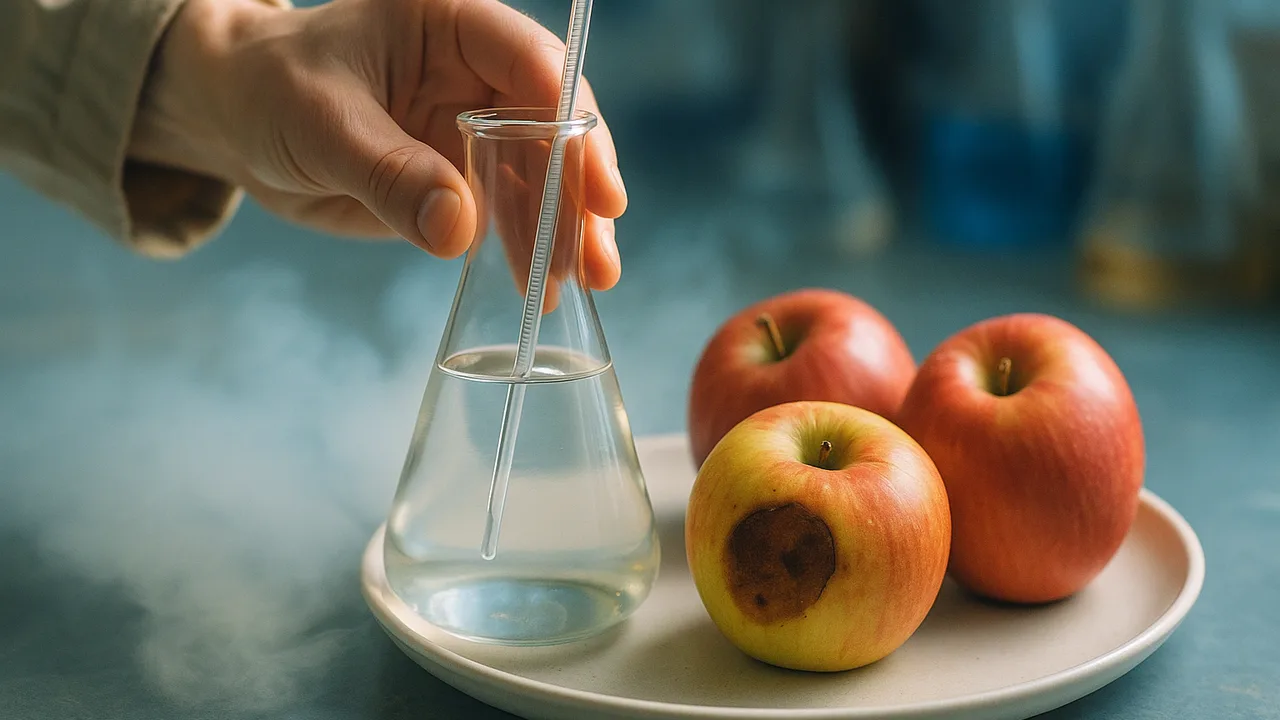
pull rates, equilibrium and nuclear change into one explanation for the food bank, refine the ammonia system with criteria and trade-offs, and brainstorm cold-storage ideas.
- I can systematically evaluate different ways to refine a chemical system by comparing how well each option meets the criteria for increasing product and fits within the given constraints.
- I can refine a chemical system by making tradeoffs to optimize product formation and explain the reasoning behind my design choices.
- I can model and explain that both fission and fusion can release energy and may require energy to start the reaction.
Phase 3: Make Sense
Warm-Up ~5 min
Do Now. Reread the Wonder Board. Pick one question we can now answer and one we cannot yet. Write a two-sentence answer to the first.
Which three ideas from this unit each involve a balance or a competition between two processes?
Instruction ~10 min
Where we are. We have three models: collision theory for rates (4.01–4.03), dynamic equilibrium (4.04) and nuclear change (4.05). Today we connect them to the food bank’s three requests, do the engineering work of refining a chemical system, and brainstorm the cold-storage design.
Request 1, spoilage. Spoilage reactions need effective collisions. Cooling lowers the fraction of collisions with enough energy to break bonds; whole produce has less exposed surface than cut produce; ventilation keeps ethylene concentration low. All three are rate levers.
Request 3a, the fertilizer question: refining a chemical system. N2 + 3H2 ⇌ 2NH3, −92 kJ. Engineers who design an ammonia plant must decide what “better” means before they change anything. Criteria: ammonia produced per hour; fraction of feed gas converted per pass. Constraints: energy cost of compression and heating, the strength and safety of high-pressure equipment, cost, and the carbon dioxide released in making the hydrogen (often from natural gas). Quantify where you can: pressure in atmospheres, temperature in °C, energy in kJ.
Worked example 1: a criteria table (sample scores, 1–3). Weights: ammonia per hour ×3, energy cost ×2, equipment safety ×2, emissions ×1.
| Option | Ammonia per hour (×3) | Energy (×2) | Safety (×2) | Emissions (×1) | Total |
|---|---|---|---|---|---|
| A. Low temperature, no catalyst, moderate pressure | 1 → 3 | 3 → 6 | 3 → 6 | 2 → 2 | 17 |
| B. Moderate temperature + catalyst + high pressure + remove NH3 | 3 → 9 | 2 → 4 | 2 → 4 | 2 → 2 | 19 |
| C. Moderate temperature + catalyst + extremely high pressure | 3 → 9 | 1 → 2 | 1 → 2 | 1 → 1 | 14 |
Option A gives a high equilibrium yield, but so slowly that little ammonia is made per hour. Option C squeezes a little more product but pays heavily in energy and safety. Option B is the compromise real plants use. Worked example 2: refining by trade-off. Keisha’s team started from option B and asked, “what one change would raise ammonia per hour without breaking a constraint?” They chose to cool the outgoing gas further so more ammonia condenses out, and to recycle the unreacted N2 and H2 back to the reactor. The cost is extra refrigeration energy; the gain is that less feed gas is wasted. Each refinement names what it gains and what it gives up.
Request 3b, the irradiation question. Fission and fusion both change nuclei and release about a million times more energy per atom than chemical reactions, but each needs energy to start: a neutron for fission, extreme temperature for fusion. Fission fragments have fewer protons than uranium; a fused nucleus has more protons than either starting nucleus; alpha decay is a lopsided fission. Food irradiation uses none of these on the food itself. It exposes food to gamma rays (often from cobalt-60), X-rays or electron beams. Gamma rays carry energy but no protons or neutrons, so they do not change the food’s nuclei into new elements, and the food does not become radioactive.
Ideate. Back to request 2: brainstorm at least five ways a pantry with no walk-in cooler could keep a day of produce cold. Tag each idea with the rate lever it uses (temperature, surface area, concentration of ethylene) and how it moves energy out of the produce (ice melting, water evaporating, insulation slowing heat flow in). Quantity first; judge later.
Guided Exercises ~15 min
Work in your project teams.
Independent Practice ~10 min
Write the synthesis.
Write one paragraph for each of the food bank's questions (spoilage, fertilizer, irradiation). Each paragraph must name a particle-level or nuclear mechanism and one piece of evidence from this unit.
Closure ~5 min
We have three models working together. Next phase, we design and test a cooler for a pantry.
Exit ticket: which of your cold-storage ideas do you expect to work best without electricity, and which part of collision theory supports that prediction?
How confident are you that you can refine a chemical system using criteria, constraints and trade-offs?
Teacher notes
Materials: the Wonder Board, the sample criteria table on chart paper, sticky notes for the Ideate round, the client letter.
Setup: 15 minutes on the ammonia refinement, 15 on the irradiation explanation, 15 on Ideate. The scores in the criteria table are sample values for practice, not real plant data.
Listen for: “more pressure is always better”; “irradiated means radioactive”; evaporation described as “making cold.”
Support / stretch: a refinement frame (“We change ___ to gain ___ at the cost of ___”). Stretch: explain why Keisha’s recycle stream does not change the equilibrium mixture in the reactor but does change the overall conversion of the plant.