1.09 Performance Task: The Lithium Element Brief
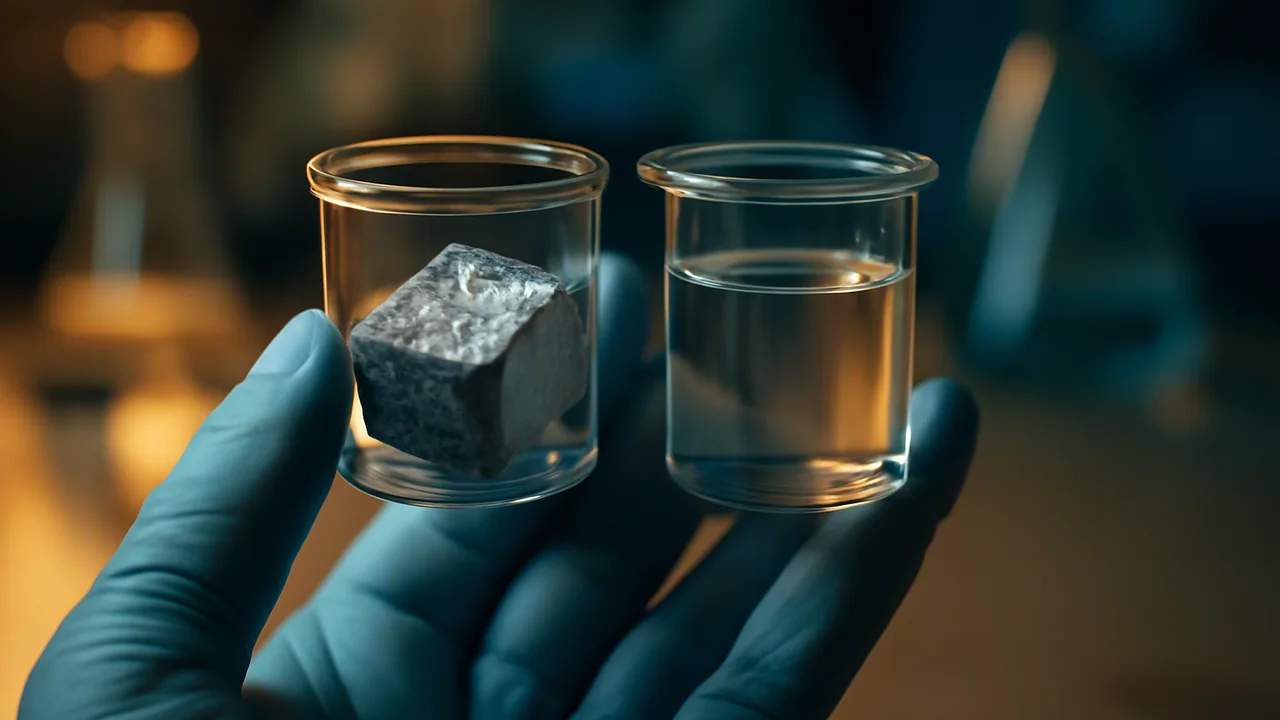
use the periodic table as a model to explain lithium’s properties, compare it with neighboring elements, and state criteria and constraints for recovering it responsibly, backed by my team’s cleanup-step data.
- I can use the periodic table to predict how elements behave based on the attraction and repulsion between charged particles and the patterns of outermost electrons that affect an atom’s reactivity.
- I can predict the number and types of bonds an element can form, and the kinds of bonds formed between elements.
- I can predict the number and charges of stable ions that form from atoms in a group of the periodic table.
- I can analyze and compare trends in reactivity, electronegativity, and atomic size across rows and down groups in the periodic table, based on the attraction of valence electrons to the nucleus.
- I can explain how the arrangement of the main groups in the periodic table shows patterns in the outermost electrons of atoms.
- I can describe how elements are organized in the periodic table by the number of protons in their atoms.
Phase 5: Prove It
Warm-Up ~5 min
Do Now. List the three strongest pieces of evidence you have collected this unit (a lab result, a NIST value, a calculation, a test result). Next to each, write the claim it supports.
Why is lithium found in the co-op's brine as Li+ ions rather than as lithium metal?
Instruction ~10 min
The context. Deep beneath a desert basin, hot brine feeds the co-op’s geothermal power plants. That brine also carries dissolved lithium, and companies and public agencies in several countries are studying how to recover lithium from geothermal brines for batteries. Lithium-ion batteries power phones, laptops and electric vehicles. Whether and how to recover lithium raises questions of chemistry, engineering and community impact on the people who live nearby.
Your job. Write an element brief that explains, from the periodic table, why lithium behaves as it does, and then frames the engineering challenge of recovering it, including your team’s tested cleanup step. You are not asked to decide the policy question; you are asked to explain the science and to specify criteria and constraints, which is how engineers begin (HS-ETS1-1).
What the science section must do. Lithium is element 3, in group 1, period 2, with shell arrangement 2, 1. Use that to predict (a) the ion it forms, (b) the formula of its compounds with chlorine and oxygen (LiCl, Li2O), (c) how its reactivity compares with sodium and potassium, with NIST ionization energies (Li 5.39, Na 5.14, K 4.34 eV) as evidence, and (d) why it is found dissolved as Li+ ions in brine rather than as a shiny metal in the ground. Include its average atomic mass computed from isotopes (7.59% Li-6 at 6.01512 u, 92.41% Li-7 at 7.01600 u gives 6.94 u) and show the calculation. Tie at least one claim to your 1.03 metal-reactivity lab evidence.
What the engineering section must do. Name at least two criteria (what a good recovery process must achieve, such as amount of lithium recovered or low water use) and at least two constraints (limits, such as cost, energy, air and water quality near communities, or consultation with local and tribal communities). Report your version 2 cleanup-step data against the class criteria and name one limitation of the bench model. Use sources: OpenStax Chemistry 2e, NIST data, USGS mineral commodity summaries, and public energy-agency material. Cite each source, and do not state figures you cannot source; label any estimate as illustrative.
Worked example: a strong paragraph. “Lithium (Z = 3) has one valence electron in its second shell (2, 1). NIST lists its first ionization energy as 5.39 eV, higher than sodium’s 5.14 eV and potassium’s 4.34 eV, so lithium is the least reactive of the three; its outer electron is closer to the nucleus and less shielded. Even so, it loses that electron easily enough that in nature it exists only in compounds, which is why it is dissolved in the brine as Li+.” Every sentence names a particle, a number or a mechanism.
Quality bar. Strong briefs connect every property claim to outer electrons, distance from the nucleus and charge. They compare findings from two different sources, for example a textbook table and NIST, and say whether they agree.
Stages. Plan, draft, get a peer review with a checklist, revise, and present to the co-op’s board (your class and visitors). The presentation is four minutes, live or recorded, followed by one question about your evidence.
Guided Exercises ~15 min
Plan and peer-review checks.
Independent Practice ~10 min
Write and revise the brief across the work sessions.
Write the science section of your brief (about 500 words), with the data table and the average-atomic-mass calculation.
Write the engineering section: criteria, constraints, your cleanup data and one limitation, with sources cited.
Project task: The Lithium Element Brief (900-1,200 words) + four-minute presentation
Task: For the desert geothermal co-op, explain lithium’s properties from its position on the periodic table, compare it with sodium and potassium using NIST ionization energies, compute its average atomic mass, report your team’s tested cleanup step, and specify criteria and constraints for recovering lithium from geothermal brine. Include one data table and at least three cited sources (OpenStax Chemistry 2e, NIST, USGS or a public energy agency).
Submission workflow
- Stage 1 — Plan. Outline with your claims, the evidence for each (lab data, NIST values, cleanup-step results) and a list of sources.
- Stage 2 — Peer-reviewed draft. A partner checks each property claim for electron-based reasoning and each number against its source; submit their notes and your revision plan.
- Stage 3 — Final brief. 900–1,200 words with a data table, the average-atomic-mass calculation, the version 2 results, and criteria and constraints.
- Stage 4 — Presentation and defense. Four minutes to the co-op’s board, live or recorded, answering one question about your evidence.
How it is scored
| Criterion | What proficient looks like |
|---|---|
| Periodic table as a model (HS-PS1-1) | Predicts ion, formulas and relative reactivity from outer electrons, distance and position, with correct reasoning. |
| Use of data | Cites NIST values, lab evidence and cleanup-step data accurately and compares two sources. |
| Calculation | Average atomic mass computed correctly with the method shown. |
| Criteria and constraints (HS-ETS1-1, HS-ETS1-3) | At least two criteria and two constraints, including community and environmental ones, with ways to measure them and one stated limitation of the bench model. |
| Communication | Clear structure; the presentation answers a question with evidence. |
Closure ~5 min
Your brief turns a unit of evidence into advice. Next: the unit checkpoint.
Exit ticket: what question did the board ask your team, and how did you answer it with evidence?
Teacher notes
Timing: the brief runs across about three sessions: this lesson launches it and covers planning and peer review; drafting and the presentations need further work time.
Materials: peer-review checklist, NIST table, OpenStax links, USGS lithium summary (have students read it, not copy figures), rubric copies for visiting “board members.”
Listen for: numbers with no source; claims of a recovery method that “has no downsides.”
Support / stretch: give a paragraph frame for each of (a)–(d). Stretch: add a section comparing lithium with sodium as a battery metal, using atomic mass and ion charge.