3.09 Performance Task: The Lizard’s New Tail
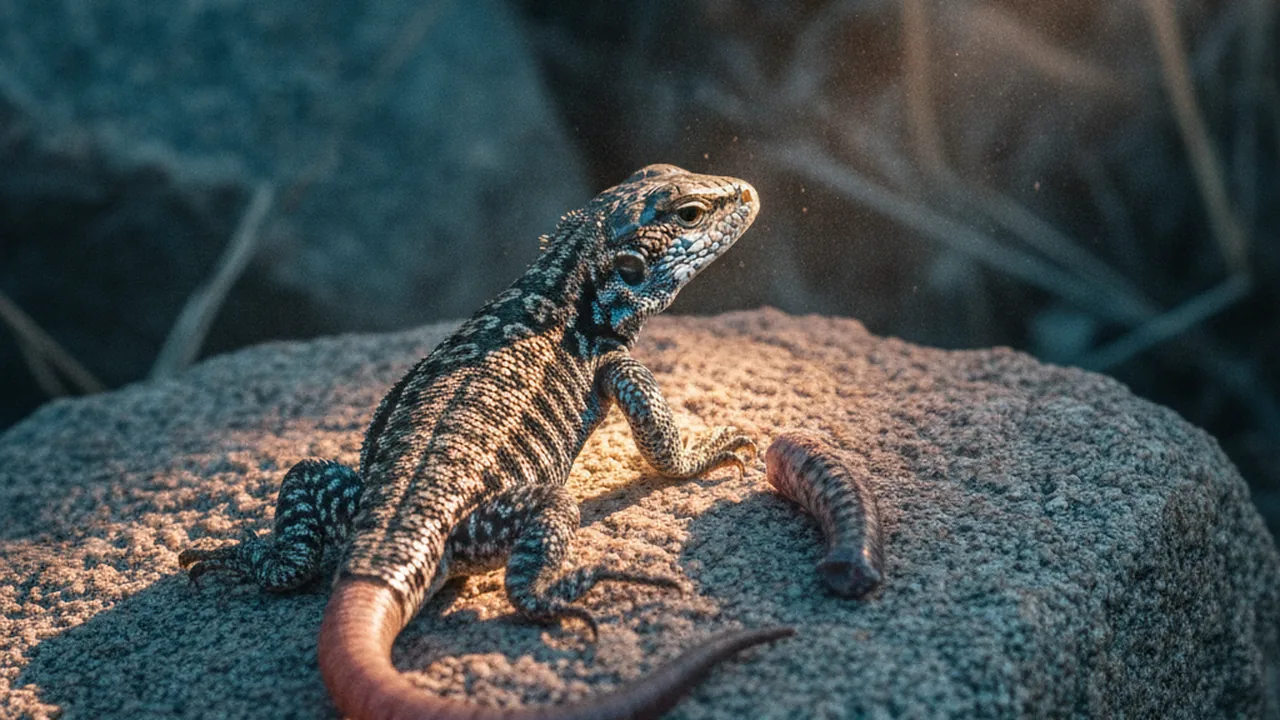
construct and defend an evidence-based explanation, with a labeled multi-level model, of how a lizard regrows its tail through cell division, differentiation and gene expression, for the museum’s exhibit text.
- I can use a model to show that mitotic cell division results in more cells, allowing the organism to grow.
- I can use a model to show that new cells from mitosis can differentiate to create different cell types.
- I can use a model to show that mitosis can replace dead cells to help maintain a complex organism.
- I can use reasoning to connect evidence and scientific principles to explain how genes in DNA code for proteins in all cells.
- I can describe how specialized cells in tissues rely on proteins to carry out their functions, and how proper protein function is necessary for cells to work correctly.
- I can explain how changes in gene sequences can affect protein function and, in turn, the function of body tissues.
- I can use a model of DNA to ask questions that help clarify how DNA codes for proteins and how those proteins cause traits in an organism.
- I can use a model of DNA to ask questions about how cells regulate which DNA and chromosomes are used.
- I can use a model of DNA to ask questions about the functions of non-protein coding sections of DNA, such as their role in regulation.
Phase 5: Prove It
Warm-Up ~5 min
Do Now. The museum will print your explanation beside the exhibit. In one sentence, what is the most important idea a visitor should leave with?
Which sequence correctly traces how a gene affects a lizard's regrown tail?
Instruction ~10 min
The question. How does a lizard rebuild a tail from a small stump of cells, and why is the new tail different from the old one?
What a strong explanation contains. Your explanation must connect three levels, and the links between them matter as much as the levels themselves.
- Cells: division. Explain how the cell cycle produces new cells with identical chromosomes. Use your onion root tip data: the mitotic index shows where division happens, and the phase fractions show how the cycle is spent. Explain why a regrowing region, like a root meristem, should have a high mitotic index.
- Cells: differentiation. Explain how identical daughter cells become muscle, cartilage, skin and blood vessel cells. Use the evidence from the strawberry DNA argument (cuttings, nuclear transfer) to show that specialized cells keep the whole genome and differ in which genes they express.
- Molecules: DNA to protein. Pick one protein a new tail needs, such as collagen in cartilage or keratin in scales, and explain how the sequence of its gene determines its amino-acid sequence, its shape and its function. Use your transcription-translation model, and explain what a point mutation in that gene could do to the tissue.
- The difference. Explain, using the ideas above, why a new tail with a cartilage tube instead of vertebrae is possible even though every cell has the same DNA. Be clear about what is known and what is still being researched: scientists are still working out exactly which signals guide lizard regeneration.
A worked example of one link. Claim: the stump regrows because cells near the wound divide rapidly. Evidence: in the root tip, the mitotic index in the meristem was far higher than 2 mm back, showing that growth is concentrated where cells divide. Reasoning: each division doubles the number of cells in a lineage, so a small group of dividing cells can supply the thousands of cells a new tail needs, and mitosis gives each new cell the same chromosomes. Every link in your explanation needs this structure.
Model and limits. Include your revised multi-level model from 3.06 or a photo of your exhibit version 2, and a short paragraph on where the model is accurate and where it is limited.
Sources. Your lab data, OpenStax Biology 2e chapters 10 and 15, and NHGRI or NCI pages. Cite every source, and say where a fact came from if you did not measure it.
Presentation. In four minutes, live or recorded, walk the museum’s education team (classmates, staff or family playing its members) through your model from gene to tissue and answer one question about your evidence.
Guided Exercises ~15 min
Plan and check your draft with these prompts.
Independent Practice ~10 min
Work on the stage your teacher assigns.
Draft the “why the new tail is different” section: explain it with gene expression, say what is known and what is still being researched, and cite at least one source.
Project task: The Lizard’s New Tail (900-1,300 words with a multi-level model) + four-minute presentation
Task: Write an evidence-based explanation, for the museum’s exhibit text, of how a lizard regrows its tail. Include a labeled model that connects the gene, protein, cell and tissue levels; explain mitosis, differentiation and gene expression; trace one named protein from gene to function, including the effect of a mutation; explain why the new tail differs from the old one; and state where your model is accurate and where it is limited. Use evidence from the onion root tip lab, the strawberry DNA argument, the protein synthesis model and your exhibit’s visitor test. Hand-drawn models, photographed or scanned, are fully acceptable.
Submission workflow
- Stage 1: Plan. A first-draft model, the protein you will trace, and a table listing which lab evidence supports each link in your explanation.
- Stage 2: Peer-reviewed draft. A partner checks every link for evidence, checks your mitotic index and transcription-translation examples, and marks any claim made without support; submit their notes and your revision plan.
- Stage 3: Final explanation. 900-1,300 words with the revised model, data displays, citations and a short paragraph on what is still unknown about lizard regeneration.
- Stage 4: Presentation and defense. Four minutes, live or recorded, to the museum team, answering one question about your evidence.
How it is scored
| Criterion | What proficient looks like |
|---|---|
| Cell division (HS-LS1-4) | Explains the cell cycle and mitosis accurately, identifies parent and daughter cells, and uses mitotic-index data as evidence of where growth happens. |
| Differentiation (HS-LS1-4) | Explains that specialized cells keep the whole genome and differ in gene expression, with evidence from cuttings or nuclear transfer. |
| DNA to protein (HS-LS1-1, HS-LS3-1) | Traces a named protein from gene sequence through transcription and translation to shape and function, including the effect of a mutation on the tissue. |
| Model and its limits | Model connects the gene, protein, cell and tissue levels with labeled links and states where it is accurate and where it is limited. |
| Use of evidence and sources | Claims tied to lab data and reliable, cited sources; calculations are correct; unknowns are stated honestly. |
| Communication | Clear for a museum visitor; the presentation answers a question about evidence accurately. |
Closure ~5 min
Next: the unit checkpoint, then a 360° field trip.
Exit ticket: which question from our Wonder Board can you now answer? Write the question and your answer.
How confident are you that you can build and defend an explanation of regeneration that connects genes, proteins, cells and tissues.
Teacher notes
Materials: Lab Notebooks with all unit data, exhibit version 2 and visitor data, rubric copies, a timer for presentations.
Timing: the task runs across about three sessions: plan and draft, peer review and revision, presentations. Writing can continue as homework.
Listen for: lists of facts with no causal links; “the new cells have new DNA”; certainty about regeneration signals that are still being researched.
Support / stretch: give a four-link organizer and sentence starters (“Because ___, the cells ___, so the tail ___”). Stretch: compare lizard tail regrowth with the cultured-skin case study and explain one similarity and one difference.