3.04 Same Genome, Different Cells: The Strawberry DNA Argument
extract DNA from strawberry cells, describe how DNA is organized into chromosomes and genes, and argue from evidence whether specialized cells keep their whole genome.
- I can identify and describe evidence that all cells contain DNA.
- I can describe how DNA contains genes, and how gene sequences provide instructions for making proteins.
- I can explain how groups of specialized cells use proteins to perform essential functions for the organism.
- I can explain how daughter cells receive identical genetic information from a parent cell or fertilized egg in a model.
- I can describe how mitotic cell division produces two genetically identical daughter cells from one parent cell in a model.
- I can explain, using a model, that differences between cell types in a multicellular organism are due to gene expression, not different genetic material.
- I can use a model of DNA to ask questions that help clarify how DNA codes for proteins and how those proteins cause traits in an organism.
- I can use a model of DNA to ask questions about how cells regulate which DNA and chromosomes are used.
- I can use a model of DNA to ask questions about the functions of non-protein coding sections of DNA, such as their role in regulation.
Phase 2: Investigate
Warm-Up ~5 min
Do Now. A muscle cell and a skin cell from the same lizard look nothing alike. Write one reason you think they differ.
You mash a strawberry with soap and salt, then pour cold alcohol on top. What will you see at the boundary?
Instruction ~10 min
DNA, genes and chromosomes. DNA is a double helix: two strands of nucleotides twisted around each other. Each nucleotide carries one of four bases: adenine (A), thymine (T), guanine (G) or cytosine (C). The strands are held together by base pairs, and pairing follows a rule: A pairs with T, and G pairs with C.
Worked example 1: Chargaff’s rule. The pairing rule has a testable consequence, first measured by Erwin Chargaff: in double-stranded DNA the amount of A equals the amount of T, and G equals C. If 30% of the bases in a sample are A, then 30% are T, and the remaining 40% is split equally, so 20% are G and 20% are C. For a sample that is 22% A: T = 22%, and G = C = (100 − 44) ÷ 2 = 28%.
A gene is a stretch of DNA that carries the instructions for a product, usually a protein. A chromosome is one very long DNA molecule wound around proteins. The National Human Genome Research Institute describes the human genome as about 3 billion base pairs, carrying roughly 20,000 protein-coding genes, packaged into 23 pairs of chromosomes in almost every cell. Stretched out, the DNA in one human cell would be about 2 meters long, which gives you a sense of how tightly it is packed.
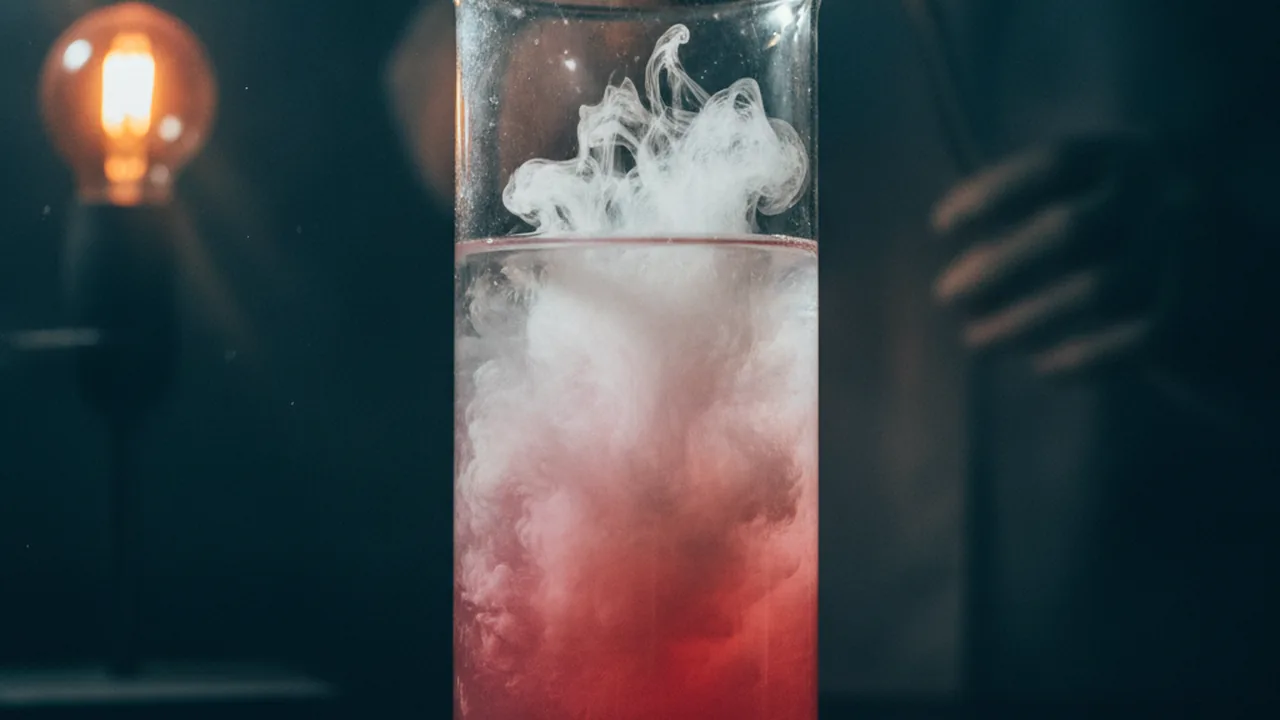
Why strawberries? Cultivated strawberries are octoploid: each cell has eight sets of chromosomes, so the fruit is rich in DNA. In the lab, you mash the fruit to break cell walls, add soap to dissolve the lipid membranes around the cell and the nucleus, add salt to help DNA strands clump, filter out the debris, and pour cold isopropyl alcohol on top. DNA does not dissolve in alcohol, so it comes out of solution as white strands at the boundary. You are seeing millions of DNA molecules clumped together, not a single strand and not individual genes. Every plant, animal, fungus and bacterial cell you could put through these steps would give DNA, because all cells carry it.
The argument: do specialized cells keep all their genes? Claim A: each cell type keeps only the genes it needs and loses the rest. Claim B: almost every cell keeps the whole genome, and cell types differ because they switch different genes on and off. Consider the evidence.
- Plant cuttings. A strawberry runner or a single cut stem can grow into a whole new plant, with roots, leaves, flowers and fruit. The cells in the cutting still carried the instructions for every other cell type.
- Nuclear transfer. In 1962 John Gurdon transplanted the nucleus of a specialized intestinal cell from a tadpole into a frog egg whose own nucleus had been destroyed, and some developed into tadpoles. In 1996 Dolly the sheep was cloned from the nucleus of an adult mammary-gland cell.
- Gene expression data. Researchers measure which genes are being read in each tissue; the same gene can be active in liver and silent in muscle.
Worked example 2: handling exceptions. A strong argument handles the exceptions honestly. Mammalian red blood cells lose their nucleus as they mature, and some immune cells cut and rejoin segments of their antibody genes. These are real exceptions, and they do not overturn the general pattern. Evidence decides: a single cell’s DNA must still hold the instructions for a whole organism if a whole organism can grow from it. A rebuttal names the best evidence for the other side and explains why it does not win.
Back to the lizard. If Claim B is right, the cells at the tail stump carry the genes for skin, muscle, cartilage and nerve. That raises the next question for the model: how does a cell switch a gene on, and how does the gene’s code become a protein?
Lab procedure: extracting DNA from strawberries. Question: can we isolate DNA from plant cells, and what does each step do?
- Remove the green top, seal the strawberry in a zip-top bag, and mash it with your fingers for two minutes until no large lumps remain.
- Add 10 mL of extraction buffer (90 mL water, 10 mL clear dish soap and 1/2 teaspoon table salt, premixed), reseal and mash gently for one more minute without making lots of foam.
- Pour the mixture through a coffee filter in a funnel and collect about 5 mL of liquid in a clear cup or test tube.
- Tilt the tube and slowly pour an equal volume of ice-cold alcohol (dispensed by your teacher) down the side so it forms a separate layer on top. Do not mix.
- Watch the boundary for two minutes and record what you see. Twirl a wooden stirrer at the boundary to spool the white strands.
- Record observations for each step and return the alcohol as your teacher directs.
| Step | What we did | What we observed | Purpose of the step (our explanation) |
|---|---|---|---|
| Mashing | |||
| Soap and salt buffer | |||
| Filtering | |||
| Cold alcohol |
No lab? Watch the teacher’s recorded demonstration, complete the observation table from the video, and write the same argument.
Reading: OpenStax Biology 2e, chapter 14, DNA Structure and Function, and section 16.1, Regulation of Gene Expression; NHGRI Talking Glossary entries for chromosome and gene (public domain).
Guided Exercises ~15 min
Use your observation table and the evidence list.
Independent Practice ~10 min
Write your full argument.
Write your argument for Claim A or Claim B with at least three pieces of evidence, and rebut one piece of evidence for the other claim. Name each source (your lab, Gurdon, Dolly, OpenStax) and say why you trust it.
Identify two variables that could change how much DNA you collect, and describe how you would test one of them.
Closure ~5 min
Every cell carries the full code. Next phase, we read the code: from gene to protein.
Exit ticket: give two pieces of evidence that all cells contain DNA, and one piece of evidence that specialized cells keep the whole genome.
How confident are you that you can explain how DNA is organized into genes and chromosomes and argue why specialized cells keep their whole genome.
Teacher notes
Materials: one fresh or thawed strawberry per student in a zip-top bag, premixed extraction buffer, coffee filters, funnels, clear cups or tubes, ice-cold 70–91% isopropyl alcohol in a dropper bottle (keep it in the teacher’s freezer), wooden stirrers, goggles.
Timing: this lab spans two 50-minute periods: extraction and observations on day 1, argument writing on day 2.
Listen for: “we can see the double helix” (we see a clump); “cells lose genes they don’t need” (address with the cloning evidence).
Support / stretch: give an argument frame (claim, three evidence boxes, reasoning, rebuttal). Stretch: research how an organism with many chromosome sets differs from one with two, and ask a testable question about it.