2.08 Critique and Iterate: Park Carbon Plan Version 2
use peer critique and decomposition-test evidence to revise our park carbon plan, and explain how our model differs from the real carbon cycle.
- I can explain the difference between what my model shows and how carbon actually cycles through photosynthesis and cellular respiration in the real world.
- I can use valid and reliable sources, such as theories, simulations, or my own investigations, to gather evidence for my explanation.
Phase 4: Build
Warm-Up ~5 min
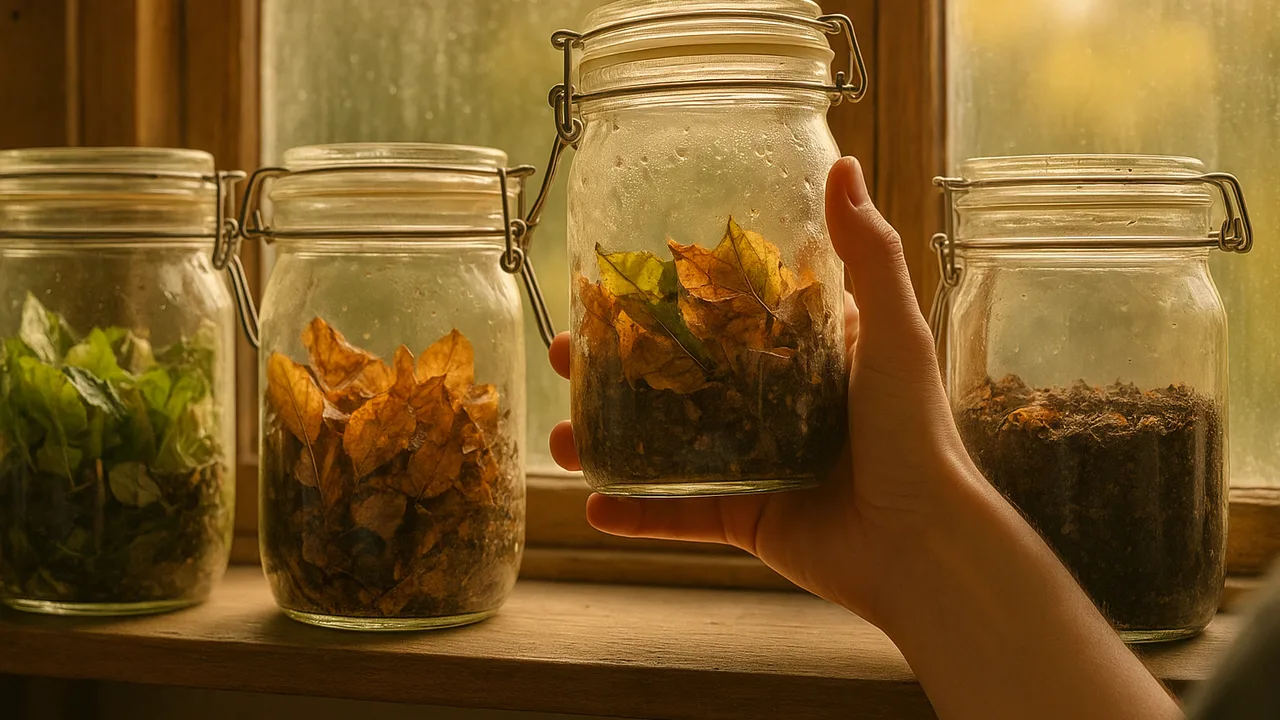
Do Now. Check your jars. Record each BTB color, then write one sentence: which jar’s decomposers respired the most?
The control jar (BTB, no litter) stayed blue. Why does that matter?
Instruction ~10 min
Reading the jars (sample results). One class found: control still blue; dry litter blue-green; waterlogged litter green; damp litter yellow. Inference: damp litter released the most CO2, because decomposers need water and respire fastest with oxygen. Waterlogged litter released less, consistent with slower anaerobic decomposition. That supports keeping leaf piles for compost only where they can be turned and managed, and shows why soggy, airless storage keeps carbon longer but can create other problems such as odors.
Gallery critique. Teams post their carbon-flow models, ledgers and matrices. Visitors leave notes: I like… (a strength backed by a number), I wonder… (a question about an assumption), What if… (a specific change). Check every arrow’s direction and every calculation’s units.
Worked example 1: a version 2 revision. Diego’s team planned to compost everything. Critique asked, “What about the big trunks?” Version 2 keeps trunks over 30 cm wide as benches and habitat logs (option D), composts leaves and small branches (option C), and plants 20 new trees. Using the sample ledger for 10 tonnes a year (4 tonnes of logs, 6 of leaves and branches): 4 × 250 + 6 × 100 = 1,600 kg of carbon still stored after 10 years, compared with 0 kg for burning. Cost: 4 × 2 + 6 × 4 = 32 points for 10 tonnes, or 3.2 points per tonne.
Worked example 2: model versus reality. Their model drew one arrow from “compost” to “air.” Real compost releases carbon fast at first and slowly later, keeps some in the soil for decades, and some of it is taken up again by the trees that grow in that soil. Their revised model adds a soil box and a note: “Rates are sample numbers; real rates depend on moisture, temperature and wood type.”
Using sources well. When a team cites a figure, it says where it came from: our jar test, our bead model, the NOAA record, an OpenStax chapter, or a peer-reviewed study. Unlabeled numbers lose credibility with a city council.
Guided Exercises ~15 min
Use the jar results and critique notes.
Independent Practice ~10 min
Finalize version 2.
Explain how your version 2 carbon model differs from the real carbon cycle in at least two ways, and how the parks department could measure whether the plan works over the next ten years.
🔎 Mini case study: A forest that is measured breathing ~6 min
At Harvard Forest, a long-term ecological research site in central Massachusetts, scientists have used instruments on a tall tower since the early 1990s to measure the carbon dioxide moving between the forest and the air above it, hour by hour. The record shows the same pattern you saw at Mauna Loa, but for one forest: in summer, photosynthesis pulls in more CO2 than the trees, soil organisms and animals release by respiration, and in winter the flow reverses. Over a full year, this maturing forest has taken up more carbon than it released. Measurements like these let scientists test carbon models against reality instead of guessing.
Think about it: How could the parks department check whether your plan really keeps more carbon stored, instead of trusting the ledger’s sample numbers?
Closure ~5 min
Version 2 plans feed straight into the carbon budget in the next lesson.
Exit ticket: what did the jar test add to your plan that the sample ledger could not?
How confident are you that you can use evidence and critique to improve a carbon plan and explain the limits of my model.
Teacher notes
Materials: the jars from 2.07, a white card behind each jar to read colors, sticky notes in three colors, ledgers and matrices, calculators, gloves and goggles for opening jars.
Timing: about 10 minutes for jars, 15 for critique, 25 for revision and the revision log.
Listen for: “decomposition destroys carbon”; arrows pointing the wrong way; numbers without units.
Support / stretch: give a revision-log template. Stretch: compare version 2 with a plan that adds 40 trees instead of 20, and decide whether it fits the budget.