3.06 Gene to Tissue: Revising the Tail Model
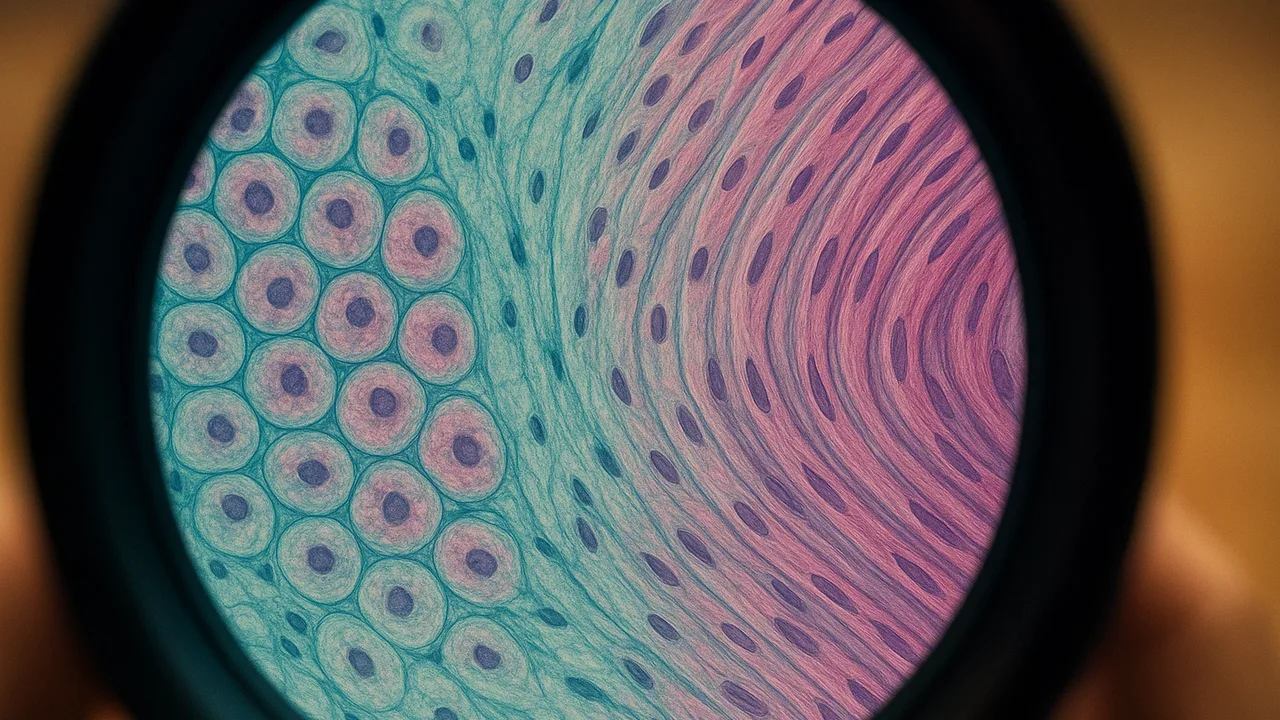
revise my model of tail regrowth so it connects genes, proteins, cell division and differentiation, judge where the model matches the real process and where it falls short, and brainstorm exhibit ideas from it.
- I can use a model to show that mitotic cell division results in more cells, allowing the organism to grow.
- I can use a model to show that new cells from mitosis can differentiate to create different cell types.
- I can use a model to show that mitosis can replace dead cells to help maintain a complex organism.
- I can compare the model of cellular division to the actual process and explain where the model is accurate and where it is limited.
- I can use reasoning to connect evidence and scientific principles to explain how genes in DNA code for proteins in all cells.
- I can describe how specialized cells in tissues rely on proteins to carry out their functions, and how proper protein function is necessary for cells to work correctly.
- I can explain how changes in gene sequences can affect protein function and, in turn, the function of body tissues.
Phase 3: Make Sense
Warm-Up ~5 min
Do Now. Take out your initial tail model from 3.01. Circle one thing you now know is wrong or missing, and write what you would change.
A good scientific model has to look exactly like the real thing.
Instruction ~10 min
Pulling the unit together. In three investigations you gathered evidence at three levels. The root tips showed where and how fast cells divide. The strawberry argument showed that specialized cells keep the whole genome. The protein model showed how a gene’s sequence becomes a protein that does a job. Today you join the levels into one revised, multi-level model of tail regrowth.
The four links.
- Division. Cells near the wound divide by mitosis. Each parent cell gives two daughter cells with the same chromosomes, so the new tail’s cells all carry the lizard’s genetic material from both its parents.
- More cells. Repeated divisions build a growing bud of cells, the way a root meristem builds a root. Mitosis also replaces cells that die during repair.
- Differentiation. Daughter cells switch on different genes. Transcription factors turn on collagen and cartilage-protein genes in one group of cells, contractile-protein genes in another and keratin genes in the skin.
- Function. Each protein’s amino-acid sequence, set by its gene, gives it a shape that does a job, so each cell type works in its tissue. A mutation in, say, a collagen gene could weaken the new support tube.
Worked example 1: a model-revision log. Diego’s first model showed a stump with “new tail cells” and an arrow to a tail. His revision log reads: Added: a mitosis panel with one parent and two identical daughters (evidence: root tip slides). Added: three branches from the daughter cells to cartilage, muscle and skin, each labeled with the gene switched on (evidence: strawberry argument, cloning). Changed: “cells make new DNA” to “cells copy the same DNA”. Added: a zoom box showing one gene → mRNA → protein (evidence: bead model).
Worked example 2: where the model is accurate and where it is limited. Every model of cell division leaves things out. Compare a typical classroom model, four pipe-cleaner chromosomes split into two piles, with the real process.
| Feature | Classroom model | Real cell | Does it matter? |
|---|---|---|---|
| Chromosome number | 4 | 16 in onion; dozens in many lizards | Not for the idea of identical copies |
| Timing | Separate, neat steps | A continuous process; stages blur into each other | Yes, when classifying cells on a slide |
| Control | Not shown | Checkpoints stop division if DNA is damaged | Yes, for explaining why regrowth stops |
| Differentiation | Not shown | Signals from neighbors switch genes on | Yes, for explaining the cartilage tube |
A strong statement of a model’s limits names the feature, says how reality differs, and says whether the difference changes the conclusions you draw from the model.
Why is the new tail different? The DNA is the same, so the difference must come from which genes are expressed. In an adult wound, the signals that guide cells differ from the signals in an embryo, so cartilage forms where bone once stood. Scientists are still working out exactly which signals are involved; good explanations say clearly what is known and what is not.
Ideate: from model to exhibit. Our client needs visitors to grasp these four links in four minutes. Brainstorm at least five exhibit ideas, each tied to one link: a flip-panel mitosis wheel, a “same DNA, different switches” light-board, a codon decoder visitors spin, a magnetic tail visitors rebuild cell by cell, or a before-and-after cross-section of old and new tails. Wild ideas are welcome; we judge them in 3.07.
Guided Exercises ~15 min
Revise your model with your team, then answer.
Independent Practice ~10 min
Model limits and Ideate.
Name two ways your revised model differs from real tail regrowth. For each, explain whether the difference changes what a visitor would conclude from the model.
Ideate: list five exhibit ideas for the museum. Tag each with the link it teaches (division, more cells, differentiation or function) and star the two your team likes best.
Closure ~5 min
Our science is ready. Next phase, we design the exhibit.
Exit ticket: in three sentences, explain how a tail stump becomes a tail, from gene to tissue.
How confident are you that you can use a multi-level model to explain growth and differentiation and judge where the model is accurate and where it is limited.
Teacher notes
Materials: students’ 3.01 initial models, chart paper, colored markers, sticky notes for the Ideate wall, the class Wonder Board.
Setup: before revising, revisit the Wonder Board and mark the questions the unit has now answered.
Listen for: revisions without evidence; “a model is wrong if it is simplified”; “differentiated cells lost genes”.
Support / stretch: give a four-box model frame (division, more cells, differentiation, function). Stretch: add a cell-cycle checkpoint to the model and explain what would happen to the tail if it failed.