2.02 Project Brief and Wonder Board: The Park Carbon Ledger
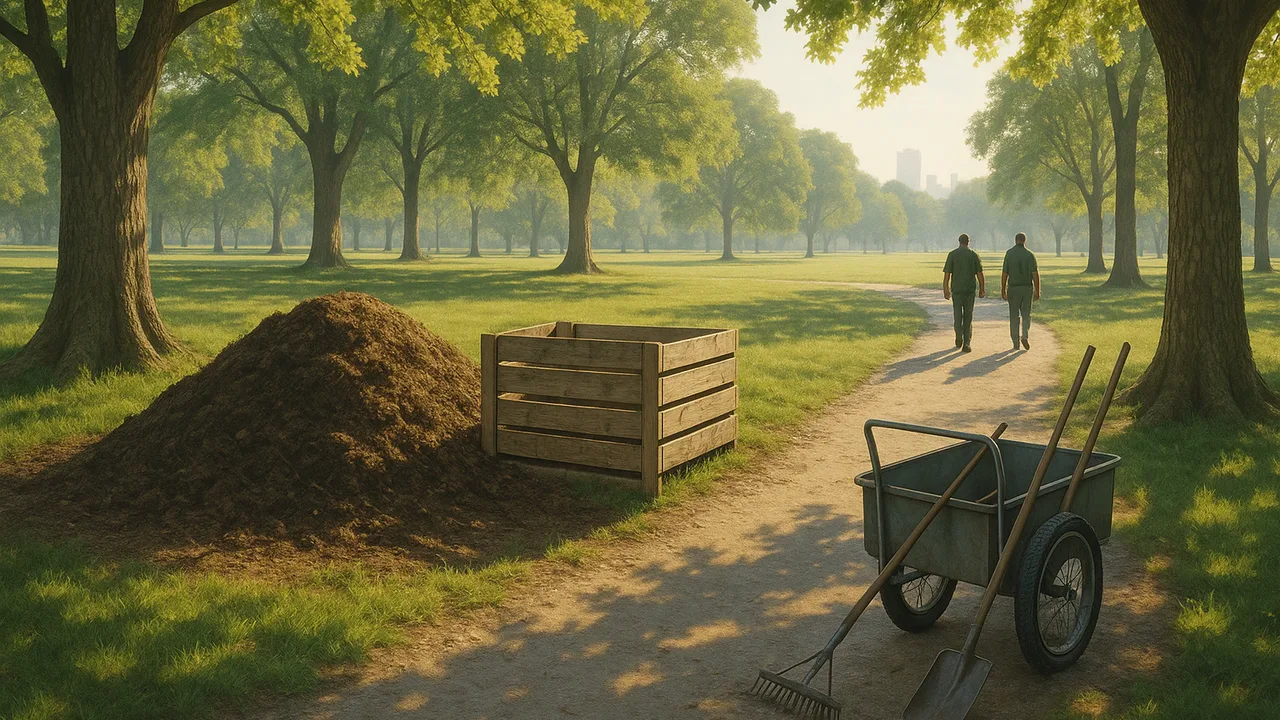
The Park Carbon Ledger
Where does a tree’s mass come from, where does its carbon go, and how can a city park plan its trees and green waste to keep more carbon out of the air?
The mystery: A forest giant holds tonnes of wood, yet it grew from a seed lighter than a grain of rice, and the soil beneath it was never used up.
Questions we will figure out together in this unit:
- How much carbon is in one tree?
- Do plants breathe out carbon dioxide too?
- Why do leaves float in some experiments and sink in others?
- Can living things get energy without oxygen?
- Why does carbon dioxide in the air go up and down every year?
- Is it better for the climate to compost leaves or bury them?
- Where does the energy in sugar go after we use it?
- How do trees turn sugar into wood and proteins?
define the parks department’s carbon problem, identify the parts of the carbon cycle our ledger must track, and organize teams and need-to-knows for the project.
- I can identify and describe the inputs and outputs of photosynthesis in a model.
- I can identify and describe the inputs and outputs of cellular respiration in a model.
- I can identify and describe the biosphere, atmosphere, hydrosphere, and geosphere as parts of a model of the carbon cycle.
- I can describe how all organisms take in matter and rearrange atoms in chemical reactions.
- I can explain how photosynthesis captures sunlight energy to make chemical products that can be used as food in cellular respiration.
- I can explain how cellular respiration uses matter from food and rearranges it to release energy for life processes.
Phase 1: Spark
Warm-Up ~5 min
Do Now. Every fall a city park fills with fallen leaves and branches. List three things a city could do with them. For each, guess where their carbon ends up.
A pile of leaves slowly disappears over a year. Where did most of its carbon go?
Instruction ~10 min
Meet the client. A city parks and urban forestry department has written to our class. It manages a large park with several hundred trees. Each year crews remove a few old trees, prune many more, and collect tonnes of leaves. The department writes: “Our city council wants to know how much carbon our park’s trees store, and how we should handle green waste and new plantings to keep more carbon out of the air. Please build us a carbon ledger and recommend a plan we can afford.”
The driving question. Where does a tree’s mass come from, where does its carbon go, and how can a city park plan its trees and green waste to keep more carbon out of the air?
The project. Scientists, you will (1) measure photosynthesis and respiration in the lab; (2) model how carbon atoms move from air to sugar to wood and back; (3) design and compare green-waste and planting plans with a decision matrix and a carbon ledger; and (4) write and present a carbon budget to the department.
The carbon cycle, first look. Carbon is stored in four big reservoirs: the atmosphere (carbon dioxide in air), the biosphere (living and dead organisms), the hydrosphere (carbon dioxide dissolved in water) and the geosphere (rocks, soil, fossil fuels). Processes move carbon between them. Photosynthesis takes carbon from the air into plants. Cellular respiration, by plants, animals and decomposers, returns it. All organisms take in matter and rearrange its atoms in chemical reactions: a tree turns air and water into wood, and a fungus turns fallen wood back into carbon dioxide.
Worked example 1: classifying a ledger entry. “Leaves raked into a compost pile.” Reservoir: biosphere (dead matter). Process acting on it: respiration by decomposers. Direction: biosphere → atmosphere, with some carbon staying in the soil.
Worked example 2: a need-to-know. Jamal asked, “How much carbon is in one tree?” His team broke it into smaller questions: How much of wood is carbon? Where did that carbon come from? How fast do trees add it? Those questions map onto lessons 2.03–2.06.
| Need-to-know | Reservoir or process it is about | Lesson that answers it |
|---|---|---|
Teams and roles. Teams of four rotate weekly: Principal Investigator, Data Analyst, Lab Manager and Communicator.
Guided Exercises ~15 min
Sort each item into a reservoir and a process.
Independent Practice ~10 min
Add to the class Wonder Board.
Write two Wonder Board questions: one about how carbon gets into a tree, and one about what happens to it after the tree dies.
Closure ~5 min
We have a client, a question and a first carbon map. Next phase, we measure photosynthesis and respiration.
Exit ticket: name the four carbon reservoirs and one process that moves carbon between two of them.
Teacher notes
Materials: printed client letter (generic city parks department), chart paper for the Wonder Board and need-to-knows, role cards, a bag of dry leaves and a twig as props.
Listen for: “carbon disappears when things rot” (it moves to the air); “the carbon cycle is only about pollution.”
Support / stretch: give a four-box reservoir diagram to fill in. Stretch: add the ocean’s role and predict how a warmer pond might hold less dissolved CO2.