understand short posts about what people like to do, name free-time activities, describe a musical tradition of the Spanish-speaking world, and watch or listen to one cultural event or broadcast in Spanish through media.
Instruction
Activities. Free-time vocabulary is mostly infinitives, which you already know how to recognize by their -ar, -er and -ir endings:
- bailar (to dance), cantar (to sing), dibujar (to draw), tocar la guitarra (to play the guitar)
- escuchar música, ver series or ver la tele (to watch shows / TV), leer (to read), escribir (to write)
- correr (to run), nadar (to swim), andar en bicicleta (to ride a bike; montar en bicicleta in Spain), practicar deportes, jugar al fútbol or jugar fútbol (to play soccer)
- jugar videojuegos (to play video games; jugar a los videojuegos in Spain), cocinar, descansar (to rest), pasar tiempo con amigos (to spend time with friends)
Notice that English play splits in Spanish: you jugar a game or sport but tocar an instrument.
Saying you like something. Me gusta + infinitive: Me gusta bailar. (I like to dance.) No me gusta correr. (I don’t like to run.) Me gusta mucho dibujar. (I really like to draw.) No me gusta nada cocinar. (I don’t like cooking at all.) Ask a friend: ¿Qué te gusta hacer? (What do you like to do?) ¿Te gusta nadar? You will learn how gustar really works in Lesson 4.2; for now, use it as a phrase.
Culture: music of the Spanish-speaking world. Spanish-speaking communities in Latin America and the United States keep many musical traditions alive, and blend them with new ones:
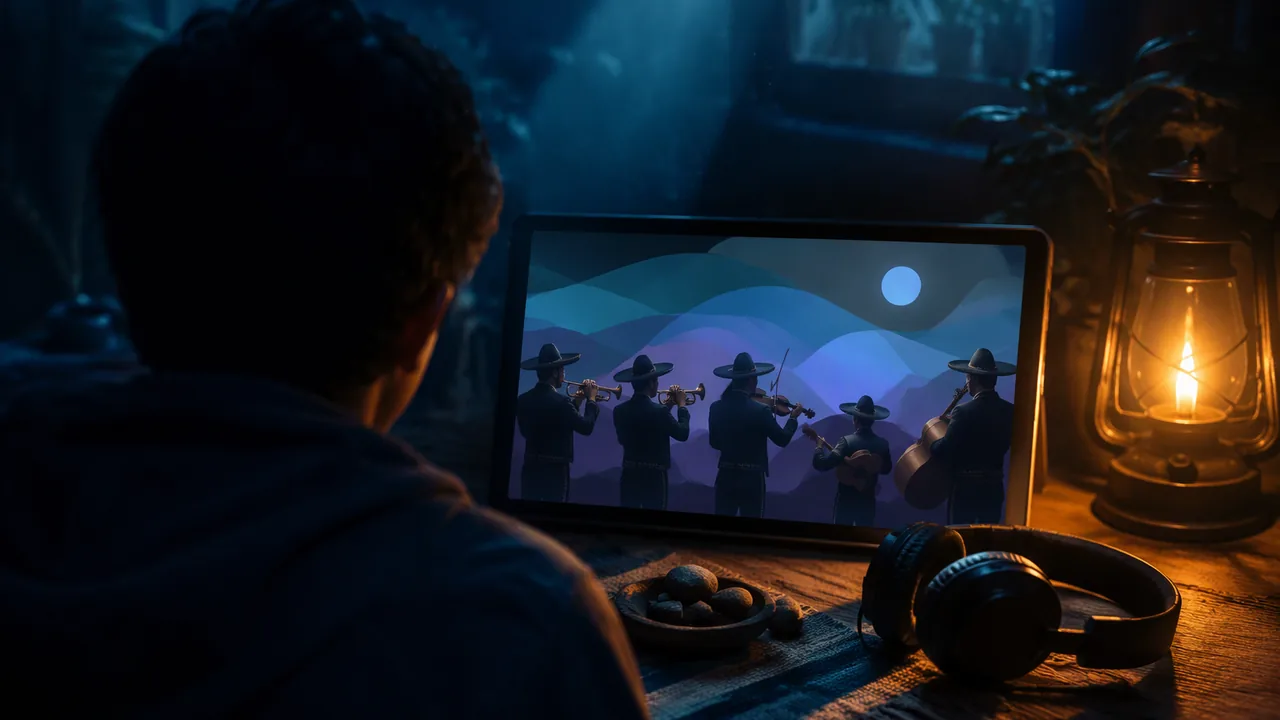
- Mariachi, which UNESCO describes as a traditional Mexican music and a fundamental element of Mexican culture. Modern mariachi ensembles include trumpets, violins, the vihuela and the guitarrón. UNESCO added mariachi to its Representative List of the Intangible Cultural Heritage of Humanity in 2011, and its page includes a video of a performance (UNESCO: Mariachi).
- Son jarocho, from Veracruz, with roots in the eighteenth century, played on small guitars called jaranas at a community gathering called a fandango. Dancers tap their heels on the tarima, a wooden platform that becomes one more percussion instrument.
- Banda, brass and percussion bands that grew up in Sinaloa in the mid-nineteenth century, and norteño, with the accordion and the bajo sexto, from northeastern Mexico; norteño is popular in both Mexico and the United States.
- Cumbia, born in the coastal region of Colombia and reshaped into regional styles in Mexico, Central America, Peru, Argentina, the United States and many other countries.
These are not museum pieces: young musicians mix them with hip-hop, rock and pop. Each tradition also carries a perspective: the fandango, for example, values participation over performance, so everyone present is part of the music.
Spanish in your media: attend an event from home. You can take part in cultural events through media. In Missouri, the Kansas City Royals have produced Spanish-language radio broadcasts of some of their games; in 2023 the Royals and Tico Sports produced 14 of them, available on the MLB app (MLB.com press release). This week, watch or listen to one event in Spanish through media: a Spanish-language game broadcast, the mariachi performance on UNESCO’s page, a recorded concert or folk-dance performance, or a Spanish-language radio station or podcast. In your note, write what the event was, where it comes from, and three Spanish words you recognized.
Reading the posts. Today’s reading is a set of short posts from an online Spanish club board for teens. Use the strategies you know: predict, skim, then read for detail. Look for me gusta and no me gusta and the infinitives after them; each post is really a list of likes and dislikes.
📖 Read for this lesson
The reading opens over the lesson; close it to come back to exactly where you were. The checks below draw on it.
Formative check
Work through these before moving on. They are not graded — they tell you whether the standard below has landed yet.
Read the posts from an online club board, then answer.
Tablero del club: ¿Qué te gusta hacer?
Emilio: Me gusta mucho tocar la guitarra y cantar. Toco en un grupo de mariachi los martes y los jueves. No me gusta correr.
Sofía: Me gusta dibujar y ver series. Los fines de semana me gusta pasar tiempo con mi familia. ¡No me gusta nada cocinar!
Kevin: Me gusta jugar fútbol y nadar. También me gusta bailar cumbia en las fiestas de mi familia.
Show transcript
Tablero del club: ¿Qué te gusta hacer? Emilio: Me gusta mucho tocar la guitarra y cantar. Toco en un grupo de mariachi los martes y los jueves. No me gusta correr. Sofía: Me gusta dibujar y ver series. Los fines de semana me gusta pasar tiempo con mi familia. ¡No me gusta nada cocinar! Kevin: Me gusta jugar fútbol y nadar. También me gusta bailar cumbia en las fiestas de mi familia.
Who plays in a mariachi group?
What does Sofía NOT like at all?
Where does Kevin dance cumbia?
Match each activity to its meaning.
Listen. What does Andrea like to do?
Show transcript
Me llamo Andrea. Me gusta mucho leer y escribir. No me gusta nadar.
Missouri standard: WL.5.2a.I
UNESCO’s mariachi page, where you can watch a mariachi performance on video, lists mariachi on the Intangible Cultural Heritage of Humanity.
How confident are you that you can understand posts about free time, describe one musical tradition of the Spanish-speaking world, and attend a cultural event in Spanish through media?
Practice
Work these on paper or in your notebook, then open Check your answer. Aim for all of Fluency and Application; try at least one Challenge.
Printable version: this unit’s practice workbook (PDF)
Fluency
Build speed and accuracy with the core skill.
- Write the English meaning of each activity: (a) dibujar; (b) nadar; (c) descansar; (d) andar en bicicleta; (e) pasar tiempo con amigos.
Check your answer
Answer: (a) to draw; (b) to swim; (c) to rest; (d) to ride a bike; (e) to spend time with friends.Free-time vocabulary is mostly infinitives. - Write jugar or tocar: (a) ____ la guitarra; (b) ____ fútbol; (c) ____ videojuegos; (d) ____ la trompeta.
Check your answer
Answer: (a) tocar; (b) jugar; (c) jugar; (d) tocar.English “play” splits in Spanish: jugar a game or sport, tocar an instrument. - Translate into English: (a) Me gusta mucho cantar. (b) No me gusta nada cocinar. (c) ¿Qué te gusta hacer?
Check your answer
Answer: (a) I really like to sing. (b) I don’t like cooking at all. (c) What do you like to do?Mucho strengthens a like; no … nada means not at all.
Application
Use the skill in context. Show your reasoning.
- Read: Me llamo Lucía. Me gusta leer y escribir. Los fines de semana me gusta andar en bicicleta. No me gusta ver la tele. List in English what Lucía likes and what she does not like.
Check your answer
Answer: Likes: reading, writing, riding a bike on weekends. Does not like: watching TV.Look for me gusta and no me gusta, then the infinitives after them. - Match each tradition to its description: (1) mariachi; (2) son jarocho; (3) norteño; (4) cumbia — (a) from Veracruz, played on jaranas at a fandango; (b) born on the coast of Colombia and reshaped across many countries; (c) with the accordion and bajo sexto, from northeastern Mexico; (d) trumpets, violins, vihuela and guitarrón, on UNESCO’s list since 2011.
Check your answer
Answer: 1-d, 2-a, 3-c, 4-b.Each description comes from the lesson’s list of musical traditions. - Explain what the tarima is in son jarocho and what perspective the fandango carries.
Check your answer
Answer: The tarima is a wooden platform dancers tap their heels on, so it becomes one more percussion instrument. The fandango values participation over performance: everyone present is part of the music.A strong answer names the platform, its percussion role and the value of participation. - Write three Spanish sentences about an invented student, Tomás: two things he likes to do and one he does not.
Check your answer
Answer: Model: Me llamo Tomás. Me gusta jugar fútbol y tocar la guitarra. No me gusta correr.Use me gusta + infinitive and no me gusta + infinitive; tocar for the guitar, jugar for soccer.
Challenge
Stretch problems. Expect to think before you write.
- You choose UNESCO’s mariachi performance video as your media event for this lesson’s note. Write the note in English with the three parts the lesson asks for, using only facts from the lesson, and list three Spanish words from this lesson you might hear or see.
Check your answer
Answer: Model: Event: the mariachi performance video on UNESCO’s mariachi page. Where it comes from: mariachi is a traditional Mexican music, on UNESCO’s Intangible Cultural Heritage list since 2011, played by ensembles with trumpets, violins, the vihuela and the guitarrón. Three Spanish words: la música, cantar, tocar (others from the lesson are fine).A strong note names the event, where the tradition comes from, and three recognized Spanish words. Other events the lesson allows: a Royals Spanish-language broadcast (14 were produced with Tico Sports in 2023), a recorded concert, or a Spanish-language radio station or podcast.
Review
Keep earlier skills sharp.
- Review (Lesson 2.4): conjugate bailar for yo, tú and nosotros, and write “We dance cumbia.”
Check your answer
Answer: bailo, bailas, bailamos. Bailamos cumbia.Bailar is a regular -ar verb: stem bail- + -o, -as, -amos.
La música del mundo hispanohablante
SLS original reading, written for RLP Spanish 1A Lesson 4.1, informed by UNESCO’s public description of mariachi, Wikipedia’s articles on son jarocho, banda, norteño and cumbia, and an MLB.com press release on the Kansas City Royals’ Spanish-language broadcasts; retrieved November 10, 2026 · SLS original
Una descripción, en palabras propias de SLS, de cuatro tradiciones musicales del mundo hispanohablante. No es una cita de la UNESCO; es un resumen en español de nivel 1.
La música del mundo hispanohablante
Los jóvenes hispanohablantes escuchan y tocan muchos tipos de música. El mariachi es una música tradicional de México. Los grupos modernos usan trompetas, violines, la vihuela y el guitarrón. En 2011, el mariachi entra en la lista de la UNESCO del Patrimonio Cultural Inmaterial de la Humanidad.
El son jarocho es de Veracruz. Los músicos tocan la jarana, una guitarra pequeña, en una fiesta comunitaria llamada fandango. La gente baila en la tarima, una plataforma de madera.
La banda es de Sinaloa, con instrumentos de metal. El norteño usa el acordeón y el bajo sexto, y es muy popular en México y en los Estados Unidos. La cumbia es de la costa de Colombia, y viaja a México, Centroamérica, Perú, Argentina y los Estados Unidos.
En Missouri, también hay radio en español. Los Reales de Kansas City (los Royals) transmiten algunos partidos de béisbol en español: en 2023, transmiten catorce partidos.
Sources: UNESCO Intangible Cultural Heritage, Mariachi, string music, song and trumpet (inscribed 2011) (ich.unesco.org); Wikipedia, Son jarocho (CC BY-SA) (en.wikipedia.org); Wikipedia, Banda music (CC BY-SA) (en.wikipedia.org); Wikipedia, Norteño music (CC BY-SA) (en.wikipedia.org); Wikipedia, Cumbia (CC BY-SA) (en.wikipedia.org); MLB.com, Royals and Tico Sports to produce 14 Spanish-language broadcasts in 2023 (mlb.com)