understand an unseen introduction, record an unscripted introduction conversation, and present myself in Spanish to Spanish-speaking students my age.
Instruction
An Integrated Performance Assessment (IPA) checks what you can do with Spanish, in all three modes, around one theme. The theme for this unit is meeting new people. Nothing in it is new; it asks you to use Unit 1 at once.
Task 1: Interpretive. You will read a student profile written in Spanish for a student exchange website and listen to a short recorded introduction. You have not seen either text before, and you will not understand every word. That is expected at Novice level. Your job is to find the key information: the person’s name, where they are from, their age, their birthday, and whether they are using tú or usted. Strategy: before reading, list the words you expect (me llamo, soy de, tengo, años, cumpleaños), then scan for them. Cognates help too: estudiante, música, familia.
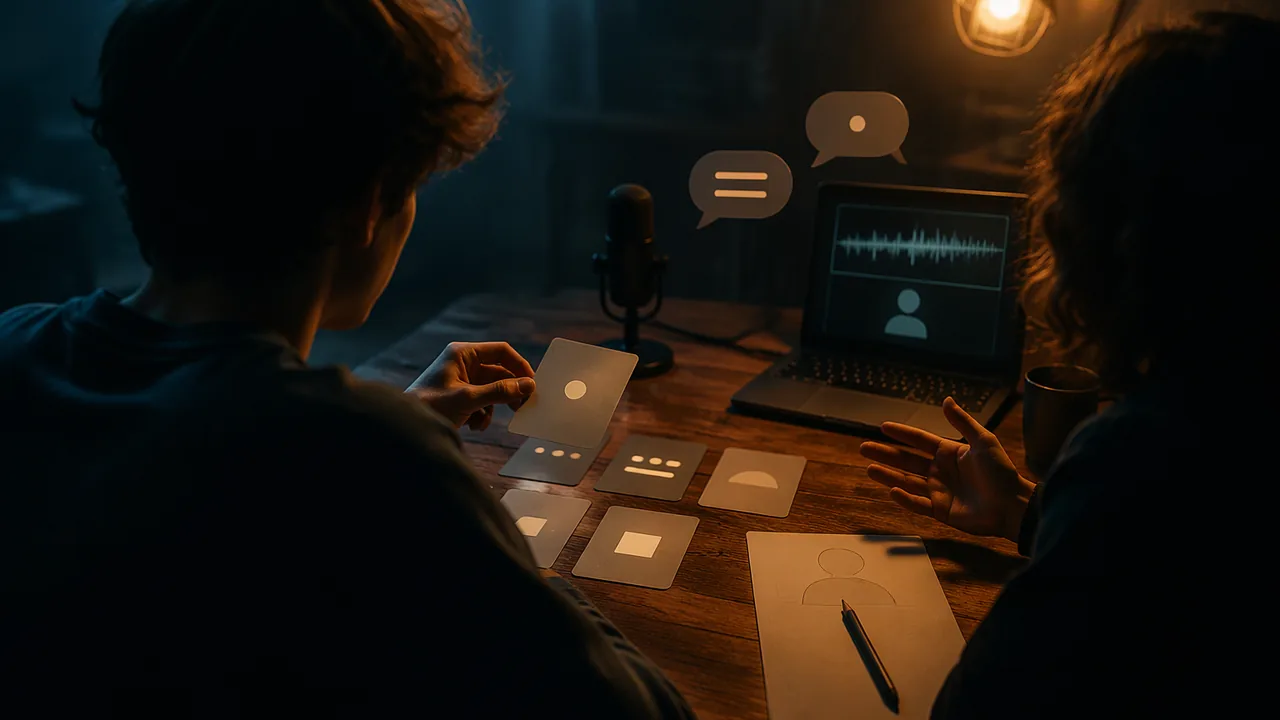
Task 2: Interpersonal. You will record a two-to-three-minute introduction conversation. It is not rehearsed: shuffle the prompt-card slips from Lesson 1.3 and add two of your own (for example ¿Cómo estás? and ¿De dónde es tu familia?), then turn them over one at a time so you do not know which question comes next. Greet in the right register, answer each question aloud, ask at least three questions back, and use at least one strategy when a question is hard (¿Cómo? Más despacio, por favor). You may play both roles, or a willing family member or other adult you know may read the English prompt card to you in any order. If you prefer not to share personal details, use one of the invented identities from Lesson 1.3.
Task 3: Presentational. You will introduce yourself to Spanish-speaking students your age, for example on a student exchange website. First you plan: list your six pieces of information and the Spanish for each. Then you draft, set the draft aside, and check it with the checklist from Lesson 1.4 (a family member can read the checklist aloud). Then you revise, and finally you record your introduction as audio or video; a family member may watch.
What Novice Mid looks like. Novice Mid speakers and writers use memorized words and phrases, and some short sentences, on very familiar topics. They are understood by a sympathetic listener, even with some mistakes. To reach toward Novice High, go beyond the memorized pattern: combine sentences with y and pero (Soy de Springfield, pero mi familia es de Jalisco), ask a follow-up question, and self-correct when you hear a mistake.
Heritage and home speakers. If you already speak Spanish at home, take the extension path: in Task 1, write a two-sentence summary in Spanish; in Task 3, write eight to ten sentences, including one about a family member and one about a place that matters to you, with every accent in place. Use the Spanish you speak at home; no regional form is marked wrong.
📖 Read for this lesson
The reading opens over the lesson; close it to come back to exactly where you were. The checks below draw on it.
Formative check
Work through these before moving on. They are not graded — they tell you whether the standard below has landed yet.
Interpretive task, part A. Read Valeria’s profile from a student exchange website, then answer.
¡Hola! Me llamo Valeria Cruz Morales. Soy de Kansas City, Missouri, pero mi familia es de Morelia, en México. Tengo quince años. Mi cumpleaños es el dieciocho de noviembre. Soy estudiante en la escuela Franklin. Mi amigo Samuel es de Kansas City también; él tiene dieciséis años. ¿Y tú? ¿De dónde eres? ¡Hasta pronto!
Show transcript
¡Hola! Me llamo Valeria Cruz Morales. Soy de Kansas City, Missouri, pero mi familia es de Morelia, en México. Tengo quince años. Mi cumpleaños es el dieciocho de noviembre. Soy estudiante en la escuela Franklin. Mi amigo Samuel es de Kansas City también; él tiene dieciséis años. ¿Y tú? ¿De dónde eres? ¡Hasta pronto!
Where is Valeria from?
When is Valeria’s birthday?
How old is Samuel?
Is Valeria writing in the tú or the usted register?
Interpretive task, part B. Listen to the introduction. Where is the speaker’s family from?
Show transcript
Buenas tardes. Me llamo Héctor. Soy de Sedalia, pero mi familia es de Guerrero. Tengo catorce años.
Presentational task, planning. Write your six pieces of information in Spanish: greeting, name, origin, age, birthday, and one more fact with ser. Mark which sentence you will join with y or pero.
How confident are you that you can understand an unseen introduction, hold an introduction conversation, and present myself in Spanish?
Unit 1 checkpoint
Do this before you start the task. It covers the whole unit and tells you what to review first.
It is 3:30 p.m. and you arrive at practice. Which greeting fits?
Which question would you ask your friend’s grandmother?
In many Latin American communities, a person arriving at a party greets only the person they came to see.
The number 16 in Spanish is .
A friend writes the party date as 7/9. When is the party?
Tu and tú mean the same thing; the accent is optional.
Which answer fits ¿Cuántos años tienes?
To ask someone to speak more slowly, say: Más , por favor.
Complete: Nosotros ____ de Columbia.
A student from El Salvador who says vos sos is using a standard form of Spanish.
Spanish rule over Missouri ended in a ceremony in St. Louis on March 9, , remembered as Three Flags Day.
Submit: IPA ¡Hola, soy yo! (interpretive answer sheet, conversation, presentational self-introduction)
Theme: meeting new people through a student exchange website.
Interpretive. Read Valeria’s profile (below, in the lesson checks) and listen to the recorded introduction. Identify name, origin, age, birthday and register, and answer the comprehension questions.
Interpersonal. Two to three minutes, recorded: answer the shuffled prompt-card questions aloud, playing both roles or with a willing family member reading the English card; greet, ask at least three questions, answer, use one repair strategy, say goodbye.
Presentational. A self-introduction of at least six sentences for Spanish-speaking students your age, using ser, tener with age, a date and a Missouri place name, recorded as audio or video.
Heritage-speaker extension: a Spanish summary in Task 1 and eight to ten sentences in Task 3, including a family member and a place that matters to you.
Submission workflow
- Stage 1: Plan. Complete the planning sheet: your six pieces of information in English and in Spanish, the forms of ser and tener you will need, and one sentence joined with y or pero.
- Stage 2: Self-checked draft. Write the introduction and set it aside. Then check every form of ser, tengo with age, and every accent, and mark one sentence that could be extended. Submit the draft with your checklist notes.
- Stage 3: Revised final. Revise using the notes, and write one line explaining the most useful change you made.
- Stage 4: Delivery. Record your introduction as audio or video; a family member may watch. Complete the interpretive and interpersonal tasks in the same week.
How it is scored
| Criterion | What proficient looks like |
|---|---|
| Interpretive (WL.1.2a.I / WL.1.2b.I) | Novice Mid: identifies name, origin, age and birthday in an unseen text. Novice High: also identifies register and one further detail, and infers meaning from a cognate. |
| Interpersonal (WL.1.1a.I / WL.1.1b.I / WL.1.1c.I / WL.1.1d.I / WL.1.1e.I) | Novice Mid: answers and asks at least three questions with memorized phrases; understood by a sympathetic listener. Novice High: asks a follow-up question, uses a repair strategy and keeps the exchange going. |
| Culturally appropriate interaction (WL.2.1a.I / WL.4.2c.I / WL.1.2c.I) | Greets and takes leave appropriately for the time of day, and chooses tú or usted to fit the person addressed. |
| Presentational (WL.1.3a.I / WL.1.3b.I) | Novice Mid: six sentences with memorized patterns, understandable to the audience. Novice High: sentences joined with y or pero and one detail beyond the model. |
| Language control (WL.1.3a.I) | Correct forms of ser, tener with age, question-word and number accents; errors do not block meaning. |
Perfil de Emiliano
SLS original model profile, written for the Spanish 1A Unit 1 Integrated Performance Assessment; RLP edition · SLS original
Un perfil de práctica antes de la evaluación integrada: identifica el nombre, el origen, la edad, el cumpleaños y el registro.
Perfil de Emiliano
¡Hola! Me llamo Emiliano Reyes Castro. Soy de St. Louis, Missouri, pero mi familia es de Tijuana. Tengo catorce años. Mi cumpleaños es el siete de agosto. Soy estudiante en la escuela Bonita Vista. Mi mejor amiga se llama Karina; ella tiene quince años y es de Kansas City. ¿Y tú? ¿De dónde eres? ¡Mucho gusto!
Emiliano usa tú en su perfil porque escribe para otros estudiantes en una página de intercambio. Para un adulto, el registro correcto es usted: Buenas tardes, señor. ¿Cómo está usted? Compara los dos registros antes de escribir tu propio perfil.
Emiliano también practica el fútbol los fines de semana y toca la guitarra en su tiempo libre. Su cumpleaños siempre cae en el verano, así que celebra con una fiesta en el lago con su familia.