understand an unseen school welcome page, find common free times in a recorded schedule exchange, and present a welcome guide to a school for Spanish-speaking families.
Instruction
Missouri has a long history of welcoming Spanish-speaking families to school: in Kansas City, the Guadalupe Centers began in 1919 as a volunteer school and clinic for Mexican immigrant families on the Westside (Guadalupe Centers). Today many schools send newsletters and hold meetings in Spanish, but the most useful guide is often a student’s: what the day is actually like. This IPA asks you to make one.
Task 1: Interpretive. You will read an unseen welcome page from a bilingual school and look at its schedule, then listen to a student describing her day. Use the strategies from Lesson 2.1: predict, skim once, then read with a question in mind. Look for times (a las ocho), places (la biblioteca, el gimnasio), classes and verbs you know. Answer in English.
Task 2: Interpersonal. You work from the two schedule cards in this lesson’s task: Card A (Mateo) and Card B (Lucía). Cover Card B. Ask each question aloud as Mateo, uncover one line of Card B, and answer aloud as Lucía, until you find two times when both are free and one class they share. Expect questions like ¿Qué clase tienes a las nueve?, ¿A qué hora es tu clase de arte? and ¿Estás libre a la una? Use a repair phrase at least once. Record the exchange. If a family member or another adult you know is willing, they can hold Card B and point to each answer while you speak both parts in Spanish.
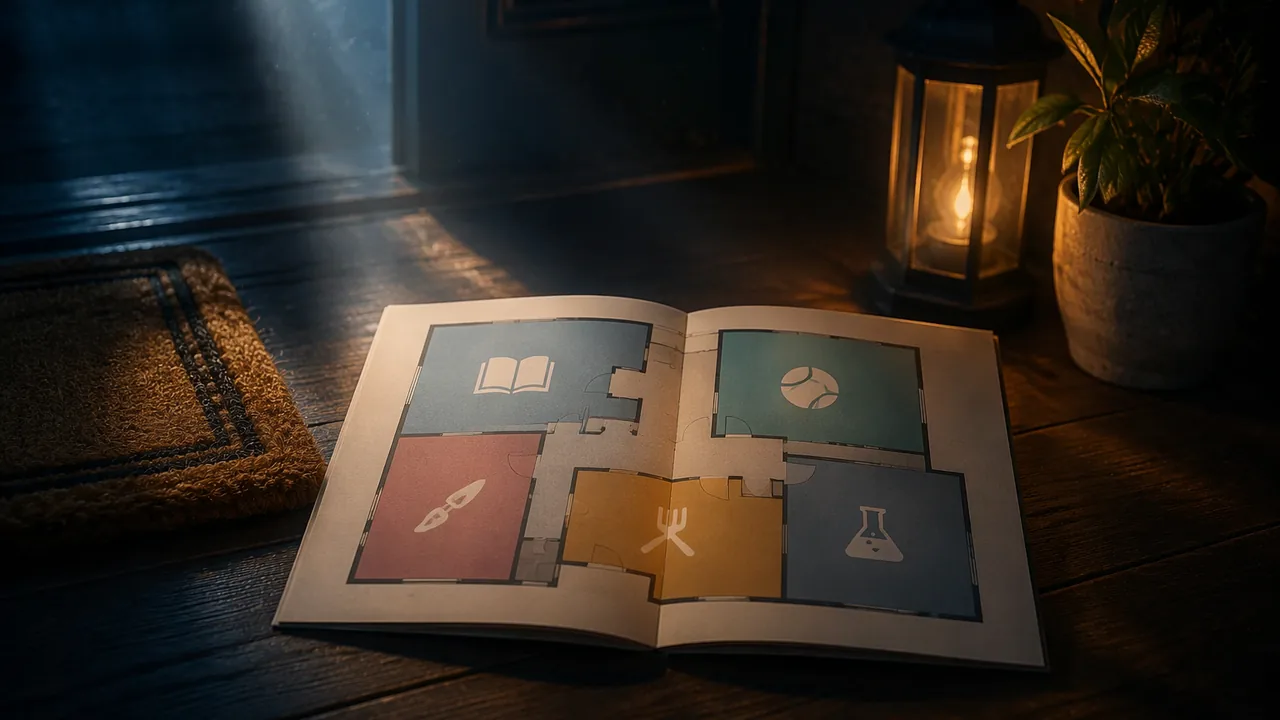
Task 3: Presentational. Write and record a welcome guide for a Spanish-speaking family whose child is joining a school: your own school (describe your real school day, online lessons included) or the model Escuela Esperanza from the reading. Describe at least four classes: when each meets, where, what supplies it needs and what students do in it. Use -ar verbs with at least three different subjects, hay at least once, and at least one negative sentence. You may add a map or floor plan labeled in Spanish.
What Novice Mid looks like here. Lists and short sentences that are understood: La clase de arte es a la una. Hay pinturas y papel. Los estudiantes dibujan. Toward Novice High, connect ideas and add detail: La clase de arte es a la una en el salón 12, y es mi clase favorita. Los estudiantes no usan libros, pero necesitan un cuaderno de dibujo.
Accuracy that matters most. The article agrees with the noun (la calculadora, los cuadernos); each verb matches its subject; times use es la una but son las dos; and a las tells when. Check these four things in your own draft the next day.
Heritage and home speakers. Write the guide as if for a real family: add a paragraph on how the family can contact the school and what students do at lunch, use the vocabulary your family uses, and check your own accents with the rules from Unit 1. If your family’s word differs from the one taught (la pluma, el lapicero, el bolígrafo), use yours.
📖 Read for this lesson
The reading opens over the lesson; close it to come back to exactly where you were. The checks below draw on it.
Formative check
Work through these before moving on. They are not graded — they tell you whether the standard below has landed yet.
Interpretive task, part A. Read the welcome page, then answer.
Escuela Preparatoria Esperanza: ¡Bienvenidos!
Las clases empiezan a las ocho de la mañana y terminan a las tres y cuarto de la tarde. Los estudiantes tienen seis clases al día. El almuerzo es a las doce y media en la cafetería. La biblioteca está abierta de las siete y media a las cinco. Todos los estudiantes necesitan un cuaderno, una calculadora y una computadora portátil de la escuela. Los lunes y los miércoles hay tutorías de matemáticas y de inglés en la biblioteca. ¿Preguntas? Hablamos español e inglés en la oficina.
Show transcript
Escuela Preparatoria Esperanza: ¡Bienvenidos! Las clases empiezan a las ocho de la mañana y terminan a las tres y cuarto de la tarde. Los estudiantes tienen seis clases al día. El almuerzo es a las doce y media en la cafetería. La biblioteca está abierta de las siete y media a las cinco. Todos los estudiantes necesitan un cuaderno, una calculadora y una computadora portátil de la escuela. Los lunes y los miércoles hay tutorías de matemáticas y de inglés en la biblioteca. ¿Preguntas? Hablamos español e inglés en la oficina.
When do classes end?
How many classes do students have each day?
What happens on Mondays and Wednesdays?
Which item is NOT on the supply list?
Interpretive task, part B. Listen to Lucía. What does she do at one o’clock?
Show transcript
Hola, soy Lucía. A las nueve tengo inglés. A la una practico fútbol en el gimnasio. A las tres camino a casa.
Presentational planning. List your four classes with time, place, one supply and two -ar verbs for each. Then write one sentence telling a family from Mexico or Central America about something at your school that may be different from what they know.
How confident are you that you can understand a school welcome page, exchange schedule information and present a guide to my school in Spanish?
Unit 2 checkpoint
Do this before you start the task. It covers the whole unit and tells you what to review first.
What does la librería mean?
In many public schools in Mexico, the teachers move between classrooms while the group of students stays in one room.
In Mexico, upper secondary school, roughly grades 10-12, is called la (or la prepa).
Which article goes with problema?
The plural of el lápiz is los .
How do you write 45 in Spanish?
What time is Son las cuatro menos diez?
16:30 on a schedule in Mexico is 6:30 p.m.
Which sentence says when the class happens?
Nosotros (estudiar) en la biblioteca.
How do you say “I don’t work on Mondays”?
Submit: IPA Bienvenidos a mi escuela (interpretive answers, schedule exchange, welcome guide)
Theme: welcoming a Spanish-speaking family to a school.
Interpretive. Read the Escuela Esperanza welcome page and schedule (in the lesson checks) and listen to Lucía describe her day; answer the questions.
Interpersonal. Using the two cards below, cover Card B, ask each question aloud as Mateo and answer it aloud as Lucía until you find two common free times and one shared class, recorded, with no English except ¿Cómo se dice…? A willing family member may hold Card B and point to the answers.
Tarjeta A: el horario de Mateo
| Hora | Clase |
|---|---|
| 8:00 | Inglés |
| 9:00 | Matemáticas |
| 10:00 | Arte |
| 11:00 | Libre |
| 12:30 | Almuerzo |
| 1:00 | Ciencias |
| 2:00 | Libre |
Tarjeta B: el horario de Lucía
| Hora | Clase |
|---|---|
| 8:00 | Historia |
| 9:00 | Inglés |
| 10:00 | Arte |
| 11:00 | Libre |
| 12:30 | Almuerzo |
| 1:00 | Educación física (fútbol, en el gimnasio) |
| 2:00 | Libre |
Presentational. A welcome guide of at least eight sentences describing four classes (time, place, supplies, activities) at your own school or at Escuela Esperanza, recorded as audio or video, optionally with a map labeled in Spanish.
Heritage-speaker extension: add a paragraph on contacting the school and on lunch, written for a real family.
Submission workflow
- Stage 1: Plan. A table with four classes: time, place, one supply, two activities as -ar verbs. Mark where you will use hay and a negative sentence.
- Stage 2: Self-checked draft. Write the guide and set it aside. Then check article-noun agreement, verb-subject agreement, es la una / son las, and a las for when, and mark one place to add a detail. Submit the draft with your checklist notes.
- Stage 3: Revised final. Revise and write one line on the change that most improved the guide.
- Stage 4: Delivery. Record the guide as audio or video, showing your map if you made one. A family member may watch.
How it is scored
| Criterion | What proficient looks like |
|---|---|
| Interpretive (WL.1.2a.I / WL.1.2b.I) | Novice Mid: identifies classes, times and places in an unseen welcome page and audio. Novice High: also identifies what students do, using verb endings and cognates. |
| Interpersonal (WL.1.1a.I / WL.1.1b.I / WL.1.1c.I / WL.1.1d.I / WL.1.1e.I) | Novice Mid: asks and answers schedule questions with memorized patterns and completes the task. Novice High: asks follow-up questions and repairs breakdowns in Spanish. |
| Presentational (WL.1.3a.I / WL.1.3b.I) | Novice Mid: eight or more understandable sentences on four classes. Novice High: connected sentences with details and at least one comparison with another school system. |
| Language control (WL.1.3a.I) | Article-noun agreement, -ar verb endings matched to subjects, correct time expressions; errors do not block meaning. |
| Cultural comparison and audience (WL.4.2a.I / WL.4.2b.I) | The guide is written for its audience and notes at least one difference a family from Mexico or Central America might find. |
Bienvenidos a la Escuela Preparatoria César Chávez
SLS original reading, written for the Spanish 1A Unit 2 Integrated Performance Assessment · SLS original
Una segunda página de bienvenida, de práctica antes de la evaluación integrada del horario y del perfil de la escuela.
Bienvenidos a la Escuela Preparatoria César Chávez
¡Bienvenidos, familias! Las clases son de las ocho de la mañana a las tres de la tarde. Los estudiantes tienen seis clases al día y treinta minutos de almuerzo, a las doce. La oficina está abierta de las siete a las cuatro, y hablamos español e inglés.
Cada estudiante necesita una mochila, tres cuadernos, una calculadora y lápices. La biblioteca tiene libros en español y en inglés. Los martes y los jueves hay tutorías de matemáticas después de las clases.
Muchas familias en nuestra escuela hablan español, inglés o las dos lenguas en casa. Si su hijo o hija necesita ayuda con la tarea, la biblioteca está abierta después de las clases, de las tres a las cinco.
¿Preguntas sobre el horario o los útiles escolares? Hablamos con usted en la oficina o por teléfono. Su familia es bienvenida en nuestra escuela.