understand and use greetings and farewells for different times of day, choose between tú and usted for the person I am speaking to, and greet people the way many Spanish-speaking communities expect.
Instruction
About 180,000 Missourians age five and older speak Spanish at home, roughly 3 in every 100; in Kansas City it is nearly 9 in every 100 (U.S. Census Bureau, American Community Survey, 2024). You hear it in neighborhoods such as Kansas City’s Westside, at the market, on Spanish-language radio and TV, and on the phone with relatives in other countries. The first Spanish anyone uses in those places is a greeting, so that is where this course begins.
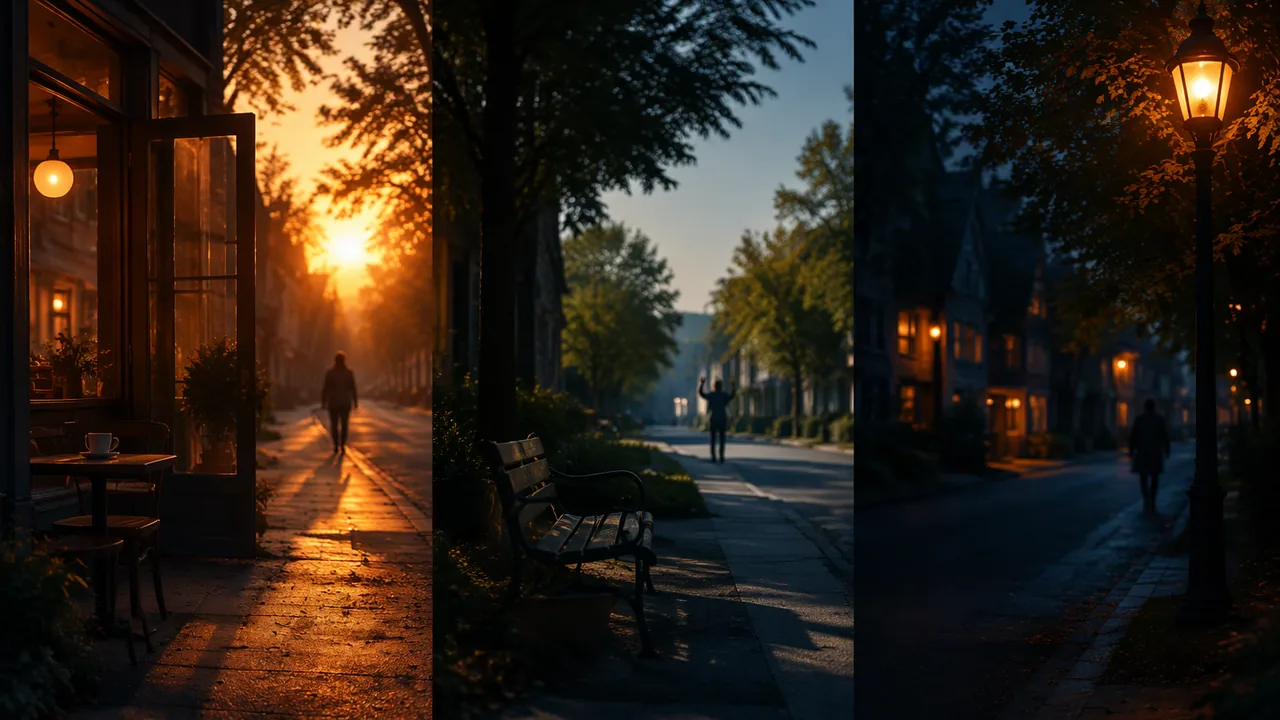
Greetings carry the time of day. English speakers can say hi at any hour. Spanish speakers usually mark the time:
- Buenos días: good morning, from waking up until about noon.
- Buenas tardes: good afternoon, from noon until it gets dark.
- Buenas noches: good evening or good night, after dark. It works both when you arrive and when you leave.
- Hola: hi, at any time. The h is always silent, so it sounds like OH-lah.
Notice buenos días but buenas tardes. The word for good changes its ending to match the noun: día is a masculine word, and tarde and noche are feminine. You do not need the full rule yet; it comes back in Unit 2.
Greetings carry the relationship. Spanish has two words for you. Use tú with a friend, someone your own age, a younger person or a family member. Use usted with an adult you do not know well, a store clerk, an older neighbor or anyone you want to show respect to. The question changes with it:
- To a friend: Hola, Marco. ¿Cómo estás?
- To your friend’s grandmother: Buenas tardes, señora. ¿Cómo está usted?
In many Spanish-speaking families, children use usted with grandparents, and some even with their parents. In other families everyone uses tú. Neither is wrong; listen to how people speak to each other and follow their lead. If you are not sure, start with usted. People will tell you when to switch: Háblame de tú means “Use tú with me.”
Answering. ¿Qué tal? and ¿Cómo estás? both ask how you are. Answer with bien (well), muy bien (very well), más o menos (so-so) or mal (bad), and ask back: Bien, gracias. ¿Y tú? With usted, the return question is ¿Y usted?
Leaving. Adiós (goodbye), hasta luego (see you later), hasta mañana (see you tomorrow) and nos vemos (see you) are all common.
Also said. Among friends in Mexico and in many Mexican American communities in the United States you will hear ¿Qué onda? (what’s up?). In Central America and the Caribbean you may hear ¿Qué hubo? or ¿Qué pasó? used the same way, and many people shorten any afternoon or evening greeting to just ¡Buenas! These are informal; save them for friends.
Culture: the greeting itself. In many Latin American communities, people greet everyone in a room when they arrive, not just the person they came to see, and they say goodbye to everyone when they leave. Friends and family often greet with a light kiss on the right cheek or a hug; adults meeting in a formal setting shake hands. Walking into a room without greeting anyone can come across as cold. A guest arriving at a family party often says Buenas tardes a todos (Good afternoon, everyone) and, before leaving, Hasta luego a todos. Compare this with how people greet each other in your own home and community: what do people your age do, and what do adults do?
📖 Read for this lesson
The reading opens over the lesson; close it to come back to exactly where you were. The checks below draw on it.
Formative check
Work through these before moving on. They are not graded — they tell you whether the standard below has landed yet.
Match each greeting or farewell to the moment you would use it.
Missouri standard: WL.2.1c.I
Your friend’s father arrives at a family party in Kansas City and speaks to the whole room. Listen. What is he doing?
Show transcript
Buenas tardes a todos. ¿Cómo están?
Build it: “Good afternoon. How are you?” You are speaking to your friend’s grandmother.
Type it instead
What does this mean in English?
Bien, gracias. ¿Y tú?
How confident are you that you can greet and say goodbye at the right time of day, choose between tú and usted, and greet a room the way many Spanish-speaking communities expect?
Practice
Work these on paper or in your notebook, then open Check your answer. Aim for all of Fluency and Application; try at least one Challenge.
Printable version: this unit’s practice workbook (PDF)
Fluency
Build speed and accuracy with the core skill.
- Write the Spanish greeting you would use at each time: (a) 9:00 a.m.; (b) 2:00 p.m.; (c) 9:30 p.m., after dark; (d) any time, to a friend.
Check your answer
Answer: (a) Buenos días; (b) Buenas tardes; (c) Buenas noches; (d) Hola.Buenos días runs until about noon, buenas tardes from noon until dark, buenas noches after dark. Hola works at any hour. - Write the English meaning of each farewell: (a) adiós; (b) hasta luego; (c) hasta mañana; (d) nos vemos.
Check your answer
Answer: (a) goodbye; (b) see you later; (c) see you tomorrow; (d) see you.All four are common despedidas (farewells). - Write tú or usted for each person: (a) your cousin, age 14; (b) a store clerk you do not know; (c) a classmate; (d) an older neighbor.
Check your answer
Answer: (a) tú; (b) usted; (c) tú; (d) usted.Tú is for friends, people your age, younger people and family; usted is for adults you do not know well and anyone you want to show respect to.
Application
Use the skill in context. Show your reasoning.
- Read the exchange and answer in English: — Buenas tardes, señor Ruiz. ¿Cómo está usted? — Muy bien, gracias. ¿Y tú? — Más o menos. (a) Is it morning, afternoon or night? (b) Who uses usted, and why? (c) How does the younger speaker feel?
Check your answer
Answer: (a) Afternoon (buenas tardes). (b) The younger speaker uses usted with señor Ruiz, an adult, to show respect; Mr. Ruiz answers with tú to the younger person. (c) So-so (más o menos).Look for the clues: tardes marks the time, ¿Cómo está usted? marks respect, and más o menos means so-so. - Rewrite this greeting so it fits your friend’s grandmother instead of your friend Marco: Hola, Marco. ¿Cómo estás?
Check your answer
Answer: Buenas tardes (or Buenos días / Buenas noches, depending on the time), señora. ¿Cómo está usted?Switch to a time-of-day greeting, a respectful title (señora) and the usted question ¿Cómo está usted? - Write the Spanish for: “Very well, thanks. And you?” (a) to a friend; (b) to a teacher.
Check your answer
Answer: (a) Muy bien, gracias. ¿Y tú? (b) Muy bien, gracias. ¿Y usted?The return question follows the register: ¿Y tú? for a friend, ¿Y usted? for an adult you show respect to. - You arrive at a family party at 4:00 p.m. where several adults and children are in the room. Write what you say as you walk in and what you say when you leave, the way many Latin American communities expect.
Check your answer
Answer: Arriving: Buenas tardes a todos. Leaving: Hasta luego a todos (or Adiós a todos).The lesson explains that in many Latin American communities a guest greets everyone in the room on arrival and says goodbye to everyone on leaving; walking in without a greeting can seem cold.
Challenge
Stretch problems. Expect to think before you write.
- A friend at school says ¿Qué onda? Later that day an adult you have just met says Háblame de tú. Explain in English what each speaker means and how you would answer each one in Spanish.
Check your answer
Answer: ¿Qué onda? is an informal “what’s up?” heard among friends in Mexico and many Mexican American communities; answer with something like Bien, ¿y tú? Háblame de tú means “use tú with me,” so you switch from usted to tú with that adult, for example Bien, gracias. ¿Y tú?A strong answer explains both meanings and shows the register change: informal answers to the friend, and tú (not usted) with the adult once invited.
Review
Keep earlier skills sharp.
- Recall from this lesson’s opening: about how many Missourians age five and older speak Spanish at home, and what share is that in Kansas City?
Check your answer
Answer: About 180,000 Missourians, roughly 3 in every 100; in Kansas City nearly 9 in every 100 (U.S. Census Bureau, American Community Survey, 2024).This is why the course begins with greetings: they are the first Spanish anyone uses in those neighborhoods, markets and calls.
Saludos en el pasillo
SLS original dialogue, written for Spanish 1A Lesson 1.1; RLP edition · SLS original
Cuatro momentos en un día, en una escuela y en un partido, con un saludo distinto para cada hora del día.
Saludos en el pasillo
7:45 de la mañana.
— Buenos días, señora Reyes. ¿Cómo está usted?
— Muy bien, gracias. ¿Y tú?
— Bien, gracias.
10:00 de la mañana, entre amigos.
— ¡Hola! ¿Qué tal?
— Más o menos. ¿Y tú? ¿Qué onda?
— Bien, bien.
1:30 de la tarde.
— Buenas tardes, profesor.
— Buenas tardes. Hasta mañana.
— Hasta luego.
7:00 de la noche, en un partido de la escuela.
— Buenas noches, señor Ortiz. ¿Cómo está usted?
— Bien, gracias. ¿Y usted?
— Muy bien. Nos vemos.
En muchas familias hispanas, los jóvenes usan usted con los maestros y los adultos, y tú con los amigos. Hola y buenos días son correctos a cualquier hora antes del mediodía, pero solo buenos días marca la hora. Después del mediodía, el saludo cambia a buenas tardes, y después de anochecer, a buenas noches.