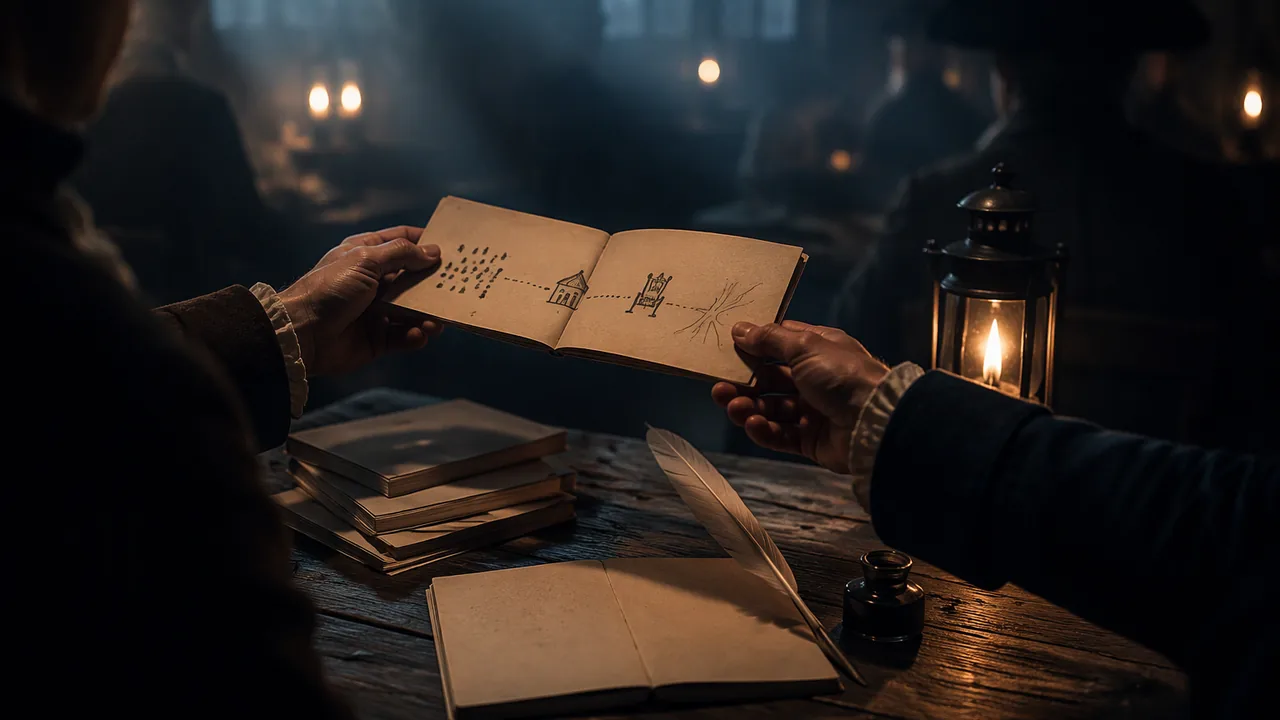
explain how the Introduction and Section 1 of Common Sense lay the foundation for the whole pamphlet, and how its purpose, themes and rhetorical features made it a foundational American document.
Instruction
In January 1776 the war with Britain had been going on for nine months, and most colonial leaders still said they were fighting for their rights as Englishmen, not for independence. Then a pamphlet appeared in Philadelphia, signed only “Written by an Englishman.” Its author was Thomas Paine, who had arrived from England little more than a year before. Common Sense was reprinted up and down the colonies, read aloud in taverns and army camps, and argued over everywhere. (Historians disagree about how many copies were sold; treat any single number you see online with caution.) Within six months, Congress had declared independence. This unit begins here because Paine shows, in one short book, how an American argument is built.
Why a foundational document? 11-12.RI.3.B / 11-12.RI.3.C asks you to analyze seventeenth-, eighteenth- and nineteenth-century U.S. documents for their themes, purposes and rhetorical features. A document is foundational when later Americans keep arguing with it. Paine’s claims — that government exists to protect freedom and security, that hereditary power is irrational, that America has a mission for “all mankind” — are still being cited, attacked and revised.
The structure. Paine does not start with the king. He starts with first principles and works outward:
- Of the Origin and Design of Government: why people form governments at all. Society comes from our wants; government from our wickedness. The simpler the government, the easier it is to repair.
- Of Monarchy and Hereditary Succession: an attack on kingship itself, using scripture and ridicule. If one king is good, why should his son be?
- Thoughts on the Present State of American Affairs: the practical case. Reconciliation will fail; distance makes British rule absurd; the time to separate is now.
- Of the Present Ability of America: can the colonies actually win? Paine argues about ships, debt and population.
- Appendix, added after the first edition: Paine answers the King’s speech to Parliament and a Quaker testimony against independence, and argues that the present moment is the time to act.
You read the Introduction and Section 1 in full before this lesson. Section 2 follows in Lesson 1.2, Section 3 in Lesson 1.4, Section 4 in Lesson 1.5 and the Appendix in Lesson 1.7, so the argument map you start today grows as you read.
Notice the logic of that order. By the time readers reach the king, they have already agreed that government is a “necessary evil” to be kept simple, and that inheriting power is foolish. The conclusion — independence — then feels like common sense rather than rebellion. The structure itself is part of the argument (11-12.RI.2.A).
Plain style as a strategy. Paine wrote for farmers and artisans, not lawyers. He uses short declarative sentences, homely analogies (an island governing a continent), and a direct address to the reader. Compare the Declaration of Independence six months later, with its long periodic sentences. Both are persuasive; they imagine different readers.
An older American argument. Paine was not the first to claim a mission for America. In 1630 John Winthrop, leading Puritan settlers to Massachusetts, told them in a lay sermon, “A Model of Christian Charity,” that they would be “as a city upon a hill” with “the eyes of all people” upon them (spelling modernized; the text was not printed until 1838, and historians still debate exactly where he delivered it). Winthrop’s mission is a covenant with God and a community bound by duty; Paine’s is a cause of “all mankind” grounded in natural rights. Both claim the world is watching. Keep both in mind: later American writers will borrow each.
Images as argument (11-12.RI.3.A / 11-12.RI.1.C). Twenty-two years earlier, Benjamin Franklin printed a woodcut in the Pennsylvania Gazette (1754): a snake cut into eight pieces labeled with colony initials, above the words “Join, or Die.” Compare what the image argues with what Paine’s words argue. The image makes one claim instantly; the pamphlet makes many claims in sequence. Ask what each medium can do that the other cannot.
Reading older prose. Use context before the dictionary (11-12.RL.1.B / 11-12.RI.1.B). “Pleads for separation” — the sentence’s subject is “every thing that is right or natural,” so pleads means argues in favor of, as a lawyer pleads a case.
📖 Before this lesson, read: Common Sense, Introduction and Section 1
The reading opens over the lesson; close it to come back to exactly where you were.
Reading: Paine’s Common Sense in his own words: the passages for your section map
Thomas Paine, Common Sense (Philadelphia, 1776); text from Project Gutenberg #147, retrieved 2026-09-26….. Identifiers: Project Gutenberg 147 · SLS original; quoted passages are public domain (Thomas Paine, 1776)
Text: Project Gutenberg #147 (Common Sense, Philadelphia, 1776 text), retrieved 2026-09-26. Spelling, capitals and punctuation are Paine’s.
Paine’s pamphlet is about 22,000 words. This reading gives the passages your section map needs, one group for each of his sections, in his order and in his spelling. Each paragraph inside a quotation box is a separate passage, given in order; text between passages is left out. Everything outside the quotation boxes is SLS original.
Passages from Common Sense (Philadelphia, 1776)
Introduction (dated 14 February 1776)
Perhaps the sentiments contained in the following pages, are not yet sufficiently fashionable to procure them general favor; a long habit of not thinking a thing wrong, gives it a superficial appearance of being right, and raises at first a formidable outcry in defense of custom. But the tumult soon subsides. Time makes more converts than reason.
The cause of America is in a great measure the cause of all mankind.
Section 1. Of the Origin and Design of Government in General
Society is produced by our wants, and government by our wickedness; the former promotes our happiness positively by uniting our affections, the latter negatively by restraining our vices. The one encourages intercourse, the other creates distinctions. The first a patron, the last a punisher.
Society in every state is a blessing, but government even in its best state is but a necessary evil; in its worst state an intolerable one; for when we suffer, or are exposed to the same miseries by a government, which we might expect in a country without government, our calamity is heightened by reflecting that we furnish the means by which we suffer. Government, like dress, is the badge of lost innocence; the palaces of kings are built on the ruins of the bowers of paradise. For were the impulses of conscience clear, uniform, and irresistibly obeyed, man would need no other lawgiver; but that not being the case, he finds it necessary to surrender up a part of his property to furnish means for the protection of the rest; and this he is induced to do by the same prudence which in every other case advises him out of two evils to choose the least. Wherefore, security being the true design and end of government, it unanswerably follows that whatever form thereof appears most likely to ensure it to us, with the least expence and greatest benefit, is preferable to all others.
Section 2. Of Monarchy and Hereditary Succession
To the evil of monarchy we have added that of hereditary succession; and as the first is a degradation and lessening of ourselves, so the second, claimed as a matter of right, is an insult and an imposition on posterity. For all men being originally equals, no one by birth could have a right to set up his own family in perpetual preference to all others for ever, and though himself might deserve some decent degree of honors of his cotemporaries, yet his descendants might be far too unworthy to inherit them. One of the strongest natural proofs of the folly of hereditary right in kings, is, that nature disapproves it, otherwise she would not so frequently turn it into ridicule by giving mankind an ass for a lion.
But it is not so much the absurdity as the evil of hereditary succession which concerns mankind. Did it ensure a race of good and wise men it would have the seal of divine authority, but as it opens a door to the foolish, the wicked, and the improper, it hath in it the nature of oppression. Men who look upon themselves born to reign, and others to obey, soon grow insolent; selected from the rest of mankind their minds are early poisoned by importance; and the world they act in differs so materially from the world at large, that they have but little opportunity of knowing its true interests, and when they succeed to the government are frequently the most ignorant and unfit of any throughout the dominions.
Section 3. Thoughts on the Present State of American Affairs
In the following pages I offer nothing more than simple facts, plain arguments, and common sense; and have no other preliminaries to settle with the reader, than that he will divest himself of prejudice and prepossession, and suffer his reason and his feelings to determine for themselves; that he will put on, or rather that he will not put off, the true character of a man, and generously enlarge his views beyond the present day.
Every thing that is right or natural pleads for separation. The blood of the slain, the weeping voice of nature cries, ‘Tis time to part.
Small islands not capable of protecting themselves, are the proper objects for kingdoms to take under their care; but there is something very absurd, in supposing a continent to be perpetually governed by an island. In no instance hath nature made the satellite larger than its primary planet, and as England and America, with respect to each other, reverses the common order of nature, it is evident they belong to different systems: England to Europe, America to itself.
Section 4. Of the Present Ability of America
It is not in numbers, but in unity, that our great strength lies; yet our present numbers are sufficient to repel the force of all the world.
Appendix (added after the first edition)
We have it in our power to begin the world over again. A situation, similar to the present, hath not happened since the days of Noah until now. The birthday of a new world is at hand, and a race of men, perhaps as numerous as all Europe contains, are to receive their portion of freedom from the event of a few months. The Reflexion is awful–and in this point of view, How trifling, how ridiculous, do the little, paltry cavellings, of a few weak or interested men appear, when weighed against the business of a world.
Worked model: one row of the argument map (SLS original)
Your map needs one row per section: purpose, one quotation, and why the section comes where it does. Here is a finished row for Section 2. Compare each part with the passage above.
| Section | Purpose (one sentence) | Quotation | Why it comes here |
|---|---|---|---|
| 2. Of Monarchy and Hereditary Succession | Paine attacks inherited power itself, not one king, so that reconciliation with any king looks foolish. | “For all men being originally equals, no one by birth could have a right to set up his own family in perpetual preference to all others for ever.” (Section 2) | Section 1 has already taught readers that government is a “necessary evil” kept as simple as possible. Only after readers agree to that does Paine turn to the king, so the attack on kingship reads as the next logical step and not as an outburst. |
The island-and-continent analogy: a reasoning check
Paine writes: small islands need a larger power to protect them, so a kingdom may properly take an island under its care; but a continent governed by an island is absurd. Notice the shape: (1) a general rule about size and protection; (2) a claim that Britain and America reverse the rule; (3) a conclusion that they belong to different systems. The rule in step 1 is the premise. Paine does not prove it. He supports it with a picture from astronomy: nature never makes a satellite larger than the planet it circles. That is why the sentence is an argument from analogy, and why it persuades even though size does not settle who has the right to govern.
Franklin’s “Join, or Die” (1754), described
Franklin’s cartoon appeared in the Pennsylvania Gazette on 9 May 1754. It shows a snake cut into eight pieces. Each piece carries initials for a colony or region: New England is one piece (N.E.), followed by New York, New Jersey, Pennsylvania, Maryland, Virginia, North Carolina and South Carolina. Beneath the snake are the words “JOIN, or DIE.” The image argues one thing at a glance: separate parts die, a joined body lives. Paine’s twenty-two years later argues many things in sequence and can answer objections. For your comparison, write one thing the picture does that the pamphlet cannot (instant recognition, no reading required) and one thing the pamphlet does that the picture cannot (give reasons, make a case for a specific act).
Formative check
Work through these before moving on. They are not graded — they tell you whether the standard below has landed yet.
Paine’s pamphlet is a case for independence. Where do you think it starts?
In Section 1, Paine imagines a small group of settlers forming a society and then a government. What does he conclude is “the design and end of government”?
In Section 1, Paine praises the English constitution because its king, lords and commons check one another.
Start your argument map. For the Introduction and Section 1, write one sentence on each part’s purpose, one quotation, and one sentence on why it comes where it does. For Sections 2, 3 and 4 and the Appendix, use the passages in the reading below to write a one-sentence prediction of each part’s purpose; you will revise these rows as you read each part. Then compare Franklin’s ‘Join, or Die’ with Paine’s claim in the Introduction that “The cause of America is in a great measure the cause of all mankind”: what does each medium do that the other cannot?
How confident are you that you can explain how the opening of Common Sense prepares the argument that follows?
Printable: Unit 1 Student Workbook
Every organizer for this unit in one booklet — the reading schedule, the vocabulary pages, all five lesson organizers, the peer review sheet and the scoring rubric. Print it before the unit starts and bring the page to each lesson.
Read the complete work: Common Sense
This unit only close-reads part of the text in any one lesson. The complete, unabridged public-domain text of Common Sense is also here as a single printable PDF, for anyone who wants to read ahead or read it straight through.
Common Sense, Introduction and Section 1
Common Sense, Introduction
Source: Thomas Paine, Common Sense (Philadelphia, 1776), Project Gutenberg eBook #147 (gutenberg.org) · Public domain
Perhaps the sentiments contained in the following pages, are not yet sufficiently fashionable to procure them general favor; a long habit of not thinking a thing wrong, gives it a superficial appearance of being right, and raises at first a formidable outcry in defense of custom. But the tumult soon subsides. Time makes more converts than reason.
As a long and violent abuse of power, is generally the Means of calling the right of it in question (and in Matters too which might never have been thought of, had not the Sufferers been aggravated into the inquiry) and as the King of England hath undertaken in his own Right, to support the Parliament in what he calls Theirs, and as the good people of this country are grievously oppressed by the combination, they have an undoubted privilege to inquire into the pretensions of both, and equally to reject the usurpation of either.
In the following sheets, the author hath studiously avoided every thing which is personal among ourselves. Compliments as well as censure to individuals make no part thereof. The wise, and the worthy, need not the triumph of a pamphlet; and those whose sentiments are injudicious, or unfriendly, will cease of themselves unless too much pains are bestowed upon their conversion.
The cause of America is in a great measure the cause of all mankind. Many circumstances hath, and will arise, which are not local, but universal, and through which the principles of all Lovers of Mankind are affected, and in the Event of which, their Affections are interested. The laying a Country desolate with Fire and Sword, declaring War against the natural rights of all Mankind, and extirpating the Defenders thereof from the Face of the Earth, is the Concern of every Man to whom Nature hath given the Power of feeling; of which Class, regardless of Party Censure, is the
AUTHOR
P.S. The Publication of this new Edition hath been delayed, with a View of taking notice (had it been necessary) of any Attempt to refute the Doctrine of Independance: As no Answer hath yet appeared, it is now presumed that none will, the Time needful for getting such a Performance ready for the Public being considerably past.
Who the Author of this Production is, is wholly unnecessary to the Public, as the Object for Attention is the Doctrine itself, not the Man. Yet it may not be unnecessary to say, That he is unconnected with any Party, and under no sort of Influence public or private, but the influence of reason and principle.
Philadelphia, February 14, 1776
Common Sense, Of the Origin and Design of Government in General
Source: Thomas Paine, Common Sense (Philadelphia, 1776), Project Gutenberg eBook #147 (gutenberg.org) · Public domain
Some writers have so confounded society with government, as to leave little or no distinction between them; whereas they are not only different, but have different origins. Society is produced by our wants, and government by our wickedness; the former promotes our happiness positively by uniting our affections, the latter negatively by restraining our vices. The one encourages intercourse, the other creates distinctions. The first a patron, the last a punisher.
Society in every state is a blessing, but government even in its best state is but a necessary evil; in its worst state an intolerable one; for when we suffer, or are exposed to the same miseries by a government, which we might expect in a country without government, our calamity is heightened by reflecting that we furnish the means by which we suffer. Government, like dress, is the badge of lost innocence; the palaces of kings are built on the ruins of the bowers of paradise. For were the impulses of conscience clear, uniform, and irresistibly obeyed, man would need no other lawgiver; but that not being the case, he finds it necessary to surrender up a part of his property to furnish means for the protection of the rest; and this he is induced to do by the same prudence which in every other case advises him out of two evils to choose the least. Wherefore, security being the true design and end of government, it unanswerably follows that whatever form thereof appears most likely to ensure it to us, with the least expence and greatest benefit, is preferable to all others.
In order to gain a clear and just idea of the design and end of government, let us suppose a small number of persons settled in some sequestered part of the earth, unconnected with the rest, they will then represent the first peopling of any country, or of the world. In this state of natural liberty, society will be their first thought. A thousand motives will excite them thereto, the strength of one man is so unequal to his wants, and his mind so unfitted for perpetual solitude, that he is soon obliged to seek assistance and relief of another, who in his turn requires the same. Four or five united would be able to raise a tolerable dwelling in the midst of a wilderness, but one man might labour out of the common period of life without accomplishing any thing; when he had felled his timber he could not remove it, nor erect it after it was removed; hunger in the mean time would urge him from his work, and every different want call him a different way. Disease, nay even misfortune would be death, for though neither might be mortal, yet either would disable him from living, and reduce him to a state in which he might rather be said to perish than to die.
Thus necessity, like a gravitating power, would soon form our newly arrived emigrants into society, the reciprocal blessings of which, would supersede, and render the obligations of law and government unnecessary while they remained perfectly just to each other; but as nothing but heaven is impregnable to vice, it will unavoidably happen, that in proportion as they surmount the first difficulties of emigration, which bound them together in a common cause, they will begin to relax in their duty and attachment to each other; and this remissness, will point out the necessity, of establishing some form of government to supply the defect of moral virtue.
Some convenient tree will afford them a State-House, under the branches of which, the whole colony may assemble to deliberate on public matters. It is more than probable that their first laws will have the title only of Regulations, and be enforced by no other penalty than public disesteem. In this first parliament every man, by natural right, will have a seat.
But as the colony increases, the public concerns will increase likewise, and the distance at which the members may be separated, will render it too inconvenient for all of them to meet on every occasion as at first, when their number was small, their habitations near, and the public concerns few and trifling. This will point out the convenience of their consenting to leave the legislative part to be managed by a select number chosen from the whole body, who are supposed to have the same concerns at stake which those who appointed them, and who will act in the same manner as the whole body would act were they present. If the colony continue increasing, it will become necessary to augment the number of the representatives, and that the interest of every part of the colony may be attended to, it will be found best to divide the whole into convenient parts, each part sending its proper number; and that the elected might never form to themselves an interest separate from the electors, prudence will point out the propriety of having elections often; because as the elected might by that means return and mix again with the general body of the electors in a few months, their fidelity to the public will be secured by the prudent reflexion of not making a rod for themselves. And as this frequent interchange will establish a common interest with every part of the community, they will mutually and naturally support each other, and on this (not on the unmeaning name of king) depends the strength of government, and the happiness of the governed.
Here then is the origin and rise of government; namely, a mode rendered necessary by the inability of moral virtue to govern the world; here too is the design and end of government, viz. freedom and security. And however our eyes may be dazzled with show, or our ears deceived by sound; however prejudice may warp our wills, or interest darken our understanding, the simple voice of nature and of reason will say, it is right.
I draw my idea of the form of government from a principle in nature, which no art can overturn, viz. that the more simple any thing is, the less liable it is to be disordered; and the easier repaired when disordered; and with this maxim in view, I offer a few remarks on the so much boasted constitution of England. That it was noble for the dark and slavish times in which it was erected, is granted. When the world was over run with tyranny the least remove therefrom was a glorious rescue. But that it is imperfect, subject to convulsions, and incapable of producing what it seems to promise, is easily demonstrated.
Absolute governments (tho’ the disgrace of human nature) have this advantage with them, that they are simple; if the people suffer, they know the head from which their suffering springs, know likewise the remedy, and are not bewildered by a variety of causes and cures. But the constitution of England is so exceedingly complex, that the nation may suffer for years together without being able to discover in which part the fault lies, some will say in one and some in another, and every political physician will advise a different medicine.
I know it is difficult to get over local or long standing prejudices, yet if we will suffer ourselves to examine the component parts of the English constitution, we shall find them to be the base remains of two ancient tyrannies, compounded with some new republican materials.
First.–The remains of monarchical tyranny in the person of the king.
Secondly.–The remains of aristocratical tyranny in the persons of the peers.
Thirdly.–The new republican materials, in the persons of the commons, on whose virtue depends the freedom of England.
The two first, by being hereditary, are independent of the people; wherefore in a constitutional sense they contribute nothing towards the freedom of the state.
To say that the constitution of England is a union of three powers reciprocally checking each other, is farcical, either the words have no meaning, or they are flat contradictions.
To say that the commons is a check upon the king, presupposes two things:
First.–That the king is not to be trusted without being looked after, or in other words, that a thirst for absolute power is the natural disease of monarchy.
Secondly.–That the commons, by being appointed for that purpose, are either wiser or more worthy of confidence than the crown.
But as the same constitution which gives the commons a power to check the king by withholding the supplies, gives afterwards the king a power to check the commons, by empowering him to reject their other bills; it again supposes that the king is wiser than those whom it has already supposed to be wiser than him. A mere absurdity!
There is something exceedingly ridiculous in the composition of monarchy; it first excludes a man from the means of information, yet empowers him to act in cases where the highest judgment is required. The state of a king shuts him from the world, yet the business of a king requires him to know it thoroughly; wherefore the different parts, by unnaturally opposing and destroying each other, prove the whole character to be absurd and useless.
Some writers have explained the English constitution thus; the king, say they, is one, the people another; the peers are an house in behalf of the king; the commons in behalf of the people; but this hath all the distinctions of a house divided against itself; and though the expressions be pleasantly arranged, yet when examined they appear idle and ambiguous; and it will always happen, that the nicest construction that words are capable of, when applied to the description of some thing which either cannot exist, or is too incomprehensible to be within the compass of description, will be words of sound only, and though they may amuse the ear, they cannot inform the mind, for this explanation includes a previous question, viz. How came the king by a power which the people are afraid to trust, and always obliged to check? Such a power could not be the gift of a wise people, neither can any power, which needs checking, be from God; yet the provision, which the constitution makes, supposes such a power to exist.
But the provision is unequal to the task; the means either cannot or will not accomplish the end, and the whole affair is a felo de se; for as the greater weight will always carry up the less, and as all the wheels of a machine are put in motion by one, it only remains to know which power in the constitution has the most weight, for that will govern; and though the others, or a part of them, may clog, or, as the phrase is, check the rapidity of its motion, yet so long as they cannot stop it, their endeavors will be ineffectual; the first moving power will at last have its way, and what it wants in speed is supplied by time.
That the crown is this overbearing part in the English constitution needs not be mentioned, and that it derives its whole consequence merely from being the giver of places and pensions is self-evident, wherefore, though we have been wise enough to shut and lock a door against absolute monarchy, we at the same time have been foolish enough to put the crown in possession of the key.
The prejudice of Englishmen, in favour of their own government by king, lords and commons, arises as much or more from national pride than reason. Individuals are undoubtedly safer in England than in some other countries, but the will of the king is as much the law of the land in Britain as in France, with this difference, that instead of proceeding directly from his mouth, it is handed to the people under the more formidable shape of an act of parliament. For the fate of Charles the first, hath only made kings more subtle–not more just.
Wherefore, laying aside all national pride and prejudice in favour of modes and forms, the plain truth is, that it is wholly owing to the constitution of the people, and not to the constitution of the government that the crown is not as oppressive in England as in Turkey.
An inquiry into the constitutional errors in the English form of government is at this time highly necessary, for as we are never in a proper condition of doing justice to others, while we continue under the influence of some leading partiality, so neither are we capable of doing it to ourselves while we remain fettered by any obstinate prejudice. And as a man, who is attached to a prostitute, is unfitted to choose or judge of a wife, so any prepossession in favour of a rotten constitution of government will disable us from discerning a good one.