How much power should unelected judges have in a democracy?
explain Article III and how justices are selected and confirmed, analyze Marbury, McCulloch and United States v. Nixon, and deliberate on judicial activism and restraint.
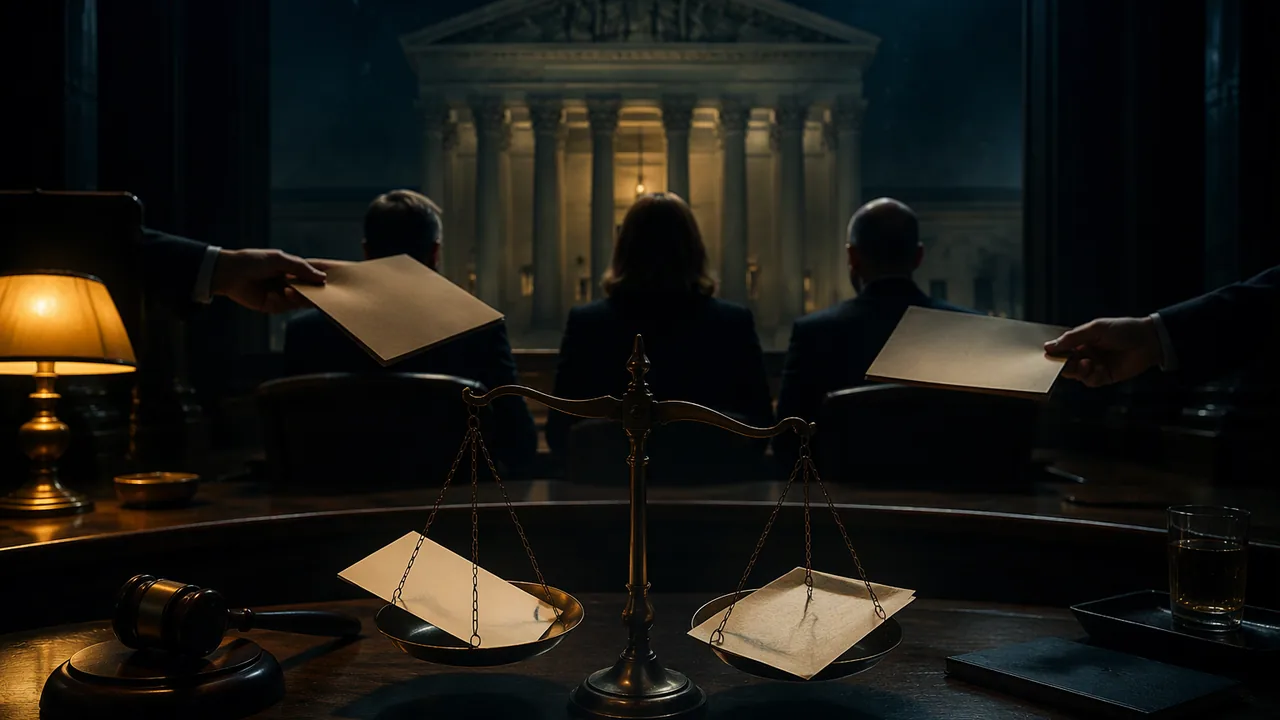
Article III. The Constitution creates one Supreme Court and lets Congress create lower courts. Federal judges hold office “during good Behavior” — effectively for life, unless impeached — and their pay cannot be reduced. The Supreme Court hears a few kinds of cases first (original jurisdiction, such as disputes between states) and most on appeal (appellate jurisdiction). Congress sets the number of justices; it has been nine since 1869.
The Supreme Court, through judicial review and landmark decisions, plays a critical and often contested role in shaping American law and government.
📖 Read for this lesson
The reading opens over the lesson; close it to come back to exactly where you were. The checks below draw on it.
A court’s power to hear a case first, rather than on appeal.
What do you think is the most important role of the judicial branch in a government like ours?
What did McCulloch v. Maryland establish?
Selection and confirmation
Congress sets the number of justices, and it has been nine since 1869; the Constitution itself does not fix the number.
The President nominates a justice; the Senate Judiciary Committee holds hearings; the full Senate confirms by a simple majority. Confirmations have become more contested over time, because a justice may serve for decades and the Court decides divisive questions.
The Constitution fixes the number of Supreme Court justices at nine.
A Missouri comparison
Missouri fills its supreme court differently. Under Article V of the Missouri Constitution, a nonpartisan judicial commission nominates three people and the governor appoints one; judges of the supreme court “shall be selected for terms of twelve years”, and voters then decide, on a ballot “without party designation”, whether each judge should “be retained in office”. Independence for a fixed term, with a public check at the end, is a third model beside life tenure and contested elections.
Marbury established judicial ; McCulloch rests on the necessary and clause; in Nixon the Court held executive privilege is not .
Judicial review — Marbury v. Madison (1803)
The Constitution does not say explicitly that courts can strike down laws. In Marbury, Chief Justice John Marshall held that part of a federal statute conflicted with the Constitution and was therefore void, and that “it is emphatically the province and duty of the judicial department to say what the law is.” By giving up a small power the statute had given the Court, Marshall claimed a much larger one.
The Constitution clearly states that the Supreme Court can declare laws unconstitutional.
The power of judicial review was not explicitly granted by the Constitution. It was established by the Supreme Court in Marbury v. Madison, asserting the Court’s role in interpreting the law.
Record (or write out) your 90-second position on fixed terms for justices, citing Federalist 78 or an Anti-Federalist argument. Then write two replies, one to Hamilton’s argument and one to Brutus’s (both are in the reading), evaluating each speaker’s reasoning and evidence — not their conclusion — before stating where you agree or differ.
Federal supremacy — McCulloch v. Maryland (1819)
Maryland taxed the Second Bank of the United States. The Court held that Congress had implied power to create the bank under the necessary and proper clause, and that a state could not tax a federal institution: “the power to tax involves the power to destroy.” McCulloch is the foundation of a broad reading of national power.
No one above the law — United States v. Nixon (1974)
A special prosecutor subpoenaed White House tape recordings during the Watergate investigation. President Nixon claimed executive privilege. The Court, unanimously, held that the privilege is real but not absolute, and must yield to the specific needs of a criminal trial. Nixon released the tapes and resigned sixteen days later.
The President’s qualified right to keep certain communications confidential.
Activism and restraint
Judicial activism describes courts willing to strike down laws or expand rights; judicial restraint describes deference to elected branches and precedent. The labels are used by critics of all persuasions, and a court can be “activist” in one direction and “restrained” in another. The Warren Court (1953-69) expanded civil rights and criminal-procedure protections (Brown, Miranda); the Rehnquist Court (1986-2005) revived limits on federal power over the states. Assess each on its reasoning, not on whether you like the outcome.
Deference by courts to elected branches and precedent.
Deliberation question
Should Supreme Court justices serve fixed terms instead of for life? Consider Hamilton’s argument for independence in Federalist 78, the Anti-Federalist worry about unaccountable judges, and the Missouri plan above. SL.11-12.3 asks you to evaluate each speaker’s reasoning and use of evidence — including your own.
Key terms
The power of courts to declare laws or government actions unconstitutional.
Powers not listed in the Constitution but reasonably implied by the enumerated ones.
Reading: Three foundational holdings
Marbury v. Madison, 5 U.S. 137 (1803); McCulloch v. Maryland, 17 U.S. 316 (1819); United States v. Nixon, 418 U.S. 683 (1974) · Public domain
For each, write the question the Court answered in one sentence.
Marbury: It is emphatically the province and duty of the judicial department to say what the law is.
McCulloch: Let the end be legitimate, let it be within the scope of the constitution, and all means which are appropriate, which are plainly adapted to that end, which are not prohibited, but consist with the letter and spirit of the constitution, are constitutional.
United States v. Nixon: Neither the doctrine of separation of powers, nor the need for confidentiality of high-level communications, without more, can sustain an absolute, unqualified Presidential privilege of immunity from judicial process under all circumstances.
Practice
Work these on paper or in your notebook, then open Check your answer. Aim for all of Fluency and Application; try at least one Challenge.
Printable version: this unit’s practice workbook (PDF)
Fluency
Build speed and accuracy with the core skill.
- Define original and appellate jurisdiction, and give an example of a case the Supreme Court hears under original jurisdiction.
Check your answer
Answer: Original jurisdiction is the power to hear a case first; appellate jurisdiction is the power to review a lower court’s decision. Example of original jurisdiction: a dispute between two states. - Describe the three steps by which a Supreme Court justice is chosen, and state how long justices serve.
Check your answer
Answer: The President nominates; the Senate Judiciary Committee holds hearings; the full Senate confirms by simple majority. Justices hold office “during good Behavior,” effectively for life unless impeached and removed. - Match each case to the principle it established: Marbury v. Madison; McCulloch v. Maryland; United States v. Nixon.
Check your answer
Answer: Marbury: judicial review. McCulloch: implied powers under the necessary and proper clause, and federal supremacy (a state may not tax a federal institution). Nixon: executive privilege is real but not absolute; no one is above the law.
Application
Use the skill in context. Show your reasoning.
- Marshall wrote that “It is emphatically the province and duty of the judicial department to say what the law is.” Explain why the lesson says that in Marbury he gave up a small power to claim a much larger one.
Check your answer
Answer: The Court held that the part of a federal statute giving it the power at issue conflicted with the Constitution and was void, so the Court gave up that small grant of jurisdiction. In doing so it established that courts can declare acts of Congress unconstitutional, a far larger power, while issuing no order anyone could defy.A strong answer names both the power surrendered and the power claimed, and why the ruling was hard for opponents to resist. - Scenario: a state passes a tax that applies only to a new federal agency’s offices located in the state. Using McCulloch, predict the result and quote the lesson’s reasoning.
Check your answer
Answer: The tax would be struck down. In McCulloch the Court held that a state could not tax a federal institution, because “the power to tax involves the power to destroy”; letting states tax federal institutions would let them undo valid national laws. - Deliberation: “Should Supreme Court justices serve fixed terms instead of for life?” State the strongest argument on each side, drawing on Federalist 78 and the Anti-Federalists. Do not give a verdict.
Check your answer
Answer: For life tenure: Hamilton argued that the judiciary has “neither FORCE nor WILL, but merely judgment,” and needs independence to rule against the powerful without fear; fixed terms could make judges look to their next job or to politics. For fixed terms: the Anti-Federalists warned that judges with life tenure would be unaccountable, and because a justice may now serve for decades, each vacancy carries enormous stakes, which has made confirmations more contested.A strong answer represents both positions in the form their holders would recognize and evaluates reasoning, not outcomes (SL.11-12.3). - Missouri’s Constitution has the governor appoint supreme court judges from three names sent by a nonpartisan commission, for twelve-year terms, after which voters decide whether to retain each judge. Which concern from Federalist 78 and which from the Anti-Federalists does this plan address, and what does it give up? Do not give a verdict.
Check your answer
Answer: It keeps Hamilton’s independence for a long fixed term, because a judge cannot be removed for rulings during the twelve years, and it answers the Anti-Federalist worry about unaccountable judges with a public vote at the end of each term. What it gives up is permanence: a judge who must face a retention vote may feel pressure, which Hamilton thought tenure during good behavior would prevent.A strong answer matches each feature to the argument it answers and names the trade-off without declaring the plan better or worse.
Review
Keep earlier skills sharp.
- Review from Unit 1: judicial review is one of the checks and balances. Which branch does it check, and which two branches’ actions can it reach?
Check your answer
Answer: It is exercised by the judiciary and checks the legislative and executive branches, whose laws and actions courts can declare unconstitutional.
Missouri fills its supreme court differently from the federal courts: a nonpartisan commission nominates three people, the governor appoints one, and after a twelve-year term voters decide, without party labels, whether the judge is retained, a state-level model of independence with a public check.
Considering the cases discussed, how would you define the ideal balance between judicial independence and accountability?
How confident are you that you can explain what Marbury, McCulloch and Nixon decided and why each still matters?
The Shift
- The Supreme Court’s power of judicial review was established by Chief Justice Marshall.
- Landmark cases like McCulloch v. Maryland defined the scope of federal power.
- Courts must balance judicial independence with accountability, as seen in debates on activism and restraint.
The Judicial Power: Article III, Marbury, and the Argument Over Life Tenure
U.S. Constitution, Article III; Marbury v. Madison, 5 U.S. (1 Cranch) 137 (1803); McCulloch v. Maryland, 17 U.S. (4 Wheat.) 316 (1819); United States v. Nixon, 418 U.S. 683 (1974); Federalist No. 78 (1788); Brutus XV (1788); Missouri Constitution, Article V sections 19, 25 and 26, via the Revisor of Missouri · Public domain
Why this reading. Your lesson’s excerpt gives you one sentence from each of three great holdings. This reading gives you the constitutional text those holdings construe, the reasoning Marshall used to reach the most consequential of them, and — for the deliberation on fixed terms — the best argument on each side, written in 1788 by people who knew it was a hard question. Hamilton, writing as Publius, defended tenure during good behaviour; “Brutus” attacked it. Read them as opponents, because they were. What to look for: the word “judgment.” Hamilton uses it to argue that courts are harmless; Brutus uses the same fact to argue that they are uncontrollable.
Article III: all the Constitution says about the courts
Section 1. The judicial Power of the United States, shall be vested in one supreme Court, and in such inferior Courts as the Congress may from time to time ordain and establish. The Judges, both of the supreme and inferior Courts, shall hold their Offices during good Behaviour, and shall, at stated Times, receive for their Services, a Compensation, which shall not be diminished during their Continuance in Office.
Section 2. The judicial Power shall extend to all Cases, in Law and Equity, arising under this Constitution, the Laws of the United States, and Treaties made, or which shall be made, under their Authority;—to all Cases affecting Ambassadors, other public Ministers and Consuls;—to all Cases of admiralty and maritime Jurisdiction;—to Controversies to which the United States shall be a Party;—to Controversies between two or more States;— between a State and Citizens of another State,—between Citizens of different States […]
In all Cases affecting Ambassadors, other public Ministers and Consuls, and those in which a State shall be Party, the supreme Court shall have original Jurisdiction. In all the other Cases before mentioned, the supreme Court shall have appellate Jurisdiction, both as to Law and Fact, with such Exceptions, and under such Regulations as the Congress shall make.
The Trial of all Crimes, except in Cases of Impeachment, shall be by Jury […]
Read what is missing. The Constitution does not say how many justices there are — Congress sets the number by statute, and has set it at nine since 1869. It does not say how a justice is chosen; that is in Article II (the President nominates, the Senate confirms). It does not say how long “during good Behaviour” lasts, though in practice it has meant for life or until retirement, since no Supreme Court justice has ever been removed by impeachment. And it does not say anywhere that courts may declare a law unconstitutional.
Marbury v. Madison (1803): the reasoning, not just the sentence
Marshall builds judicial review out of two premises: that a written constitution is superior law, and that deciding cases necessarily means deciding which law applies.
Certainly all those who have framed written constitutions contemplate them as forming the fundamental and paramount law of the nation, and consequently the theory of every such government must be, that an act of the legislature repugnant to the constitution is void.
If an act of the legislature, repugnant to the constitution, is void, does it, notwithstanding its invalidity, bind the courts and oblige them to give it effect? Or, in other words, though it be not law, does it constitute a rule as operative as if it was a law? This would be to overthrow in fact what was established in theory; and would seem, at first view, an absurdity too gross to be insisted on. It shall, however, receive a more attentive consideration.
It is emphatically the province and duty of the judicial department to say what the law is. Those who apply the rule to particular cases, must of necessity expound and interpret that rule. If two laws conflict with each other, the courts must decide on the operation of each.
So if a law be in opposition to the constitution: if both the law and the constitution apply to a particular case, so that the court must either decide that case conformably to the law, disregarding the constitution; or conformably to the constitution, disregarding the law: the court must determine which of these conflicting rules governs the case. This is of the very essence of judicial duty.
[…] This doctrine would subvert the very foundation of all written constitutions. It would declare that an act, which, according to the principles and theory of our government, is entirely void, is yet, in practice, completely obligatory. […] It would be giving to the legislature a practical and real omnipotence with the same breath which professes to restrict their powers within narrow limits.
Notice the tactical brilliance your lesson points to. What the Court actually did was hold that a section of the Judiciary Act of 1789, which purported to give the Court power to issue a writ in a case like Marbury’s as an original matter, was inconsistent with Article III’s allocation of original jurisdiction — and therefore void. The Court gave up a small piece of its own jurisdiction. In doing so it announced that it could strike down an act of Congress, and it issued no order that anyone could refuse to obey.
Two holdings that build on it
McCulloch v. Maryland (1819) asked whether Congress could charter a national bank when no clause says so, and whether Maryland could tax it. Marshall’s two central passages:
We admit, as all must admit, that the powers of the government are limited, and that its limits are not to be transcended. But we think the sound construction of the constitution must allow to the national legislature that discretion, with respect to the means by which the powers it confers are to be carried into execution, which will enable that body to perform the high duties assigned to it, in the manner most beneficial to the people. Let the end be legitimate, let it be within the scope of the constitution, and all means which are appropriate, which are plainly adapted to that end, which are not prohibited, but consist with the letter and spirit of the constitution, are constitutional.
That the power to tax involves the power to destroy; that the power to destroy may defeat and render useless the power to create; that there is a plain repugnance in conferring on one government a power to control the constitutional measures of another, which other, with respect to those very measures, is declared to be supreme over that which exerts the control, are propositions not to be denied.
So McCulloch establishes two things: Congress’s implied powers under the necessary and proper clause, and the rule that a state may not tax a federal instrumentality. It is the foundation of a broad reading of national power — exactly what Brutus had predicted in 1787.
United States v. Nixon (1974) asked whether a President could refuse a criminal trial subpoena for White House tape recordings. A unanimous Court recognized the privilege and then limited it:
[N]either the doctrine of separation of powers, nor the need for confidentiality of high-level communications, without more, can sustain an absolute, unqualified Presidential privilege of immunity from judicial process under all circumstances. The President’s need for complete candor and objectivity from advisers calls for great deference from the courts. However, when the privilege depends solely on the broad, undifferentiated claim of public interest in the confidentiality of such conversations, a confrontation with other values arises.
The impediment that an absolute, unqualified privilege would place in the way of the primary constitutional duty of the Judicial Branch to do justice in criminal prosecutions would plainly conflict with the function of the courts under Art. III.
President Nixon released the tapes and resigned sixteen days later.
A Missouri comparison: appointment, then twelve-year terms and retention votes
Missouri does not give its appellate judges life tenure, and it does not elect them in contested races. Article V of the Constitution of 1945, as amended in 1976, sets up what Missourians call the nonpartisan court plan. When a seat opens on the Supreme Court of Missouri, a commission nominates three people and the governor chooses one (section 25(a)):
Whenever a vacancy shall occur in the office of judge of any of the following courts of this state, to wit: The supreme court, the court of appeals, or in the office of circuit or associate circuit judge within the city of St. Louis and Jackson county, the governor shall fill such vacancy by appointing one of three persons possessing the qualifications for such office, who shall be nominated and whose names shall be submitted to the governor by a nonpartisan judicial commission established and organized as hereinafter provided.
The appellate commission is made up of a judge of the supreme court, lawyers elected by the bar, and citizens who are not lawyers appointed by the governor (section 25(d)). A judge serves a fixed term, and the voters then decide, with no opponent on the ballot, whether to keep the judge. Section 19 fixes the terms: “Judges of the supreme court and of the court of appeals shall be selected for terms of twelve years, judges of the circuit courts for terms of six years, and associate circuit judges for terms of four years.” Section 25(c)(1) sets the retention question, on a ballot “without party designation”:
Shall Judge __________________ (Here the name of the judge shall be inserted) of the __________________ (Here the title of the court shall be inserted) be retained in office?
and provides that “If a majority of those voting on the question vote against retaining him in office, upon the expiration of his term of office, a vacancy shall exist which shall be filled by appointment as provided in section 25(a).” Section 26 also requires judges to retire at seventy.
Use this in the deliberation as evidence, not as an answer. Missouri’s plan is a middle path between Hamilton’s permanence and Brutus’s demand for accountability: independence for twelve years, a public check at the end. Whether that compromise would suit the United States Supreme Court, which decides different questions, is the deliberation.
The deliberation: life tenure, argued by the people who chose it
Hamilton, Federalist No. 78, for tenure during good behaviour:
The standard of good behavior for the continuance in office of the judicial magistracy, is certainly one of the most valuable of the modern improvements in the practice of government. In a monarchy it is an excellent barrier to the despotism of the prince; in a republic it is a no less excellent barrier to the encroachments and oppressions of the representative body. And it is the best expedient which can be devised in any government, to secure a steady, upright, and impartial administration of the laws.
[T]he judiciary, from the nature of its functions, will always be the least dangerous to the political rights of the Constitution; because it will be least in a capacity to annoy or injure them. The Executive not only dispenses the honors, but holds the sword of the community. The legislature not only commands the purse, but prescribes the rules by which the duties and rights of every citizen are to be regulated. The judiciary, on the contrary, has no influence over either the sword or the purse […] It may truly be said to have neither FORCE nor WILL, but merely judgment; and must ultimately depend upon the aid of the executive arm even for the efficacy of its judgments.
[A]s nothing can contribute so much to its firmness and independence as permanency in office, this quality may therefore be justly regarded as an indispensable ingredient in its constitution, and, in a great measure, as the citadel of the public justice and the public security.
[The courts] were designed to be an intermediate body between the people and the legislature, in order, among other things, to keep the latter within the limits assigned to their authority. […] Nor does this conclusion by any means suppose a superiority of the judicial to the legislative power. It only supposes that the power of the people is superior to both.
Brutus XV, against it:
The judges in England are under the control of the legislature, for they are bound to determine according to the laws passed by them. But the judges under this constitution will control the legislature, for the supreme court are authorized in the last resort, to determine what is the extent of the powers of the Congress; they are to give the constitution an explanation, and there is no power above them to set aside their judgment.
I do not object to the judges holding their commissions during good behavior. I suppose it a proper provision provided they were made properly responsible. […] they have made the judges independent, in the fullest sense of the word. There is no power above them, to control any of their decisions. There is no authority that can remove them, and they cannot be controlled by the laws of the legislature. In short, they are independent of the people, of the legislature, and of every power under heaven.
Had the construction of the constitution been left with the legislature, they would have explained it at their peril; if they exceed their powers […] the people from whom they derived their power could remove them, and do themselves right […] but when this power is lodged in the hands of men independent of the people, and of their representatives, and who are not, constitutionally, accountable for their opinions, no way is left to control them but with a high hand and an outstretched arm.
These are not two conclusions; they are two arguments, and your replies are supposed to evaluate the reasoning rather than the conclusion. Both men accept that judges will interpret the Constitution. Hamilton’s step is that judgment without force or purse cannot become tyranny. Brutus’s step is that the interpreter of a supreme law is supreme over everyone bound by it, and that irremovability removes every remedy. Test each step against what has actually happened: courts do depend on other branches to enforce their rulings, and Congress can and has changed the Court’s size, its jurisdiction and its budget — but no justice has ever been removed from the Supreme Court, and since justices now often serve for decades, each vacancy carries stakes the founders did not anticipate. Either fact can be evidence; say which argument it tests.
Sources: The Constitution of the United States: A Transcription (archives.gov); Marbury v. Madison, 5 U.S. 137 (1803) (Legal Information Institute) (law.cornell.edu); McCulloch v. Maryland, 17 U.S. 316 (1819) (Legal Information Institute) (law.cornell.edu); United States v. Nixon, 418 U.S. 683 (1974) (Legal Information Institute) (law.cornell.edu); The Federalist Papers: No. 78 (avalon.law.yale.edu); Brutus XV (20 March 1788) (teachingamericanhistory.org); Missouri Constitution, Article V, section 25(a) (Revisor of Missouri) (revisor.mo.gov); Missouri Constitution, Article V, section 25(c)(1) (Revisor of Missouri) (revisor.mo.gov); Missouri Constitution, Article V, section 25(d) (Revisor of Missouri) (revisor.mo.gov); Missouri Constitution, Article V, section 19 (Revisor of Missouri) (revisor.mo.gov); Missouri Constitution, Article V, section 26 (Revisor of Missouri) (revisor.mo.gov)