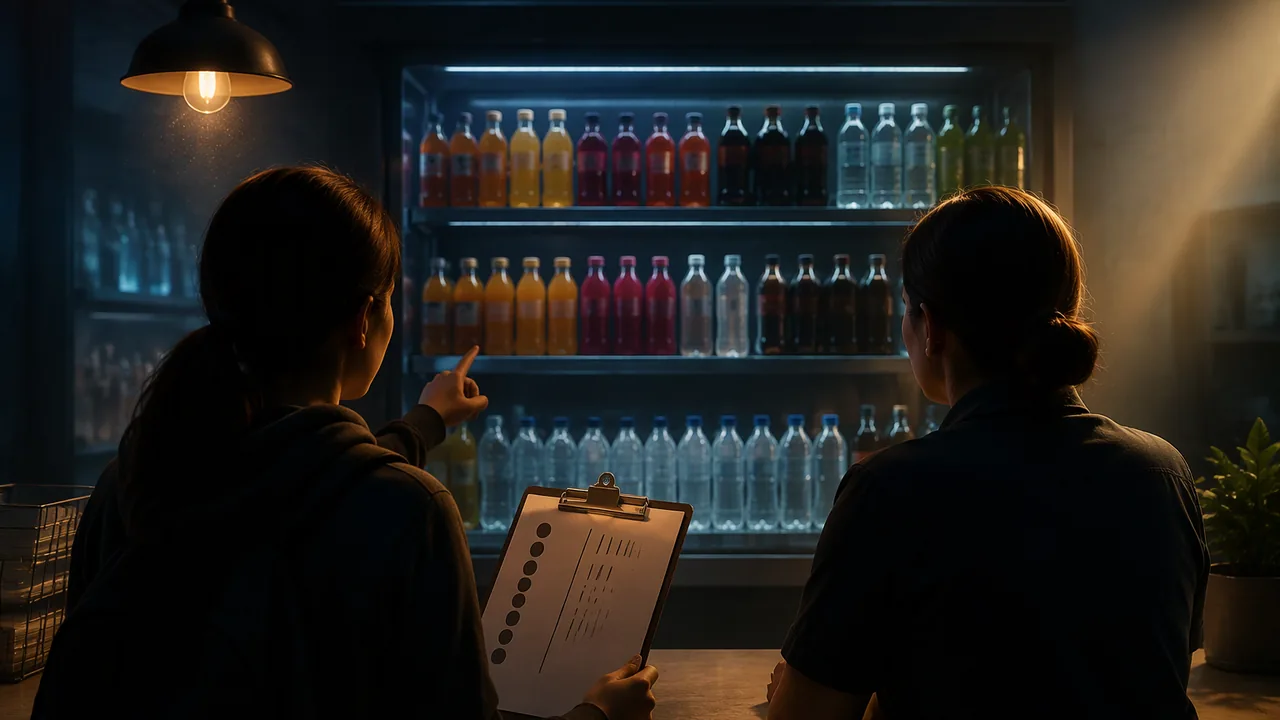
audit one part of the food or activity environment in your Missouri home or community with a data checklist, compare it with federal guidelines, and argue for one feasible change to the person or group who can make it.
Instruction
This task asks you to change the environment, not the individual.
Choose the setting. Pick one: the drinks cooler and snack aisle of a grocery or convenience store near your home; water, hours and places to be active at a park, trail or community center; the walking and biking routes from your home to the nearest park, store or library; the structure of your online school day (lesson minutes and planned breaks); or the shared spaces of your home (where water is, what is in view, space to move). You work on your own; a family member may help you count.
Collect data. Use a checklist with countable items. For a store: how many items in total, and how many meet a nutrition criterion you define from the label (for example, 10% DV or less of added sugars per package)? Is water cheaper than soda of the same size? For a park: how many working fountains or bottle fillers, and are they clean? For routes: count sidewalks, crosswalks and bike racks, and time the walk. Observe at least twice and record the date and time of every observation. Go to public places with a parent or guardian, ask a store manager before counting shelves, do not photograph or record other people, and never record anyone’s own eating or weight, including yours.
Compare with the standards. Put your findings next to the Dietary Guidelines (2.1) and the Physical Activity Guidelines (2.4). For store items you may also use the federal competitive-food standard for school snacks as a yardstick: it legally applies only to schools, but it is a precise public benchmark. Where the environment falls short, you have a problem statement backed by evidence.
Propose one change. Feasible beats grand. “Add a bottle-filling station at the park pavilion” or “move water to eye level in the store cooler” can happen this year; “ban all snacks” will not. Estimate cost where you can, and cite where the estimate comes from or label it as illustrative. Name who decides: the store manager, the city parks board, a city council member, a neighborhood association, the RLP student-support contact or your family.
Answer the strongest objection. Every proposal costs something — money, sales, staff time or people’s freedom to choose. Name the best objection and answer it with evidence.
The brief (700-900 words). Audience: the person or group who can make the change. Structure: the problem with your data (including one simple chart), the relevant guideline, your proposed change, the objection and your answer, and a specific request. Record a three-minute pitch with the chart as your visual, or write a cover letter. If you cannot collect your own data, the lesson’s reading has a complete sample data set for a fictional Missouri town (full credit).
📖 Read for this lesson
The reading opens over the lesson; close it to come back to exactly where you were. The checks below draw on it.
Formative check
Work through these before moving on. They are not graded — they tell you whether the standard below has landed yet.
Which proposal is most likely to succeed with a city parks board?
A good environment audit records what individual people buy and eat.
How confident are you that you can audit a home or community environment and argue for one feasible change with data?
Submit: Environment audit data + advocacy brief + 3-minute pitch
Task: Audit one part of the food or activity environment in your home or community (or your online school day), compare it with federal guidelines, and write and pitch a brief proposing one feasible change to the person or group who can make it.
The audit is about the environment. It never records any person’s food, weight or body, including your own.
Submission workflow
- Stage 1 — Plan. Setting, checklist with countable items, observation schedule (with a parent or guardian for any public place), the guideline you will compare against, and the decision-maker you will write to.
- Stage 2 — Self-reviewed draft. Use the self-review sheet in the reading: recount your totals, check your chart and citations, and write the strongest objection as the decision-maker would say it (a family member may read the draft and play the decision-maker); submit a revision note.
- Stage 3 — Final brief. 700-900 words with one chart, a feasible proposal, the objection answered and a specific request.
- Stage 4 — Three-minute pitch. Recorded, with the chart as the visual. A written cover letter to the decision-maker is an equal-credit alternative.
How it is scored
| Criterion | What proficient looks like |
|---|---|
| Data (FN2.12.9 / PA2.12.9) | Countable, dated observations on at least two occasions; accurate chart. |
| Use of guidelines and policy (FN8.12.1 / PA8.12.1) | Correctly cites the Dietary Guidelines, Physical Activity Guidelines or a federal food standard used as a yardstick, and connects findings to them. |
| Proposal and feasibility (FN8.12.1 / PA8.12.1) | One specific, feasible change with a sourced or labeled-illustrative cost, addressed to the person or group who can make it. |
| Argument (WHST.9-10.1) | Clear claim; the strongest objection stated fairly and answered with evidence. |
| Pitch (SL.9-10.4, SL.9-10.5) | Clear, within time, chart used to make the point. |
Performance Task Brief: The Home and Community Audit Checklist, a Sample Data Set for Cedar Bluff, Missouri, the Standards, a Model Brief and the Self-Review Sheet
SLS original assignment brief, sample data set (Cedar Bluff, Missouri, and every count are invented), model brief and self-review sheet. Standards: 7 CFR 210.11 (competitive food standards, eCFR, as of 2026-09-20, retrieved 2026-09-26); Dietary Guidelines for Americans 2025-2030; Physical Activity Guidelines, 2nd edition. Missouri facts: Missouri State Parks, Katy Trail State Park; KY3 News (July 16, 2026) on state park entrance fees; Missouri DSS (SNAP) and DHSS (WIC); retrieved 2026-11-06. · SLS original; standards quoted from U.S. federal regulations and guidance (public domain)
Why this reading. The task asks you to audit one part of the food or activity environment in your home, your community or your online school day, compare it with standards, and write an advocacy brief to the person or group who can change it. This reading supplies the checklist, the standards to compare against, a complete sample data set so you can build your brief even if you cannot collect your own data, a model brief, the rubric and a self-review sheet. Cedar Bluff, Missouri, its store, park and library, and every count below are SLS original and invented. The audit never records any person’s food, weight or body, including your own.
1. The assignment
- Choose one setting: a grocery or convenience store near your home (drinks cooler and snack aisle); a park, trail or community center (water, hours, lighting, places to be active); the walking and biking routes near your home; your online school day (how lesson time and movement breaks are arranged); or the shared spaces of your home (where water is, what food is in view, space to move). If you cannot collect your own data, use the Cedar Bluff data below (full credit).
- Collect countable data on at least two occasions, recording the date and time each time. Go to public places with a parent or guardian, ask a store manager before counting shelves, and do not photograph or record other people.
- Compare your counts with the standards in Section 3.
- Propose one feasible change, with a sourced or labeled-illustrative cost.
- Answer the strongest objection.
- Write a 700-900 word brief with one simple chart to the person or group who can make the change (a store manager, a city parks board, a city council member, a neighborhood association, the RLP student-support contact, or your family), and record a three-minute pitch (or write a cover letter).
2. A checklist you can copy
| Setting | Countable items |
|---|---|
| Store drinks cooler and snack aisle | Total items; items meeting your stated criterion (for example, 5 g of added sugars or less per package, which is 10% of the 50 g Daily Value); price of plain water versus a sweetened drink of the same size; where water sits (eye level or bottom shelf) |
| Park, trail or community center | Working fountains and bottle fillers; out-of-order count; hours open; lit paths; bike racks |
| Routes near home | Sidewalks, marked crosswalks, signals and bike lanes on the way to the nearest park, store or library; minutes to walk there |
| Online school day | For one sample day: minutes of lessons, number of planned breaks, longest stretch without a break (you are auditing the schedule, not yourself) |
| Home shared spaces | Is a water pitcher or filter easy to reach; is fruit or another ready-to-eat option in view; is there a clear space for a 10-minute workout (count shared features only, never what anyone eats) |
3. Standards to compare against
A yardstick from school rules. The federal rules below govern only food and drinks sold to students at schools in federal meal programs during the school day. They do not apply to stores, but they are a precise, public benchmark: you may use them to say how many items in a store aisle would meet the standard a school snack must meet.
Federal competitive-food standards (7 CFR 210.11, as of 2026-09-20). These govern food and beverages sold to students on campus during the school day (from the midnight before to 30 minutes after the official school day). Snack items and side dishes: not more than 200 calories and 200 mg of sodium per item as packaged; total sugar not more than 35 percent of weight; saturated fat less than 10 percent of calories; total fat not more than 35 percent of calories (with listed exemptions); and the item must be a grain product that is at least 50 percent whole grain by weight or has whole grain as the first ingredient, or have as first ingredient a fruit, vegetable, dairy or protein food, or be a combination food with 1/4 cup fruit and/or vegetable. Beverages for high school students are limited to: plain water or plain carbonated water (no size limit); milk (up to 12 fluid ounces); 100 percent juice (up to 12 fluid ounces); calorie-free flavored water (up to 20 fluid ounces); other beverages labeled under 5 calories per 8 fluid ounces or 10 calories per 20 fluid ounces (up to 20 ounces); and other beverages of no more than 40 calories per 8 fluid ounces or 60 per 12 fluid ounces (up to 12 ounces). Foods and beverages available to high school students may contain caffeine. A limited exemption exists for infrequent school-sponsored fundraisers, at a frequency set by the State agency. State and local agencies may set stricter rules.
Dietary Guidelines 2025-2030. Avoid sugar-sweetened beverages such as sodas, fruit drinks and energy drinks; no more than 10 grams of added sugars in one meal; ages 14 and over: sodium under 2,300 mg per day; for adolescents, significantly limit sugary drinks and energy drinks and avoid highly processed foods.
Physical Activity Guidelines (2018). Young people ages 6-17: 60 minutes or more of moderate-to-vigorous activity daily, with vigorous, muscle-strengthening and bone-strengthening activity on at least 3 days a week; brisk walking and bicycle riding count. Young people who do not meet the guideline should increase activity in small steps and in ways they enjoy.
Missouri places and programs. Missouri state parks charge no entrance fee, and Katy Trail State Park offers 240 miles of trail for walking and bicycling; SNAP (Missouri Department of Social Services) and WIC (Missouri DHSS) help eligible families afford food (details in the 2.4 reading). Use these when your proposal connects people to a free or low-cost resource.
4. Sample data set: Cedar Bluff, Missouri (SLS original, invented)
| Setting | Observation 1 (Sat Oct 3, 10:30 a.m.) | Observation 2 (Wed Oct 14, 4:45 p.m.) |
|---|---|---|
| Corner store, drinks cooler | 40 items; 11 meet (6 waters, 2 unsweetened teas, 3 plain milks) | 40 items; 12 meet |
| Corner store, snack aisle | 60 items; 14 meet | 60 items; 13 meet |
| Price, 20 oz bottles | Water $2.19; sweetened soda $2.19 | Same |
| Water, city park pavilion (next to the ball fields and walking loop) | 2 fountains, 1 working; 0 bottle fillers | 2 fountains, 1 working; 0 bottle fillers |
| Water, trailhead | 1 fountain, 1 working | 1 fountain, 1 working |
| Water, public library | 2 fountains, 2 working; 1 bottle filler | 2 fountains, 2 working; 1 bottle filler |
Totals: 100 store items, of which 25 (first observation) and 25 (second) meet the criterion, or 25% both times; 4 of 5 fountains working; 1 bottle filler in all three public places, at the library; the park pavilion, where most after-school and weekend activity happens, has 1 working fountain and no filler, and water costs as much as soda at the nearest store. The park pavilion is the strongest target.
5. A feasible proposal and its cost (labeled illustrative)
“Install one bottle-filling station at the park pavilion, and repair the broken fountain.” Cost: a typical outdoor bottle filler with installation might be in the low thousands of dollars. This is an SLS original illustrative estimate, not a quote; in your own brief, give a sourced quote or say you are estimating. State who pays and who decides (here, the city parks and recreation board).
6. Model brief (SLS original; about 330 words, shorter than the assigned 700-900)
To the Cedar Bluff Parks and Recreation Board. Problem. On October 3 and October 14, I counted every public drinking fountain at the city park, the trailhead and the library. 4 of 5 work. The park pavilion, next to the ball fields and walking loop where families and teams are active after school and on weekends, has two fountains, one of them broken, and no bottle filler; the library has the town’s only filler. [Chart: working fountains and fillers by location.] At the nearest store, a 20-ounce water costs the same as a 20-ounce soda ($2.19), and only 25% of drinks and snacks meet a 5-gram added-sugar limit. Standards. The Physical Activity Guidelines call for at least 60 minutes of moderate-to-vigorous activity a day for young people, and the Dietary Guidelines say to avoid sugar-sweetened drinks such as sodas. People exercising at the park need free water close by. Proposal. Install one bottle-filling station at the pavilion and repair the broken fountain. An illustrative estimate is in the low thousands of dollars. Objection. “The budget is tight, and people can bring water from home.” Answer. Not everyone can, and a filler makes any reusable bottle useful all day; one station serves every team, walker and family who uses the park, which is free to enter, and replaces purchases of bottled or sweetened drinks. Request. Please add the station and the repair to next year’s park improvement list, and tell residents when it is scheduled.
7. Rubric and self-review sheet
| Criterion | Strong work |
|---|---|
| Data | Countable, dated observations on at least two occasions; chart matches the counts |
| Guidelines and resources | Correct citations to the standards above, and the findings connected to them |
| Proposal | One specific, feasible change; cost sourced or labeled illustrative; the right decision-maker named |
| Argument | Clear claim; strongest objection stated fairly and answered with evidence |
| Pitch | Within time; the chart makes the point |
Self-review sheet. Recount the totals from your data. Check each cited standard against Section 3. Write the strongest objection in one sentence as the decision-maker would say it. Note one strength, one correction and one question; if you like, ask a family member to read the brief and play the decision-maker. Check that nothing records any person’s food, weight or body.
Sources: 7 CFR 210.11, Competitive food service and standards (ecfr.gov); HHS and USDA, Dietary Guidelines for Americans, 2025-2030 (cdn.realfood.gov); HHS, Physical Activity Guidelines for Americans, 2nd edition (odphp.health.gov); Missouri State Parks, Katy Trail State Park (mostateparks.com); KY3 News, Fact Finders: Do other states have a better way of paying for state parks? (July 16, 2026) (ky3.com); Missouri Department of Social Services, My SNAP Benefit (mydss.mo.gov); Missouri DHSS, Women, Infants & Children (WIC) (health.mo.gov)