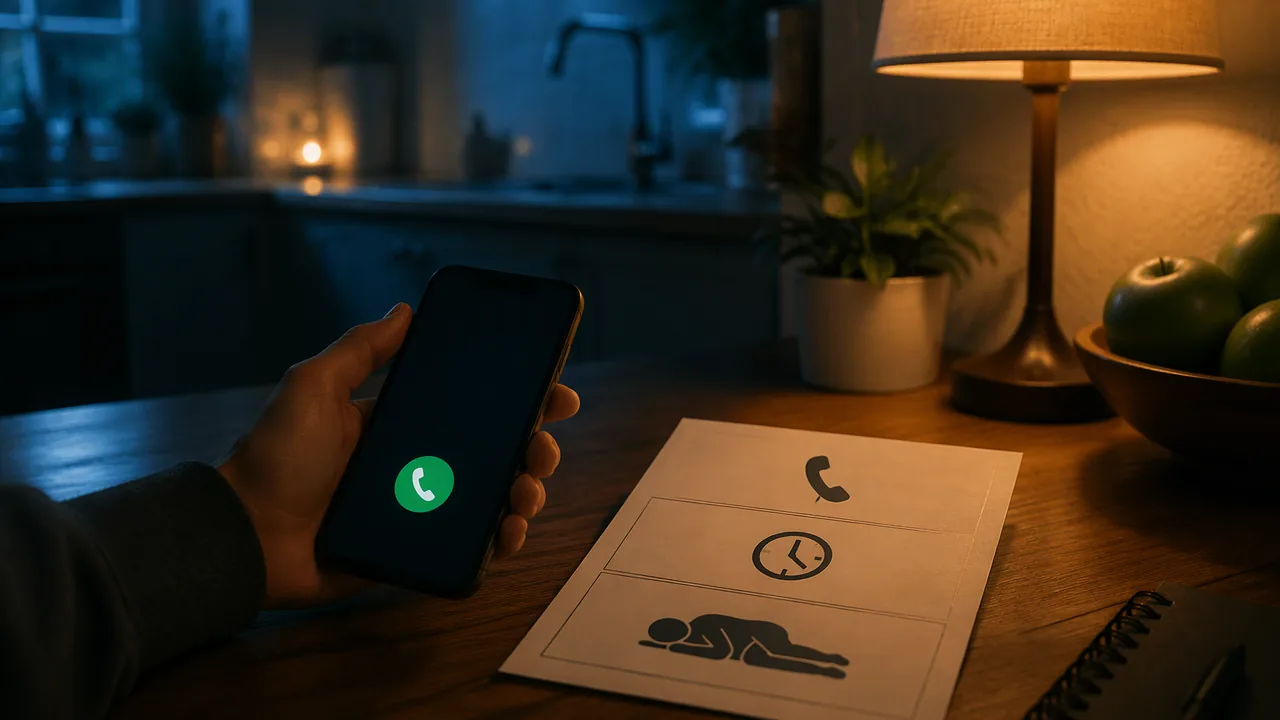
use refusal and negotiation skills, plan never to ride with an impaired driver, and make and defend the decision to call 911 in an emergency involving substances.
Instruction
Norms are often misread. Students often overestimate how many of their peers use substances, and people act on what they think is normal. The 2024 National Youth Tobacco Survey found 7.8% of U.S. high school students currently used e-cigarettes. If you guessed a much higher number, you are not alone — and knowing the real number makes saying no easier, because you are in the majority.
Refusal skills that work. A refusal is stronger when it is clear, short and repeatable. (1) Say no clearly and use the word “no.” (2) Give a reason if you want — “I’ve got a game tomorrow,” “not my thing” — but you don’t owe one. (3) Suggest an alternative: “Let’s go get food instead.” (4) Match your body language to your words: eye contact, a steady voice. (5) Leave if the pressure continues, and don’t argue. Negotiation adds a step: find a choice that meets the other person’s real goal (having fun, fitting in) without the risk. Real friends accept a no.
Never ride with an impaired driver. Alcohol, cannabis and many other drugs slow reaction time and impair judgment. Missouri has zero tolerance for drivers under 21: a driver under 21 stopped for a traffic offense with a blood-alcohol content of 0.02% or more has their license suspended or revoked (RSMo 302.505), and driving while intoxicated by alcohol or any drug is a crime at any age. CDC reports that about 2,800 teens aged 13-19 were killed and about 227,000 injured in motor vehicle crashes in the United States in 2020, and names inexperience as a key risk. Missouri’s graduated licensing law (RSMo 302.178) is built around those risks: a driver with an intermediate license (ages 16-18) may not drive between 1:00 and 5:00 a.m. without a qualified adult except to and from school, work or an emergency; the driver and every passenger must wear seat belts; and for the first six months the driver may carry no more than one passenger under 19 who is not family (then no more than three). Since August 28, 2023, Missouri’s Siddens Bening Hands Free Law (RSMo 304.822) bars every driver from holding a phone or texting while driving. Make the plan before you need it: agree on a code word with a family member or trusted adult that means “come get me, no questions tonight,” keep money for a ride, and know who else could drive. As a passenger, your behavior matters too: wear a seat belt, keep the driver’s attention on the road, and speak up about speeding or phone use.
The 911 decision. The hardest moment often comes after someone has already used something: a friend won’t wake up at a party, and people are afraid of getting in trouble. Alcohol overdose signs (NIAAA) include mental confusion, vomiting, seizures, slow or irregular breathing, clammy skin, low body temperature, and being unable to be woken. Opioid overdose signs appear in Lesson 3.2. In either case, call 911. Never leave the person alone to “sleep it off,” and don’t give them coffee or a cold shower — NIAAA says those do not reverse an overdose and can make things worse. Turn them on their side and stay.
What Missouri law protects. Missouri’s Good Samaritan law (RSMo 195.205) covers a drug or alcohol overdose or other medical emergency. A person who, in good faith, seeks or obtains medical help — by calling 911, a poison center or a medical provider, helping the caller, or giving care while waiting — and the person having the emergency cannot be arrested, charged, prosecuted or penalized for possessing a controlled substance or drug paraphernalia, for underage possession of alcohol or giving alcohol to a minor, or for violating probation, parole or a restraining order, when the evidence was found because they sought help. It does not cover other crimes, such as selling drugs or impaired driving, or an outstanding warrant. Its purpose is simple: fear of trouble should never cost a life.
The decision lab. Choose one of three fictional scenarios: pressure to vape before a game, a ride home from a driver who has been drinking, or a friend who can’t be woken at a party. Map the options, the likely consequences for each person involved, and your choice, then record yourself playing the main character in the conversation (you may ask a family member to read the other part). Finish by writing the strongest objection someone could raise to your choice and your answer to it.
📖 Read for this lesson
The reading opens over the lesson; close it to come back to exactly where you were. The checks below draw on it.
Formative check
Work through these before moving on. They are not graded — they tell you whether the standard below has landed yet.
Which refusal is strongest?
A friend who drank too much and can’t be woken should be left to sleep it off on their back.
CDC reports that about teens aged 13-19 were killed in U.S. motor vehicle crashes in 2020.
A friend at a party drank too much and can’t be woken. Under Missouri’s Good Samaritan law (RSMo 195.205), which is accurate?
For your scenario, write the decision map: at least three options, the likely consequences of each for everyone involved, and your choice. Then write the exact words the main character says, and one sentence on how Missouri’s Good Samaritan law, zero-tolerance law or graduated licensing law bears on the choice.
How confident are you that you can refuse pressure, avoid riding with an impaired or distracted driver and make the 911 call?
Decision Lab Dossier: Three Scenarios With Their Options and Consequences, the Refusal Skills, and What Missouri Law Says and Does Not Say
SLS original fictional scenarios, options, scripts and worked decision map. Norm: Park-Lee et al., MMWR 2024;73(35). Teen drivers: CDC, Teen Drivers (2020 data; page dated January 29, 2026). Alcohol overdose: NIAAA, Alcohol Overdose and Understanding the Dangers of Alcohol Overdose. Revised Statutes of Missouri 195.205 (L. 2017 S.B. 501), 302.505, 302.178, 304.822 (L. 2023 S.B. 398), 311.325, 579.015, 579.074 and 579.078, revisor.mo.gov. NIDA, Preventing Drug Use among Children and Adolescents (2nd ed., 2003). Retrieved 2026-11-06. · SLS original; facts and statute paraphrases from U.S. and Missouri public sources
Why this reading. You work through one of three scenarios, record the conversation and defend your choice against the strongest objection. Here are all three, the options and consequences for each, the refusal skills, the real number about vaping, the Missouri laws, and a finished decision map. The scenarios and characters are SLS original and fictional. Nothing here asks you about your own life. This is education, not legal advice.
1. The number that changes what feels normal
In the 2024 National Youth Tobacco Survey, 7.8% of U.S. high school students currently used e-cigarettes (Park-Lee et al., MMWR 2024;73(35)). So more than 9 in 10 did not. If you thought it was much higher, you are in good company, and the real number makes “no” easier: you are in the majority. NIDA’s prevention guide notes that most prevention curricula include a normative education component to correct the misperception that many students use drugs, and that interactive methods such as discussion and role-play work best (NIDA, Preventing Drug Use among Children and Adolescents, 2nd edition, 2003).
2. Refusal skills, with examples (SLS original)
- Say no clearly: “No, I’m good.”
- A reason is optional: “I’ve got a game tomorrow.”
- Offer an alternative: “Want to get tacos instead?”
- Match your body: eye contact, steady voice.
- Leave if pressed. Negotiation: look for a choice that meets the real goal (fun, fitting in) without the risk.
3. Scenario 1: pressure before a game
Before the second half of a club soccer match, a teammate (Jordan) passes a disposable vape around behind the bench and says “everyone’s doing it; it’s just flavor.” Sam has not tried it. Options and consequences: (a) take one to fit in: nicotine is highly addictive and can harm the parts of an adolescent’s brain that control attention, learning, mood and impulse control (CDC); (b) laugh it off and hold the vape without using it: sends mixed signals and pressure continues; (c) “No, I’m good, I want to stay sharp for the second half. Anyone want to get a snack after?” and step away: clear, respects the goal, best choice; (d) tell the coach or a parent: an option if pressure continues or someone seems unwell.
4. Scenario 2: the ride home
At a friend’s house, Priya notices her ride, a 17-year-old driver named Marcus, has been drinking. It is 1:30 a.m. and her phone has 12% battery. Facts. Missouri has zero tolerance for drivers under 21: the Department of Revenue must suspend or revoke the license of a driver under 21 stopped on probable cause of a traffic offense with a blood alcohol content of 0.02% or more (RSMo 302.505), and a person under 21 with a detectable blood alcohol content of more than 0.02% commits a misdemeanor (RSMo 311.325). Marcus holds an intermediate license (RSMo 302.178), so he may not drive between 1:00 and 5:00 a.m. unless accompanied by a qualified adult, except to or from school, work or an emergency; he and every passenger must wear seat belts. CDC reports that in 2020 about 2,800 teens aged 13-19 were killed and about 227,000 injured in U.S. motor vehicle crashes, and that factors such as inexperience put teens at risk. Missouri’s Siddens Bening Hands Free Law (RSMo 304.822, effective August 28, 2023, with citations beginning January 1, 2025) bars any driver from holding a phone or texting while driving. Options: (a) ride with Marcus and buckle up: still unsafe, and illegal for him to drive; (b) ask another sober driver; (c) call the pre-agreed adult using the code word, share location, keep money for a ride; (d) stay put until morning. Best: (c) or (b). Plan before you need it: agree on a code word with a trusted adult meaning “come get me, no questions tonight,” and charge your phone before you go out.
5. Scenario 3: a friend who cannot be woken
At a party, Lee is on the couch, very hard to wake, vomiting once, breathing slowly, and cold and clammy. Some people say to let him sleep. Facts (NIAAA). Alcohol overdose symptoms include mental confusion, difficulty remaining conscious, vomiting, seizure, trouble breathing, slow heart rate, clammy skin, dulled responses such as no gag reflex (which prevents choking), and extremely low body temperature. NIAAA says to call 911 for help immediately, not to wait for the person to have all the symptoms, and not to leave an intoxicated person alone because they are at risk of getting injured from falling or choking; cold showers, hot coffee and walking do not reverse the effects of alcohol overdose and could make things worse. Be ready to tell responders what and how much he drank. Turning him on his side while you wait is standard first-aid practice to keep his airway clear. Opioid signs are in Lesson 3.2. Options: (a) let him sleep it off: dangerous; (b) coffee or a cold shower: does not work and can make it worse; (c) call 911, turn him on his side, stay with him, tell the dispatcher what he took if you know, and send someone to meet responders: best; (d) drive him yourself: not if the driver has been drinking, and 911 can send help and guide you.
6. What Missouri’s Good Samaritan law says, and does not
RSMo 195.205 (enacted 2017), in summary. It defines a “drug or alcohol overdose” as a condition such as extreme illness, decreased consciousness, slowed breathing, coma or death resulting from a controlled substance or alcohol, or a condition a person would reasonably believe is an overdose needing medical help. “Medical assistance” includes reporting the emergency to law enforcement, 911, a poison control center or a medical provider; helping someone who is reporting; or giving care while waiting for help. A person who, in good faith, seeks or obtains medical assistance for someone experiencing a drug or alcohol overdose or other medical emergency, and the person having the emergency, shall not be arrested, charged, prosecuted, convicted or otherwise penalized, if the evidence was gained as a result of seeking help, for:
- possessing a controlled substance (RSMo 579.015), drug paraphernalia (579.074) or an imitation controlled substance (579.078), or keeping a place used for drugs (579.105);
- the alcohol offenses in RSMo 311.310 (supplying alcohol to a person under 21), 311.320 (misrepresenting age to get alcohol) and 311.325 (a person under 21 buying or possessing alcohol or having a blood alcohol content over 0.02%);
- violating a restraining order, or violating probation or parole.
It does not cover arrest on an outstanding warrant, or any other offense, even one arising from the same situation, such as selling or distributing drugs or driving while intoxicated. Police who respond must offer information about substance-use help. Compare naloxone: RSMo 195.206 separately protects a person who gives naloxone in good faith (Lesson 3.2). Because Missouri’s law covers alcohol overdoses as well as drug overdoses, it applies to Scenario 3. Its purpose: fear of trouble should not cost a life. When in doubt, call.
7. A finished decision map (Scenario 3, SLS original)
| Option | Consequences for Lee | For the caller | Choice |
|---|---|---|---|
| Sleep it off | May stop breathing or choke | Guilt; possible tragedy | No |
| Coffee or cold shower | Does not reverse overdose; may worsen | False reassurance | No |
| Call 911, side position, stay | Fastest route to treatment | Fear of trouble; protection under RSMo 195.205 for the listed offenses | Yes |
Words the main character says (model): “Lee, can you hear me? Somebody get the door. I’m calling 911 right now. He’s breathing slowly and I can’t wake him. Help me turn him on his side.” Law sentence (model): “Missouri’s Good Samaritan law covers alcohol overdoses and protects a caller and Lee from charges like underage possession of alcohol when the evidence comes from calling for help, though not from charges like selling drugs or impaired driving, so calling is right, and the real reason to call is that Lee’s life is at risk.” Objection and answer (model): “Objection: Lee will be angry and his parents will find out. Answer: he can be angry and alive; a person who has passed out can die, and NIAAA says not to wait.”
Sources: RSMo 195.205, immunity for seeking medical assistance for a drug or alcohol overdose (revisor.mo.gov); RSMo 302.505, license suspension or revocation (0.02% for drivers under 21) (revisor.mo.gov); RSMo 302.178, intermediate driver’s license (revisor.mo.gov); RSMo 304.822, Siddens Bening Hands Free Law (revisor.mo.gov); RSMo 311.325, purchase or possession of alcohol by a person under 21 (revisor.mo.gov); RSMo 579.015, possession of a controlled substance (revisor.mo.gov); NIAAA, Alcohol Overdose (niaaa.nih.gov); NIAAA, Understanding the Dangers of Alcohol Overdose (niaaa.nih.gov); CDC, Teen Drivers (cdc.gov); NIDA, Preventing Drug Use among Children and Adolescents (2nd ed.) (nida.nih.gov)