apply the Dietary Guidelines for Americans, 2025-2030 and the Physical Activity Guidelines to everyday choices: balanced eating with food restrictions, processing, flavor without excess sugar and sodium, hydration instead of energy drinks, breakfast and shared meals, and activity without equipment, and plan around barriers including food access.
Instruction
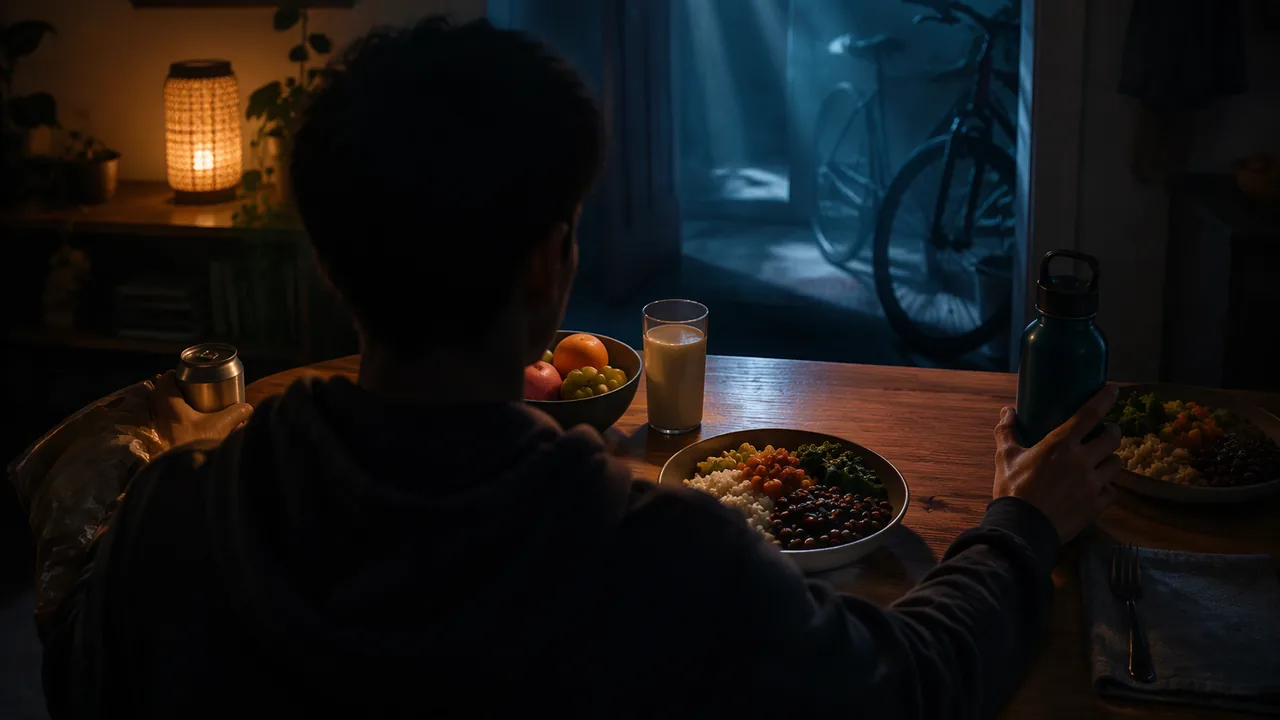
The case. Marcus, a fictional sophomore at RLP, studies at home in Springfield. Most days he skips breakfast, buys a 16-ounce energy drink at noon, eats chips in the afternoon and has dinner alone in front of a screen. He has a bike but rarely uses it. He says he feels tired and jittery at the same time. This lesson gives you the federal guidance and the everyday skills to help Marcus, and yourself, make better daily choices without a special diet or a gym.
Balanced eating, including with restrictions. The Dietary Guidelines for Americans, 2025-2030 (HHS and USDA, January 2026) center on whole, nutrient-dense foods: protein foods, dairy, vegetables, fruits, healthy fats and whole grains, with far fewer highly processed foods. People who avoid foods by choice or medical need can still eat a balanced pattern, but they must plan. The Guidelines warn that vegan diets can fall short in vitamins B12 and D, calcium, iron, zinc and protein, and advise varied plant proteins (beans, lentils, tofu, nuts, seeds) and, where needed, targeted supplements. A gluten-free diet is medically necessary for people with celiac disease, which FDA estimates affects about 3 million people in the United States; whole grains such as rice, corn, oats labeled gluten-free and quinoa keep it balanced. A dairy-free eater needs other calcium sources, such as fortified soy drinks.
Processing changes nutrients. Processing runs from minimal (washing, freezing, canning) to heavy (refining grain, adding sugar, salt, flavors and dyes). Minimal processing often keeps nutrients: the Guidelines say frozen, dried or canned produce with little or no added sugar can be good options. Refining whole grain into white flour removes fiber; turning fruit into juice removes fiber and concentrates sugar, so the Guidelines limit juice.
Flavor without excess sugar and salt. The Guidelines set less than 2,300 mg of sodium a day for ages 14 and up, recommend no more than 10 grams of added sugar in a meal, and suggest herbs, spices and healthy fats such as olive oil. Roasting vegetables with olive oil and garlic, topping plain yogurt with fruit and cinnamon, or air-popping popcorn with chili powder are good-tasting, nutrient-dense swaps.
Drinks: water, not energy drinks. CDC says the body needs more water in hot weather and during activity, and that dehydration is linked to unclear thinking and mood changes. MedlinePlus lists thirst, dark yellow urine, headache and muscle cramps as early signs, and dizziness and a rapid heartbeat as severe ones; all of them hurt performance. A 16-ounce energy drink can contain 70 to 240 mg of caffeine (NCCIH); a 12-ounce cola has about 35 mg. FDA notes that medical experts advise against energy drinks for children and teens because of their sugar and caffeine, which can raise heart rate and blood pressure and cause anxiety and sleep problems. The Guidelines say to avoid sugar-sweetened beverages, including energy drinks.
Breakfast and shared meals. A review of 36 studies (Adolphus and colleagues, 2013) found that eating breakfast more often was consistently associated with better academic performance, though income and other factors explain part of that link. A systematic review of family meals (Harrison and colleagues, 2015) found frequent family meals associated with less disordered eating, substance use and depressive feelings, and with higher self-esteem.
Activity without a plan or equipment. The Physical Activity Guidelines for Americans ask teens for at least 60 minutes of moderate-to-vigorous activity daily, and say any amount helps: brisk walking to errands, stairs, yard work, dancing, or a five-minute movement break every hour. Short-term benefits include less anxiety and better sleep; long-term ones include better heart and bone health and lower risk of depression.
Access and barriers. USDA reports that 13.7% of U.S. households were food insecure at some time in 2024. In Missouri, SNAP, WIC and local food pantries help (dss.mo.gov), and dialing 211 connects you to local programs. Time, cost, habits and the people around you are all barriers; a good plan names one and works around it.
📖 Read for this lesson
The reading opens over the lesson; close it to come back to exactly where you were. The checks below draw on it.
Formative check
Work through these before moving on. They are not graded — they tell you whether the standard below has landed yet.
Missouri standard: FN1.12.8
Priya has decided to eat vegan. According to the Dietary Guidelines for Americans, 2025-2030, which plan best keeps her eating pattern balanced?
Missouri standard: FN1.12.9, FN1.12.10
Rework one food or snack you (or Marcus) eat often so it tastes good and is more nutrient-dense. Name the original, then list at least three changes that use healthy fats, herbs or spices, or whole foods to cut added sugar or sodium (for example: plain yogurt with berries and cinnamon instead of flavored yogurt; popcorn air-popped with chili powder instead of microwave butter popcorn). For each change, say which nutrient goes up or which of sugar or sodium goes down, and check one packaged item’s Nutrition Facts label to give a real before-and-after number.
Missouri standard: FN1.12.7
Frozen or canned vegetables are always much less nutritious than fresh ones, so they should never be part of a healthy eating pattern.
Missouri standard: FN1.12.13
A 16-ounce energy drink can contain up to 240 mg of caffeine, and a 12-ounce cola has about 35 mg (NCCIH). Which statement is supported by those numbers and by FDA’s guidance?
Missouri standard: PA1.12.12
Thirst, dark yellow urine, headache and muscle cramps are early signs of , which can also bring dizziness and unclear thinking that hurt performance during a hot Missouri practice.
Missouri standard: FN1.12.11, FN1.12.23
Which statement matches what the two research reviews in this lesson found about breakfast and shared meals?
Missouri standard: PA1.12.5
Marcus has no gym membership and no equipment. Which plan best fits the Physical Activity Guidelines’ advice that any amount of movement counts?
Missouri standard: FN5.12.5, PA5.12.6
Marcus swaps his noon energy drink for water, eats breakfast, and adds 30 minutes of brisk walking or biking most days. Predict which outcome is most likely in the first few weeks, and which takes much longer.
Missouri standard: FN1.12.14, PHW5.12.1, PHW5.12.5, PHW6.12.1, PHW6.12.3
Write a one-week wellness plan for yourself (or for Marcus). (1) Assess current practices: for three days, record breakfast (yes/no), sugary or energy drinks, water, and minutes of activity. (2) Set one food goal and one activity goal. (3) Name two barriers, including at least one about access to food (cost, distance to a store, time, what is in the house), and explain how each could push a choice in the wrong direction. (4) For each barrier, choose a healthy alternative, and for an access barrier name a real Missouri resource from the reading (SNAP, WIC, a food pantry, or 211). (5) After the week, evaluate: did the decision work, what got in the way, and what would you change?
Everyday Choices from the Federal Guidelines: Food, Drinks, Movement and Access in Missouri
Dietary Guidelines for Americans, 2025-2030 (realfood.gov, January 2026); Physical Activity Guidelines for Americans, 2nd ed. (odphp.health.gov); NCCIH, Energy Drinks; FDA, Spilling the Beans; FDA, Gluten-Free Labeling of Foods; CDC, About Water and Healthier Drinks; MedlinePlus, Dehydration; USDA ERS, Food Security in the U.S. 2024; Missouri DSS Food Assistance; Missouri DHSS WIC; United Way 211; Adolphus et al. 2013; Harrison et al. 2015. Retrieved 2026-11-06. · Public domain (U.S. and Missouri government information); research findings paraphrased with citation (Adolphus et al. 2013 is CC BY); tables and worked example SLS original
Why this reading. The lesson asks you to make everyday choices from federal guidance. Here are the actual recommendations with their numbers, the caffeine and hydration facts, what two research reviews found about breakfast and family meals, Missouri food resources, and a worked example of Marcus’s plan. Marcus is SLS original and illustrative.
1. The Dietary Guidelines for Americans, 2025-2030 (HHS and USDA, January 2026)
- Core message: eat whole, nutrient-dense foods (protein foods, dairy, vegetables, fruits, healthy fats, whole grains) and sharply reduce highly processed foods.
- Servings (2,000-calorie pattern, adjust to your needs): vegetables 3 a day, fruits 2, dairy 3, whole grains 2-4; protein 1.2-1.6 g per kilogram of body weight per day.
- Sodium: under 2,300 mg a day for ages 14 and up.
- Added sugars: none is recommended; one meal should contain no more than 10 g. Look for ingredients with “sugar” or “syrup” or ending in “-ose.”
- Fats: prioritize oils such as olive oil; keep saturated fat under 10% of calories.
- Drinks: “Hydration is a key factor in overall health.” Choose water and unsweetened drinks; avoid sugar-sweetened beverages such as sodas, fruit drinks and energy drinks.
- Adolescents (11-18): growing bodies need more energy, protein, calcium and iron; significantly limit sugary and energy drinks; take part in shopping and cooking.
- Processing: eat produce whole when possible; frozen, dried or canned produce with no or little added sugar can be good options; limit 100% juice or dilute it.
2. Eating patterns with restrictions
| Pattern | Why people follow it | Nutrients to plan for | Balanced choices |
|---|---|---|---|
| Vegetarian | Personal, ethical or religious choice | Vitamins D and E, choline, iron (Dietary Guidelines) | Eggs, dairy, beans, lentils, nuts, fortified cereals |
| Vegan | Personal or ethical choice | B12, D, calcium, iron, zinc, protein and others (Dietary Guidelines) | Tofu, tempeh, beans, lentils, seeds, fortified soy drink; ask a health care professional about B12 |
| Gluten-free | Medically necessary with celiac disease (about 3 million people in the U.S., FDA) | Fiber, B vitamins from whole grains | Brown rice, quinoa, corn, oats labeled gluten-free, beans |
| Dairy-free | Milk allergy, lactose intolerance or choice | Calcium, vitamin D, protein | Fortified soy drink, canned salmon with bones, leafy greens, beans |
3. Energy drinks, caffeine and hydration
- Caffeine: 70-240 mg in a 16-oz energy drink; 113-200 mg in an energy shot; about 35 mg in a 12-oz cola; about 100 mg in an 8-oz coffee (NCCIH).
- Worked comparison: 240 ÷ 35 ≈ 6.9, so the strongest 16-oz energy drink holds as much caffeine as almost 7 colas. Two such drinks would be 480 mg, above the 400 mg a day FDA cites as generally safe for most adults.
- FDA: medical experts (the American Academy of Pediatrics) advise against energy drinks for children and teens; too much caffeine can cause increased heart rate, palpitations, high blood pressure, anxiety, sleep problems, digestive problems and dehydration.
- NCCIH: energy drink-related emergency department visits doubled between 2007 and 2011, and caffeine content may not be easy to identify on the label.
- Hydration (CDC): the body needs more water in hot climates and with more physical activity; dehydration is linked to unclear thinking and mood changes. Water has no calories.
- Signs of dehydration (MedlinePlus): mild to moderate, thirst, dry or sticky mouth, little urine, darker yellow urine, headache, muscle cramps; severe, very dark urine or none, dizziness, rapid heartbeat and breathing, confusion. Prevention: drink fluids every day and more when it is hot or you are exercising.
4. Breakfast and eating together: the evidence
Breakfast. Adolphus, Lawton and Dye (2013, Frontiers in Human Neuroscience, open access, CC BY) reviewed 36 studies. They found a mainly positive effect of breakfast on on-task behavior, and that eating breakfast more often was consistently associated with better academic performance; a breakfast with a variety of food groups and enough energy also looked better. They caution that family income and weak study methods explain part of the link.
Family meals. Harrison and colleagues (2015, Canadian Family Physician) reviewed 14 studies of youth. Frequent family meals were associated with less disordered eating, alcohol and substance use, violent behavior, and feelings of depression or thoughts of suicide, and with higher self-esteem and school success. These are associations: families who eat together may differ in other ways too. An RLP student can get many of the same social benefits from regular meals with whoever they live with, or a standing video call with a relative.
5. Physical activity (Physical Activity Guidelines for Americans, 2nd edition)
- Ages 6-17: at least 60 minutes of moderate-to-vigorous activity each day, mostly aerobic, plus muscle- and bone-strengthening activity.
- Any amount helps; the old rule that only 10-minute bouts count was removed. Move more, sit less.
- Immediate benefits: less anxiety, lower blood pressure, better sleep and insulin sensitivity. Long-term for youth: better thinking, bone health, fitness and heart health, and lower risk of depression.
- No-equipment ideas: walk or bike for errands, carry groceries, yard work, stairs, dancing, push-ups and squats during study breaks, a walk with a family member after dinner.
6. Access to food in Missouri
USDA’s Economic Research Service reports that 13.7% of U.S. households (18.3 million) were food insecure at some time in 2024. Access shapes choices: a household far from a full grocery store, short of money or short of time buys differently. Missouri resources:
- SNAP (Missouri Department of Social Services): a monthly benefit to buy food; apply through dss.mo.gov/food-assistance, which also lists food pantries and Missouri SUN Bucks.
- WIC (Missouri DHSS): supplemental food, nutrition education and referrals for eligible pregnant, breastfeeding and postpartum women, infants and children up to age five; 800-392-8209.
- Local food banks and pantries, listed through DSS.
- 211: United Way 211 of Missouri and Illinois connects callers with local food programs 24/7.
7. Worked example: Marcus’s one-week plan
| Step | Marcus |
|---|---|
| Assess (3 days) | Breakfast 0 of 3 days; one 16-oz energy drink a day; about 2 cups of water; activity 10, 0 and 15 minutes |
| Goals | Food: breakfast at least 5 of 7 days (eggs or yogurt with fruit). Activity: 30 minutes a day by bike or brisk walk, plus movement breaks |
| Barrier 1 (habit/taste) | He likes the energy drink’s buzz. Alternative: cold sparkling water at noon and a 10-minute walk outside when he feels sluggish |
| Barrier 2 (access) | The nearest grocery store is a 25-minute walk; breakfast foods run out. Alternative: bike to the store twice a week (activity and access together); his family checks SNAP eligibility through DSS |
| Evaluate | Breakfast 5 of 7 days; energy drinks 2 (down from 7); activity averaged 28 minutes. Next week: keep the bike trips, add Sunday dinner with his grandmother |
Sources: HHS and USDA, Dietary Guidelines for Americans, 2025-2030 (cdn.realfood.gov); ODPHP, Top 10 Things to Know About the Second Edition of the Physical Activity Guidelines for Americans (odphp.health.gov); NCCIH, Energy Drinks (nccih.nih.gov); FDA, Spilling the Beans: How Much Caffeine Is Too Much? (fda.gov); FDA, Gluten-Free Labeling of Foods (fda.gov); CDC, About Water and Healthier Drinks (cdc.gov); MedlinePlus, Dehydration (medlineplus.gov); USDA ERS, Food Security in the U.S.: Key Statistics & Graphics (ers.usda.gov); Missouri DSS, Food Assistance (dss.mo.gov); Missouri DHSS, WIC (health.mo.gov); United Way 211 of Missouri and Illinois (211helps.org); Adolphus K, Lawton CL, Dye L. The effects of breakfast on behavior and academic performance in children and adolescents. Front Hum Neurosci 2013;7:425 (pmc.ncbi.nlm.nih.gov); Harrison ME et al. Systematic review of the effects of family meal frequency on psychosocial outcomes in youth. Can Fam Physician 2015;61(2):e96-106 (pmc.ncbi.nlm.nih.gov)