compare the recreational and social aspects of several dance forms, explain with evidence how each has influenced the culture that carries it, and design inclusive versions of a dance for people of diverse backgrounds and abilities.
Instruction
Dances change cultures, and cultures change dances
A dance does more than reflect a culture; it helps build one. People who dance together learn the same patterns, music and manners, and the shared practice ties them into a group. Missouri’s expectation asks you to compare the recreational and social aspects of dances and their impact on cultural development. Here are four case studies drawn from the forms you practiced.
Case 1: The square dance standardizes a community
Beginning in the 1930s, Colorado educator Lloyd “Pappy” Shaw collected calls from callers across the country to preserve traditional western square dancing and make it teachable. Modern western square dance grew from that style between about 1940 and 1960, and since the 1970s Callerlab, the international association of callers, has standardized it; its basic Mainstream program of about 70 calls is danced in around 30 countries (Wikipedia, “Square dance,” cross-checked). Standard calls mean a dancer from Springfield can join a square in another country. Missouri’s 1995 law naming the square dance the state’s American folk dance, and defining it to include round, clogging, contra, line and heritage dance, shows a state treating a recreation as part of its identity (Missouri Secretary of State).
Case 2: The hora carries a community through life events
The hora is danced at weddings and festivals across Southeast Europe and in Jewish communities, and in North Macedonia also at christenings, holidays, graduations and birthdays. In the early twentieth century it became a symbol of the Zionist pioneer movement in what is now Israel, spread by touring performances in farming settlements in the 1920s (Wikipedia, “Hora,” cross-checked). A circle has no front row: everyone faces the center and belongs equally, which is part of why the form signals community.
Case 3: The jarabe tapatío becomes a national symbol
The jarabe began in Guadalajara, Jalisco as a courtship dance. Colonial and church authorities banned it at times, which made dancing it a form of protest, and after independence it became a symbol of Mexican national pride; the Russian ballerina Anna Pavlova added it to her repertoire after visiting Mexico in 1919, carrying it abroad (Wikipedia, “Jarabe Tapatío,” cross-checked). One regional dance came to stand for a nation.
Case 4: Bhangra travels and blends
Bhangra began as a celebration among Punjabi farmers at the harvest festival of Vaisakhi. Over the past decades it has spread worldwide with Punjabi communities, blended with hip hop, house and reggae and become the subject of competitions in places such as Canada and the United States (Wikipedia, “Bhangra (dance),” cross-checked). A harvest dance became a way for young people of a diaspora to stay connected to their heritage while making something new.
A comparison frame
| Question | Recreational aspect | Social aspect |
|---|---|---|
| Why do people do it? | Fun, exercise, skill | Belonging, celebration, identity |
| Who can join? | Anyone who learns the steps | Often a community, a family, an occasion |
| What does it change? | Fitness and coordination | Shared customs, pride, connection across distance |
Making dance inclusive
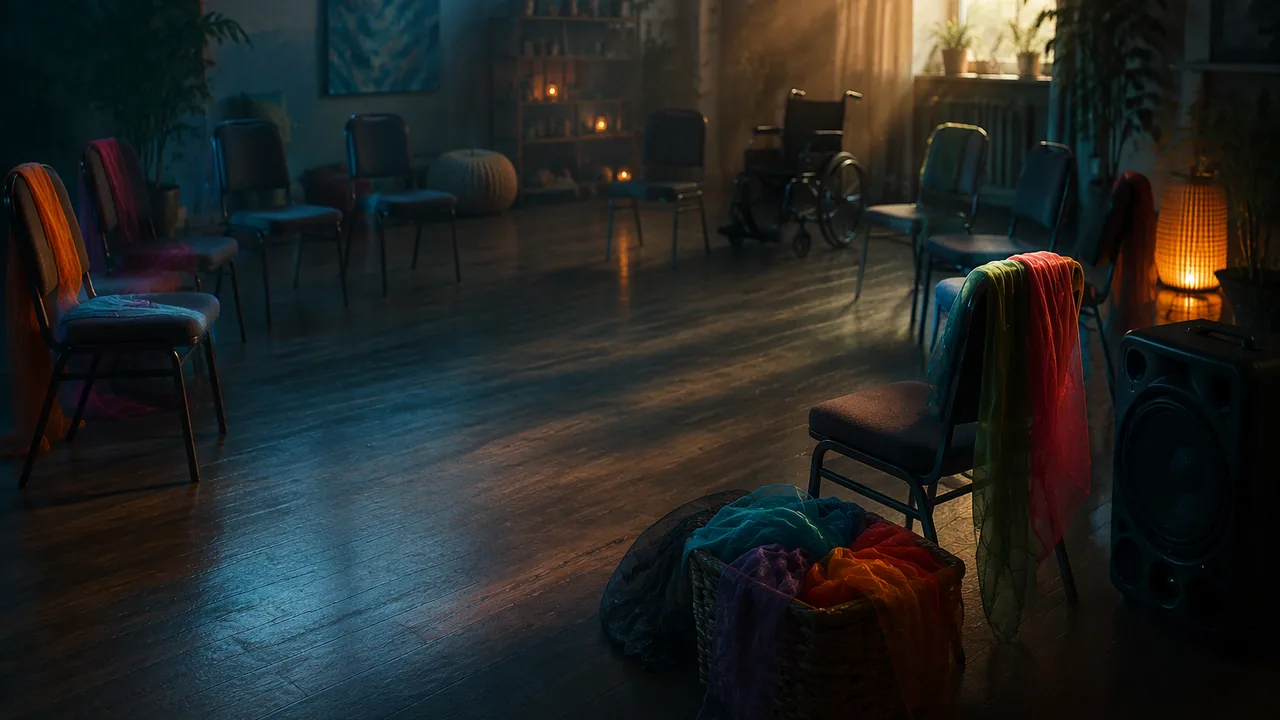
Missouri also expects you to identify strategies for including people of diverse backgrounds and abilities. A planning tool used in adapted physical education is STEP: change the Space (a smaller circle, more room for a wheelchair), the Task (step-touch instead of a hop; arms only), the Equipment (a scarf to hold instead of hands; a chair) or the People arrangement (a slower group, a dancer who signs the calls). Seated dance and wheelchair dance are real, organized activities. Inclusion across backgrounds means learning a dance’s name and origin, welcoming people who do not share it, offering cues in more than one language or by demonstration, and respecting dress or contact customs (a scarf link instead of holding hands, for example). A good test: could every person in your household join this dance and feel welcome?
Formative check
Work through these before moving on. They are not graded — they tell you whether the standard below has landed yet.
Which piece of evidence best shows a dance influencing cultural development rather than only being recreation?
A family dance night includes a grandparent who uses a wheelchair and a cousin who is deaf. Which STEP change helps both join a square dance?
Because bhangra has blended with hip hop and other styles, it no longer has any connection to Punjabi culture.
Write a 300-400 word comparison of two dance forms from this unit: their recreational aspects, their social aspects, and one sourced example of each form’s impact on the culture that carries it. End with an inclusion plan for one of the forms that uses at least two STEP changes and one strategy for welcoming people of a different background.
How confident are you that you can compare the social and cultural roles of dances and plan an inclusive version of a dance?
Practice
Work these on paper or in your notebook, then open Check your answer. Aim for all of Fluency and Application; try at least one Challenge.
Printable version: this unit’s practice workbook (PDF)
Fluency
Build speed and accuracy with the core skill.
- What does each letter of the STEP adaptation tool stand for? Give one dance example for each.
Check your answer
Answer: Space: a smaller circle, or more room for a wheelchair. Task: step-touch instead of a hop, or arms only. Equipment: a scarf to hold instead of hands, or a chair. People: a slower group, or a dancer who signs the calls.STEP is used in adapted physical education. - Define diaspora and standardization, and give the lesson’s dance example of each.
Check your answer
Answer: Diaspora: a community living far from its ancestral homeland that keeps ties to its heritage (bhangra spreading worldwide with Punjabi communities). Standardization: agreeing on common rules or terms so people anywhere can take part (Callerlab’s call lists for western square dance).From the lesson glossary and case studies. - Sort into recreational (R) or social (S) aspects: (a) exercise; (b) celebration; (c) skill; (d) identity; (e) fun; (f) belonging.
Check your answer
Answer: R: (a), (c), (e). S: (b), (d), (f).From the lesson’s comparison frame.
Application
Use the skill in context. Show your reasoning.
- Summarize how each dance shaped culture, in one sentence each: square dance, hora, jarabe tapatío, bhangra.
Check your answer
Answer: Square dance: Shaw’s collected calls and Callerlab’s standard Mainstream program (about 70 calls, about 30 countries) let a dancer join a square anywhere, and Missouri made it part of state identity in 1995. Hora: it carries communities through life events and became a symbol of the Zionist pioneer movement. Jarabe tapatío: once banned at times, which made dancing it a protest, it became a symbol of Mexican national pride after independence. Bhangra: it traveled with the Punjabi diaspora and blended with hip hop, house and reggae, keeping young people connected to their heritage.Each is a case study from the lesson. - Explain why a circle formation like the hora’s signals community.
Check your answer
Answer: A circle has no front row: everyone faces the center and belongs equally.Compare a stage performance, which has performers and an audience. - An example family dance night includes a grandmother who cannot stand for long and a cousin who does not like holding hands for personal or cultural reasons. Plan a hora that includes both, using two STEP changes.
Check your answer
Answer: Model: Equipment: provide a chair for the grandmother to dance seated, keeping the rhythm and arm patterns, and use scarves as links instead of holding hands for the cousin. Space: make the circle wide enough to include the chair. (Task: arms only for the seated dancer.)A strong plan names the STEP letters used and respects dress or contact customs. - Give three strategies from the lesson for including people of diverse backgrounds in a dance.
Check your answer
Answer: Learn and share the dance’s name and origin; welcome people who do not share the heritage; offer cues in more than one language or by demonstration; respect dress or contact customs (for example, a scarf link instead of holding hands). Any three.Test: could every person in your household join this dance and feel welcome?
Challenge
Stretch problems. Expect to think before you write.
- Explain how Callerlab’s standardization can be both good for including people and a change to a folk tradition. Use facts from the lesson.
Check your answer
Answer: Good: standard calls (the Mainstream program of about 70 calls, danced in around 30 countries) mean a dancer from Springfield can join a square in another country. Change: western square dance grew from Shaw’s collected style between about 1940 and 1960 and was standardized from the 1970s, so a set of local, varied traditions became one common program.A strong answer weighs the benefit of shared rules against how a living tradition changes.
Review
Keep earlier skills sharp.
- Review (Lesson 3.3): the bhangra practice step includes hops. Use STEP to make it accessible for a dancer who cannot hop, keeping its spirit.
Check your answer
Answer: Change the Task: replace each hop with a step-touch or a knee lift (or a seated version with arms raised in a wide V and shoulder bounces on every count), keeping the full energy and joy that is the spirit of the form.Task change is the STEP letter used; the spirit is preserved.