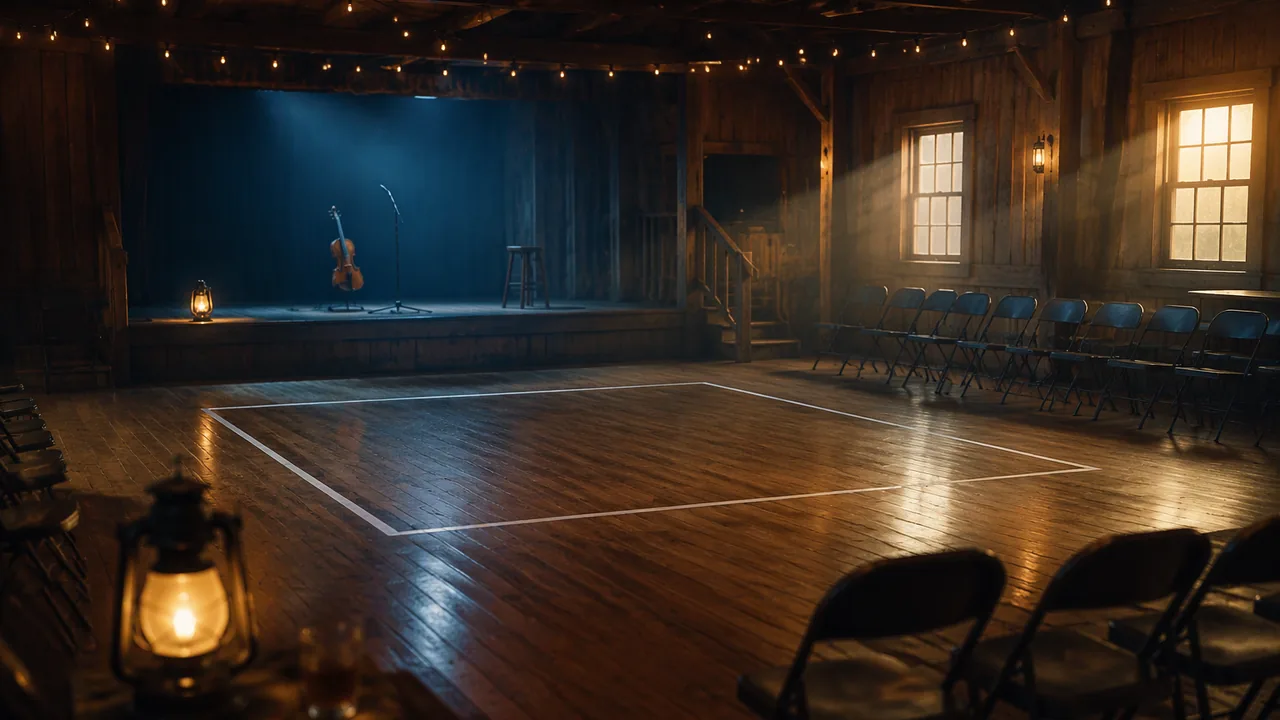
classify dance forms as social, folk, line, square or performance dance, explain the recreational and social role each plays, and describe the origins of Missouri’s official American folk dance.
Instruction
Why a physical education course studies dance
Every human culture dances. A dance is a set of movements done to a rhythm, but it is also a way a group celebrates a harvest, welcomes a marriage, remembers its history or simply spends a Saturday night together. That double life is why Missouri’s grades 9-12 physical education expectations ask you to compare the recreational and social aspects of a variety of dances and their impact on cultural development, and also to show basic skills and etiquette in dance forms from different cultural backgrounds. In this unit you study dance as fitness and as culture at the same time.
Five families of dance
- Social dance is done for fun and company rather than for an audience: couple dances at a wedding, a waltz, a swing dance at a community hall. The point is the shared experience.
- Folk dance belongs to a community and is passed down through generations, often tied to a place, a festival or a stage of life. The Romanian and Jewish hora, Punjabi bhangra and the Mexican jarabe tapatío are folk dances.
- Line dance has dancers in rows, all doing the same sequence and turning to face a new wall, so no one needs a dance companion.
- Square dance places four couples in a square, one couple on each side, facing the middle. A caller prompts the moves in time to the music.
- Performance and aerobic dance (jazz, contemporary, step aerobics) is built for an audience or for a workout.
The families overlap. A folk dance can be performed on stage, and a social dance can become a community’s folk tradition.
Missouri’s official American folk dance
In 1995 the General Assembly named the square dance the American Folk Dance of the State of Missouri; the bill was approved May 31, 1995 and took effect August 28, 1995 (Missouri Secretary of State, Missouri State Symbols). The statute, RSMo 10.120, defines the square dance broadly as an American folk dance that is called or cued to the dancers, and it includes square, round, clogging, contra, line and heritage dances. The Secretary of State describes square dances as derived from European folk and courtship dances, with lively fiddle-led music and a caller as their hallmarks.
Historians trace the square to English country dances of the 1600s and to the French quadrille and cotillion of the 1700s; the quadrille, which blended the two in the early 1800s, is its most direct ancestor. Calling, the feature that makes the American square different, is reported to have emerged when African American musicians who played for quadrilles began calling out the figures (Wikipedia, “Square dance,” cross-checked with the Missouri Secretary of State). So Missouri’s state folk dance carries English, French and African American history in one form.
Recreational and social roles
A useful way to compare dances is to ask four questions. Who dances? (Anyone at the event, or trained performers?) When? (Weekly club night, a harvest festival, a wedding?) What does it build? (Fitness, coordination, belonging, courtship, pride in a heritage?) What are the rules of etiquette? In a square, you bow to the dancer beside you and to your corner at the start and the end and do not leave a square mid-dance, because seven other dancers depend on you. In a hora circle, you join hands and keep the circle turning together. Etiquette is part of the skill, not an extra.
Worked example
Compare a square dance at a Missouri club night with a hora at a wedding. Both are recreational and social, and both put dancers in a shape (a square, a ring) that makes everyone part of one group. The square depends on a caller and on each dancer following the calls exactly; the hora depends on the whole circle keeping the same step. The square’s social role is a regular community gathering; the hora’s is marking a life event. In the next lessons you will move to the rhythm of these forms, not only read about them.
Formative check
Work through these before moving on. They are not graded — they tell you whether the standard below has landed yet.
Under Missouri’s statute (RSMo 10.120), which of these is included in the definition of the square dance as the state’s American folk dance?
A folk dance is usually created by one professional choreographer for a single stage show.
In a square dance, one dancer walks off halfway through. What is the most likely result?
Build a comparison chart for four dance forms (for example square dance, hora, bhangra and a line dance). For each, answer: who dances, when, what it builds (fitness and social), one etiquette rule, and one sourced origin fact. Then write two sentences on which form is most recreational and which carries the most cultural meaning, with reasons.
How confident are you that you can classify dance forms and explain the recreational and social role each plays?
Practice
Work these on paper or in your notebook, then open Check your answer. Aim for all of Fluency and Application; try at least one Challenge.
Printable version: this unit’s practice workbook (PDF)
Fluency
Build speed and accuracy with the core skill.
- Name the five families of dance from the lesson and give one example of each.
Check your answer
Answer: Social dance (a waltz or a swing dance at a community hall); folk dance (hora, bhangra, jarabe tapatío); line dance (rows doing the same sequence, turning to face a new wall); square dance (four couples in a square with a caller); performance and aerobic dance (jazz, contemporary, step aerobics).The families overlap: a folk dance can be performed on stage, and a social dance can become a community’s folk tradition. - When did Missouri name the square dance its American Folk Dance, and which statute defines it? List the dances the definition includes.
Check your answer
Answer: The bill was approved May 31, 1995 and took effect August 28, 1995. RSMo 10.120 defines it as an American folk dance that is called or cued, including square, round, clogging, contra, line and heritage dances.Source: Missouri Secretary of State, Missouri State Symbols. - How many dancers are in one square, and how are they arranged?
Check your answer
Answer: Eight dancers: four couples, one couple on each side of the square, facing the middle.A caller prompts the moves in time to the music.
Application
Use the skill in context. Show your reasoning.
- Trace the history of the square dance in three steps, and name the three cultural traditions it carries.
Check your answer
Answer: English country dances of the 1600s and the French quadrille and cotillion of the 1700s; the quadrille, which blended the two in the early 1800s, is its most direct ancestor; calling is reported to have emerged when African American musicians who played for quadrilles began calling out the figures. It carries English, French and African American history.Calling is the feature that makes the American square different. - Use the lesson’s four comparison questions (who, when, what it builds, etiquette) to describe a line dance at a community event.
Check your answer
Answer: Model: Who: anyone at the event, since no dance companion is needed. When: a social gathering or club night. What it builds: coordination, fitness and a sense of belonging, since everyone does the same sequence. Etiquette: keep your place in the row and move with the group as it turns to face a new wall.Any reasonable answer that addresses all four questions with line-dance features earns credit. - Explain two square-dance etiquette rules and why each matters.
Check your answer
Answer: Bow (honor) to the dancer beside you and to your corner at the start and end, which shows respect to the others in the square; do not leave a square mid-dance, because seven other dancers depend on you to complete the figures. Listening to the caller is also part of it.Etiquette is part of the skill, not an extra. - Compare a square dance at a club night with a hora at a wedding: one similarity and two differences.
Check your answer
Answer: Similarity: both are recreational and social and put dancers in a shape (a square, a ring) that makes everyone part of one group. Differences: the square depends on a caller and each dancer following calls, while the hora depends on the whole circle keeping the same step; the square’s social role is a regular community gathering, while the hora’s is marking a life event.This follows the lesson’s worked example.
Challenge
Stretch problems. Expect to think before you write.
- Classify the jarabe tapatío and bhangra by family, and explain how one dance can belong to more than one family.
Check your answer
Answer: Both are folk dances: they belong to communities and are passed down through generations, tied to places and occasions (Jalisco; the Punjabi harvest). A folk dance can also be performed on a stage, which makes it performance dance at that moment, and a social dance can become a community’s folk tradition, so the families overlap.A strong answer names the family and uses the overlap idea from the lesson.
Review
Keep earlier skills sharp.
- Review (Lesson 1.1): the lesson says etiquette is part of the skill in dance. Compare one sport etiquette habit with one dance etiquette habit that serve the same purpose.
Check your answer
Answer: Model: in sport, players shake hands or tap rackets after a game; in square dance, dancers honor (bow to) the dancers beside them at the start and end. Both show respect for the other participants.Any matched pair with a shared purpose earns credit.