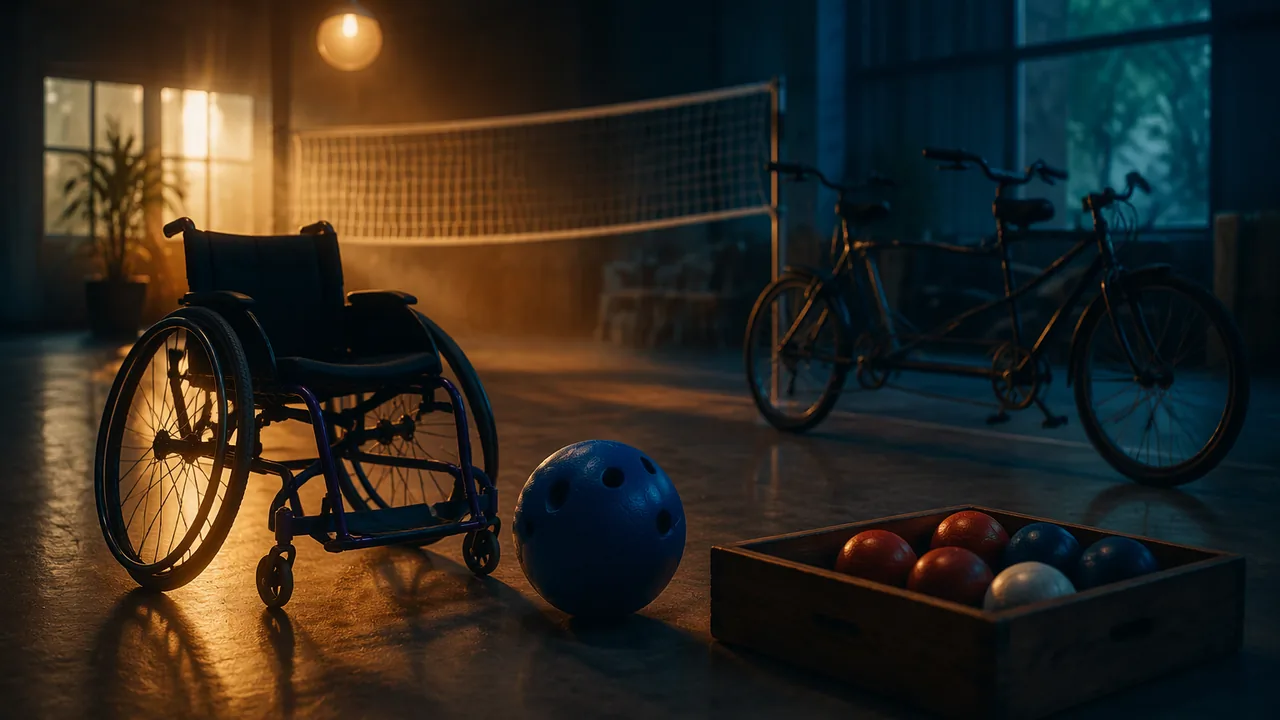
identify strategies for including people of diverse backgrounds and abilities in physical activity, using Special Olympics, Unified Sports and the Paralympic Games as evidence, and investigate and cite career opportunities related to physical education.
Instruction
Inclusion is a skill
Including people of diverse backgrounds and abilities is not a favor; it is a planning skill, and Missouri’s expectations ask you to identify strategies for it. Inclusion has two sides. Ability: people with physical, intellectual, sensory or health differences. Background: people of different cultures, languages, religions, genders, ages and family incomes. A truly inclusive activity is planned so that everyone can take part fully and meaningfully, not just watch.
Evidence from organized sport
Special Olympics was founded in 1968 by Eunice Kennedy Shriver to give people with intellectual disabilities year-round sports training and competition. Special Olympics Missouri was incorporated in 1971 and offers training and competition in 12 Olympic-style sports; worldwide Special Olympics reports nearly 5 million athletes in more than 170 countries (Special Olympics Missouri, Mission and History). Its Unified Sports and Unified Champion Schools programs put students with and without intellectual disabilities on the same teams, building inclusion through sport (Special Olympics Missouri). The Paralympic Games grew from competitions that Dr. Ludwig Guttmann organized at Stoke Mandeville Hospital in England for World War II veterans with spinal cord injuries, starting in 1948; the 1960 Rome Games, with about 400 athletes from 23 countries, are recognized as the first Paralympics (Wikipedia, “Paralympic Games,” cross-checked). Paralympic athletes compete in classes based on impairment so contests are fair. Missouri even has an early example: at the 1904 St. Louis Olympics, gymnast George Eyser won six medals with a wooden leg.
The STEP tool
You met STEP in the dance unit. Here it is applied to sport: Space (a smaller court, a shorter course, a lower net); Task (allow two bounces, walk instead of run, a seated version); Equipment (a larger or softer ball, a beeper ball for players who are blind, a lighter racket); People (balanced groupings, a buddy who cues, clear roles for everyone). For background, add: rules explained by demonstration and in more than one language, uniforms and swimwear options that respect religious or personal modesty, activities that need no costly equipment, and schedules that respect religious and family observances.
Worked example
A family wants a weekend pickleball game with a cousin who uses a wheelchair and a grandparent who speaks mostly Spanish. Space: play on a full court so the chair can move. Task: the player using a wheelchair may let the ball bounce twice, which the official pickleball rulebook allows (USA Pickleball, wheelchair rules). Equipment: a slightly softer ball if hands tire. People: explain rules by demonstration and in Spanish. Everyone plays the same game.
Careers related to physical education
Missouri asks you to investigate and cite careers. The Bureau of Labor Statistics Occupational Outlook Handbook (OOH) gives national pay, education and job outlook. Figures below are May 2025 median annual pay and projected job growth for 2025-35 (BLS OOH):
| Occupation | Median pay | Typical entry education | Outlook 2025-35 |
|---|---|---|---|
| Fitness trainers and instructors | $47,160 | High school diploma | 7% |
| Coaches and scouts | $47,320 | Bachelor’s degree | 6% |
| Athletic trainers | $62,520 | Master’s degree | 13% |
| Physical therapists | $102,760 | Doctor of Physical Therapy | 12% |
| Recreation workers | $36,560 | High school diploma | 4% |
Other related paths include school physical education educators, adapted physical education specialists and recreation program directors. Every one of these careers depends on inclusion skills: a trainer, therapist or recreation worker serves people of every age, background and ability.
Formative check
Work through these before moving on. They are not graded — they tell you whether the standard below has landed yet.
Which is an Equipment change in the STEP tool?
Special Olympics was founded in by Eunice Kennedy Shriver.
Using the BLS table, which occupation is projected to grow fastest from 2025 to 2035?
Write an inclusion plan for one sport or activity using all four STEP changes plus one strategy for including someone of a different cultural or language background. Then choose two careers from the BLS table (or another OOH occupation related to physical education) and cite their pay, education and outlook, and say how each uses inclusion skills.
How confident are you that you can plan inclusive activities and research careers related to physical education with federal data?
Practice
Work these on paper or in your notebook, then open Check your answer. Aim for all of Fluency and Application; try at least one Challenge.
Printable version: this unit’s practice workbook (PDF)
Fluency
Build speed and accuracy with the core skill.
- Name the two sides of inclusion and give two examples of each.
Check your answer
Answer: Ability: physical, intellectual, sensory or health differences. Background: different cultures, languages, religions, genders, ages and family incomes. (Any two of each.)A truly inclusive activity lets everyone take part fully and meaningfully, not just watch. - Give the founding facts: (a) Special Olympics; (b) Special Olympics Missouri; (c) the first Paralympic Games.
Check your answer
Answer: (a) Founded in 1968 by Eunice Kennedy Shriver. (b) Incorporated in 1971; offers 12 Olympic-style sports. (c) Rome, 1960, with about 400 athletes from 23 countries, growing from Dr. Ludwig Guttmann’s 1948 Stoke Mandeville competitions.Special Olympics reports nearly 5 million athletes in more than 170 countries. - Classify each adaptation by its STEP letter: (a) a lower net; (b) a beeper ball; (c) allowing two bounces; (d) a buddy who cues; (e) a lighter racket; (f) walking instead of running.
Check your answer
Answer: (a) Space; (b) Equipment; (c) Task; (d) People; (e) Equipment; (f) Task.Space, Task, Equipment, People.
Application
Use the skill in context. Show your reasoning.
- Using the BLS table, how much more is the median pay of a physical therapist than that of a fitness trainer? Which two occupations require only a high school diploma?
Check your answer
Answer: $55,600 more. Fitness trainers and instructors, and recreation workers.$102,760 − $47,160 = $55,600. - Athletic trainers are projected to grow 13% from 2025 to 2035. If a region had 500 athletic-trainer jobs in 2025, about how many would it have in 2035 at that rate? What education does the job typically require?
Check your answer
Answer: About 565 jobs. A master’s degree.13% of 500 = 0.13 × 500 = 65; 500 + 65 = 565. - Explain what median pay means and why it is used instead of the highest salary.
Check your answer
Answer: The middle wage in an occupation: half of workers earn more and half earn less. It describes a typical worker better than the highest salary, which only a few earn.BLS OOH figures are May 2025 medians. - Plan an inclusive backyard volleyball game for an example family that includes a younger cousin who is blind and an aunt who prefers modest athletic wear for religious reasons. Use at least two STEP changes and one background strategy.
Check your answer
Answer: Model: Equipment: a larger, softer ball (or a beeper ball) for the cousin. People: a buddy who calls out where the ball is. Task: allow a bounce before a hit. Background: welcome clothing options that respect religious or personal modesty, and explain rules by demonstration.A strong plan names the STEP letters and keeps everyone in the same game.
Challenge
Stretch problems. Expect to think before you write.
- Explain how Paralympic classification and Special Olympics Unified Sports each make competition fair or inclusive, and why the pickleball two-bounce rule for wheelchair players is an example of a Task change.
Check your answer
Answer: Classification groups Paralympic athletes by type and degree of impairment so contests are fair. Unified Sports puts athletes with and without intellectual disabilities on the same teams, building inclusion through sport. Allowing a player using a wheelchair two bounces changes what the task requires while everyone still plays the same game; the official pickleball rulebook (USA Pickleball) allows it.A strong answer distinguishes fairness (classification) from shared participation (Unified).
Review
Keep earlier skills sharp.
- Review (Lesson 3.4): the STEP tool first appeared in the dance unit. Give one dance example and one sport example of a Space change.
Check your answer
Answer: Dance: a wider circle to make room for a wheelchair. Sport: a smaller court, a shorter course or a lower net (or a full pickleball court so the chair can move).Space changes alter where the activity happens. - Review (Lesson 4.1): which 1904 St. Louis athlete is an early example of adapted performance, and what did he achieve?
Check your answer
Answer: George Eyser, a gymnast who won six medals even though his left leg was made of wood.Gymnastics had 11 events at those Games.