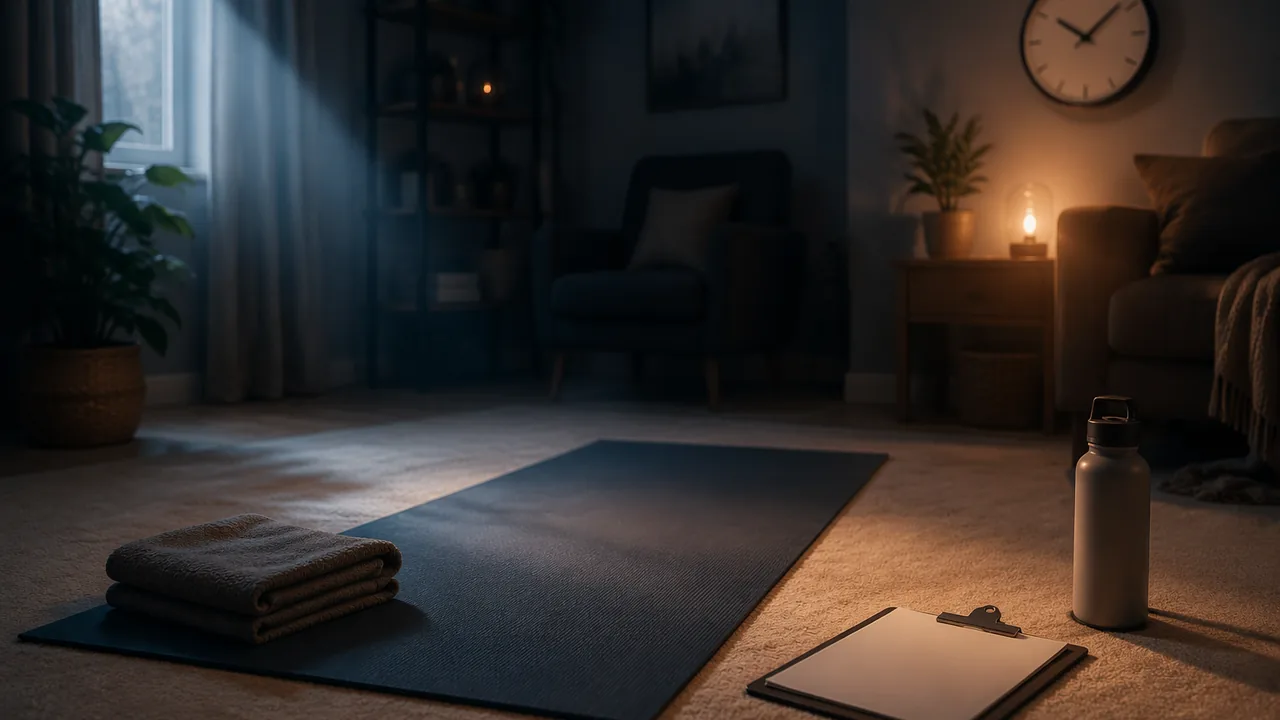
complete a readiness check, set up a safe home activity space, and perform and record a dynamic warm-up and cool-down while measuring how heart rate responds.
Instruction
Why start here. Most exercise injuries in young people are not dramatic accidents. They come from skipping the warm-up, moving with poor form, using a cluttered or slippery space, or doing too much too soon. Missouri’s grade-level expectations ask you to connect warm-up, cool-down, technique, protective equipment and conditioning to injury. This lab puts each of those links into practice before any harder training begins.
Step 1: the readiness check
Before starting a new program, adults and teens are screened with a short questionnaire. The widely used PAR-Q+ (Physical Activity Readiness Questionnaire for Everyone, PAR-Q+ Collaboration) asks seven general questions about heart conditions or high blood pressure, chest pain, dizziness or fainting, other chronic conditions, prescribed medicines, bone or joint problems that activity could make worse, and whether a doctor has said activity should be supervised. If every answer is no, the person is generally cleared to be more active; any yes means talking with a doctor first. You completed a readiness questionnaire with your parent or guardian when you enrolled. Today, re-read your answers: if anything has changed (a new injury, new medicine, a new diagnosis), stop and talk with your parent or guardian and your doctor before the lab.
Step 2: the safe space
You need a clear area about 6 by 6 feet. Check the floor (dry, not slippery; a rug that slides is a hazard), overhead (ceiling fans, light fixtures and low shelves out of reach when your arms are raised), the edges (no table corners, glass, or stairs within a step or two), and air (ventilated, not hot). Wear athletic shoes that fit and comfortable clothes. Keep water nearby. Tell someone at home that you are exercising. Showing respect and safety in a shared home means moving furniture back afterward and choosing a time that does not disrupt others; that is the etiquette part of the standard.
Step 3: the dynamic warm-up
A warm-up is 5 to 10 minutes of light activity that gradually raises heart rate, breathing and muscle temperature and rehearses the movements you are about to do. Warm muscles and tendons stretch more easily and contract more quickly. A dynamic warm-up uses controlled movement (marching, arm circles, leg swings, walking lunges) rather than long held stretches; save the long holds for the end. Start gently and build: you should feel warmer and breathe a little faster but still be able to talk comfortably. The CDC’s talk test is a handy check: during moderate activity you can talk but not sing (CDC, Measuring Physical Activity Intensity).
Step 4: the cool-down
A cool-down is 5 to 10 minutes of easy movement followed by static stretching. Stopping suddenly after hard exercise can let blood pool in the legs and leave you lightheaded; walking it off lets heart rate come down gradually. Static stretches (held 15 to 30 seconds without bouncing) are most comfortable when muscles are warm.
Measuring the effect
You will take your pulse three times. MedlinePlus (U.S. National Library of Medicine) explains the method: place two fingers on the thumb side of the inside of your wrist, count the beats for 30 seconds and multiply by 2, or count for 15 seconds and multiply by 4. A normal resting heart rate for people 10 and older is 60 to 100 beats per minute. Expect your heart rate to rise during the warm-up and to fall back toward resting during the cool-down. The size and speed of that change is your first piece of fitness data.
Heat matters in Missouri. The Missouri Department of Health and Senior Services counted 370 heat-related deaths in the state from 2010 to 2025, and advises scheduling outdoor activity for the morning or evening and avoiding strenuous activity in the warmest part of the day (DHSS, Environmental Public Health Tracking). Even indoors, a hot, stuffy room raises the risk. If the space is hot, open a window, use a fan or air conditioning, or choose a cooler time.
Activity: Readiness check, safe space, and a measured warm-up and cool-down
Question. How does a dynamic warm-up change heart rate and how I feel, and how quickly does a cool-down bring my heart rate back toward resting?
Materials
- Your readiness questionnaire from enrollment (review it with a parent or guardian)
- A clear space about 6 by 6 feet with a non-slip floor
- Athletic shoes, comfortable clothes and a water bottle
- A timer or phone clock that shows seconds
- This lesson’s data table (on paper or on screen) and a pencil
- Do not begin if any readiness answer has changed since enrollment (new injury, new medicine, new diagnosis); talk with your parent or guardian and your doctor first.
- Stop at once and tell a parent or guardian if you feel chest pain or pressure, dizziness or lightheadedness, unusual shortness of breath, or sharp or unusual joint pain; call 911 for an emergency such as fainting, chest pain that does not go away or trouble breathing.
- Clear the floor and check overhead: no rugs that slide, nothing within arm’s reach when your arms are raised, no glass, table corners or stairs next to the space.
- Keep the room cool and ventilated and drink water before and after; if the space is hot, choose a cooler time or room.
- Move with control; the warm-up should feel easy to moderate (you can talk but not sing). If you have asthma, follow your own asthma action plan and keep your quick-relief inhaler within reach.
Procedure
- Readiness and space (5 minutes): re-read your readiness questionnaire with your parent or guardian. Walk the space and complete the safe-space checklist in the data table: floor, overhead, edges, air, shoes, water, someone at home knows.
- Resting heart rate (3 minutes): sit quietly for at least 3 minutes. Find your wrist pulse, count beats for 30 seconds and multiply by 2. Record it as reading 1. Rate how you feel on the CDC 0-10 effort scale (0 = sitting still).
- Dynamic warm-up (8 minutes, 1 minute each): march in place; arm circles forward and back (10 each way); side steps with arm reaches; hip circles; leg swings front to back holding a wall (10 per leg); slow bodyweight squats to a comfortable depth (10); walking or stationary lunges (5 per leg); light jog in place or fast march.
- Warm-up heart rate (1 minute): immediately after the last move, count your pulse for 15 seconds and multiply by 4. Record it as reading 2 with your 0-10 effort rating and a note on how warm and loose you feel.
- Cool-down (8 minutes): walk or march slowly for 3 minutes, letting your breathing settle. Then hold each static stretch 20 seconds per side without bouncing: calf stretch at a wall, standing quadriceps stretch (hold a wall for balance), seated hamstring reach, chest stretch in a doorway, cross-body shoulder stretch.
- Recovery heart rate (1 minute): at the end of the cool-down, take your pulse for 30 seconds and multiply by 2. Record it as reading 3 with your effort rating.
- Restore the space (2 minutes): put furniture back, wipe up any water, and log today’s minutes and intensity in your weekly activity log.
Data
| Safe-space check | OK? (yes / fixed it) |
|---|---|
| Floor dry and non-slip | |
| Nothing overhead within reach | |
| No glass, corners or stairs at the edges | |
| Room cool and ventilated; water ready | |
| Shoes on; someone at home knows |
| Reading | Heart rate (beats per minute) | Effort (0-10) | How I feel |
|---|---|---|---|
| 1. Resting | |||
| 2. After warm-up | |||
| 3. After cool-down |
Analysis
- Calculate how much your heart rate rose from reading 1 to reading 2 and how much of that rise was gone by reading 3. Explain what the warm-up did to your body and why that lowers the chance of a muscle or tendon injury.
- Your reading 3 is probably still above reading 1. Explain why, and what would happen to your heart rate, and possibly how you would feel, if you stopped suddenly after hard exercise instead of cooling down.
- Name one hazard you found or fixed in your space and the injury it could have caused. Then write one sentence on how you showed etiquette and respect for others in your home while you exercised.
- Which warm-up moves rehearsed the squat and lunge you will practice in the studio lesson? Explain why rehearsing a movement before loading it is part of injury prevention.
If you cannot do this activity in person: Low-impact or seated version (full credit): do the readiness check and safe-space checklist the same way. For the warm-up, sit tall near the front of a sturdy chair without wheels and do 1 minute each of seated marching, arm circles, seated torso turns, ankle circles, alternating heel raises and toe taps, seated punches, and sit-to-stand from the chair (only if comfortable; otherwise extra seated marching). Take the same three heart-rate readings. For the cool-down, do 3 minutes of slow seated marching and arm swings, then seated stretches held 20 seconds each: seated hamstring reach (one leg straight), ankle-on-knee hip stretch, overhead side reach, cross-body shoulder stretch and chest opener. Answer the same analysis questions using your seated data.
Formative check
Work through these before moving on. They are not graded — they tell you whether the standard below has landed yet.
Before you start: what will a 1-minute recovery reading taken right after the cool-down most likely show?
Why does the warm-up use dynamic movement instead of long, held stretches?
If you feel dizzy or have chest pain during the warm-up, it is fine to slow down and keep going as long as you finish the lab.
To take a pulse, count the beats for 30 seconds and multiply by , or count for 15 seconds and multiply by .
How confident are you that you can check my readiness, set up a safe space, and lead myself through a warm-up and cool-down while measuring my heart rate?
Practice
Work these on paper or in your notebook, then open Check your answer. Aim for all of Fluency and Application; try at least one Challenge.
Printable version: this unit’s practice workbook (PDF)
Fluency
Build speed and accuracy with the core skill.
- A pulse count is 36 beats in 30 seconds. What is the heart rate in beats per minute? A different count is 22 beats in 15 seconds. What is that heart rate?
Check your answer
Answer: 72 beats per minute; 88 beats per minute.30-second count × 2: 36 × 2 = 72. 15-second count × 4: 22 × 4 = 88. - Name the four areas of the safe-space check and one thing to look for in each.
Check your answer
Answer: Floor (dry, not slippery, no sliding rug); overhead (ceiling fans, light fixtures, low shelves out of reach with arms raised); edges (no table corners, glass or stairs within a step or two); air (ventilated, not hot).The lab checklist also adds shoes, water and telling someone at home. - How long should a static stretch be held, and when in a session is it most comfortable?
Check your answer
Answer: 15 to 30 seconds without bouncing, at the end of a session (in the cool-down) when muscles are warm.Dynamic movement belongs in the warm-up; long holds are saved for the end.
Application
Use the skill in context. Show your reasoning.
- Example data from a student named Luis: resting 68 bpm, after warm-up 104 bpm, after cool-down 80 bpm. (a) How much did his heart rate rise during the warm-up? (b) How much of that rise was gone by the end of the cool-down? (c) What fraction of the rise was recovered?
Check your answer
Answer: (a) 36 bpm; (b) 24 bpm; (c) 2/3 (about 67%).(a) 104 − 68 = 36. (b) 104 − 80 = 24. (c) 24 ÷ 36 = 0.67, so about two-thirds; his heart rate is still 80 − 68 = 12 bpm above resting, which is normal right after a cool-down. - Explain why stopping suddenly after hard exercise is a problem and what a cool-down does instead.
Check your answer
Answer: Stopping suddenly can let blood pool in the legs and leave you lightheaded. A cool-down of 5 to 10 minutes of easy movement lets heart rate and breathing come down gradually, followed by static stretching.Key words: blood pooling, lightheaded, gradual return toward resting. - An example teen, Rosa, plans to exercise at 3 p.m. in an upstairs room with no fan in July. Using the lesson’s Missouri heat guidance, name the risk and two changes she could make.
Check your answer
Answer: Heat illness risk: a hot, stuffy room raises it even indoors. Changes: open a window or use a fan or air conditioning, or choose a cooler time (morning or evening) or a cooler room; keep water nearby.Missouri DHSS advises morning or evening activity and avoiding strenuous activity in the warmest part of the day. - Rosa’s PAR-Q+ answers were all “no” at enrollment, but last week she started a new prescribed medicine. What should she do before the lab, and why?
Check your answer
Answer: Stop and talk with her parent or guardian and her doctor before doing the lab. The readiness check asks about prescribed medicines; any change since enrollment, or any “yes,” means talking with a doctor first.The readiness check is re-read every time a new program starts; changes matter. - Give one example of etiquette and respect for others when exercising in a shared home.
Check your answer
Answer: Any one: moving furniture back afterward; choosing a time that does not disrupt others; wiping up water; telling someone at home you are exercising.The lesson calls this the etiquette part of the standard.
Review
Keep earlier skills sharp.
- Review (Lesson 1.1): the warm-up includes slow squats and lunges. Which health-related component do repeated squats mainly train, and which skill-related component does a lunge with a reach challenge?
Check your answer
Answer: Muscular endurance (repeating a movement); balance (staying in control while moving).Lesson 1.1 defined muscular endurance as how many times a muscle group can work before tiring, and balance as staying in control, still or moving.