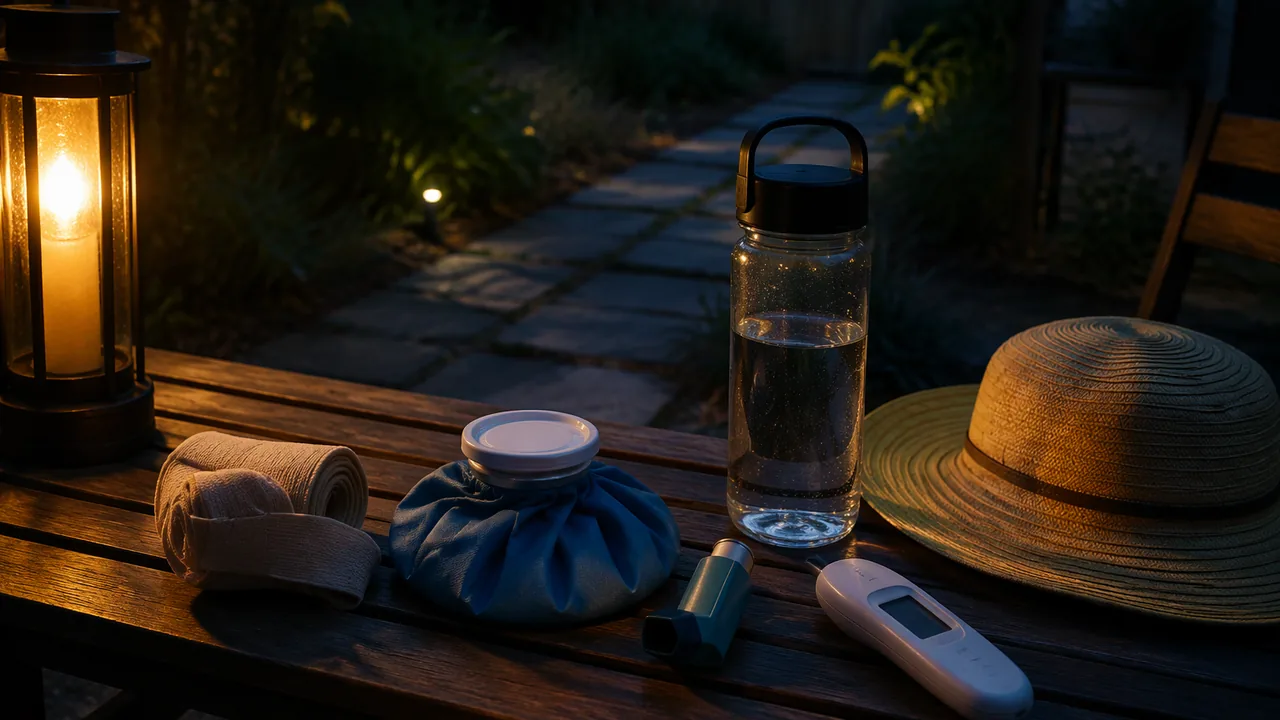
predict the exercise-related injuries and medical conditions most likely in given activities, explain how each is prevented, and write a personal safety plan for home activity.
Instruction
Thinking ahead. Athletic trainers do not wait for injuries; they predict them from the activity, the conditions and the person, then put prevention in place. You can do the same. This workshop covers four families of problems that matter most for teens training at home and outdoors in Missouri: overuse injuries, acute injuries such as sprains and strains, asthma during exercise, and heat illness.
1. Overuse injuries
An overuse injury develops gradually when tissue is stressed repeatedly without enough recovery. Examples include shin pain from a sudden jump in running mileage, tendon pain (tendinitis) in the knee or shoulder, and stress injuries to bone. The warning sign is pain that starts during or after activity and returns at the same point each session. Prediction: who is most at risk? The person who adds too much too soon, repeats one motion every day, or trains through pain. Prevention: increase time or intensity gradually (Unit 3 teaches the principle of progression), vary activities, schedule rest days, and use good technique.
2. Sprains and strains
MedlinePlus (U.S. National Library of Medicine) defines a sprain as a stretched or torn ligament, the tissue that connects bones at a joint, and a strain as a stretched or torn muscle or tendon. Ankle sprains are typical in activities with jumping, cutting and uneven ground; hamstring strains are typical in sprinting, especially without a warm-up. Early care usually involves rest, ice and compression, and a doctor should check any injury where you cannot bear weight, the joint looks deformed, or pain and swelling are severe. Prevention connects directly to your lab: a warm-up, conditioning, good footwear, a clear surface and good technique.
3. Asthma and exercise
Exercise can trigger narrowing of the airways in some people (exercise-induced bronchoconstriction), causing coughing, wheezing, chest tightness or shortness of breath. CDC school guidance notes that some students with asthma use their quick-relief medicine before vigorous activity, and that it should be within reach before and after exercise. A gradual warm-up helps. People with asthma can and should be active; the plan is to follow their own asthma action plan, avoid known triggers (very cold air, pollen days, smoke), and stop and use their medicine if symptoms start. Trouble breathing that does not improve with the inhaler is an emergency: call 911.
4. Heat illness, a Missouri risk
Missouri summers are hot and humid, and humidity slows the evaporation of sweat, the body’s main way to cool off. The Missouri Department of Health and Senior Services recorded 370 heat-related deaths in Missouri from 2010 to 2025 (DHSS, Environmental Public Health Tracking). The CDC separates two conditions. Heat exhaustion brings heavy sweating, cool, pale, clammy skin, a fast weak pulse, nausea, muscle cramps, tiredness, dizziness or headache: move to a cooler place, loosen clothing, apply cool wet cloths and sip water, and get medical help if symptoms worsen, you are vomiting, or they last more than an hour. Heat stroke is an emergency: body temperature of 103°F or higher, hot red skin (dry or damp), a fast strong pulse, confusion or passing out. Call 911 and cool the person while waiting; do not give them anything to drink (CDC, Symptoms of Heat-Related Illnesses). Prevention: exercise in the morning or evening, drink water before, during and after, wear light clothing, take breaks in shade, and build heat tolerance gradually.
Worked prediction
Activity: a 30-minute jog at 2 p.m. in July on a hilly sidewalk, after a week off. Predictions: heat exhaustion (peak heat), ankle sprain (uneven pavement), shin pain (sudden return). Prevention: move the run to 7 a.m., carry water, warm up, start with run-walk intervals, watch the footing, and tell a parent or guardian the route. That table of activity, likely problem, warning sign and prevention is the core of your safety plan.
Your stop signs
For any activity in this course: chest pain, dizziness, unusual shortness of breath or joint pain mean stop at once and tell a parent or guardian. Call 911 for an emergency.
Formative check
Work through these before moving on. They are not graded — they tell you whether the standard below has landed yet.
A runner doubles weekly mileage after a month off and develops pain along the shin that returns at the same point every run. What is the most likely problem?
A person showing confusion and a body temperature of 103°F or higher after exercising in the heat should be given a drink and allowed to rest before anyone calls for help.
Which change would most reduce the risks of a 2 p.m. July jog on a hilly sidewalk after a week off?
Build a risk-prediction table for three activities you might do this semester (one at home, one outdoors, one you choose). For each, list one likely injury or medical condition, its warning sign, and how a warm-up, cool-down, technique, protective equipment or conditioning would prevent it. Then write your personal safety plan: your space, your stop signs, who at home you tell, and what you do in an emergency (including when to call 911).
How confident are you that you can predict likely exercise-related injuries and conditions and plan how to prevent and respond to them?
Practice
Work these on paper or in your notebook, then open Check your answer. Aim for all of Fluency and Application; try at least one Challenge.
Printable version: this unit’s practice workbook (PDF)
Fluency
Build speed and accuracy with the core skill.
- Define sprain and strain and give the lesson’s typical example of each.
Check your answer
Answer: Sprain: a stretched or torn ligament (connects bones at a joint), typical example an ankle sprain from jumping, cutting or uneven ground. Strain: a stretched or torn muscle or tendon, typical example a hamstring strain from sprinting, especially without a warm-up.Definitions from MedlinePlus as quoted in the lesson. - List three signs of heat exhaustion and three signs of heat stroke.
Check your answer
Answer: Heat exhaustion (any three): heavy sweating; cool, pale, clammy skin; fast weak pulse; nausea; muscle cramps; tiredness; dizziness; headache. Heat stroke (any three): body temperature of 103°F or higher; hot red skin (dry or damp); fast strong pulse; confusion; passing out.Heat stroke is an emergency: call 911. - What are the course’s four stop signs during any activity?
Check your answer
Answer: Chest pain, dizziness, unusual shortness of breath, joint pain. Stop at once and tell a parent or guardian; call 911 for an emergency.These are repeated in every lab safety block.
Application
Use the skill in context. Show your reasoning.
- Predict one likely problem and give one prevention step for each activity: (a) a new jump-rope routine done every day for 30 minutes from day one; (b) trail running on rocky ground; (c) a 1 p.m. August bike ride.
Check your answer
Answer: (a) Overuse injury (such as shin pain) from too much too soon; prevent with gradual progression, rest days and varied activities. (b) Ankle sprain from uneven ground; prevent with a warm-up, good footwear and watching the footing. (c) Heat exhaustion or heat stroke; prevent by riding in the morning or evening, drinking water before, during and after, wearing light clothing and taking shade breaks.Activity → likely problem → warning sign → prevention is the safety-plan table. - An example friend feels heavily sweaty, clammy and dizzy after a hot run. What should be done, and when should medical help be sought?
Check your answer
Answer: This matches heat exhaustion: move to a cooler place, loosen clothing, apply cool wet cloths and sip water. Get medical help if symptoms worsen, the person is vomiting, or symptoms last more than an hour.Contrast heat stroke (confusion, 103°F or higher): call 911 and do not give anything to drink. - An example student, Nia, has asthma and wants to do interval runs in cold January air. Write three parts of a safety plan for her drawn from the lesson.
Check your answer
Answer: Model: follow her own asthma action plan; keep quick-relief medicine within reach before and after exercise (some students use it before vigorous activity, as the plan directs); do a gradual warm-up; avoid known triggers such as very cold air (choose indoors or a milder time); stop and use her medicine if symptoms start; trouble breathing that does not improve with the inhaler means call 911.Any three earn credit. People with asthma can and should be active. - Why does Missouri humidity make heat illness more likely?
Check your answer
Answer: Humidity slows the evaporation of sweat, which is the body’s main way to cool off.Missouri DHSS counted 370 heat-related deaths in the state from 2010 to 2025.
Challenge
Stretch problems. Expect to think before you write.
- An example student, Owen, ignored knee pain that returned at the same point of every basketball session for three weeks. Explain what kind of injury this pattern suggests, what in his training probably caused it, and two changes for the next month.
Check your answer
Answer: An overuse injury (such as tendinitis): pain that starts during or after activity and returns at the same point each session. Likely cause: repeating one motion every day, adding too much too soon, or training through pain. Changes (any two): schedule rest days, vary activities, increase time or intensity gradually, check technique; a doctor should check it if it does not improve.Prediction plus prevention, tied to the warning sign.
Review
Keep earlier skills sharp.
- Review (Lesson 1.3): which critical element of the hip hinge most protects the spine, and which critical element of the squat protects the inside of the knee?
Check your answer
Answer: Hip hinge: a flat (neutral) back from head to tailbone. Squat: knees track in line with the toes (not caving in).Rounding loads the spine; knee valgus stresses the inside of the knee. - Review (Lesson 1.2): an example student’s cool-down ends at 92 bpm after a resting rate of 70 bpm. Is something wrong? Explain.
Check your answer
Answer: Not necessarily. 92 − 70 = 22 bpm above resting; heart rate falls gradually and usually takes a few more minutes after the cool-down to reach resting.A reading still a little above resting is expected right after a cool-down.